
Fudan University: A 1905 Seat of Learning Named from a Classical Ode of Sunlight and Moonlight, with the Twin Guanghua Towers and the Gardens of Yanyuan and Xiyuan at Handan Road 220 in Yangpu District, Shanghai
日月光华承旧志,旦复旦兮启新程。Rìyuè guānghuá chéng jiù zhì, dànfùdàn xī qǐ xīnchéng – Sunlight and moonlight carry on the old aspiration; dawn after dawn opens a new journey.
复旦大学 Fùdàn Dàxué Fudan University is not a campus you wander into by accident — it is, plainly put, one of China’s most storied seats of learning, founded in 1905 on the strength of a line of ancient verse: the university takes its name from 「日月光华,旦复旦兮」 — “sunlight and moonlight shine in splendour; dawn follows dawn without end” — and it began that year as 复旦公学 Fùdàn Gōngxué the Fudan Public School, one of the earliest private institutions of higher learning in modern China. The campus fills its grid of lanes and lawns at 邯郸路 Hándān Lù Handan Road 220 in 杨浦区 Yángpǔ Qū Yangpu District, and its modern landmark is unmissable: 光华楼 Guānghuá Lóu the Guanghua Towers, a twin-tower complex completed for the university’s centenary in 2005 and reckoned at the time the tallest university building in the country. Around the towers sit the small classical gardens of 燕园 Yànyuán Yanyuan and 曦园 Xīyuán Xiyuan, pockets of pavilion-and-pond quiet inside a working university. What you actually visit is a living campus where a century of Chinese scholarship built itself tower by tower and garden by garden.
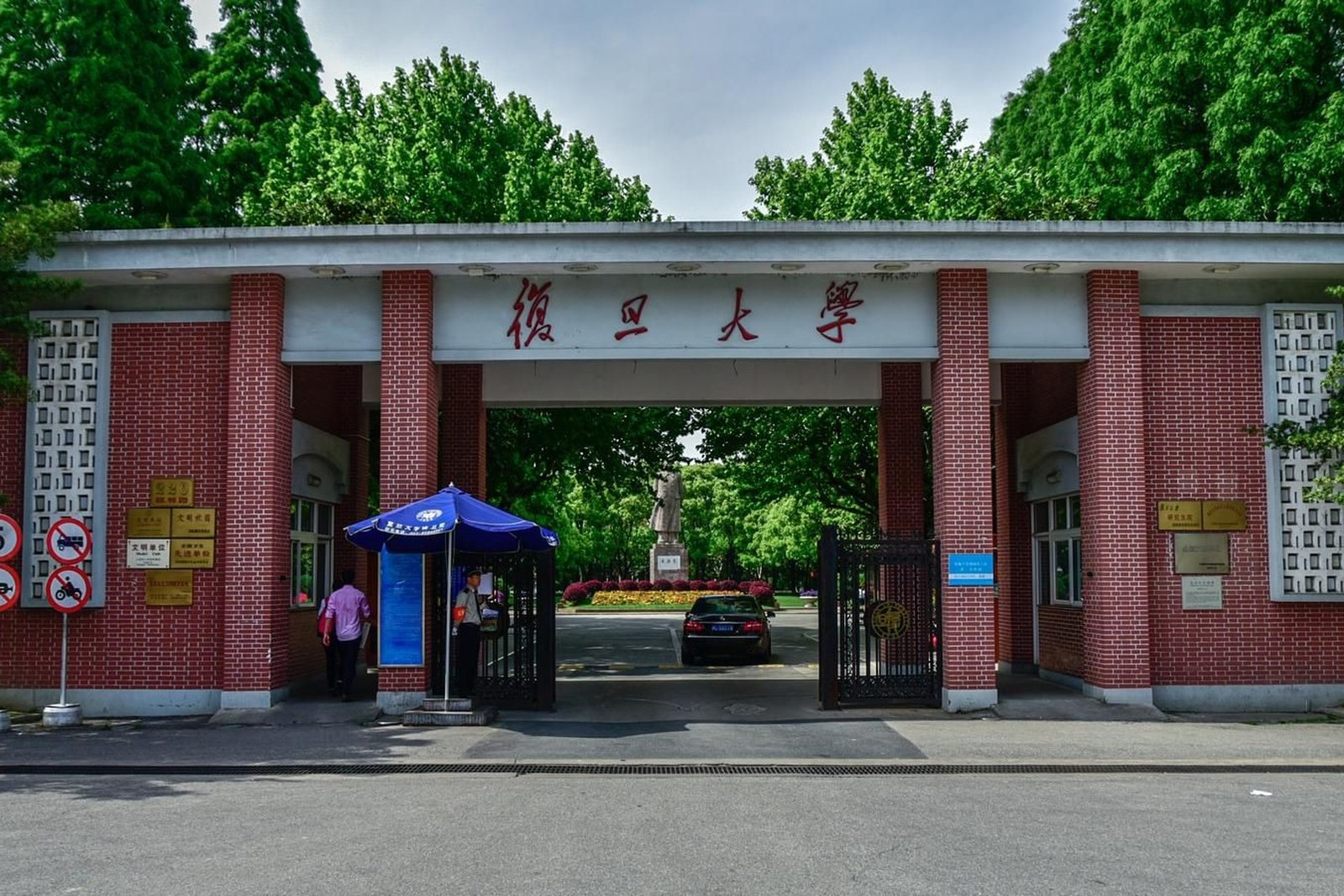
Call it honestly: campus entry is generally managed, and visitors are usually expected to register or book a slot in advance rather than walk in at the gate (worth confirming the details for the current reservation procedure, which has changed more than once), and 复旦大学站 Fùdàn Dàxué Zhàn Fudan University station on Metro Lines 10 and 18 sets you down at the campus edge. The honest warning is scale and pace: this is a university first and a sight second, so there is no ticket hall, no guided circuit and no view guaranteed — the reward goes to those who walk slowly, sit in the gardens and let the student traffic pass. Signage at the gates changes with the term calendar, and holiday periods are generally the most forgiving for visitors. Mid-morning and late afternoon are the kindest hours, when classes change and the light reaches across the lawns. Give it an hour and a half to two hours, longer if you linger over the gardens and the library quarter.
The honest star is the pair of Guanghua Towers themselves — the twin slabs rising over the campus like a gate to the sky, the photograph every visitor takes and the reason the skyline of a university can out-argue a district’s, best read from the lawns below where the scale still feels like scholarship rather than spectacle. What gets oversold is the word “campus tourism”: there is no museum circuit here, several buildings are working offices and lecture halls, and visitors expecting a scenic area with exhibits find ordinary university life instead (worth confirming the details for which areas of the campus are currently open to registered visitors). What repays the effort is the quiet inventory between the towers: the rockwork and pond of 燕园 Yànyuán Yanyuan, the borrowed scenery of 曦园 Xīyuán Xiyuan, the old-growth shade along the main axis, and the plaques that mark a century of teachers and alumni. The campus keeps its academic calm even at noon, when bicycles, lunch queues and hurried postgraduates flow along the tree lines between buildings. Come for the layering of the place: gate, then garden, then the towers over all of it.
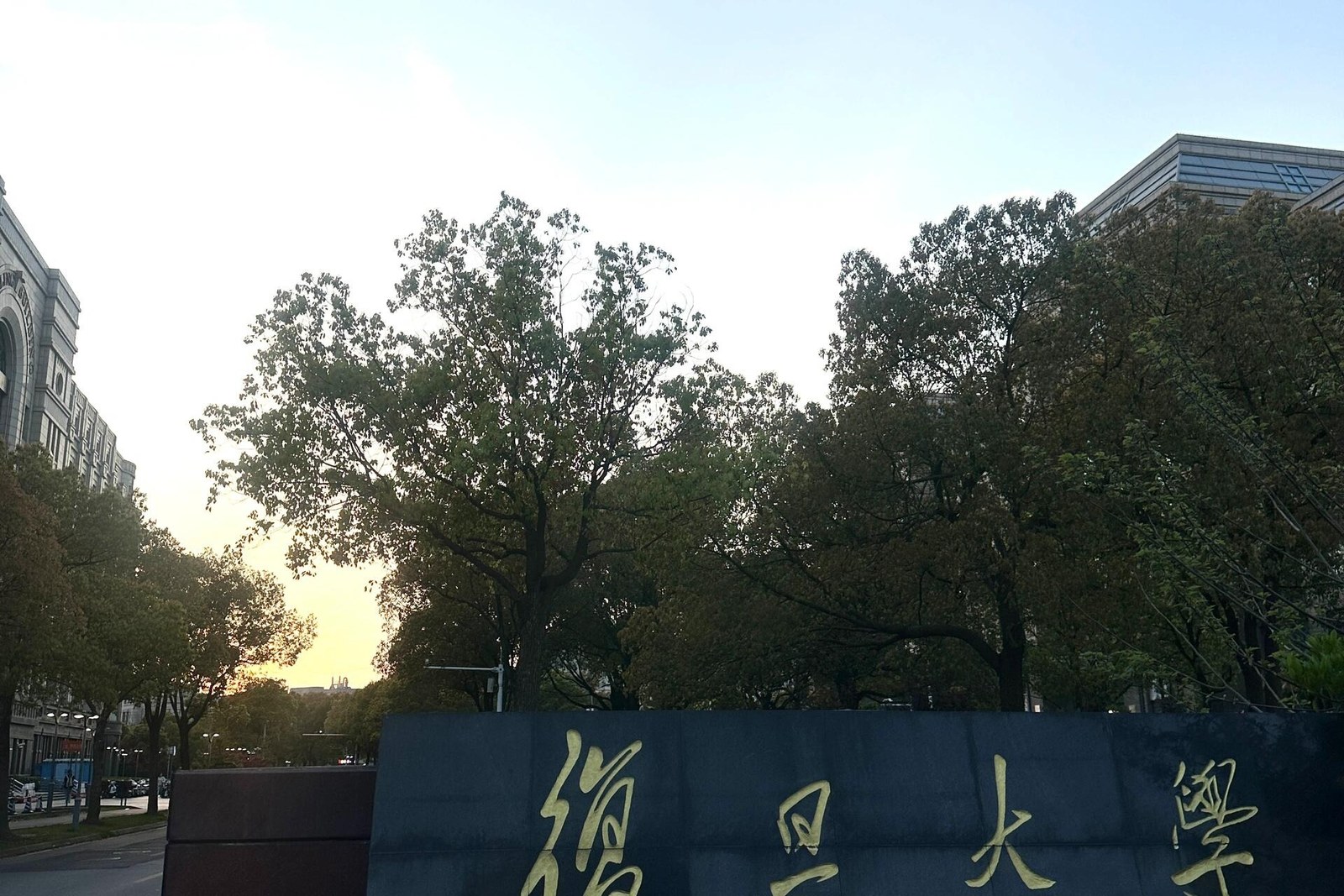
The self-aware postscript: I was reading a bench plaque in 燕园 Yànyuán one weekday afternoon when a graduate student eating her lunch volunteered the local view. “Visitors photograph the towers and leave,” she said, “but this garden is why people stay four years — every exam season someone hangs a wish on that tree, and every graduation someone takes it down smiling”. That is the visit in miniature. From the garden path, looking back through the trees toward the twin towers, the campus holds both halves of itself in one frame — a classical scholar’s garden and a skyscraper faculty, the composition no graduation photo quite catches. 复旦大学 Fùdàn Dàxué suits whoever treats it as a living university with a century of story first and a photo landmark second, and disappoints anyone expecting a ticketed scenic area with a visitor centre, a route map and nothing but quiet.
Nearly everything else on this Yangpu list lies within a short ride: the riverfront stairs and cranes of 杨浦滨江 Yángpǔ Bīnjiāng Yangpu Riverside open along 杨树浦路 Yángshùpǔ Lù Yangshupu Road to the south, the castle-like plant of 杨树浦水厂 Yángshùpǔ Shuǐchǎng Yangshupu Waterworks stands on that same bank at Yangshupu Road 828, the sawtooth sheds of 上海国际时尚中心 Shànghǎi Guójì Shíshàng Zhōngxīn Shanghai International Fashion Center wait downstream at Yangshupu Road 2866, and the riverside woods of 共青森林公园 Gòngqīng Sēnlín Gōngyuán Gongqing Forest Park spread north-east along 军工路 Jūngōng Lù Jungong Road — all inside the same 杨浦区 Yángpǔ Qū Yangpu District whose oldest academic name this campus still carries.
Practicalities
- Rating: ★★★★☆ — a century-old university campus with twin-tower landmark scale and two genuine gardens; book ahead, walk slowly, and expect a campus rather than an attraction.
- Tickets: Free to visit with advance registration or reservation for campus entry (worth confirming the details for the current booking procedure and any limits on visitor numbers).
- Address: 复旦大学 Fùdàn Dàxué, 邯郸路 Hándān Lù Handan Road 220, 杨浦区 Yángpǔ Qū Yangpu District, Shanghai — a short walk from Fudan University station on Metro Lines 10 and 18.
- Time needed: An hour and a half to two hours for the towers, the gardens and the main axis; half a day if you soak up the campus atmosphere properly.
Words and Names
复旦大学 Fùdàn Dàxué Fudan University · 复旦公学 Fùdàn Gōngxué Fudan Public School, the 1905 predecessor · 日月光华,旦复旦兮 rìyuè guānghuá, dànfùdàn xī the classical line from which the name comes · 光华楼 Guānghuá Lóu Guanghua Towers, the twin-tower centenary landmark · 燕园 Yànyuán Yanyuan, the rock-and-pond garden · 曦园 Xīyuán Xiyuan, the smaller classical garden · 校庆 xiàoqìng university anniversary, the 2005 centenary · 预约 yùyuē advance reservation for campus entry · 邯郸路 Hándān Lù Handan Road · 复旦大学站 Fùdàn Dàxué Zhàn Fudan University station · 杨浦区 Yángpǔ Qū Yangpu District
flowcloud would say that 复旦大学 Fùdàn Dàxué is a university that turned a line of poetry into an institution — founded in 1905 as 复旦公学 Fùdàn Gōngxué the Fudan Public School, one of China’s earliest private higher institutions, named from 「日月光华,旦复旦兮」 and grown into the campus of 光华楼 Guānghuá Lóu the Guanghua Towers, 燕园 Yànyuán Yanyuan and 曦园 Xīyuán Xiyuan at 邯郸路 Hándān Lù Handan Road 220 in 杨浦区 Yángpǔ Qū Yangpu District (worth confirming the details for the current reservation rules for campus visits) — and that the honest move is a booked weekday-afternoon walk entered through 复旦大学站 Fùdàn Dàxué Zhàn Fudan University station on Metro Lines 10 or 18, because the photo-landmark expectation is the poster half and the gardens, the bench plaques and the passing student traffic are the real half, and the campus repays whoever arrives as a guest of a living university rather than a customer of a scenic area. All checked October 2026.
Getting there: Metro Line 10 or 18 to 复旦大学 Fùdàn Dàxué Fudan University station, exit 1 or 2, then a walk to the main gate on 邯郸路 Hándān Lù Handan Road 220 (worth confirming the details for campus visitor booking, which the university uses on busy days); the 光华楼 Guānghuá Lóu Guanghua Towers anchor the skyline. All checked October 2026.