
Fuhoutang, the Zeng Family’s Walled Mansion
富厚堂 fù hòu táng is a walled country seat in a rice village, and it belonged to one of the most consequential men of nineteenth-century China. It stands at 富托村 fù tuō cūn in 荷叶镇 hé yè zhèn, 双峰县 shuāng fēng xiàn, in the far east of 娄底市 lóu dǐ shì where the county runs up against 湘乡 xiāng xiāng, 湘潭 xiāng tán and 衡山 héng shān, and it was built from 1865 as the country house of 曾国藩 zēng guó fān, the Qing general and statesman who put down the Taiping and was made a marquis for it. The family called it 八本堂 bā běn táng first, after the eight maxims Zeng wrote for his household, and the name over the gate was 毅勇侯第 yì yǒng hóu dì, the mansion of the Marquis of Valour. The compound covers more than forty thousand square metres, of which the buildings are nearly ten thousand, and it is a 全国重点文物保护单位, a 4A scenic area and one of the 新潇湘八景.
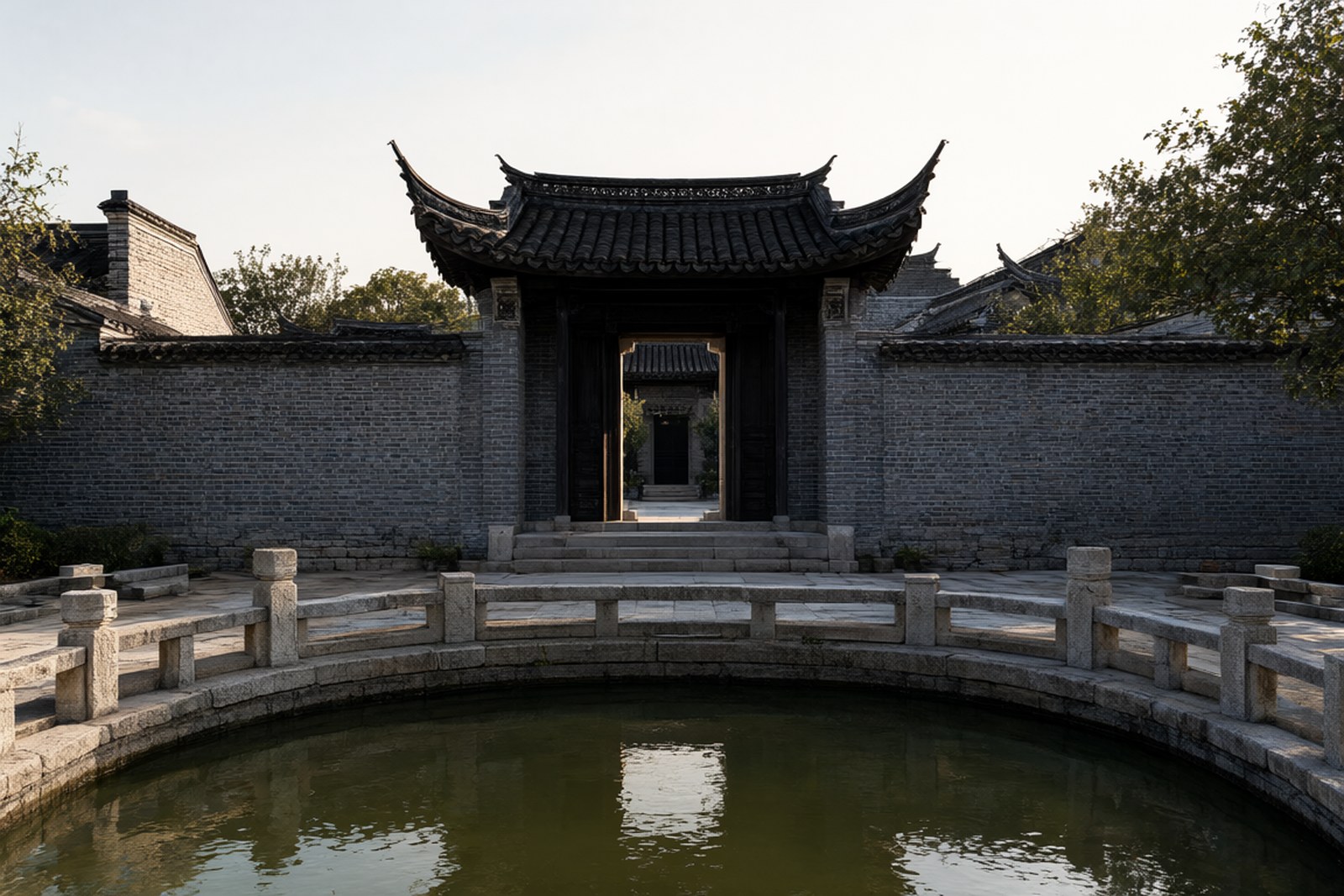
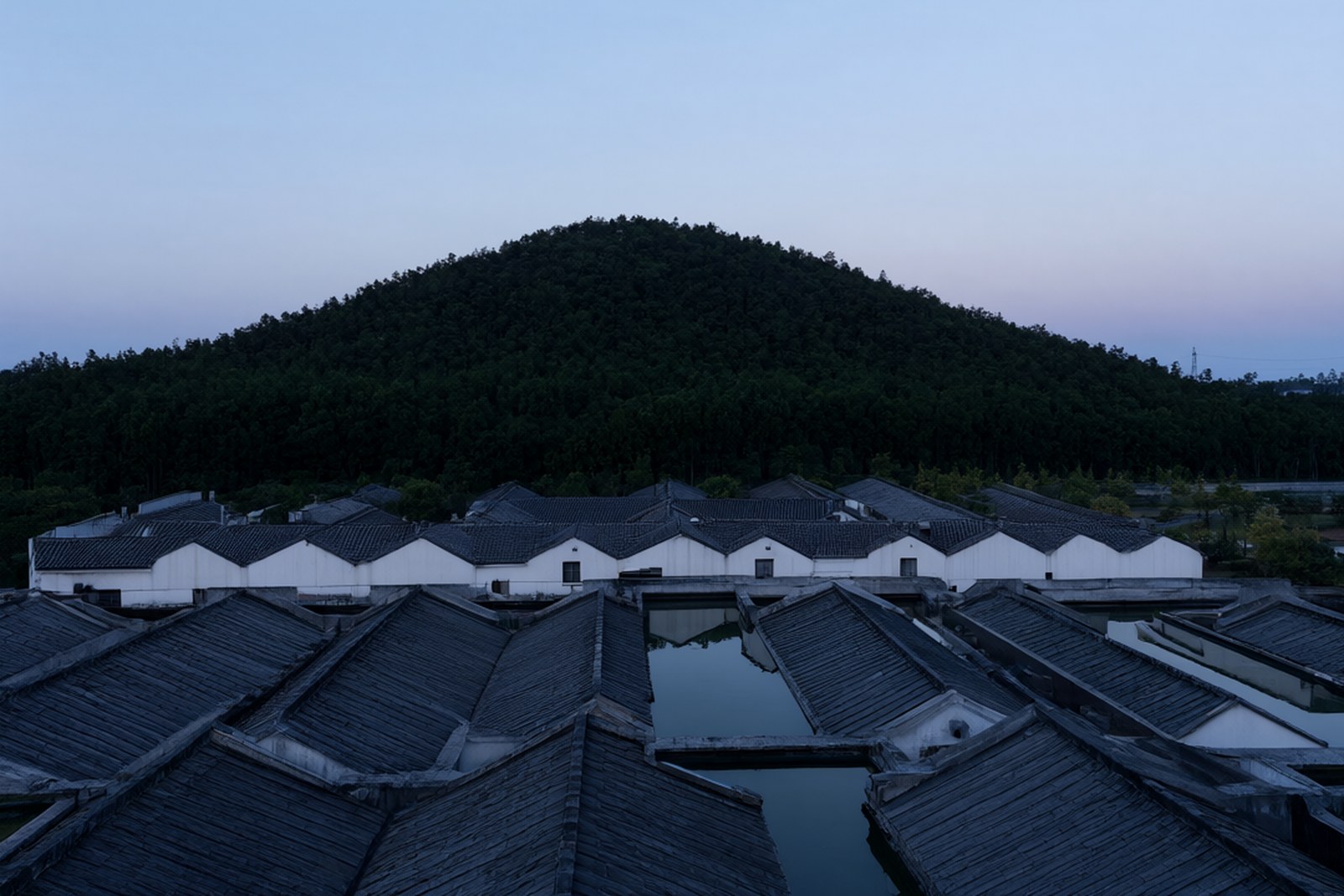
The plan is the first thing to read. You come to the 半月塘 bàn yuè táng, the half-moon pond, which is a 泮池 pàn chí, the crescent of water a scholar’s establishment was expected to have opposite its gate, and the gate stands on a granite platform above it. Behind the gate the buildings run along the axis: the 八本堂 main hall, where the maxims hang in the front room and the tablet given in the 同治 reign, 勋高柱石, merit as high as a pillar of the state, hangs in the rear one; the 思云馆 sī yún guǎn, built in 1857, when Zeng was in mourning for his father and shut himself away to read; and the courtyards around them. The maxims are worth stopping for, because they are the whole of the man in eight lines: reading founded on philology, poetry on tone, the service of parents on keeping them pleased, health on avoiding rage, conduct on not lying, a household on not lying late, office on not taking money, and an army on not troubling the people. The 鳌鱼山 áo yú shān, a half-moon hill, wraps the compound on three sides, so from a distance the house sits inside a curved armchair of wooded ground.
The libraries are why the house is more than a handsome shell. Three separate book buildings stand inside it – 公记书楼 with 求阙斋 qiú què zhāi for Zeng himself, 朴记书楼 with 归朴斋 guī pǔ zhāi for his eldest son 曾纪泽 zēng jì zé, who negotiated with the Russians over Ili, and 方记书楼 with 艺芳馆 yì fāng guǎn for the second son 曾纪鸿 zēng jì hóng – and at its peak the family collection ran past three hundred thousand volumes across the classics, the histories, the philosophers and the collections, local gazetteers and a good deal in European languages, which made it the largest surviving private library in the country. It takes about a quarter of the whole compound, which tells you what the family thought it was for. What a visitor sees now is the rooms rather than the books.
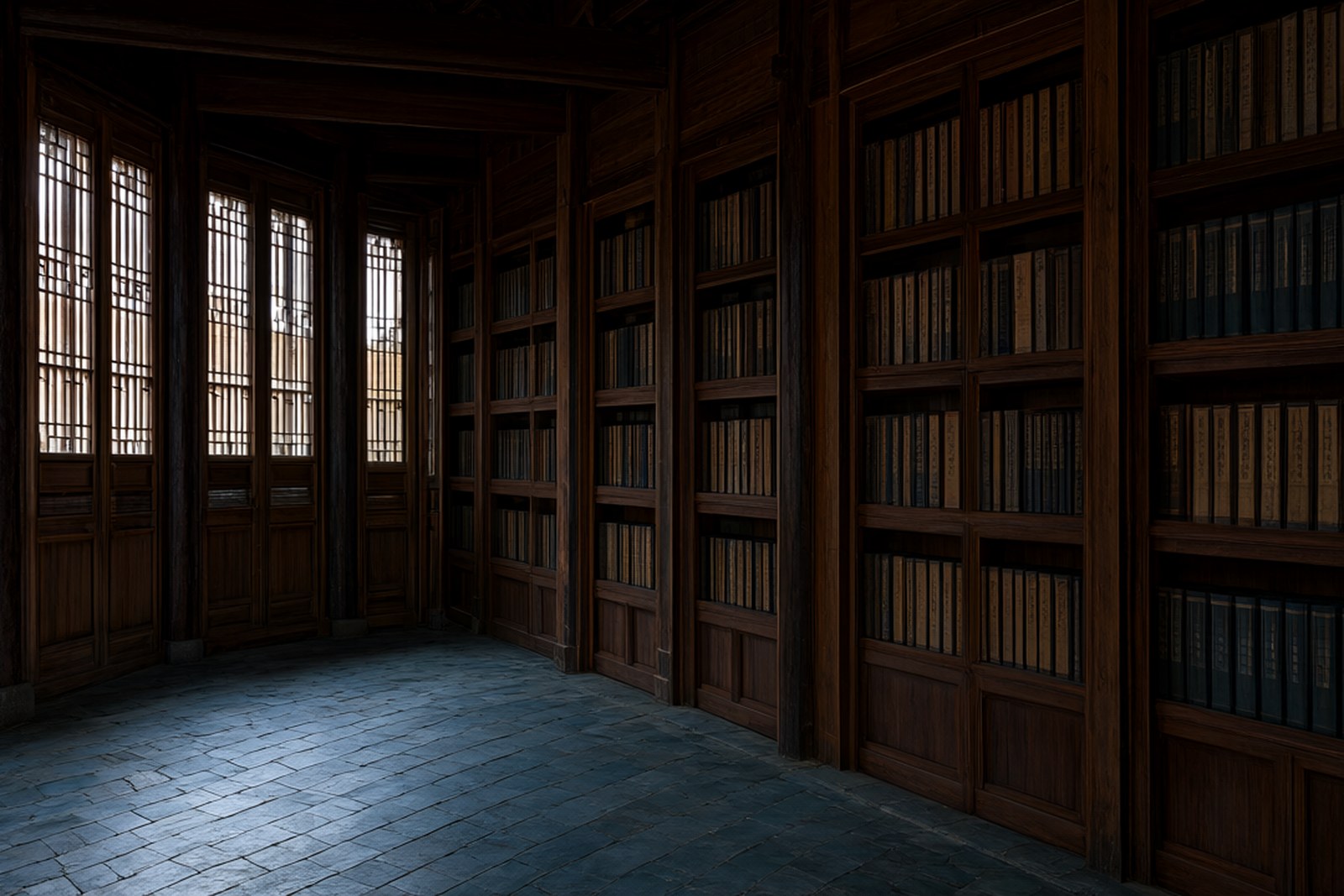
Two or three hours is the right length for 富厚堂 and the light decides the best part of it. The gate and the pond are best in the morning, when the water is still and the reflection of the eaves unbroken; the courtyards are best at midday, when the sun comes down between the roofs and the lattice windows throw the patterns they were built to throw; and the hillside behind is best in the last hour, when the grey tile sits below the trees and the white walls go pink. A guide is worth the money – eighty yuan a session for 富厚堂 and sixty for 白玉堂, the house ten minutes away where Zeng was born – because without one the courtyards read as architecture and the story stays in the display cases.
Practicalities
Tickets. The mansion alone is in the fifty-to-sixty-yuan band and the joint ticket that adds 白玉堂, the birth house ten minutes away, is around seventy. Students in full-time education, visitors aged fourteen to eighteen and the sixty-to-sixty-four bracket pay half, and anyone under fourteen or over sixty-five goes free with the right document.
Opening hours. The hours follow the Chinese tourist year rather than the calendar: from the first of May to the end of October the site opens at eight and closes at six, and from the first of November to the end of April it opens at half past eight and closes at half past five, with the last ticket sold about half an hour before the gate shuts. The interiors close first in the afternoon, so an arrival after half past three in winter is a walk in the yards and not much else.
Getting there. 富厚堂 is at 富托村 fù tuō cūn in 荷叶镇 hé yè zhèn, 双峰县, in the east of 娄底市 on the 沪昆 hù kūn and 岳临 yuè lín expressways; leave at the 白果 bái guǒ exit and drive about fifteen kilometres into the village, which puts the site roughly an hour from 娄底 lóu dǐ and an hour and a half from 长沙 cháng shā. Without a car the route is the bus from 娄底火车站 into the coach station and the 荷叶镇 minibus from there, which drops you a few minutes’ walk from the gate and runs a few times a day rather than hourly.
Closing day. No weekly closing day is published, and the attraction’s own listing gives opening hours for every day of the week, so the working assumption is that it opens all year. Local write-ups occasionally mention a maintenance closure on Mondays in the low season, and the county has shut the halls for restoration work without much notice, so telephone ahead if you are travelling a long way.
flowcloud would say that the most revealing thing about the house is not the general who built it but the room he built for books, and that a walled compound of forty thousand square metres with a library taking up a quarter of the plan is what a man builds when he believes the army is the interruption and the reading is the life.
Getting there: 富厚堂 is at 富托村 fù tuō cūn in 荷叶镇 hé yè zhèn, 双峰县, 娄底市, in the east of the county on the road out towards 衡山 héng shān; by car take the expressway to the 白果 bái guǒ exit and follow the signs for about fifteen kilometres, which is about an hour from 娄底 and an hour and a half from 长沙 cháng shā. By public transport take the bus from 娄底火车站 into the 娄底 coach station and the 荷叶镇 minibus from there, which stops a few minutes’ walk from the gate.