
甘坑 Gānkēng is a Hakka village in the hills of 龙岗 Lónggǎng, on the old road between 布吉 Bùjí and 平湖 Pínghú, and it is about three hundred and fifty years old. The village grew up around a stream in a valley that was easy to defend and awkward to reach, which is the standard Hakka logic in this part of Guangdong, and for most of its history it was known for two things: the 甘坑凉帽 Gānkēng liáng mào, the flat bamboo sun hat that the village’s women wove and sold across the region, and the 甘坑炮楼 Gānkēng pào lóu, the squat defensive tower that still stands at the top of the settlement. By the 2000s the houses were emptying and several had fallen down, and from 2014 the district and the 华侨城 group rebuilt the village as a heritage town: the surviving 客家 Kèjiā houses restored, the collapsed ones reconstructed in the same grey brick and tile, and a handful of Qing-dynasty buildings moved in from elsewhere in the province, including the 状元府 zhuàng yuán fǔ, the residence of a scholar who placed first in the imperial examination.
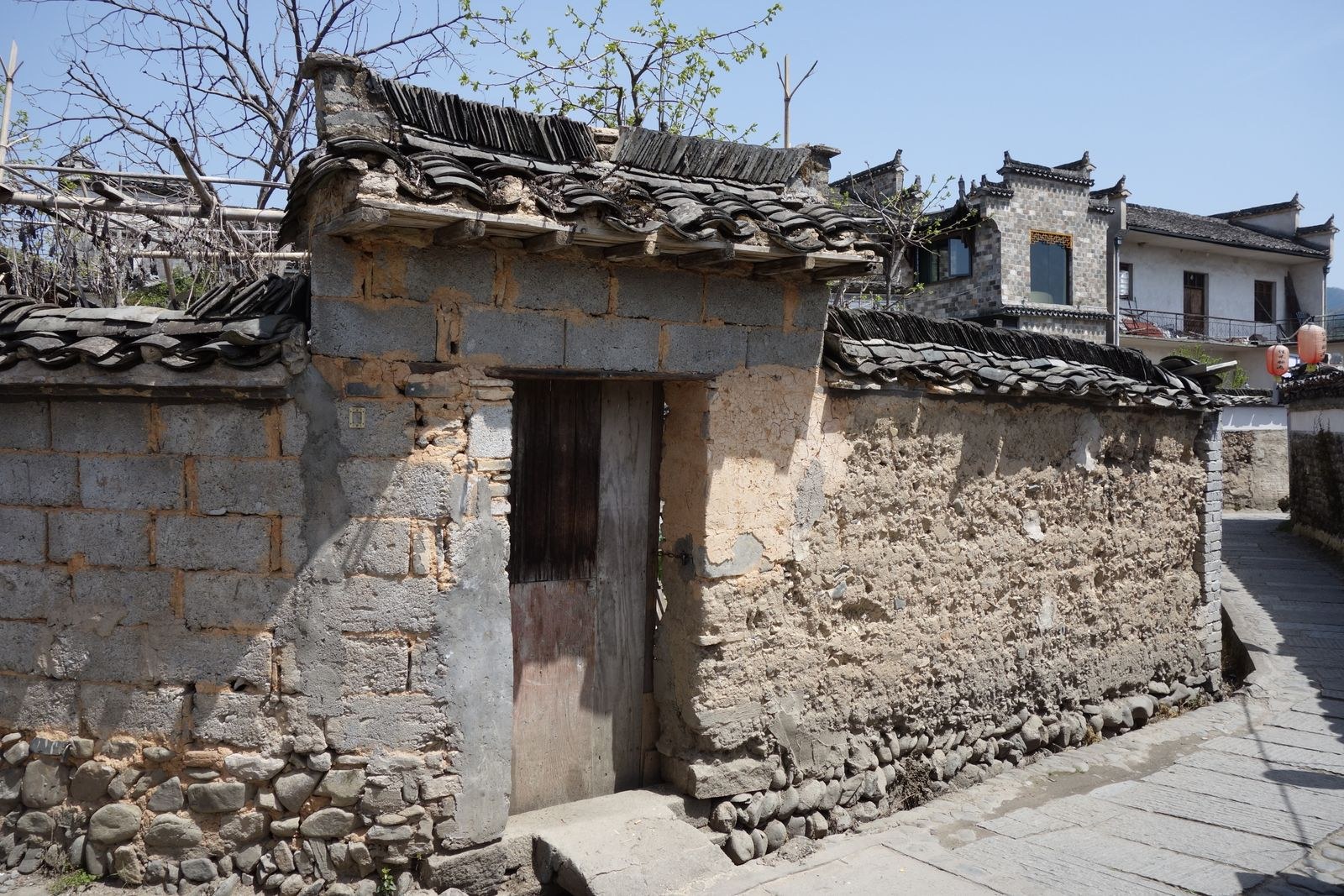
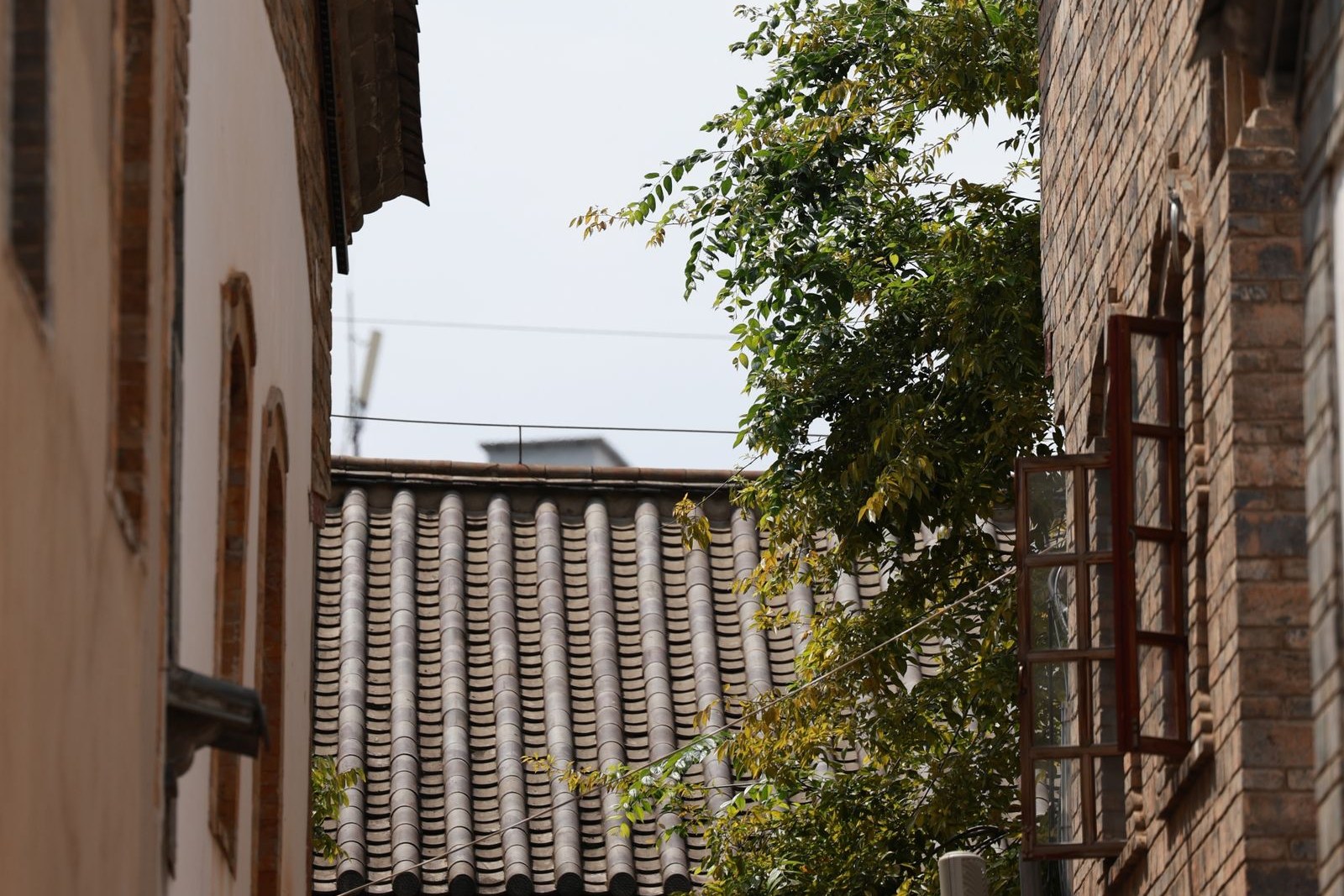
The result is half heritage site and half weekend market, and it is honest about which is which. The northern end, around the 炮楼 pào lóu and the old wells, is the part that is actually old; the lanes here are stone-paved, the walls are grey brick to shoulder height with rammed earth above, and the houses are laid out around small courtyards in the Hakka manner, with the ancestral hall on the axis. The southern half is the rebuilt section, and it contains the 小凉帽 Xiǎo Liáng Mào theme, which takes the village’s bamboo hat as its mascot and runs a children’s绘本馆 huìběn guǎn, picture-book library, a small theatre and a cluster of workshops selling bamboo weaving, indigo dyeing and rice wine. That is a commercial decision and it is what pays for the restoration of the northern end, so it is hard to resent; the thing to do is to walk the old lanes first and the rebuilt ones second.
The 凉帽 is worth knowing about before you arrive, because it is the reason the village exists. A 凉帽 is a flat disc of woven bamboo about sixty centimetres across with a hole in the middle and a fringe of dyed cloth hanging from the brim, worn by Hakka women working in the fields as a combination of sunshade, rain cover and, in its decorated form, a marker of marital status: unmarried women wore a red fringe, married women black, and the village’s industry was making them for the whole of 宝安 Bǎo’ān and beyond. The village’s own workshop still weaves them and you can try the weave, which takes about an hour and produces something recognisably a hat and not quite a good one. The other local thing to eat is 客家盆菜 Kèjiā pén cài and the 客家酿豆腐 that the restaurants along the lane all serve, neither of them remarkable and both of them correct.
Practicalities
Tickets. Free entry to the village and the lanes. Several of the indoor attractions charge separately, and the common package covering the picture-book library, the theatre and the workshop area runs about ¥60 to ¥90 depending on the season and whether there is a performance that day.
Opening hours. 09:00 to 22:00 daily for the village as a whole. The indoor attractions and the workshops keep shorter hours, generally 10:00 to 18:00, and the theatre’s performances are usually scheduled for the afternoon and early evening, so the programme is worth checking before you buy the package. The evening is when the lanes are lit and the crowds thin, and it is the pleasantest hour to be there.
Closing day. There is no closing day. The village is open every day of the year, and the indoor attractions operate daily except during the Lunar New Year break, when the whole complex closes for a week to ten days around 春节 Chūnjié. Typhoon days close the outdoor lanes.
Getting there. Metro Line 10 to 甘坑站 Gānkēng Zhàn, which puts you a five-minute walk from the north entrance and is by far the easiest approach; the line runs from 福田口岸 Fútián Kǒu’àn through 平湖 Pínghú. By car it is about forty minutes from 福田 Fútián along the 清平高速, with a paid car park at the south side of the village. Several buses along 甘坑路 also stop at the main gate.
Words and Names
甘坑 Gānkēng is the village name; 客家 Kèjiā is Hakka and 围屋 wéi wū an enclosed Hakka house. 凉帽 liáng mào is the flat bamboo sun hat the village wove, 炮楼 pào lóu a defensive tower, and 状元府 zhuàng yuán fǔ the residence of an imperial first-placed scholar, a 状元 zhuàng yuán. 小凉帽 Xiǎo Liáng Mào is the theme built on the hat, 绘本馆 huìběn guǎn a picture-book library, 龙岗 Lónggǎng the district and 布吉 Bùjí and 平湖 Pínghú the neighbouring towns.
Getting there: Metro Line 10 to 甘坑站 Gānkēng Zhàn and walk five minutes north to the entrance; go in the late afternoon so the old lanes around the 炮楼 pào lóu are quiet before the evening lighting brings the crowds back, buy the package only if a performance is on that day, and finish with a bowl of 客家酿豆腐 in one of the lane restaurants.