
Gaochang Ancient City: The Walled Capital of the Fire Land, the Sutra-Podium of Xuanzang and the Donkey-Cart Ruins East of Turpan in Turpan, Xinjiang
断壁犹存玄奘经,残垣尚记故王旗。Duànbì yóu cún Xuánzàng jīng, cányuán shàng jì gù wáng qí – In the broken walls the sutras of Xuanzang still dwell; in the crumbling ramparts the banners of vanished kings keep their post.
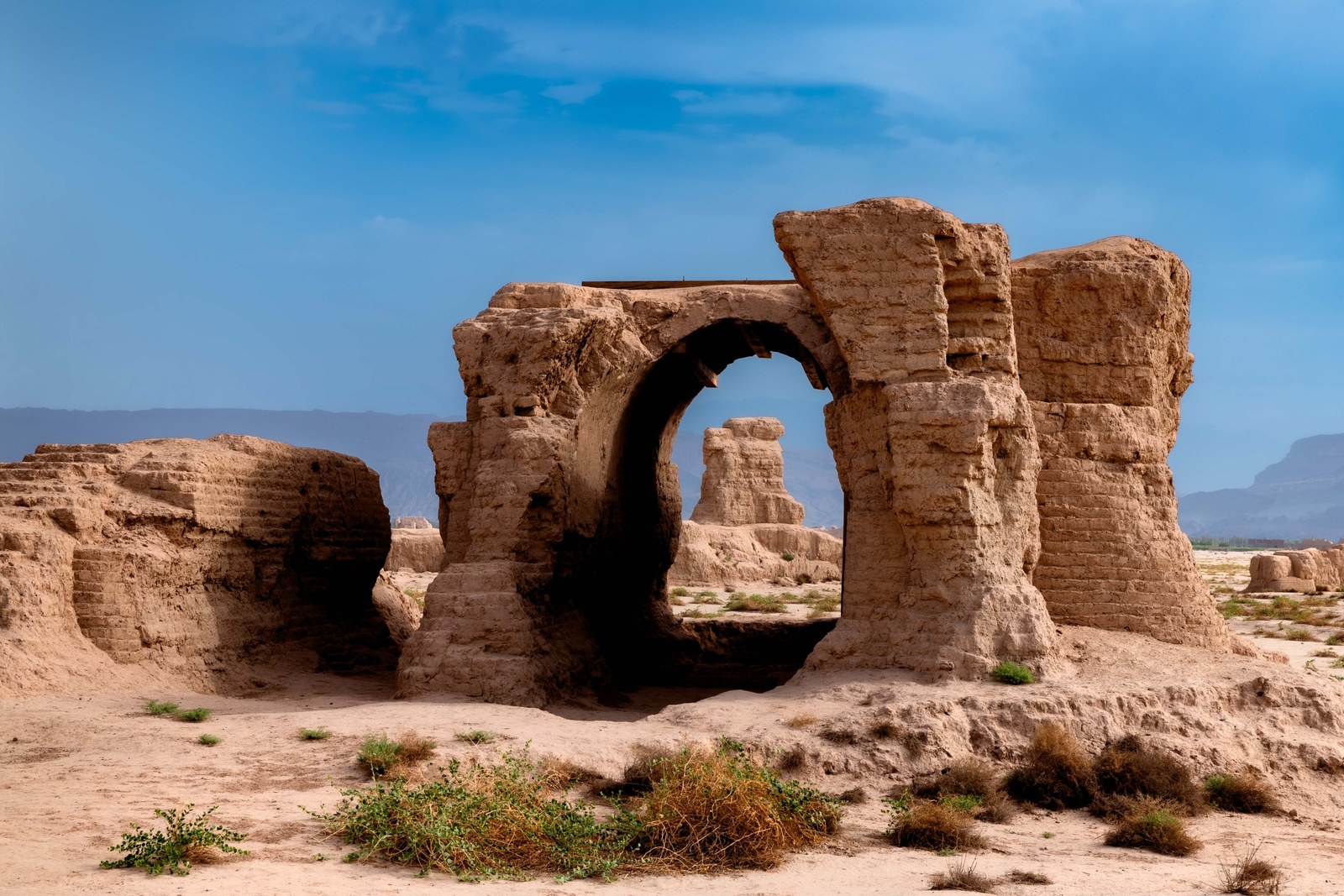
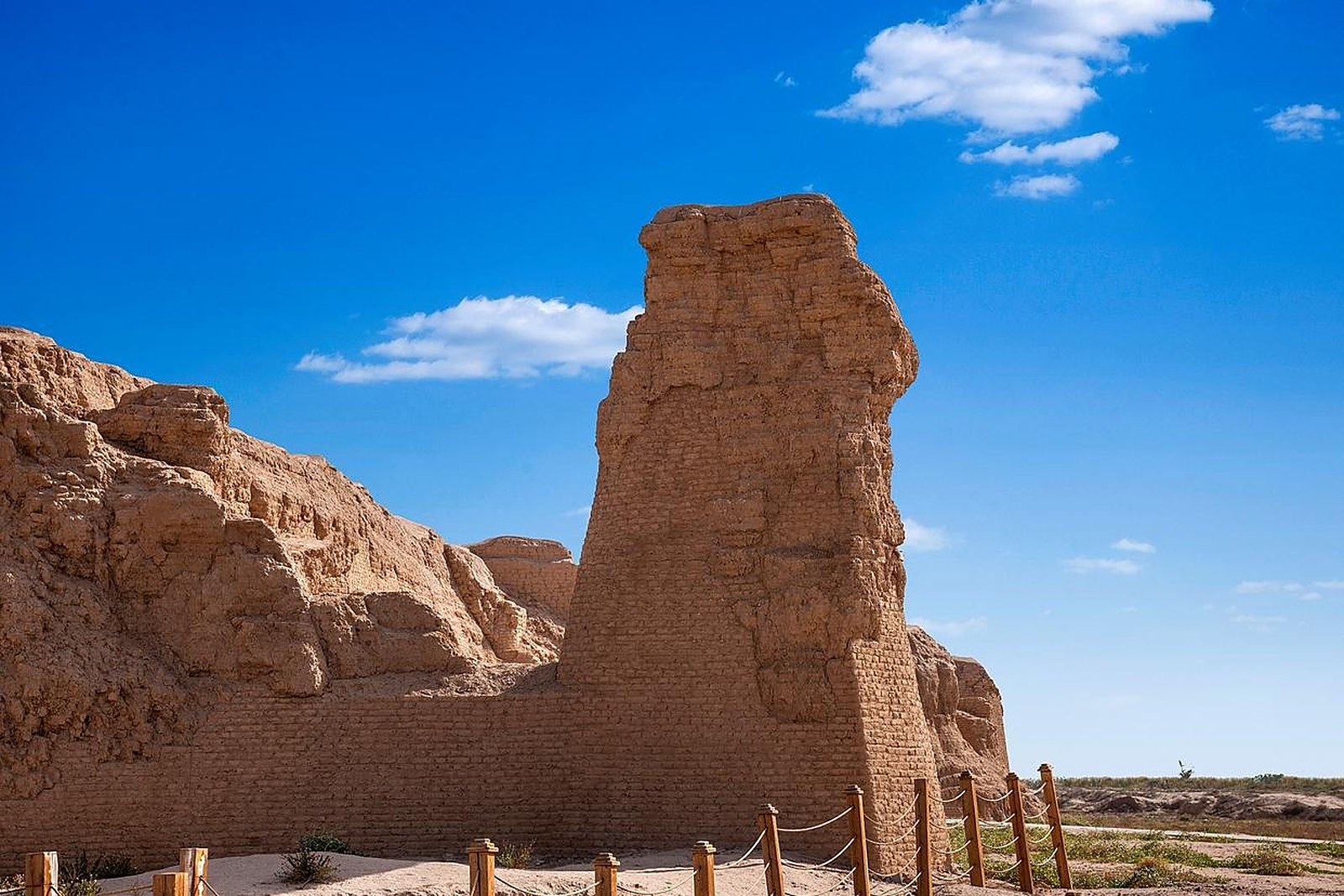
高昌故城 Gāochāng Gùchéng the Gaochang Ancient City lies about forty kilometres east of 吐鲁番市 Tǔlǔfān Shì Turpan City near 三堡乡 Sānbǎo Xiāng Sanbao, a rammed-earth rectangle the size of a small town ringed by wall stumps that the heat has baked the colour of terracotta. Where Jiaohe was dug down, Gaochang was built up – an adobe capital founded as a Han garrison station, grown into the seat of the 高昌国 Gāochāng guó Gaochang kingdom, and at its zenith one of the richest stops on the Silk Road, with Buddhist monasteries inside the walls and caravans watering outside them (worth confirming the details for the inner-site routes, which the conservation rules reshuffle as the earthen structures settle). The city’s most retold hour belongs to the pilgrim monk 玄奘 Xuánzàng Xuanzang, who lectured here for a season before walking on to India, and whose host king tried so hard to keep him that the monk answered with a hunger strike – a story the site tells in a dedicated hall. The register is expanse and heat: a wagon track between wall fragments, poplar shade at the gate, and the Flaming Mountains standing guard on the horizon.
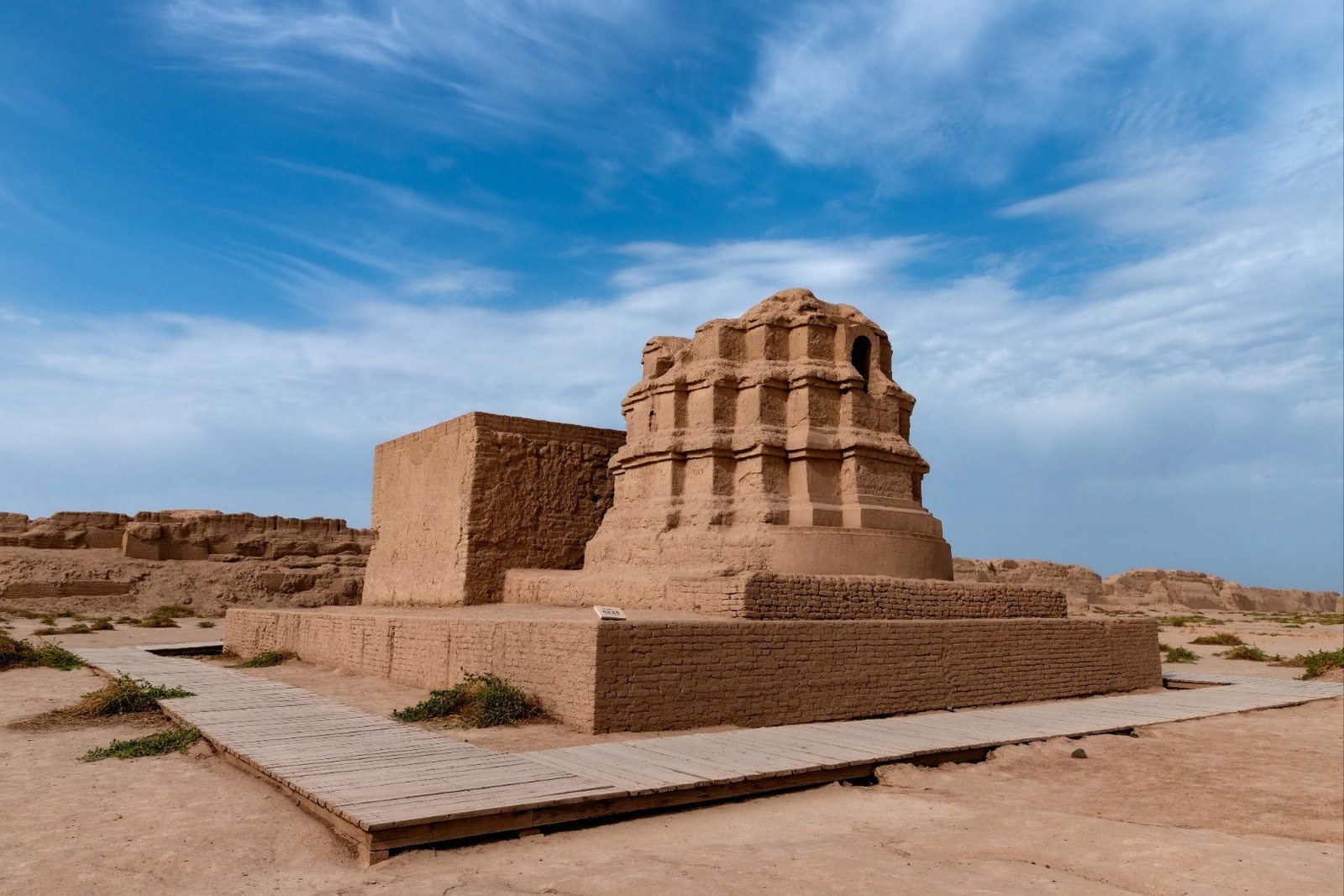
Two crowds tour the perimeter: history travellers who hire the donkey carts – the traditional, bumpy, entirely correct way to cover the distances between the outer walls, the inner city and the sutra podium – and road-trippers folding the ruin into the drive east toward Hami (worth confirming the details for the cart fares, which are set at the site gate). The stock answer in kind: the grandest walled ruin in the region, a lecture hall where the most famous pilgrim in Chinese letters once spoke, and a morning that makes the phrase “the Fire Land” feel literal rather than literary.
Call it honestly: Gaochang in the wrong hour is a kiln – noon here can push the ground past the temperature that footwear forgives, and the walls, photogenic as they are, offer no shelter whatsoever (worth confirming your morning start against the heat advisories, because by late morning the carts are carrying people back faster than they carried them in). What the map repays is the early light: come at opening time, when the walls throw long shadows and the carts still roll cool, and the inner-city rise – the royal quarter – reads like a diagram of a kingdom that traded in faith and fruit. Against that: the site is the most atmospheric ruin in Turpan precisely because nothing has been prettified, the donkey-cart ride is half the pleasure and all of the smell, and the mountains behind make every wall a staged backdrop. Come at dawn, bring more water than seems reasonable, and let the heat police your timetable – the city rewarded those who respected it in Xuanzang’s day and does so still.
Practicalities
Nearly everything else on this Turpan list trades a different mood on the same map: choose 交河故城 Jiāohé Gùchéng Jiaohe Ancient City for the river-locked earth town, 葡萄沟 Pútáo Gōu Grape Valley for the vine-shaded cool, 火焰山 Huǒyànshān the Flaming Mountains for the red ridges on Gaochang’s doorstep and 坎儿井 Kǎn’érjǐng the Karez Wells for the waterworks beneath the oasis – four more doors into the same 吐鲁番市 Tǔlǔfān Shì Turpan City. Once the day is planned, our Turpan food map fills the eating hours.
Practicalities
Words and Names
flowcloud would say that a Gaochang morning is bought for the walls and the carts – dawn terracotta to noon kiln in the November 2026 snapshot, all worth confirming the details – and that the honest move is to start early and hire the cart, because the fire land gives exactly what the hour deserves, keep the inner city and the sutra podium as the plan, and let the mountains watch the pilgrim’s road empty behind you. All checked November 2026.
Getting there: The city walls stand about forty kilometres east of Turpan near 三堡乡 Sānbǎo Xiāng Sanbao, on the highway toward Hami – buses toward Shanshan drop at the turnoff, and donkey carts ferry visitors between the gates and the ruins inside (worth confirming the details for the cart fare, which is set at the site); the sisal-thorn heat makes mornings the sane choice. All checked November 2026.