
The landscape at 高椅岭 Gāoyǐlǐng (Gaoyiling) looks less like something a mountain range would do and more like a painting that decided to become real. In the hills above 郴州 Chēnzhōu, in southern Hunan, a chain of smooth red-rock ridges curves and coils through a valley of jade-green lakes, each ridge capped with a thin line of green vegetation. From high up, it reads as a vast, rippling ribbon of rust and emerald.
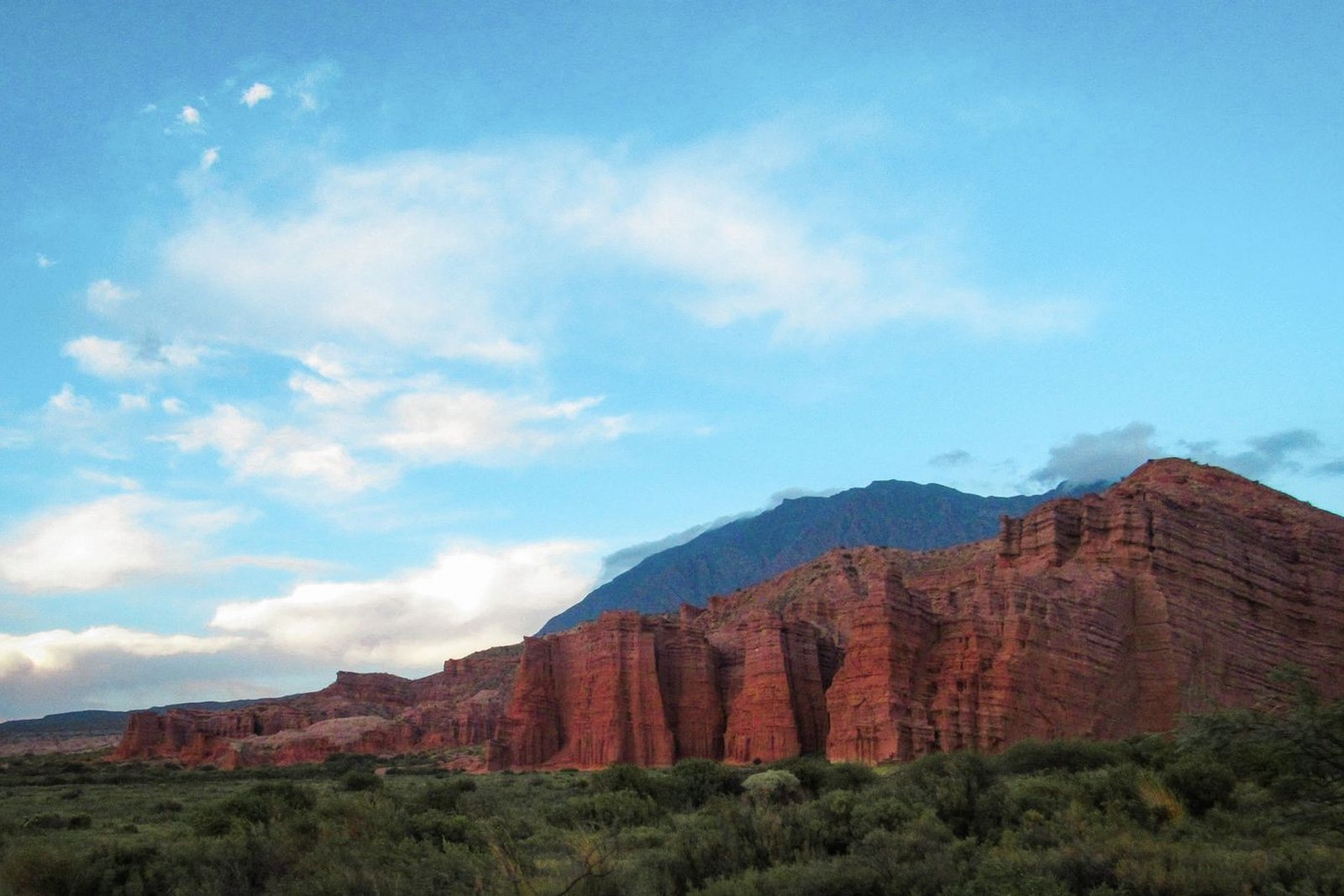
This is danxia landform — the name given to a type of red sandstone landscape, unique to China, where soft rock has been carved by wind and water into dramatic cliffs, pillars and ridges. Gaoyiling is one of the more remarkable examples of it, and it is still refreshingly quiet compared with the better-known danxia sites elsewhere in the country.
The name is charming. 高椅岭 Gāoyǐlǐng literally means “High Chair Ridge,” and locals will tell you that, seen just right, the main rock formation resembles a great chair — an image that makes more sense once you are standing on the viewing deck, looking down at the curving arms of stone.
What makes it special
Where many danxia sites rise as isolated towers, Gaoyiling’s red rock forms long, connected ridges that snake across the landscape. The stone is textured, layered, worn into rounded forms rather than sharp peaks, and the contrast with the green lakes that fill the gaps between the ridges is what makes the place so striking.
The water is the quiet star. Where the ridges fold together they trap small, deep-green pools and reservoir arms that trip over one another, so the whole scene looks like a jade necklace strung between the red rock. On a clear day the reflection doubles the effect.
The walk
There is a well-maintained path that follows the crest of the ridges, and it is the reason people come. The trail climbs over the rounded rock, sometimes hugging the edge of a cliff, sometimes dropping to a lake shore, and it rewards you with a new angle at every turn. It is not a hard walk, but it is a long one if you stop to photograph everything, which you will.
The best light comes in the morning, when the low sun turns the red rock to burnt orange, and in the late afternoon, when the valleys fill with shadow and the water glows deepest. Midday washes the colours out a little.
Practicalities
The scenic area is a short drive from 郴州 Chēnzhōu city, which is itself reachable by high-speed rail — the Guangzhou–Changsha line stops there, making it an easy stop between the two big cities. From the entrance, it is a moderate hike to the main viewpoints; there is also a shuttle for those who prefer not to walk the whole loop.
Getting there: 高椅岭 Gāoyǐlǐng is near 郴州 Chēnzhōu in southern Hunan, about an hour from the city by road, and 郴州 is on the high-speed rail line between 广州 Guǎngzhōu and 长沙 Chángshā. The scenic area is open year-round, and tickets are modest, a few tens of yuan. Allow at least half a day to walk the ridge trails, and go early in the morning or late in the afternoon for the best light. Flowcloud would say that Gaoyiling is proof that China’s most beautiful landscapes are often the ones that have not yet made it onto everyone’s list. Take the quieter road, and let the red rock tell you why.