
冼太庙 Xiǎn tài miào is a temple to 冼夫人 Xiǎn fū rén, the woman who held this coast together across three dynasties, and the principal one of them stands in the middle of 高州市 Gāo zhōu shì at 光明路 Guāng míng lù. There are dozens of halls to her in the county – in 长坡, in 大坡, in 根子, in 沙田, at the foot of 浮山岭 – because she is not a national saint but a local ancestor, and every cluster of villages that claimed a connection to her built its own. The town’s is the largest and the busiest, a walled courtyard with a gate, a hall and her image, and the practice around it is closer to a family anniversary than to a religious service.
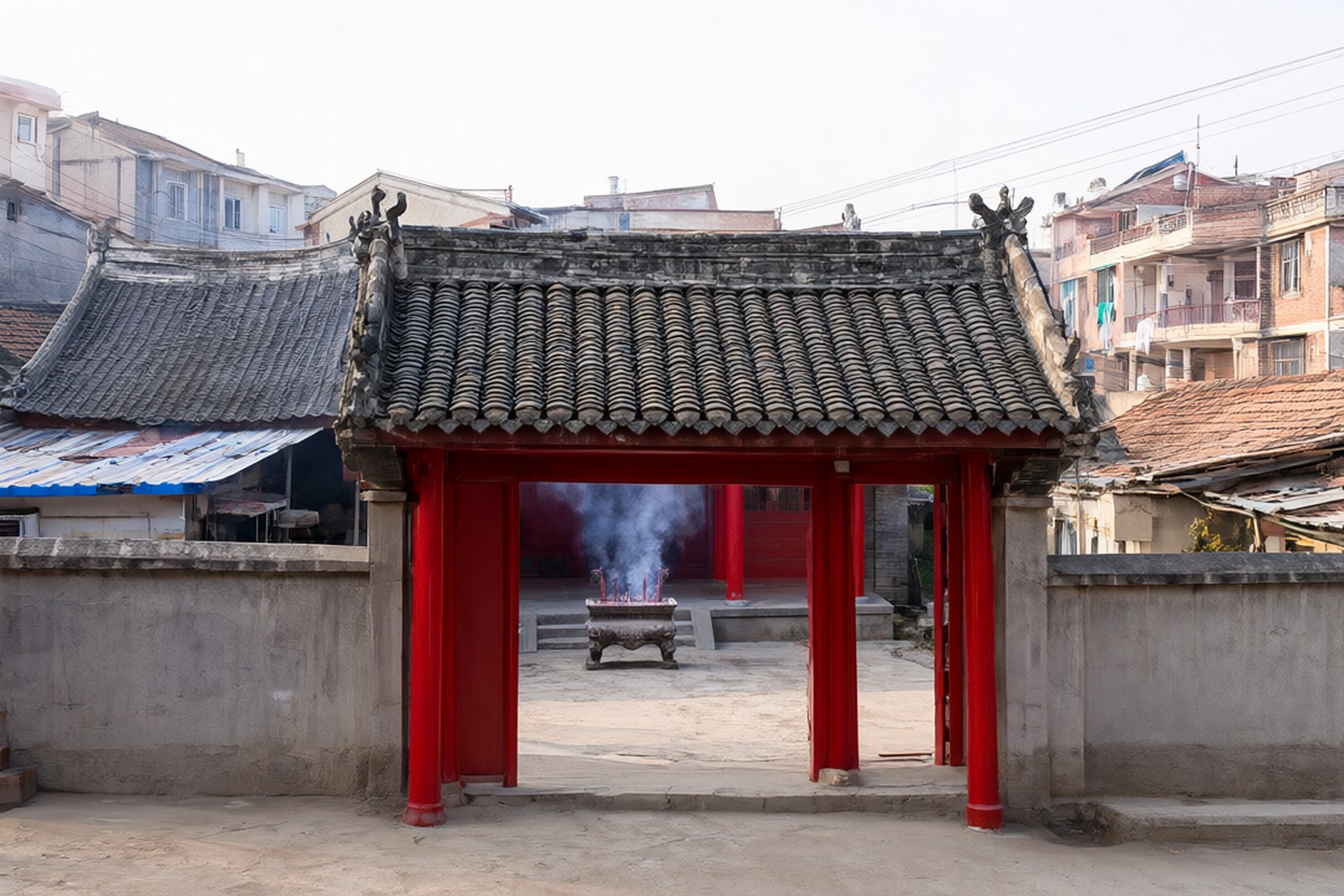
What she did was keep the peace. 冼夫人 is recorded as having lived from about the year 512 to 602, a leader of the 俚 Lǐ people of 高凉 Gāo liáng, the region that now covers this part of western 广东; she married 冯宝 Féng Bǎo, the imperial appointee as governor, and spent the following decades doing the thing that mattered most in a period of dynastic collapse, which was refusing to secede. Through the Liang, the Chen and the Sui she kept the south-western frontier inside the empire and kept the empire’s armies out of it, and the traditional accounts credit her with putting down revolts on both sides of that line rather than profiting from them. The Sui court gave her the title 谯国夫人 Qiáo guó fū rén, and the modern description of her that everybody quotes is the one attributed to 周恩来 Zhōu Ēn lái, who called her China’s first woman hero. Her fame in the province is disproportionate to what most people outside it know of her: she is the subject of a folk religion, a fleet of temples, an opera cycle and a television drama, and she is the reason 高州 says 高凉 at all.
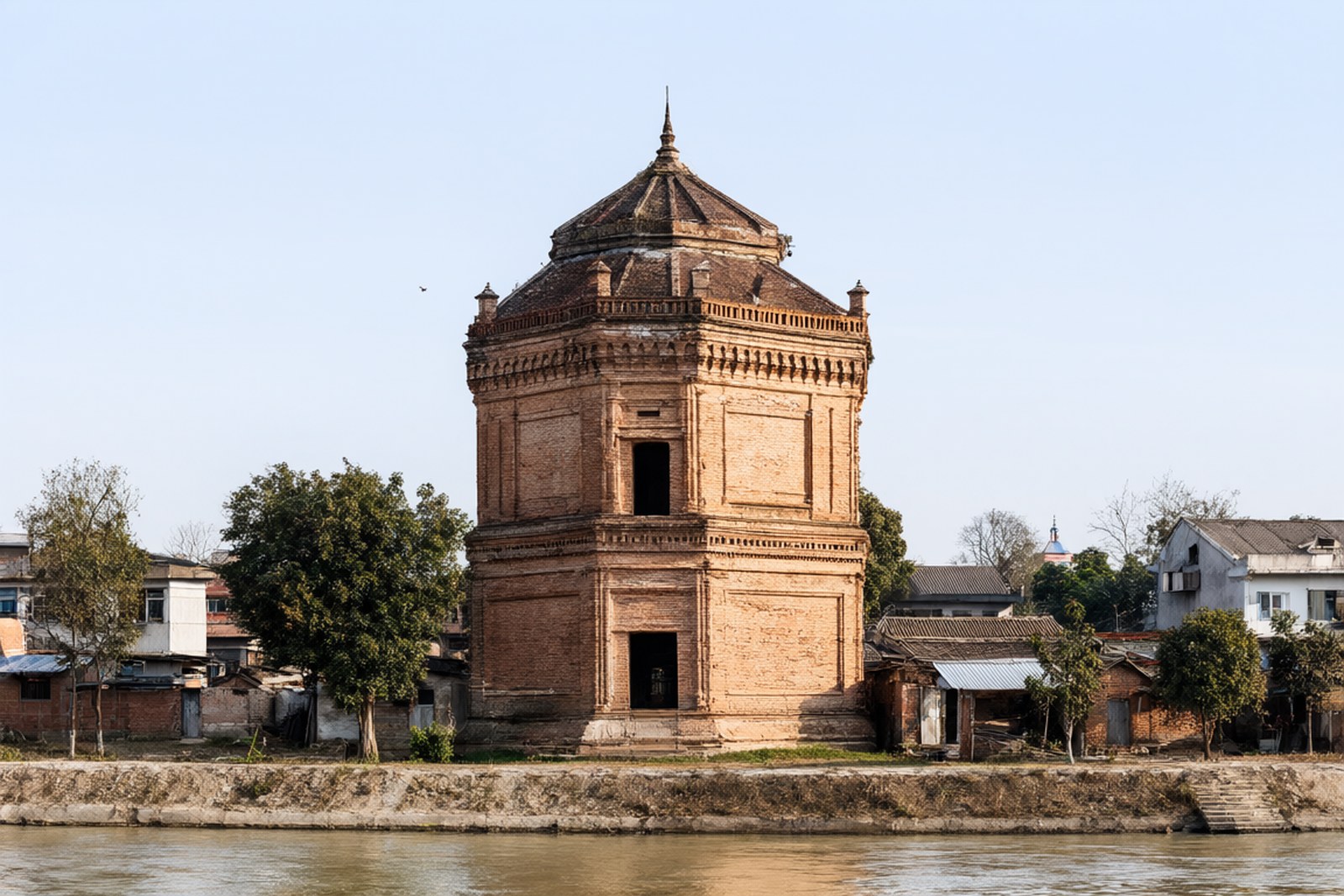
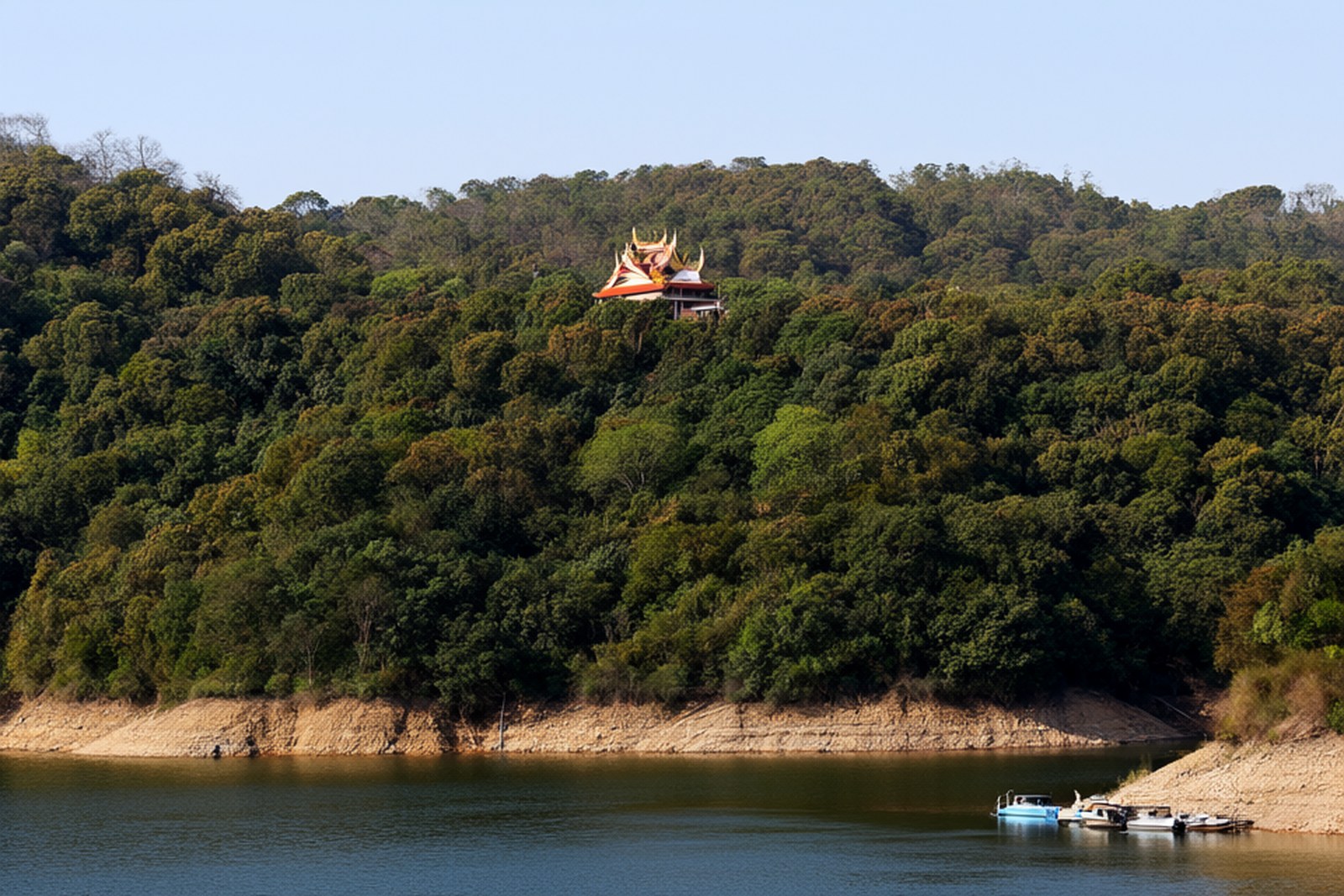
The temple in the town is the anchor of a small historical quarter and the rest of it is a morning’s walk. 宝光塔 Bǎo guāng tǎ, the pagoda, stands a few streets away on the 鉴江 Jiàn jiāng; it is the county’s landmark, an octagonal brick tower of the Ming period, and it is visible from most of the old town. Between them are the streets of the county seat with its own memorial halls and academies, and the 浮山岭 Fú shān lǐng, the ridge to the south-east, has another hall to her on its slopes above the lychee orchards of 根子镇. 长坡镇 Cháng pō zhèn, half an hour north, has the 玉湖 Yù hú, the reservoir, formed by damming the 鉴江’s headwaters, with wooded shores and a 冼太庙 of its own on the hill above the water.
The town’s own food is worth the visit on its own terms. 高州 eats the 高凉 kitchen: poached chicken, river fish, the lychee trees’ fruit in season, and a set of dishes built on the county’s orchards and its pigs. The market near the temple does the same cooking in volume and cheaply. What the temple gives a visitor who has no interest in religion is the clearest look available at how this part of the province understands its own history: not through an emperor or a general or a poet, but through a woman who married into the administration and then spent ninety years keeping it from falling apart. The county’s other attractions – the 贡园 at 根子镇, the reservoir at 长坡 – are all within an hour, which makes 高州 a full day rather than a stop.
Practicalities
Tickets. Admission to the 冼太庙 is free, as it is at the other halls to her in the county, with donations and incense money at the worshipper’s discretion; the pagoda and the reservoir charge nothing or a token sum. The lychee garden at 根子镇 is an open site and free.
Opening hours. The temple keeps the long daylight hours of a working Chinese temple, roughly eight in the morning to six in the evening, and does not close for lunch. It is busiest on the anniversaries of her birth and death and during the lunar festivals, when the courtyard fills and the smoke is thick; a weekday morning is quiet.
Getting there. The temple is at 光明路 Guāng míng lù in 高州市 Gāo zhōu shì, in the west of 茂名市, about an hour by road from the centre of 茂名 and about twenty-five kilometres from 根子镇; 茂名站 Mào míng zhàn on the 深湛 railway is the nearest railhead and 高州 is on the coach network from the city. The pagoda and the old town are within walking distance of the temple.
Closing day. There is no closing day; the temple is open every day of the year, including the public holidays when the rest of the town’s offices shut, because a temple to a local ancestor does not observe an administrative calendar. The 贡园 and the reservoir are likewise open all year, though the lychee garden is at its most useful in the six weeks from late May.
flowcloud would say that a county which built dozens of temples to a woman who lived ninety years and spent most of them refusing to let her corner of the empire fall apart, and then made her the subject of an opera cycle, has chosen its local hero rather well.
Getting there: the 冼太庙 is on 光明路 Guāng míng lù in the centre of 高州市 Gāo zhōu shì, in the west of 茂名市, about an hour by road from the centre of 茂名 and twenty to thirty minutes from 根子镇; 茂名站 Mào míng zhàn on the 深湛 railway is the nearest railhead and there are coaches from the city, and the pagoda, the old town and the market are all within a short walk of the temple gate.