
Beijing Garden Expo Park: The 2013 Garden Expo Grounds, Jinxiu Valley and China Garden Museum of Fengtai District, Beijing
荒谷填成锦绣地,百园汇作永定春。Huāng gǔ tián chéng jǐnxiù dì, bǎi yuán huì zuò Yǒngdìng chūn – The waste valley was filled into a ground of brocade; a hundred gardens converge into a Yongding spring.
北京园博园 Běijīng Yuánbóyuán Beijing Garden Expo Park is not a park with a garden in it — it is, plainly put, a world’s fair of gardens that simply never left. Along the old channel of the 永定河 Yǒngdìng Hé Yongding River in west 丰台区 Fēngtái Qū Fengtai District, Beijing, the ninth 中国国际园林博览会 Zhōngguó Guójì Yuánlín Bólǎnhuì China International Garden Expo opened its gates in 2013 on ground the city had spent years using as a quarry and a construction-waste landfill; the deepest pit was terraced, planted and renamed 锦绣谷 Jǐnxiù Gǔ — the Valley of Brocade — so that the fair’s centrepiece was the city’s own rubble, turned inside out. Around it rose dozens of 展园 zhǎnyuán display gardens, one city after another sending its own idea of a court, a bridge, a pavilion and a stand of bamboo or pine, and at the park’s edge 中国园林博物馆 Zhōngguó Yuánlín Bówùguǎn the China Garden Museum opened as the country’s first national museum devoted to the garden as an art. When the fair closed, the gates stayed open: the wetlands along the river stayed wet, the tall 永定塔 Yǒngdìng Tǎ Yongding Tower kept its watch on the ridge, and what you actually visit today is a long green of one regional style after another — a shelf of Chinese gardening you can walk in a morning and argue about for years.
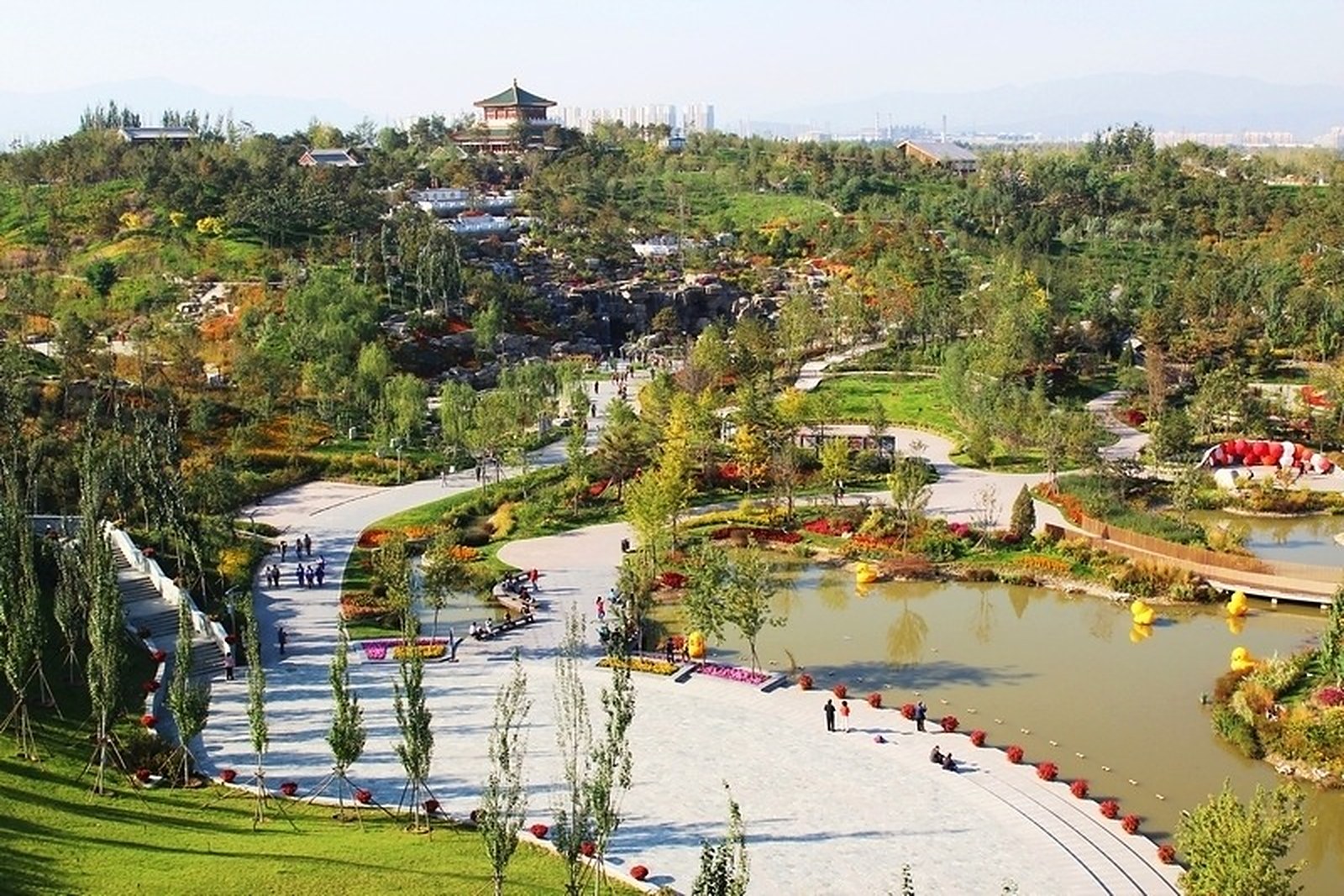
Call it honestly: a big ticketed ground where distance is the first exhibit. Entry is ticketed and the current rate is worth confirming the details before you go (worth confirming the details); the 中国园林博物馆 Zhōngguó Yuánlín Bówùguǎn keeps its own reservation entry with closed days (worth confirming the details), internal sightseeing cars and small boats charge extra (worth confirming the details), and hours stretch with the season (worth confirming the details). The mistake is to arrive at a gate at noon expecting to “do” the whole ground: the park runs for kilometres along the river, the display gardens are its best content, and the honest move is to pick a section — the 锦绣谷 Jǐnxiù Gǔ valley and its terraces, a run of regional gardens, or the museum alone — and take the sightseeing car between them (worth confirming the details). Spring blossom and autumn colour crowd the paths on fine weekends; weekdays and shoulder hours keep the pavilions quiet. Wear real shoes; the valley stairs are honest stairs.
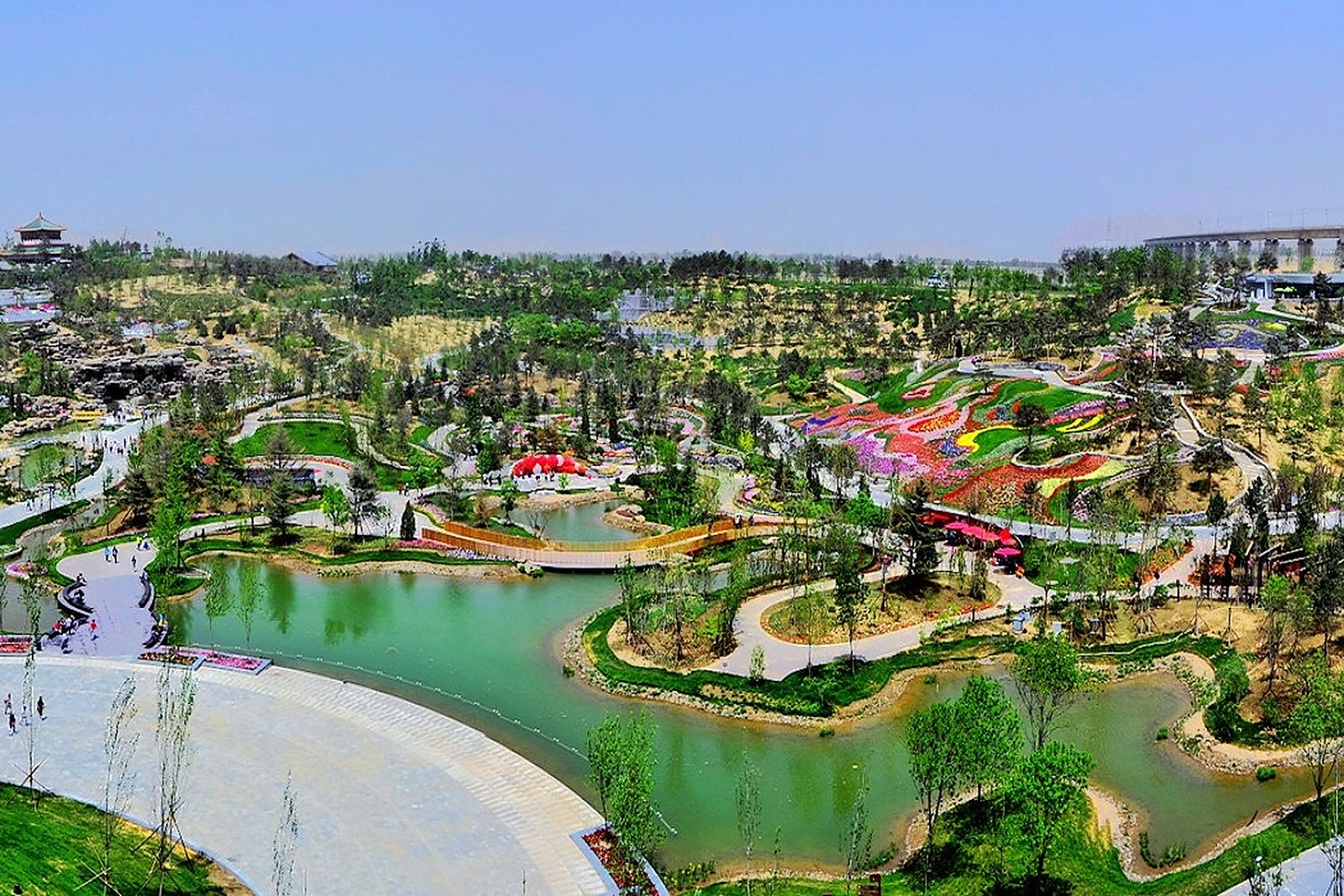
The honest star is 锦绣谷 Jǐnxiù Gǔ at opening, not the tower on the ridge. Descend into the terraced bowl while the dew is still on it — the old waste pit now stacked with rockwork, pines and season on season of bloom — and the whole story of the place tells itself without a plaque: this was the dump, and this is what a city can do with its own rubble. What gets oversold is the promise of a garden of gardens in full flower twelve months a year; many display gardens shine in their season and sleep through the rest, so come in late April, in October, or prepared to read design where flowers are not. What repays the effort is the museum indoors — modelled gardens, dynastic styles and courtyard courts you can walk — and the promenade along the river wetlands, where herons have moved back into water the city gave back (worth confirming the details for the museum’s current halls). The tall 永定塔 Yǒngdìng Tǎ Yongding Tower on the ridge is the landmark to navigate by. Come for the layering of the place: pit, then garden, then museum.
The self-aware postscript: I walked into the valley at eight with the sprinklers still turning, watched a wedding party claim the terrace below, and thought how few cities admit where their holes were. That is the visit in miniature. 北京园博园 Běijīng Yuánbóyuán suits whoever treats it as a design walk first and a blossom hunt second — pick a half, ride between the halves, read the walls — and exhausts whoever plans one march through every gate in a single noon. Everything else on this Fengtai list lies within a short ride: the stones of 卢沟桥 Lúgōu Qiáo a little way down the same river, the miniatures of 北京世界公园 Běijīng Shìjiè Gōngyuán to the south-east, the bright eye of 北京汽车博物馆 Běijīng Qìchē Bówùguǎn toward the ring road, and the lotus water of 莲花池公园 Liánhuāchí Gōngyuán by the rail station — all in the same 丰台区 Fēngtái Qū Fengtai District that turned its riverside dump into a shelf of gardens.
Practicalities
- Rating: ★★★★☆ — a fair-ground of gardens on reclaimed waste ground; the sunken 锦绣谷 Jǐnxiù Gǔ and the China Garden Museum outrank the bloom-season crowds; go on a weekday in late April or October.
- Tickets: Ticketed park entry, with the China Garden Museum on reservation entry with its own closed days, and sightseeing cars and boats charged separately (worth confirming the details for current rates, museum hours and internal transport charges).
- Address: 北京园博园 Běijīng Yuánbóyuán Beijing Garden Expo Park, east bank of 永定河 Yǒngdìng Hé Yongding River, 丰台区 Fēngtái Qū Fengtai District, Beijing — along the green river corridor in the city’s south-west, below 永定塔 Yǒngdìng Tǎ Yongding Tower.
- Time needed: Three hours for the valley and a run of display gardens; half a day adding the museum.
Words and Names
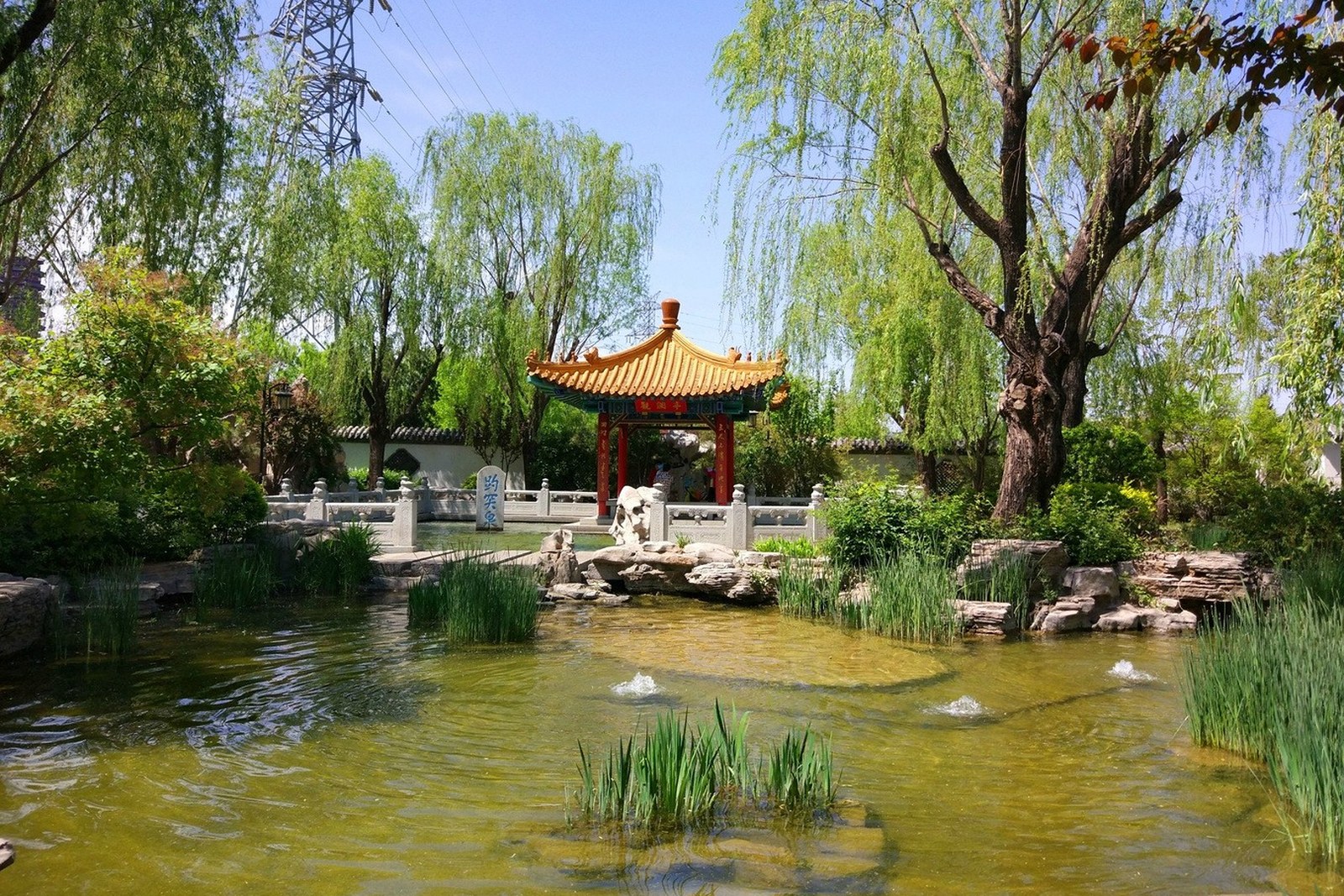
北京园博园 Běijīng Yuánbóyuán Beijing Garden Expo Park · the 2013 garden-expo grounds kept on as a public park 中国国际园林博览会 Zhōngguó Guójì Yuánlín Bólǎnhuì China International Garden Expo · the ninth fair of gardens, staged here in 2013 锦绣谷 Jǐnxiù Gǔ Jinxiu Valley · the old waste pit terraced into the sunken Valley of Brocade 中国园林博物馆 Zhōngguó Yuánlín Bówùguǎn China Garden Museum · the national museum of the garden as an art 展园 zhǎnyuán display gardens · the city gardens, each built in its own regional style 永定塔 Yǒngdìng Tǎ Yongding Tower · the tall ridge-top landmark of the expo ground 永定河 Yǒngdìng Hé Yongding River · the river whose old channel and wetlands the park guards
flowcloud would say that 北京园博园 Běijīng Yuánbóyuán is Fengtai’s turnaround made landscape — the 2013 ninth 中国国际园林博览会 Zhōngguó Guójì Yuánlín Bólǎnhuì staged on an old waste ground beside 永定河 Yǒngdìng Hé, its 锦绣谷 Jǐnxiù Gǔ terraced out of the rubble, its dozens of 展园 zhǎnyuán city gardens shelved along the shore and 中国园林博物馆 Zhōngguó Yuánlín Bówùguǎn the China Garden Museum indoors — and that the honest move is to pick a half and ride between halves, because entry, sightseeing cars and museum reservations all shift with the season (worth confirming the details), the bloom-season weekends are the crowded half, and the park repays whoever reads the valley first and the gardens second while losing whoever plans one march through every gate. All checked October 2026.
Getting there: Metro Line 14 to 园博园 Yuánbóyuán Yuanboyuan station, opened with the 2013 expo at the park’s edge, or one stop on to 张郭庄 Zhāngguōzhuāng Zhangguozhuang for the western end — the park lines the east bank of 永定河 Yǒngdìng Hé Yongding River in west 丰台区 Fēngtái Qū, with 卢沟桥 Lúgōu Qiáo a short ride down the same river (worth confirming the details for current tickets, museum hours and internal sightseeing-car charges). All checked October 2026.