
The Sea Goddess Inland: Gegu Mazu Culture Park
漕运千年余韵在,娘娘驾前香火长 Cáoyùn qiānnián yúyùn zài, Niángniang jià qián xiānghuǒ cháng – A thousand years of grain-barge lore lives on; before the Lady’s throne the incense burns long
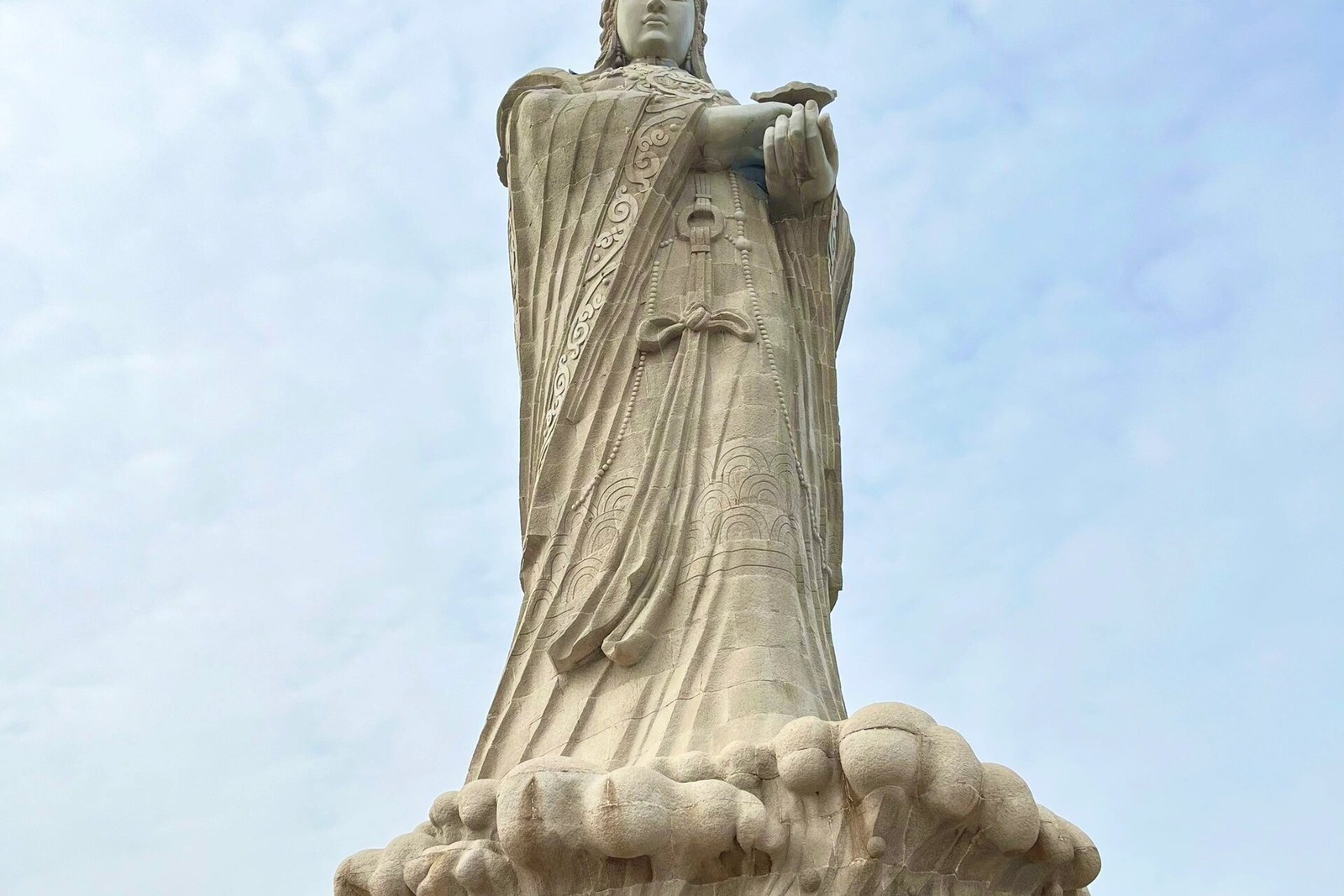
葛沽妈祖文化园 Gēgū Māzǔ Wénhuà Yuán The Gegu Mazu Culture Park carries the sea goddess deep into 天津市津南区 Tiānjīn Shì Jīnnàn Qū Jinnan District – fitting, because Gegu was where the coastal grain route met the canal, and where fisher and boatman families kept 妈祖 Māzǔ Mazu, the Lady of Tianfei, as their patron for six centuries. The park rebuilds that faith at scale: a towering statue, wide plazas, and halls that tell the port-town story the modern street grid has paved over.
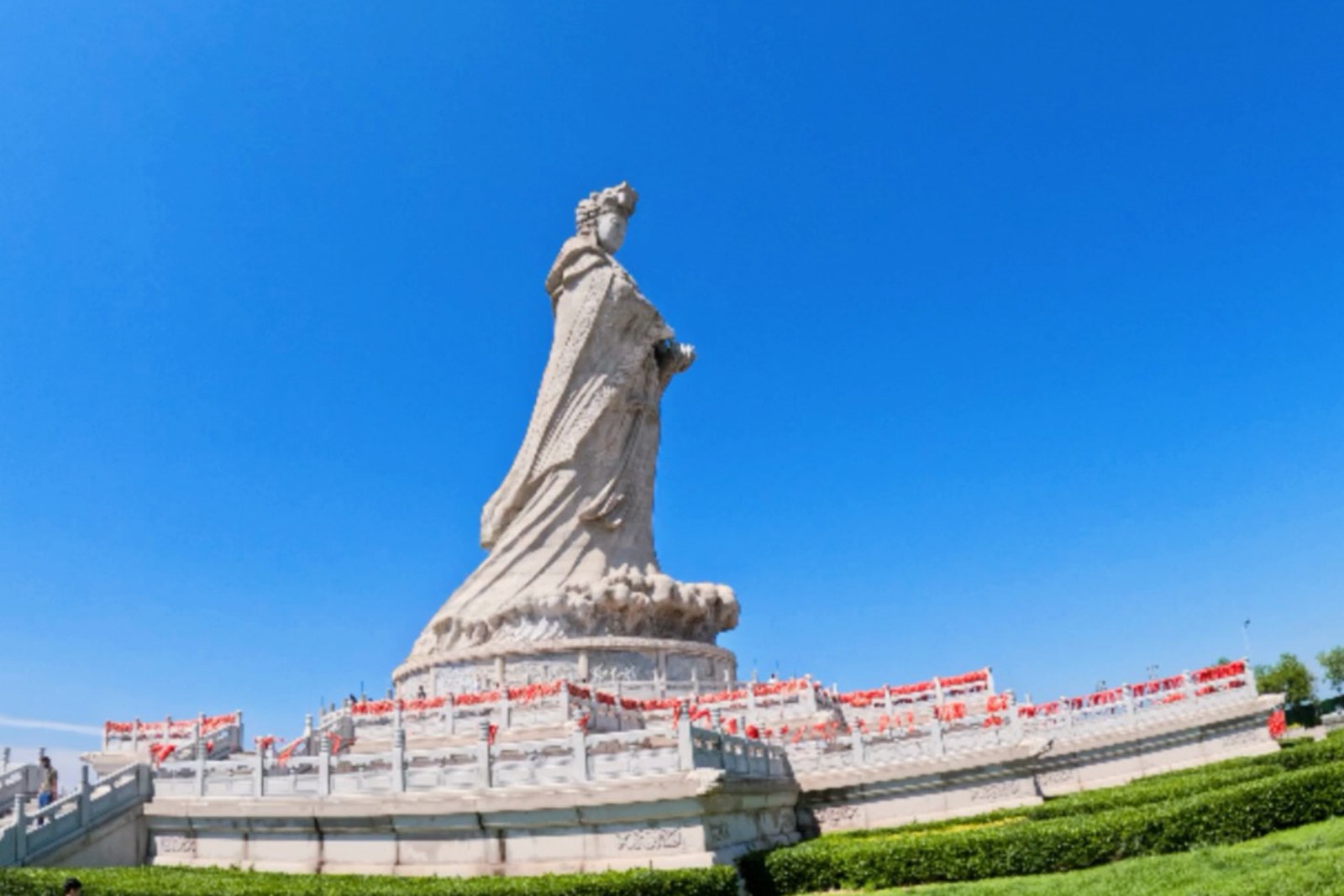
The statue runs the show. Mazu stands tall above her plaza, robed and calm, reading the horizon she once guarded – visible from the coastal road long before you reach the gate. The forecourt’s stone rails and braziers frame the classic shots, and on fair days the light turns the whole plaza golden.
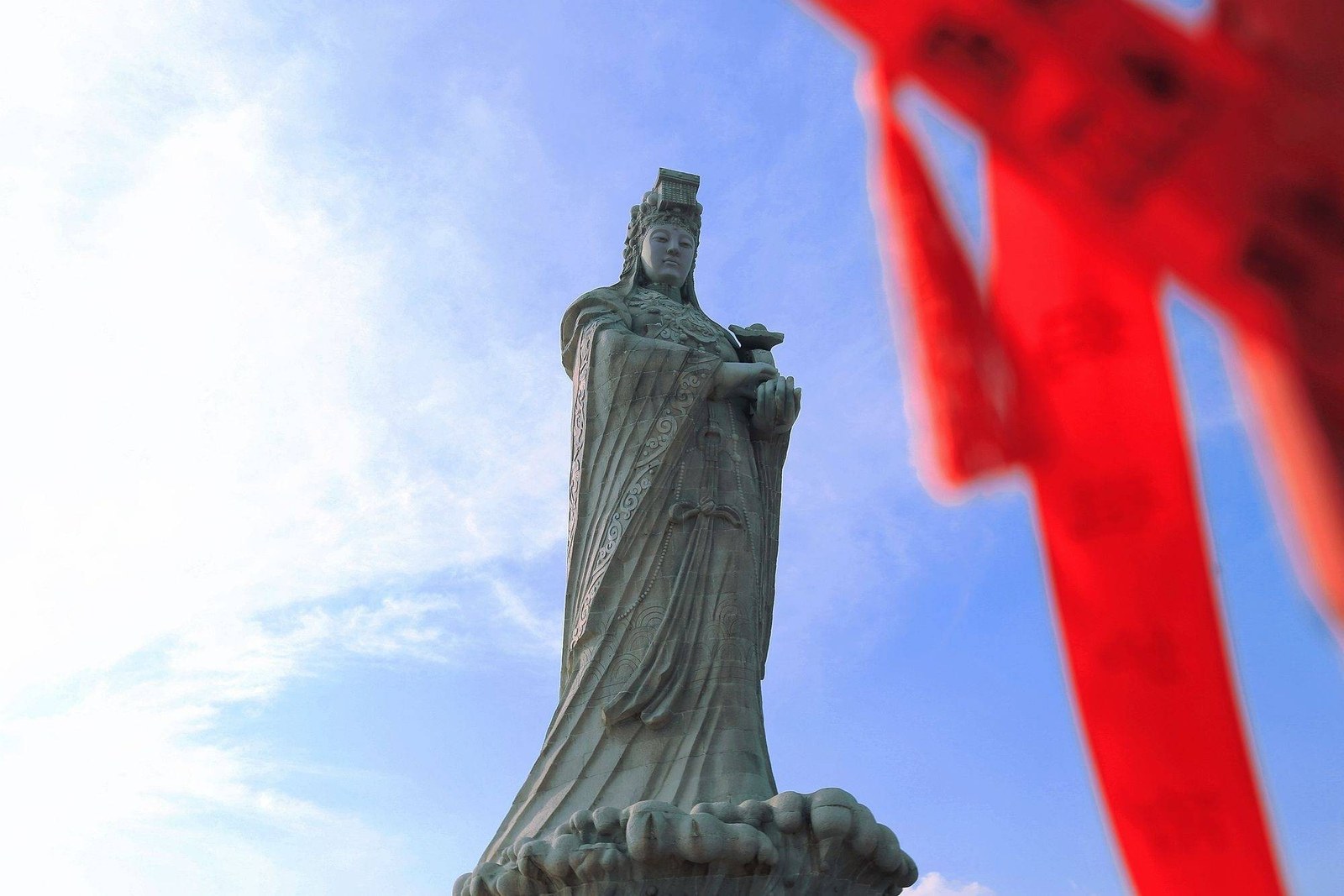
The prayer ribbons give the place its color – red silk tied by fishing families and modern pilgrims alike, knotted along the railings until they read as a second robe for the statue. Up close, the wish-tags name new cars and old mothers in the same breath; the goddess has always handled mixed portfolios.
Walk the base and the plaza stages itself – terraces, balustrades and the wide steps that the town’s temple fair fills each spring, when the 花会 huāhuì folk troupes bring drums and stilts back to the goddess’s forecourt. It is the old port calendar still running, six hundred years on.
Practicalities
- The park grounds are free; the fair each spring fills the plaza with troupes and stalls.
- Buses from the district center run Gegu’s main street; the halls stand a short walk from the stop.
- Spring festival season is the big event; weekday mornings are otherwise quiet.
- Pair the park with the town’s old merchant streets for the full port-day picture.
Words and Names
妈祖 Māzǔ Mazu, the sea goddess; 天后 Tiānhòu the Empress of Heaven, her formal title; 葛沽 Gēgū the old port town; 漕运 cáoyùn the grain transport that built it; 花会 huāhuì the folk performance troupes of the spring fair. Beyond the park, the same 天津市津南区 Tiānjīn Shì Jīnnàn Qū Jinnan District keeps more places worth the detour: 华盛寺 Huáshèng Sì Huasheng Temple, 小站练兵园 Xiǎozhàn Liànbīng Yuán the Drill Ground, 天嘉湖 Tiānjiāhú Tianjiahu Lake, or 米立方 Mǐlìfāng the Mitsui Cube – four more doors into the same Jinnan District. Once the goddess has had her hour, our Jinnan food map fills the table.
flowcloud would say Gegu is the district’s anchor shrine: the sea came and went, the barges stopped running, and the Lady still faces east on behalf of everyone who makes a living on the water. All checked November 2026.
Getting there: Gegu town sits on the old coastal road southeast of Xianshuigu – buses from the district center run the main street, and the culture park’s halls stand a short walk from the stop. All checked November 2026.