
A Kingdom of Root-Carved Buddhas: Gengong Foguo
千年树根雕佛国,一刀一凿见禅心 Qiānnián shùgēn diāo Fóguó, yī dāo yī záo jiàn chánxīn – Thousand-year tree roots carved into a Buddha kingdom; every knife-cut reveals a Zen heart
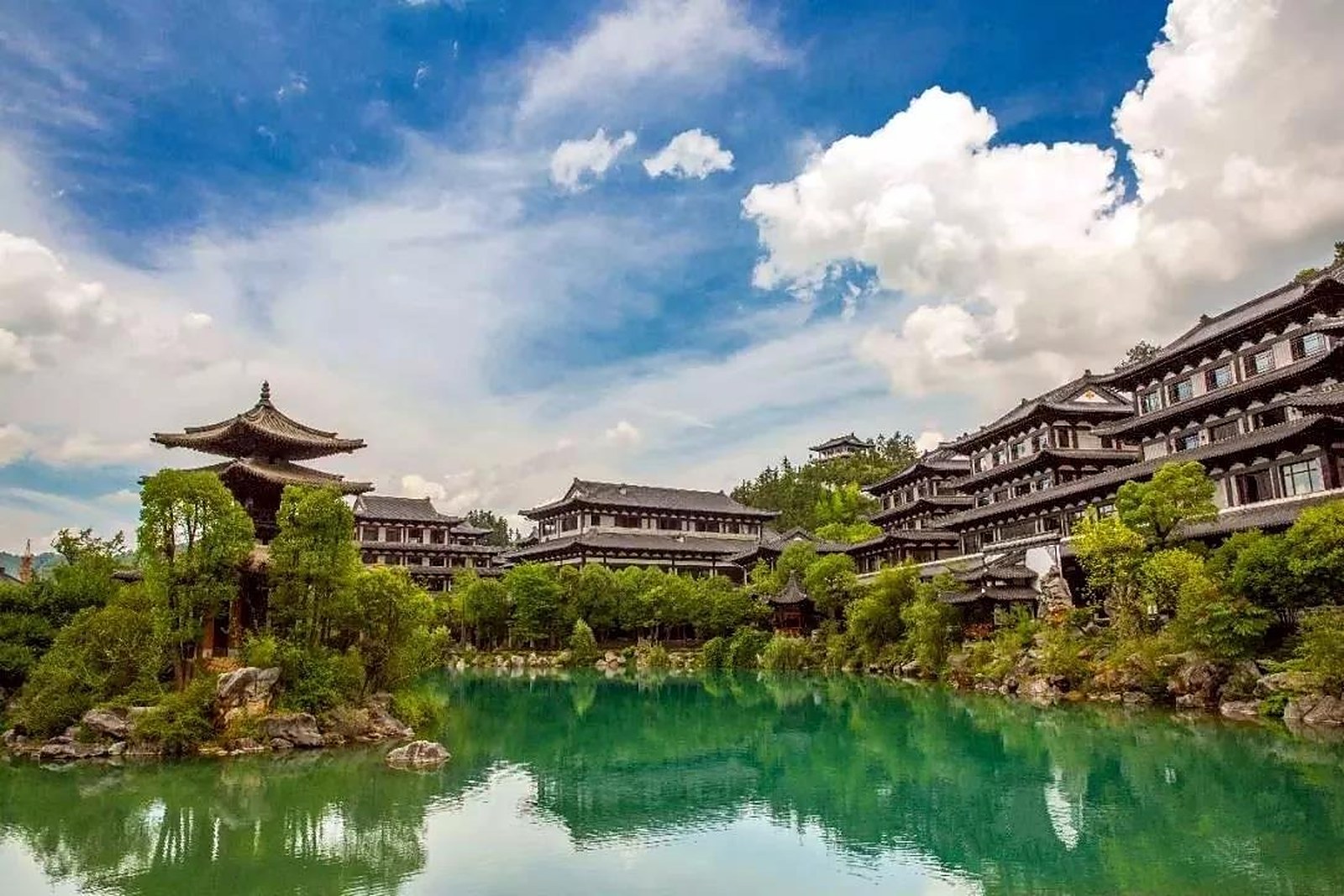
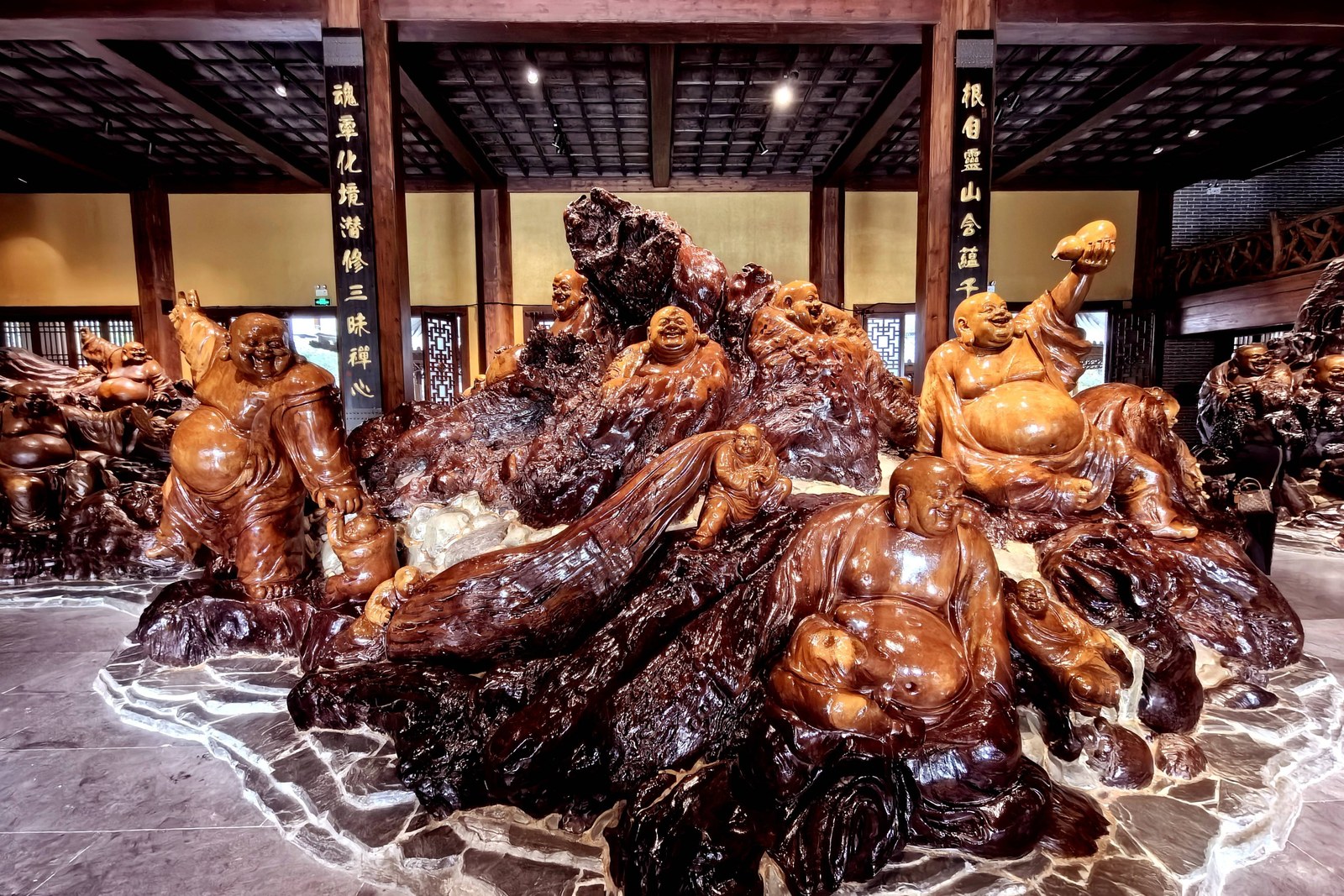
根宫佛国 Gēngōng Fóguó the Root Palace Buddha Kingdom in 开化县 Kāihuà Xiàn Kaihua county is what happens when one sculptor refuses to throw away a stump: artist 徐谷青 Xú Gǔqīng spent four decades turning discarded banyan, yew and camphor root systems – some unearthed after a thousand years underground – into halls of arhats, bodhisattvas and guardian kings, until the collection grew into a national 5A scenic area and the largest root-carving complex on earth. The park’s premise is Buddhist and practical at once: roots are the tree’s buried half, so carving them is raising the dead wood to enlightenment.
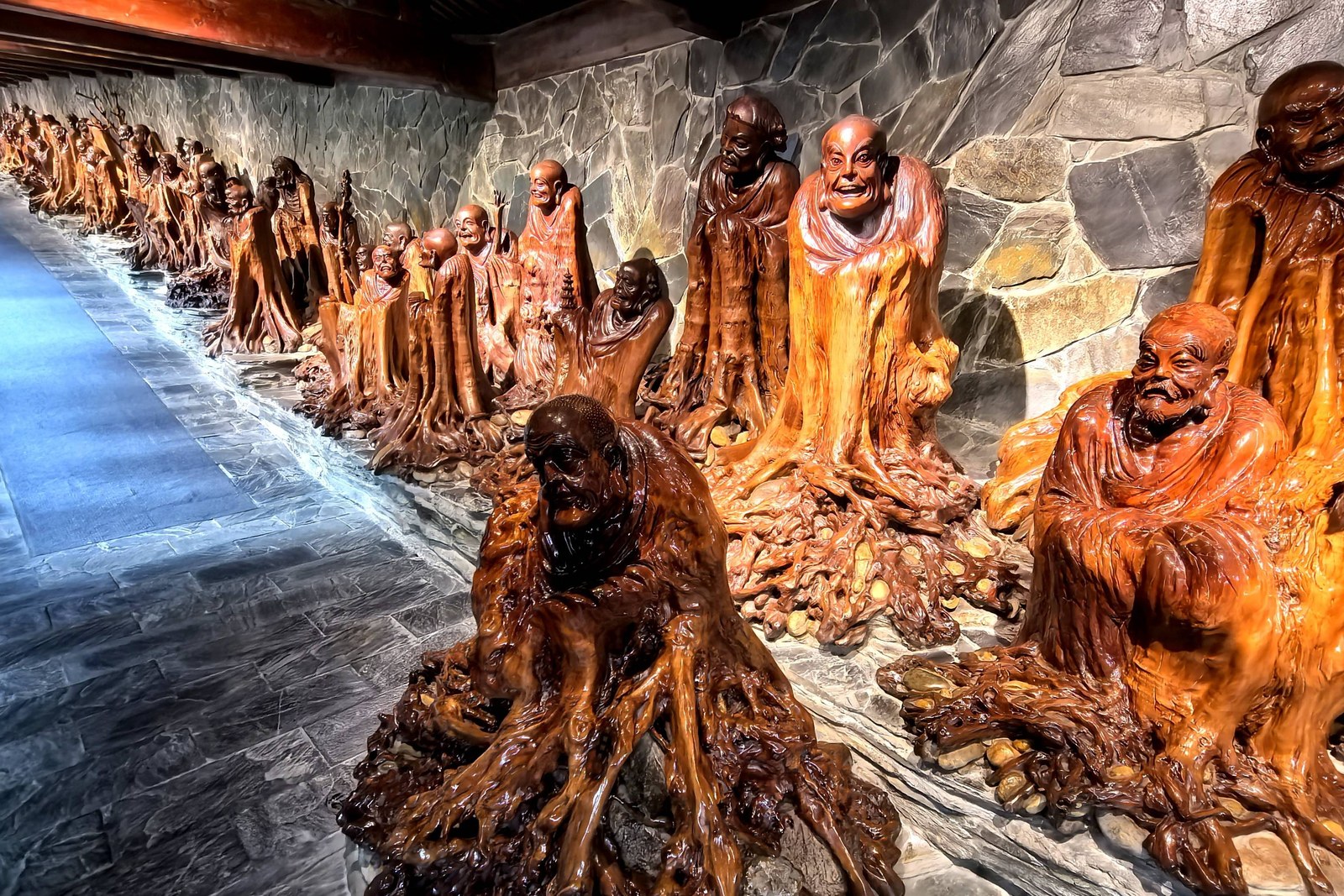
The centerpiece is the 五百罗汉阵 Wǔbǎi Luóhàn Zhèn array of five hundred arhats, each figure cut from a single giant root system, each face different – some laughing, some ascetic, some half-beast – arranged across a hall sized like an aircraft hangar. The roots themselves did half the work: lightning scars become robe folds, burl knots become brows, and the sculptors’ chisels only finished what decades of soil already drafted.
Beyond the arhat hall the park unrolls through a dozen courtyards: 醉根坛 Zuìgēn Tán the Root Altar with its giant incense cauldron, pavilions of root-carved screens and tables, a bonsai garden of centuries-old stunted trees, and the gate complex 福门祥光 Fúmén Xiángguāng whose lintel is a single root beam carved with 108 blessings. Wood chips hang in the air of the working studios – carving is still done here, not just displayed.
Give the place three hours and the thing stops being a museum: the root faces start arguing with each other, the courtyards turn into chapters. Kaihua treats the garden as its civic heart – school groups copy the arhat faces, elders play chess in the bonsai shade – and the town around it keeps the county’s other claim to fame, the clear-water fish kitchens, within one lunch break.
Practicalities
- The park opens 8 am-4:30 pm (longer in summer); the arhat hall is at the far end, so walk the axis rather than the side gardens first.
- Photography is permitted everywhere except the working studios; the hall light is dim and warm, so steady hands beat flash.
- Root carving studios sell small pieces from tens of yuan to collector prices – shipping can be arranged at the gallery desk.
- Pair the visit with a clear-water fish lunch in town, ten minutes by taxi; the combination is the county’s standard day.
Words and Names
根宫佛国 Gēngōng Fóguó the Root Palace Buddha Kingdom, the park’s formal name; 徐谷青 Xú Gǔqīng Xu Guqing, the founding sculptor; 五百罗汉 wǔbǎi luóhàn the five hundred arhats, the giant root-carved array; 开化根雕 Kāihuà gēndiāo Kaihua root carving, the provincial intangible heritage craft; 醉根 Zuìgēn “Drunken Root”, the workshop brand behind the park. Beyond the carved kingdom, the same 衢州市 Qúzhōu Shì Quzhou City keeps more places worth the detour: 江郎山 Jiāngláng Shān the three world-heritage pillars, 龙游石窟 Lóngyóu Shíkū the underground riddle chambers, 廿八都古镇 Niànbādū Gǔzhèn the three-province garrison town, or 烂柯山 Lànkē Shān the Go-legend mountain – four more doors into the same 衢州市 Qúzhōu Shì Quzhou City. Once the roots have had their say, our Quzhou food map fills the table.
flowcloud would say Gengong Foguo is a forest that came back from underground: thousand-year stumps with faces now, five hundred arhats arguing in one hall, and the smell of fresh chisel work proving the kingdom is still expanding. All checked November 2026.
Getting there: Gengong Foguo stands on the edge of Kaihua county town – the Kaihua rail stop connects through Quzhou, taxis reach the gate in ten minutes from anywhere in town, and drivers from Quzhou run about an hour on the expressway. All checked November 2026.