
Prince Gong’s Mansion: The Lavish Qing Prince’s Residence and Garden of Xicheng District, Beijing
一座恭王府,半部清代史。Yī zuò Gōngwáng Fǔ, bàn bù Qīngdài shǐ – One Prince Gong’s Mansion; half the history of the Qing dynasty.
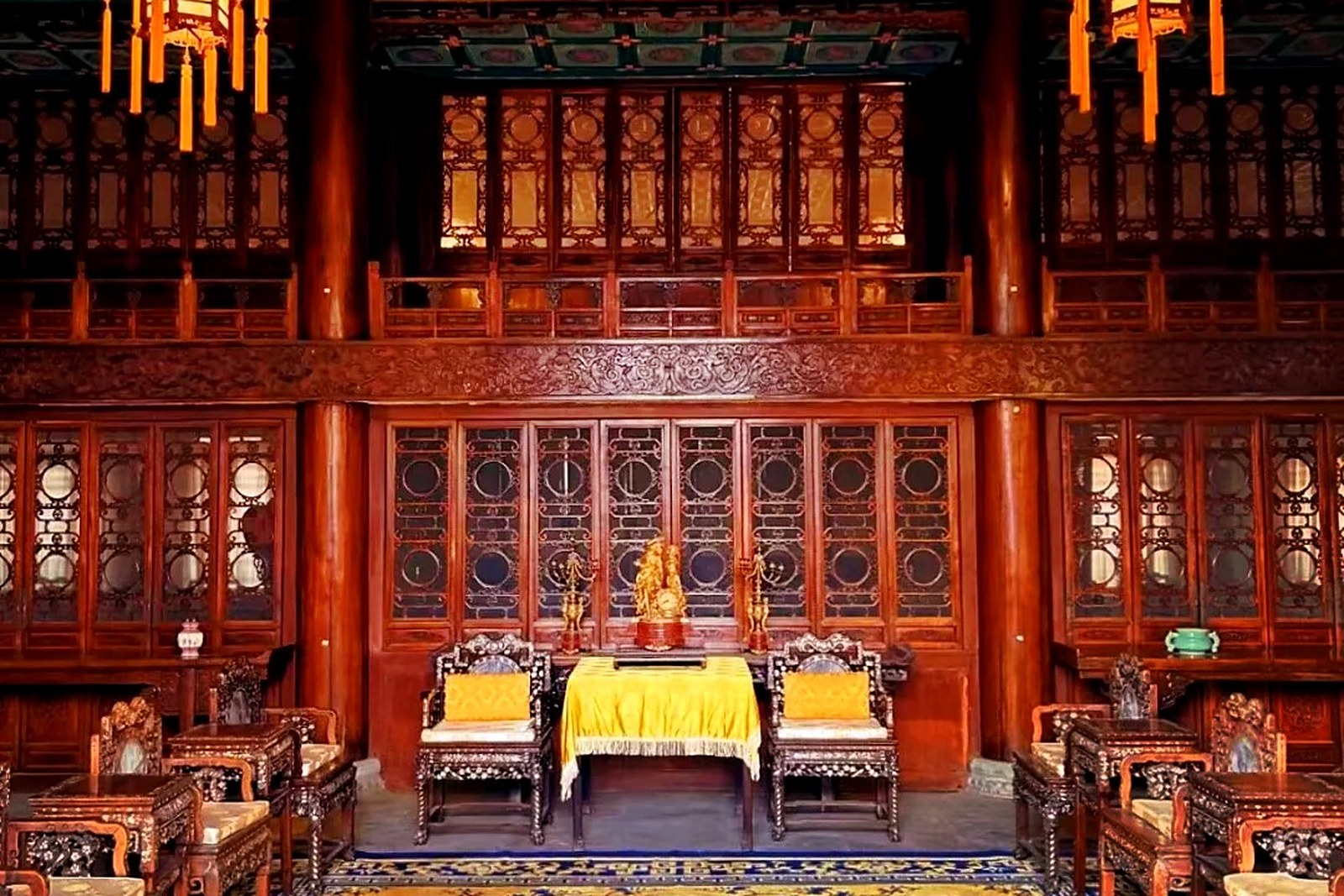
恭王府 Gōngwáng Fǔ Prince Gong’s Mansion is not a temple with a courtyard — it is, plainly put, the largest and best-preserved princely residence of the Qing dynasty open to the public, a walled compound of halls, studies and a theatrical garden in the 什刹海 Shíchàhǎi quarter of 西城区 Xīchéng Qū Xicheng District, Beijing. It was built in the 1770s for 和珅 Héshēn Heshen, the fabulously corrupt favourite of the 乾隆 Qiánlóng Qianlong Emperor, confiscated the moment the old emperor died, and later granted to 恭亲王 Gōngqīnwáng Prince Gong — 奕訢 Yìxīn Yixin, the able brother of the Xianfeng Emperor who ran China’s foreign affairs through the 1860s. The Beijing saying holds that “one Prince Gong’s Mansion is half the history of the Qing,” and the place earns it: a rare surviving 王府 wángfǔ prince’s palace, intact from gate to garden, where you can read the whole arc of the dynasty’s wealth, taste and decline in a single afternoon’s walk. No other princely compound in the capital survives so completely, which is precisely why it draws the crowds it does.
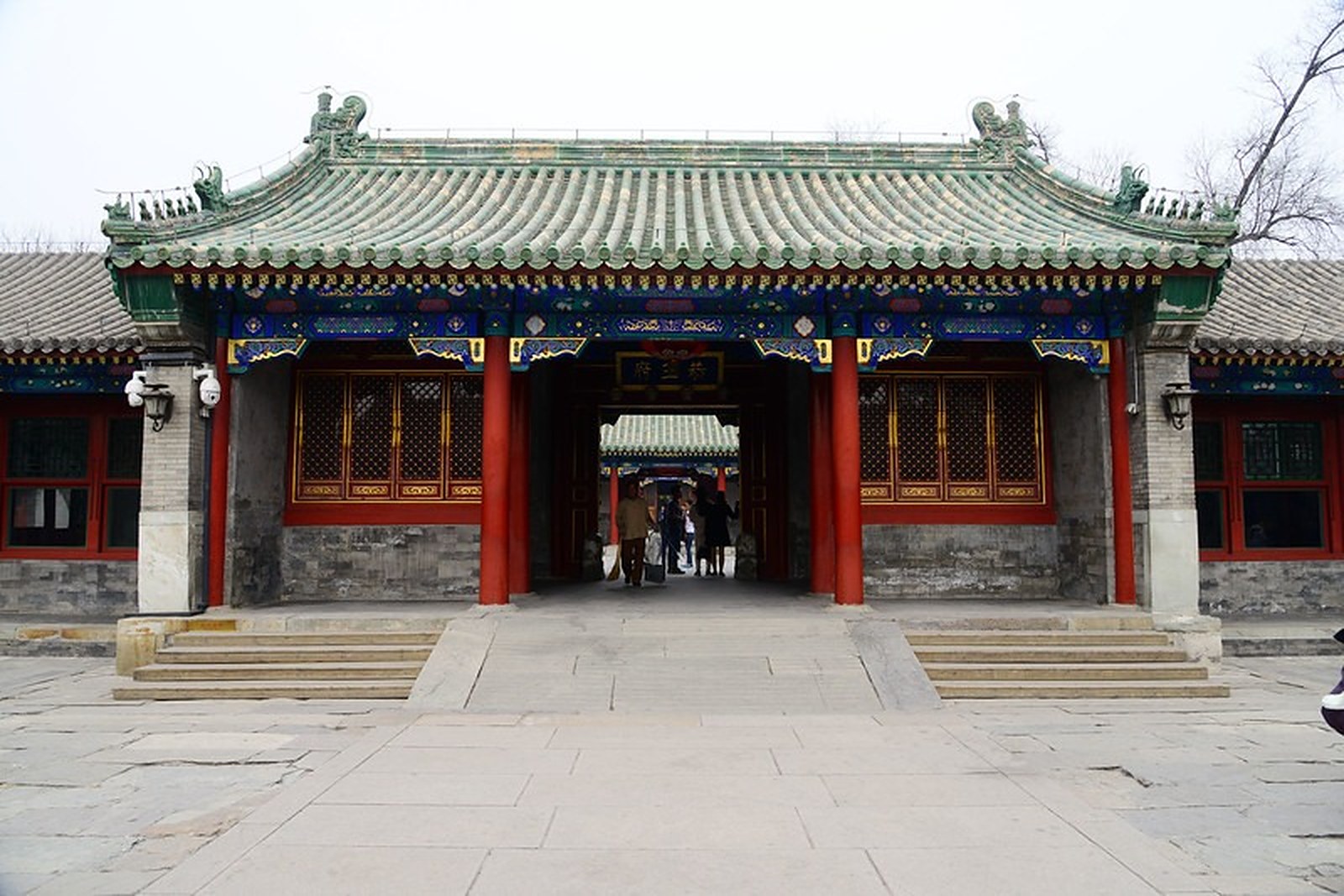
Call it honestly: the most complete Qing interior in the city, and the one most worth a timed entry. It is ticketed and worth confirming the details — admission is by dated slot in peak season and the price, the combined garden-and-hall pass and the booking channel all shift (worth confirming the details before you go). The mansion sits on a dense hutong block a few minutes’ walk north of 前海 Qiánhǎi Qianhai, and the mistake visitors make is treating it as a drive-by: plan two hours, not forty minutes, because the garden is half the point. Inside, photography rules and the one-way route are posted at the gate (worth confirming the details), and the 大戏楼 Dàxì Lóu Grand Theatre sometimes runs short opera demonstrations that are worth timing your visit around. Pair it with 什刹海 Shíchàhǎi to the south and the 钟鼓楼 Zhōnggǔlóu to the north for a single Xicheng half-day of water, lane and palace.
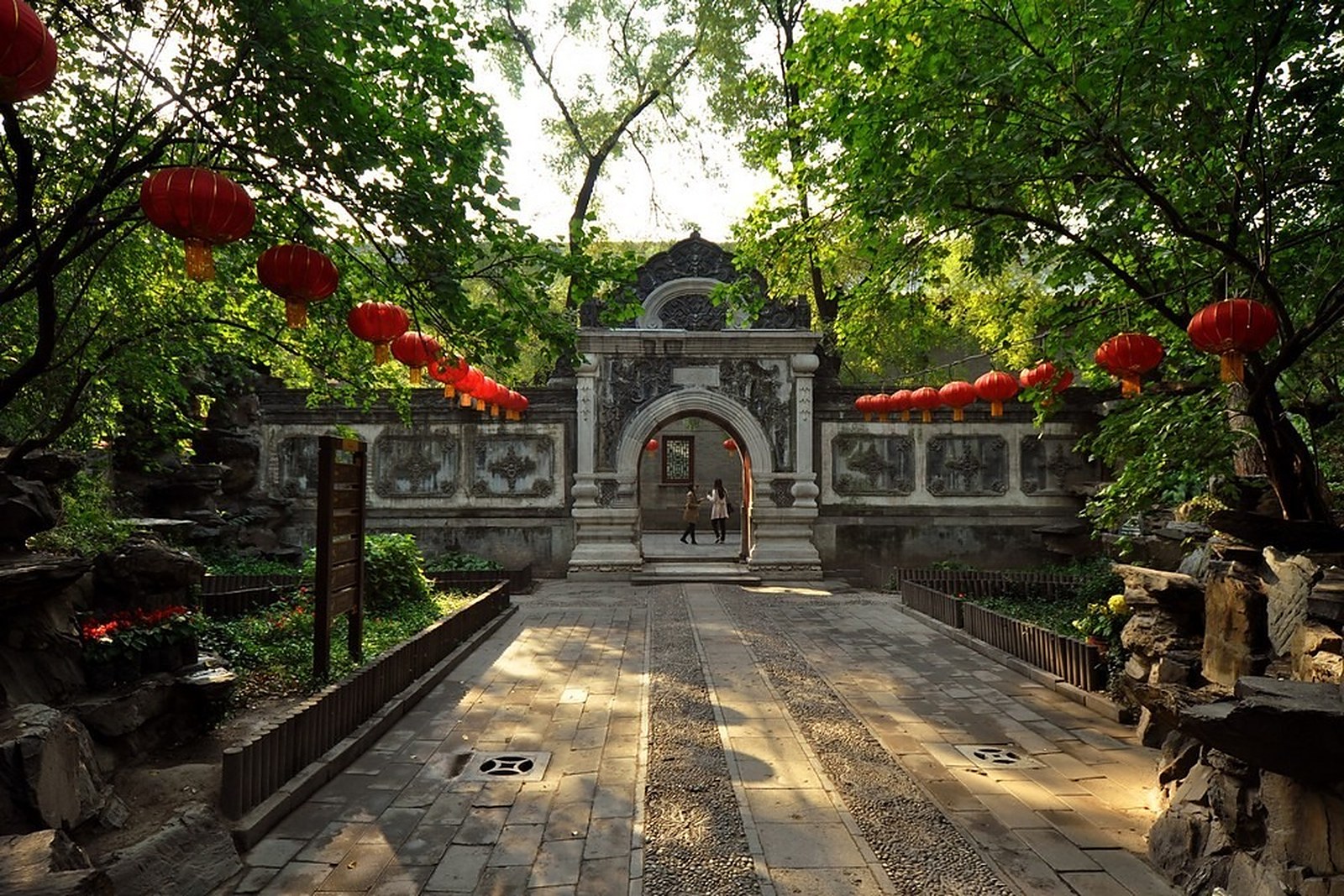
The honest star is the garden, not the front halls. Behind the residential courts lies 萃锦园 Cuìjǐn Yuán the Garden of Elegant Splendor — a miniature landscape of rockery, covered walkways, a placid pool and a rockery hill you can climb for a peek over the tiles. Its set-pieces are deliberate: the 西洋门 Xīyáng Mén Western Gate, a baroque stone arch the Qianlong court raised in imitation of European garden follies; the 福字碑 Fúzì Bēi Fortune Stele, a carved 福 fú “fortune” character attributed to the emperor 康熙 Kāngxī Kangxi, set into the rockery as the mansion’s luck; and the 蝠池 Fúchí Bat Pond, one of several bat motifs — 蝠 fú punning on fortune — that Heshen scattered through the grounds as a private joke of wealth. What gets oversold is the front courtyard crowd at noon; what repays the effort is the garden at the back, where the 大戏楼 Dàxì Lóu — a wood-lined theatre whose acoustic trick sends a whisper to the rafters — still smells of lacquer and sawdust. Read the place as a morality tale in stone: the most corrupt man in China built the most perfect garden, and kept neither.
The self-aware postscript: I came expecting a minor palace and left reading a cautionary novel — every 蝙蝠 biānfú bat, every 福 fú fortune character, every gilded beam was Heshen telling the emperor (and himself) that he owned the world, a week before the confiscation. That is the visit in miniature. 恭王府 Gōngwáng Fǔ suits whoever walks it as a story, hall to garden to theatre, and exhausts whoever photographs the gate and leaves. Buy the timed ticket, give the garden the long hour it deserves, and step out north toward 什刹海 Shíchàhǎi — the same Xicheng water that lapped the mansion’s private moat two centuries ago, now open to anyone with a pair of walking shoes.
Practicalities
- Rating: ★★★★☆ — the only fully intact Qing prince’s palace in Beijing; the garden, the Western Gate and the whisper theatre are the connoisseur’s half.
- Tickets: Timed ticketed entry, worth confirming the details — dated slots in peak season and shifting prices and booking channels (worth confirming the details before you go).
- Address: No. 14 前海西街 Qiánhǎi Xījiē Qianhai West Street, 西城区 Xīchéng Qū Xicheng District, Beijing — in the Shichahai quarter, a few minutes north of 前海 Qiánhǎi Qianhai.
- Time needed: Two hours minimum; a half day if you add the lakes and a hutong walk to the north.
Words and Names
恭王府 Gōngwáng Fǔ Prince Gong’s Mansion · the largest preserved Qing princely residence, in the Shichahai quarter 和珅 Héshēn Heshen · the corrupt Qianlong favourite who first built the mansion 恭亲王 Gōngqīnwáng Prince Gong · Yixin, the able royal later granted the compound 萃锦园 Cuìjǐn Yuán Garden of Elegant Splendor · the rockery-and-pool garden behind the halls 西洋门 Xīyáng Mén Western Gate · the baroque stone arch in European style 福字碑 Fúzì Bēi Fortune Stele · the Kangxi “fortune” character carved into the rockery 大戏楼 Dàxì Lóu Grand Theatre · the wood-lined opera house with a whisper-carrying acoustic
flowcloud would say that 恭王府 Gōngwáng Fǔ is Xicheng’s intact Qing prince’s palace — built for 和珅 Héshēn, later granted to 恭亲王 Gōngqīnwáng, with the garden 萃锦园 Cuìjǐn Yuán, the 西洋门 Xīyáng Mén Western Gate, the 福字碑 Fúzì Bēi Fortune Stele and the 大戏楼 Dàxì Lóu Grand Theatre — and that the honest move is a timed two-hour ticket worth confirming the details (worth confirming the details), because the garden is half the point, the opera demonstrations are worth timing around, and the mansion repays whoever reads it as a story of wealth and fall while losing whoever photographs the gate and leaves. All checked October 2026.
Getting there: Metro Line 6 to 北海北 Běihǎi Běi Beihai North then north, or walk a few minutes from 前海 Qiánhǎi Qianhai and 烟袋斜街 Yāndài Xiéjiē; the mansion sits in the Shichahai quarter of Xicheng, a stroll from the lakes and the 钟鼓楼 Zhōnggǔlóu (worth confirming the details for the current timed-entry and booking channel). All checked October 2026.