
A Thousand Li of Shade: Walking the Grape Corridor of Hotan
绿荫遮长路,果香伴水声 Lǜyīn zhē chánglù, guǒxiāng bàn shuǐshēng – Green shade roofs the long road; fruit scent keeps company with the water
正文:千里葡萄长廊 Qiānlǐ Pútao Chángláng the Grape Corridor stretches outward from 和田地区 Hétián Dìqū Hotan Prefecture along the canal roads of the county town – kilometres of trellised vine arches over a single shaded road, claimed locally to be the longest planted walkway on earth. Whatever the exact number of li, the effect is what the name promises: a green tunnel that starts at the town’s edge and runs into the oasis without a gap, the vines closing overhead in June and opening their fruit by late August. Under the trellis the light turns green, the temperature drops five degrees, and the road becomes a promenade.
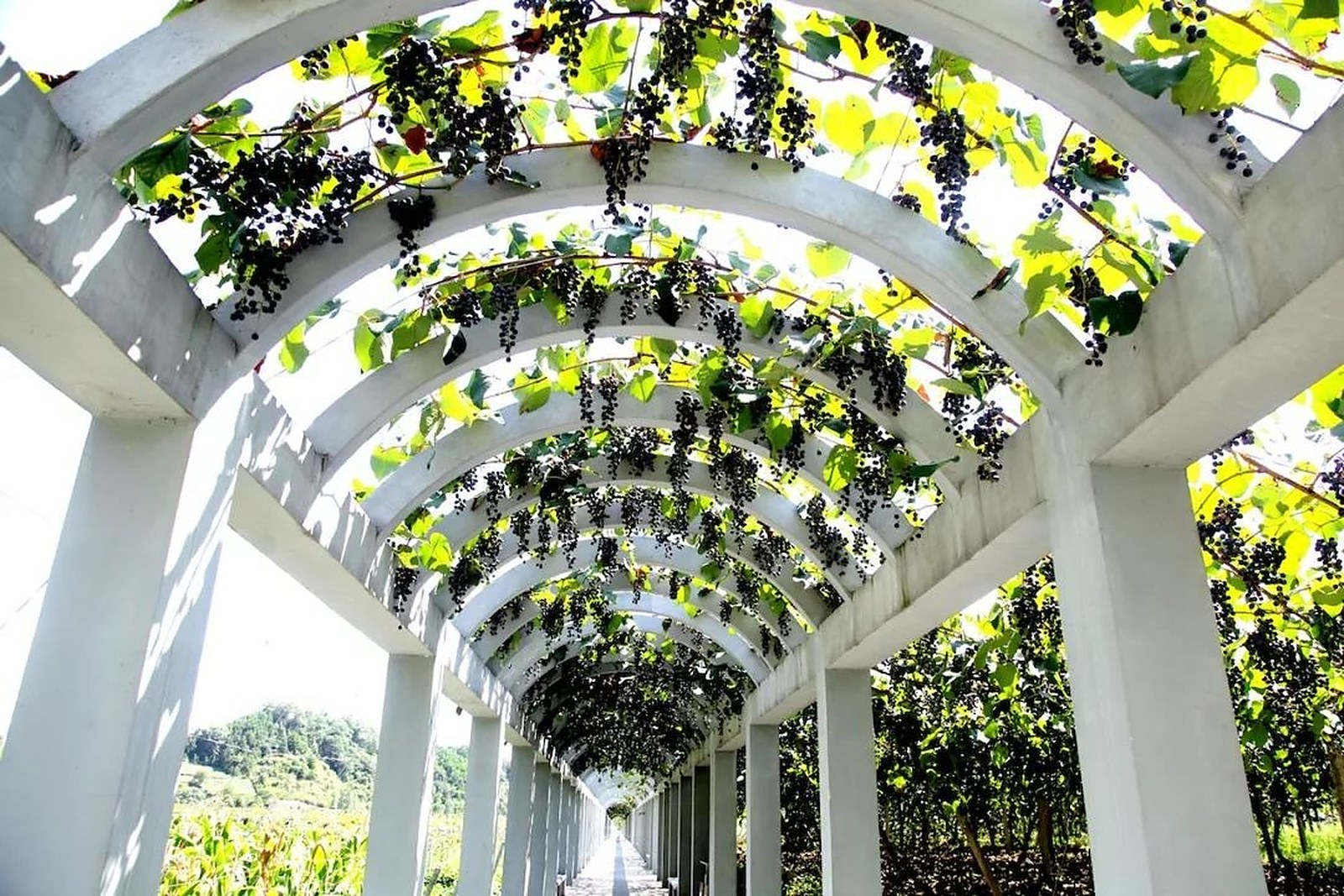
The corridor grew from irrigation, not landscaping. The canal that waters the oasis needed shade from the desert wind, and the vine – trained over timber frames on both banks – was the farmer’s answer: shade, fruit and a crop on land that grew nothing else. The frames now run in unbroken arches for kilometres, white-washed poles and green canopy, and the village lanes that branch off the main tunnel each carry their own smaller trellises until the whole district reads as one vineyard with roads through it.
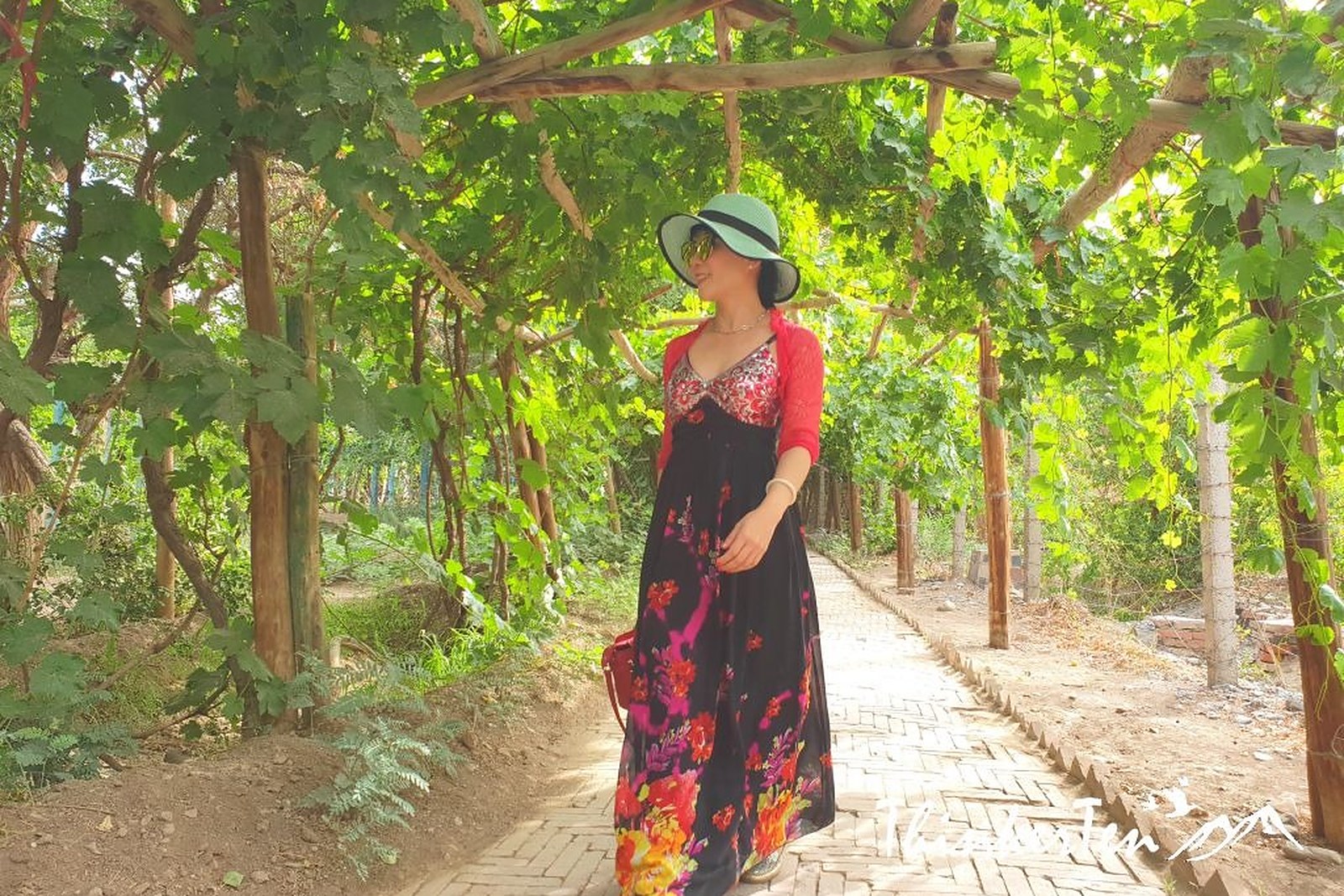
Walk it slowly and the system explains itself. Water runs in the channel below the vines; the gravel road stays cool enough for children to play football at noon; and the fruit – table grapes in a dozen varieties – hangs in reachable bunches from August, when families set stools under the heaviest bunches and sell directly from the trellis. Autumn brings the pickers and the drying racks, and the seedless white grape that Hotan ships across the country starts its journey here, laid out on mud-brick drying houses that look like small palaces of honeycomb.
The corridor is a working road as much as a promenade. Tractor carts and motorbikes thread the shade; farmers carry crates through the arches; and the small stalls that appear at noon sell the season’s fruit, cold drinks and the local raisin bread. Visitors who come for the photographs stay for the routine of it – this is not a scenic park but a road that happens to be roofed in grapes, and the pleasure is in walking it the way the village does, slowly, with something cold in hand.
Late summer is the corridor’s festival season. The grape harvest weeks bring market days, music in the village squares and the year’s biggest sales of fresh and dried fruit; the drying houses open for visits; and the corridor’s guesthouses fill with Uyghur and Han families who come from the city for the weekend air. Autumn reverses the palette – gold leaves, red paths – and winter leaves the bare frames architectural, the road open to the low sun.
Practicalities first. The corridor’s main gate and its car park sit on the county road about fifteen kilometres from Hotan city; taxis and hired cars make the trip easily, and the walk from the gate runs as long as you like – most visitors do the first kilometre and the lunch stalls. Wear shoes for gravel, carry water in summer, and bring cash for the fruit stalls. Morning light through the canopy is the photographer’s hour; the crowd-free window is any weekday.
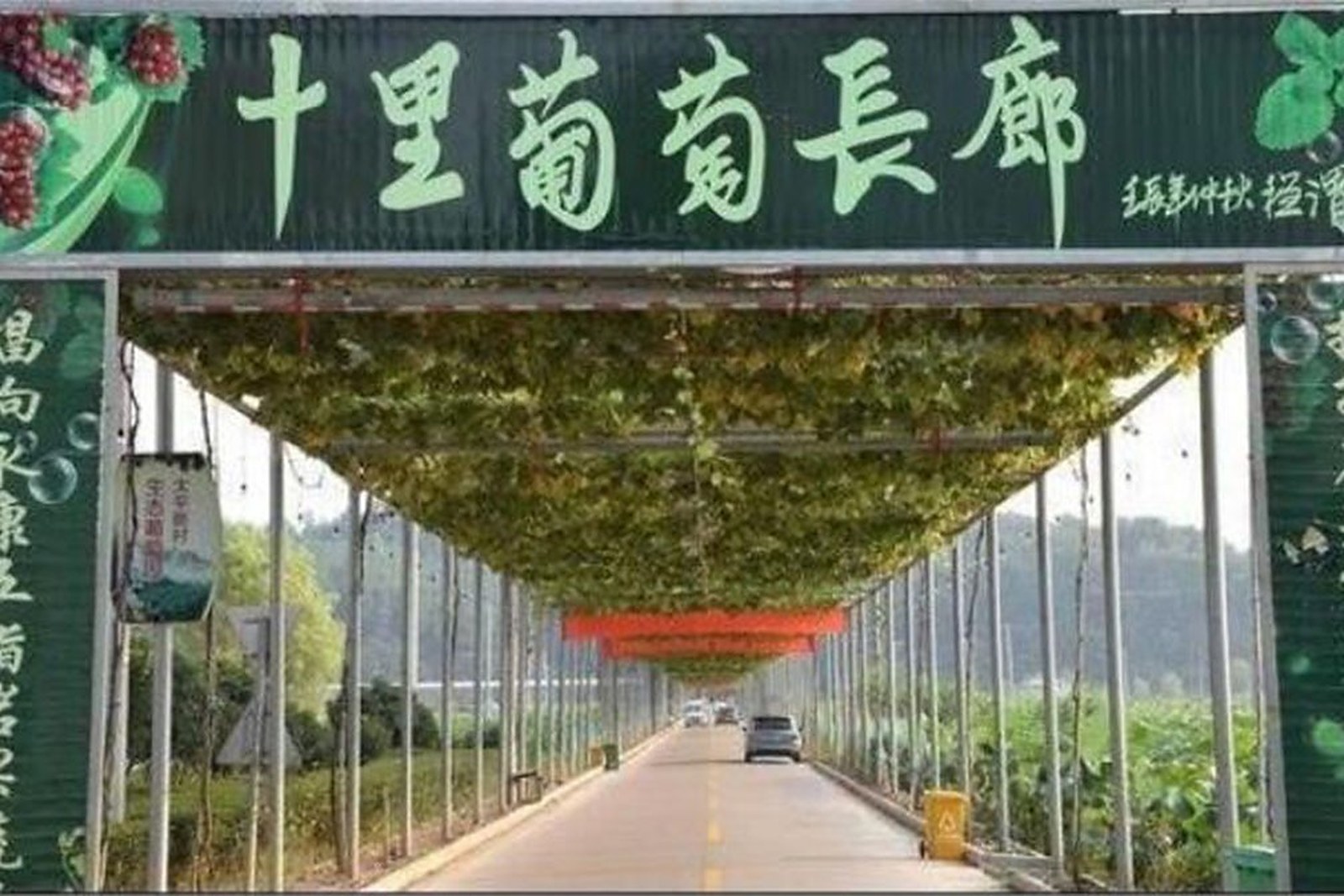
Combine the walk with the orchard country around it – walnut groves, mulberry rows and the white drying houses – and the visit reads as a single lesson in how this oasis feeds itself. The corridor is the system’s most photogenic piece, but the whole valley runs on the same trick: shade the water, plant the shade, eat the result.
And the lasting impression is a simple one: a road roofed in grapes, cool at noon, loud with birds, three thousand li of ordinary miracle – the kind of infrastructure that makes an oasis a home rather than a survival.
Practicalities
Beyond the corridor, the same 和田地区 Hétián Dìqū Hotan Prefecture keeps more places worth the detour: 约特干故城 Yuētègān Gùchéng the Yotkan ruins to the south, 和田地区博物馆 Hétián Dìqū Bówùguǎn the Hotan Museum in the new district, 团城老街 Tuánchéng Lǎojiē the Tuancheng old blocks downtown, or 玉龙喀什河 Yùlóngkāshī Hé the Yurungkash river for the jade diggers – four more doors into the same 和田地区 Hétián Dìqū Hotan Prefecture. Once the corridor is seen, our Hotan food map fills the day.
Practicalities
Words and Names
flowcloud would say the Grape Corridor is the oasis showing off its engineering: a road roofed in vines for kilometre after kilometre, cool as a cellar at noon, sweet by August – the longest lunch walk in the desert. All checked November 2026.
Getting there: The corridor runs along the canal roads of Hotan county town, roughly 15 kilometres from the city centre; hire a car or take the grape-corridor turnoff off the Beijing road. The shade is best from June to September, and the fruit hangs heaviest in August. All checked November 2026.