
The General’s Armor on the Old Bank: Guajia Temple
尉迟挂甲传千古,一寺钟声护河西 Wèichí guàjiǎ chuán qiāngǔ, yī sì zhōngshēng hù Héxī – The tale of the general hanging his armor runs a thousand years; one temple’s bell keeps watch over the west bank
挂甲寺 Guàjiǎ Sì Guajia Temple keeps 天津市河西区 Tiānjīn Shì Héxī Qū Hexi District’s oldest claim to sacred ground – a working Buddhist temple whose founding tale runs back to the Tang, when the general 尉迟恭 Yùchí Gōng Yuchi Gong is said to have hung his armor on the bank’s old tree while fording the river, giving the shrine its name. The compound that stands today on 新围堤道 Xīnwéi Dīdào Xinweidi Road is a working neighborhood temple: yellow walls, painted gate gods, and a calendar of incense days that fills the lane.
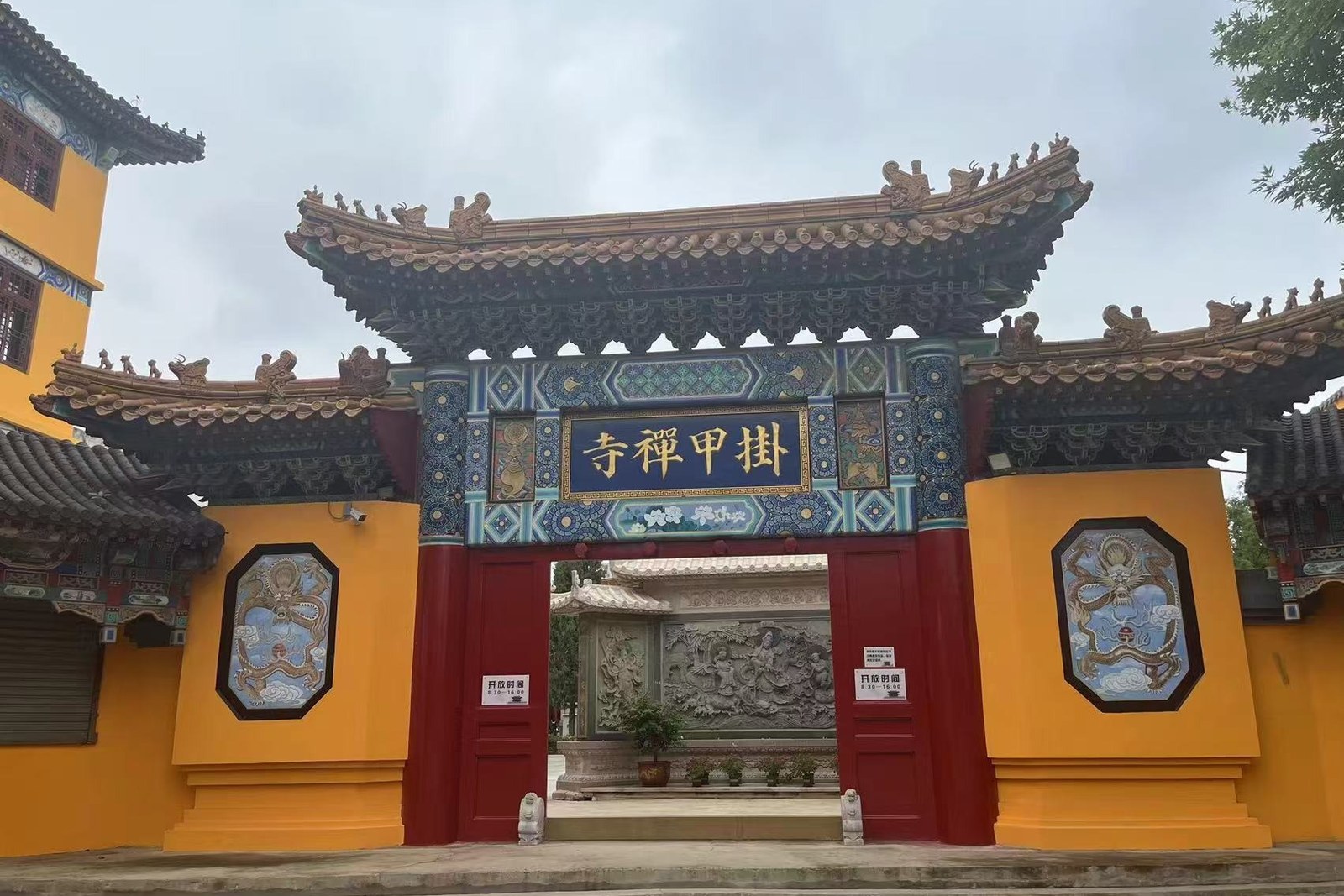
The gateway sets the tone – painted door generals on red leaves, a tablet naming the temple’s long lineage, and the courtyard beyond where the halls stack gold roofs against the surrounding towers. The contrast is the point: a quiet Buddhist compound older than every tower around it, holding its ground in the middle of a modern district.
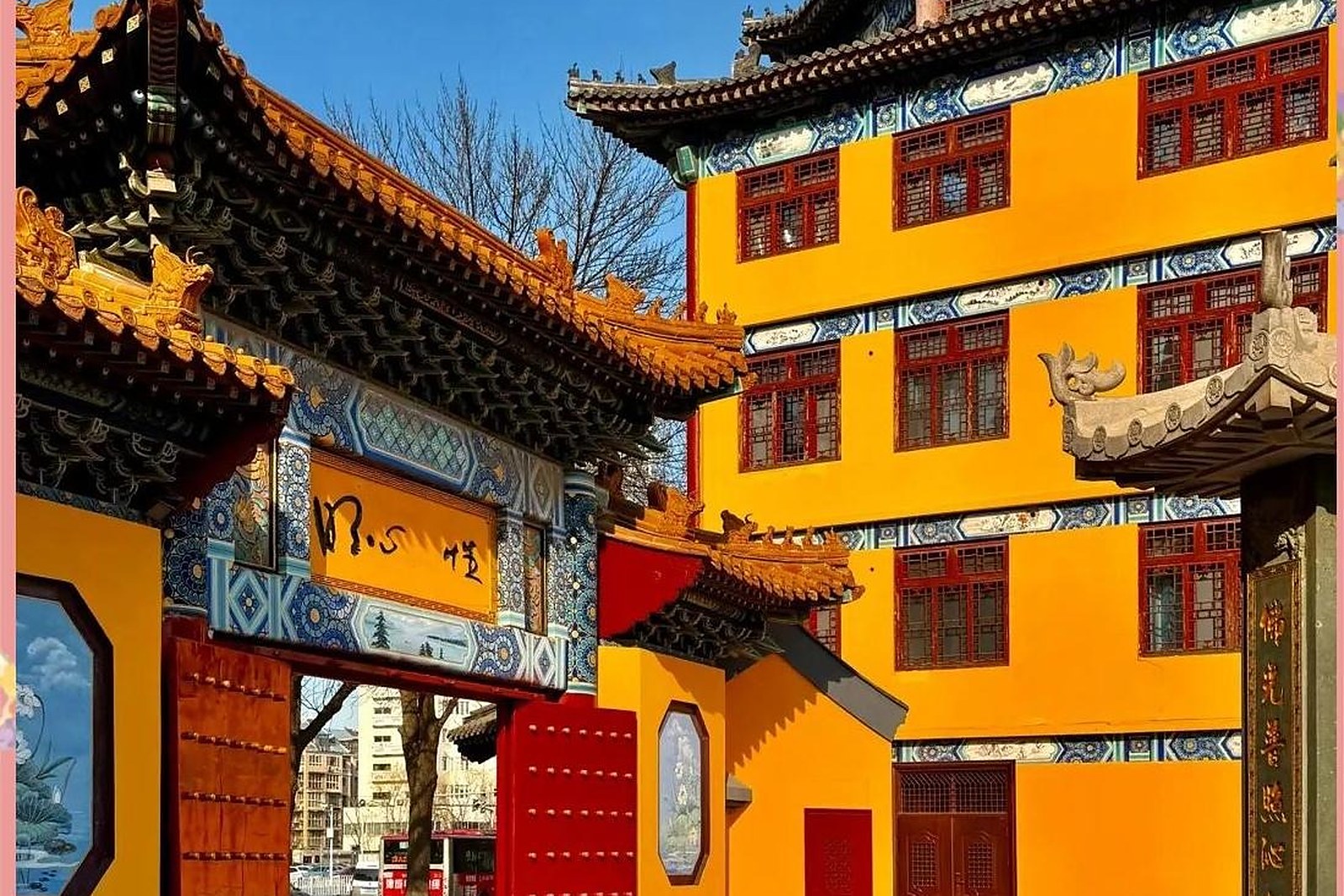
Inside, the halls run from the laughing entrance Buddha to a tall rear Guanyin, with brass burners smoking at each threshold and volunteer hands refilling the candle racks. The temple works – chanting in the morning, families arriving with offerings through the day, and a courtyard noticeboard that reads like the quarter’s social calendar.
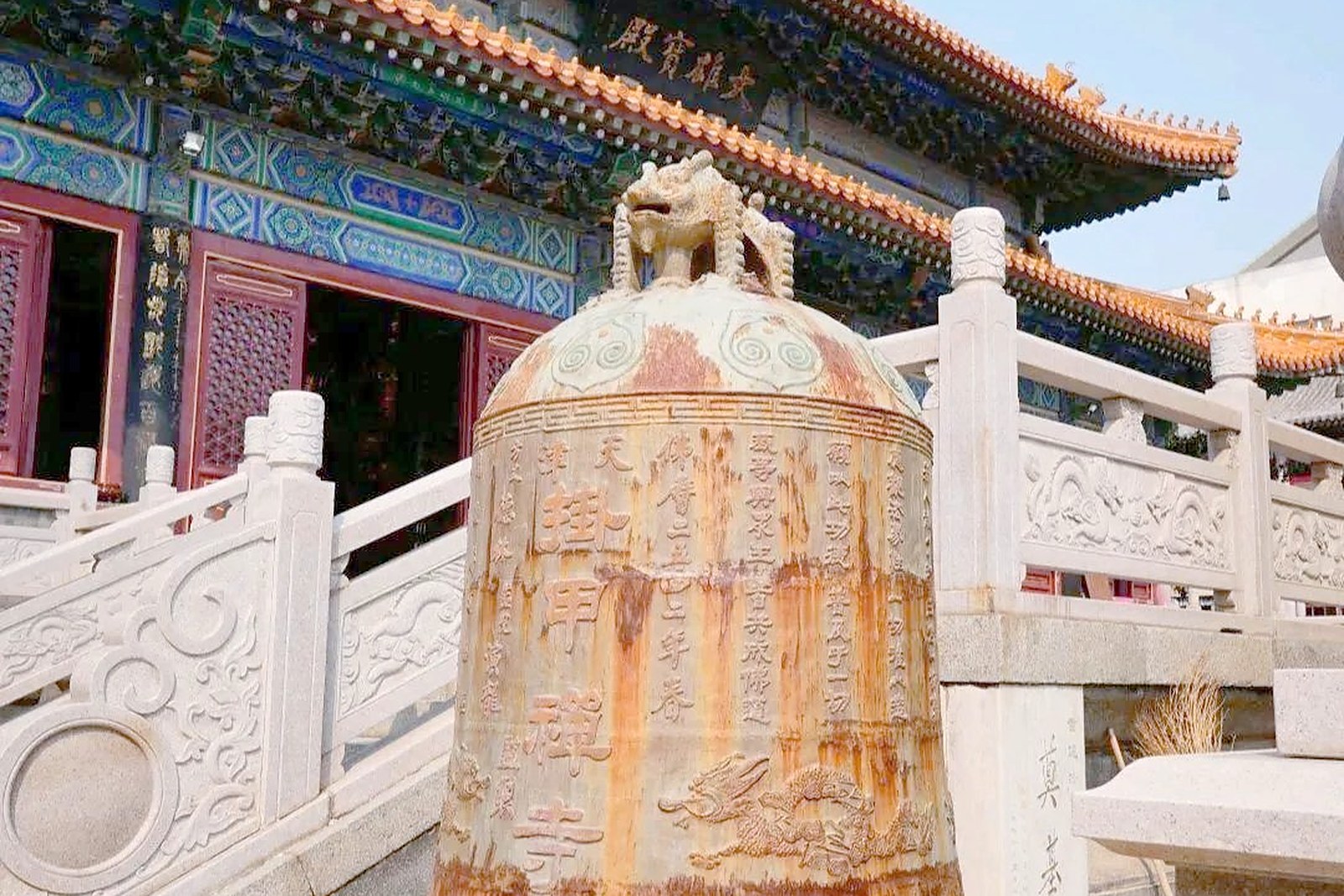
Give it half an hour, light a stick of incense if you like, and take the story with you: the temple’s name is a legend, but the continuity is not – the same bank, the same bell, centuries on.
Practicalities
- Entry free; incense and amulets take small change at the stand.
- The temple sits on Xinweidi Road – buses along the road stop at the corner, or ride Metro Line 1 and walk from the river side.
- The first and fifteenth of the lunar month bring the incense crowds; weekdays are calm.
- Dress and behave as a guest of a working temple, not a ticketed sight.
Words and Names
挂甲寺 Guàjiǎ Sì Guajia Temple, the hanging-the-armor temple; 尉迟恭 Yùchí Gōng the Tang general of the founding legend; 山门 shānmén the temple gateway; 观音 Guānyīn Guanyin of the rear shrine; 香炉 xiānglú the brass incense burners. Beyond the temple, the same 天津市河西区 Tiānjīn Shì Héxī Qū Hexi District keeps more places worth the detour: 天津文化中心 Tiānjīn Wénhuà Zhōngxīn the Cultural Center, 天津广播电视塔 Tiānjīn Guǎngbō Diànshì Tǎ the TV Tower, 人民公园 Rénmín Gōngyuán Renmin Park, or 柳林景区 Liǔlín Jǐngqū the Liulin riverside – four more doors into the same Hexi District. Once the incense has had its hour, our Hexi food map fills the table.
flowcloud would say Guajia Temple is the district’s oldest standing appointment: a general’s armor on a riverbank tree, and a bell that never fell out of the schedule. All checked November 2026.
Getting there: Guajia Temple stands on Xinweidi Road by the Haihe’s old bend – buses along the road stop at the corner, and the metro-plus-walk from Xiawafang side takes about fifteen minutes. All checked November 2026.