
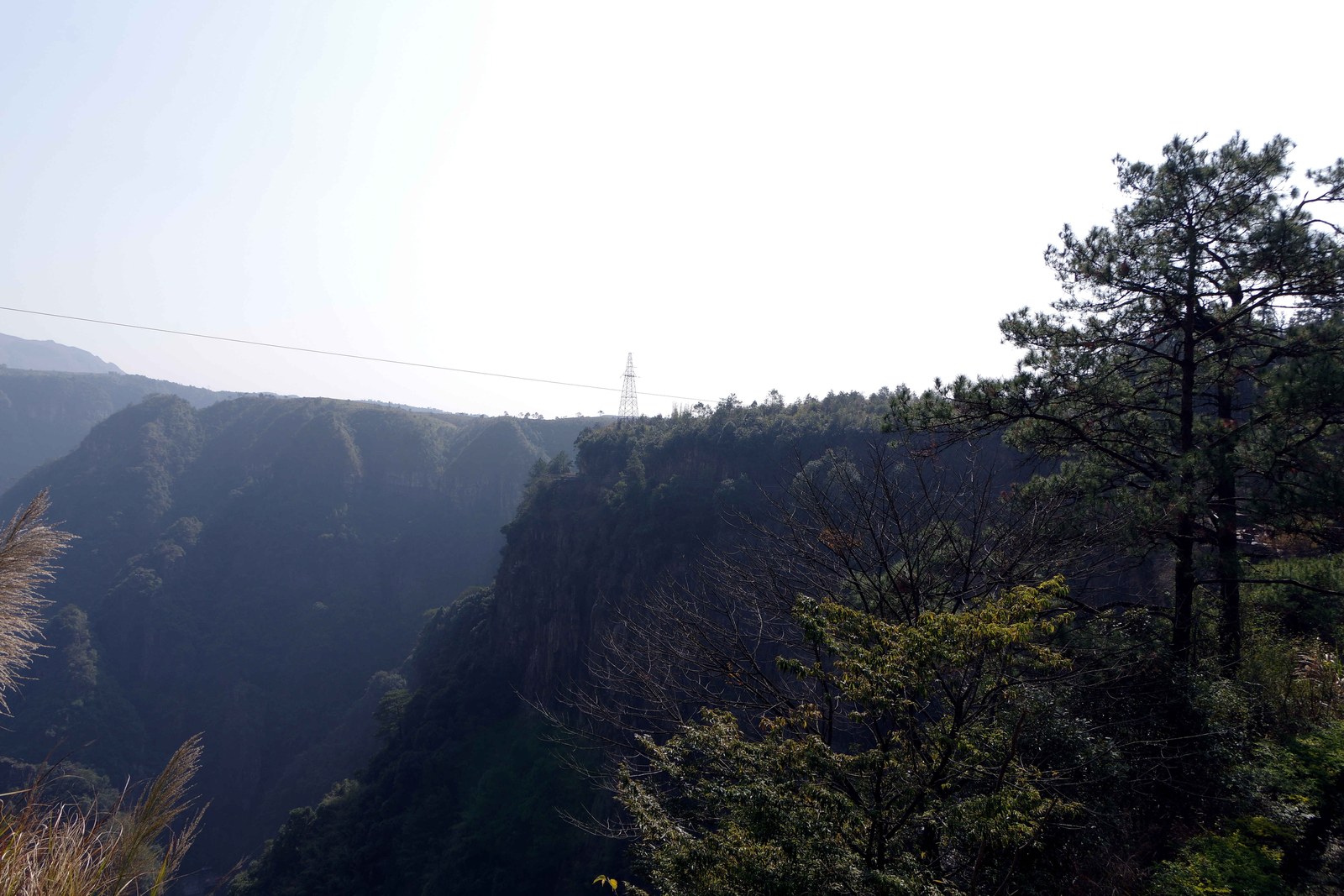
广东大峡谷 Guǎng dōng dà xiá gǔ is the largest canyon in the province and it is also the strangest, because it is not a valley that water has been wearing down for a hundred million years – it is a crack that opened in a plateau. It lies at 大布镇 Dà bù zhèn in 乳源瑶族自治县 Rǔ yuán Yáo zú zì zhì xiàn, about 68 kilometres south-west of the county town on the road towards the 英德 Yīng dé border, and the other names it goes by – 粤北大峡谷 yuè běi dà xiá gǔ and 乳源大峡谷 rǔ yuán dà xiá gǔ – are the same place. What makes it unusual is its type: it is the only 地陷式峡谷 dì xiàn shì xiá gǔ, a sunken or rift-type canyon, in 华南 huá nán, and the local description of it – 广东地貌的一道美丽的伤痕 Guǎng dōng dì mào de yī dào měi lì de shāng hén, a beautiful wound in the geomorphology of Guangdong – is less sentimental than it sounds, because a wound is exactly what it is. The arithmetic is the argument. The canyon runs about 15 kilometres along a north-west to south-east line; its walls reach more than 300 metres at the deepest; the plateau surface at the top is comparatively flat, so that the ground you are standing on has no visible relation to the ground 300 metres below you; and the 大布河 Dà bù hé, the river that made it, runs along the floor for the whole length. At the top the opening is roughly 600 metres across, though it varies – over a kilometre in places, a few hundred in others, and no narrower than about 100 metres anywhere. The rock is 石英砂岩 shí yīng shā yán, quartz sandstone: sedimentary beds laid down over 300 million years ago, and the hard, close-grained kind of sandstone that holds a sheer face instead of crumbling into a slope. The origin story the geologists tell is a small basin in the hills, then the 燕山造山运动 Yān shān zào shān yùn dòng, the Yanshan orogeny, which stretched the crust and lifted blocks while letting others drop away, so that a section of the basin dropped along fractures and left a slot with a flat plateau on either side. The dating is around ten million years for the rift structure; a widely repeated alternative that puts it in the 喜马拉雅 Xǐ mǎ lā yǎ orogeny 130 million years ago does not work geologically and is best left alone. Because 乳源 Rǔ yuán is limestone karst country, there are caves in the canyon walls, and because limestone and red conglomerate weather into similar shapes, the canyon’s scenery ends up looking a good deal like 丹霞山’s, which is a useful thing to know when you plan the two into one trip.
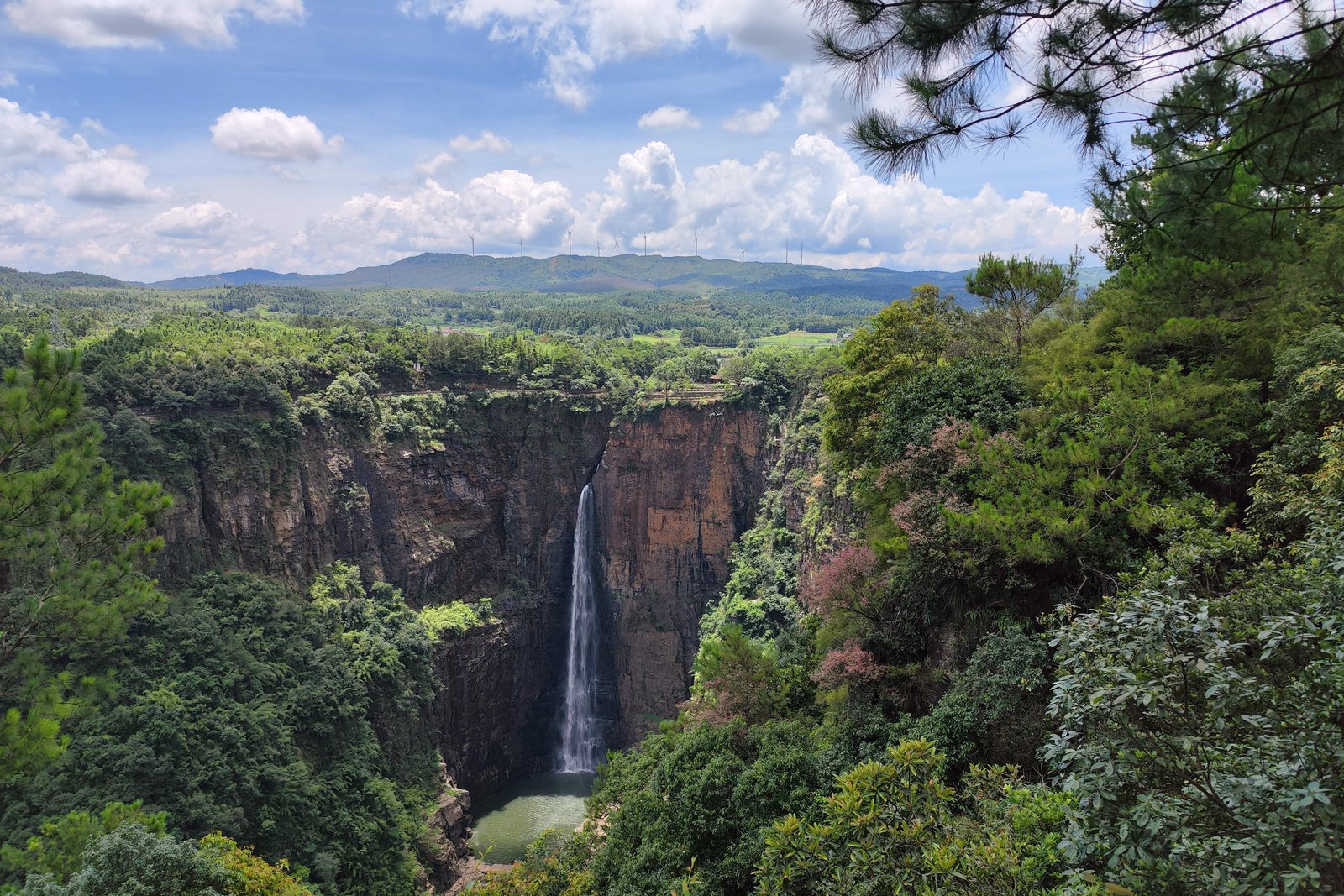
The water is what most people actually come for, and it falls in a way that is characteristic of a rift rather than a valley. At the head of the canyon the plateau surface drains over a stepped edge and drops more than 200 metres to the floor in one series of leaps, which is the fall the local write-ups call 埕头瀑布 chéng tóu pù bù, also described as the canyon’s own 壶口 hú kǒu; the biggest single fall, 腾龙大瀑布 téng lóng dà pù bù, is given as 222 metres, the largest in Guangdong. Five named falls are counted along the floor: 腾龙 téng lóng, 黄龙 huáng lóng, 银河 yín hé, 仙女潭 xiān nǚ tán and 珍珠幕帘 zhēn zhū mù lián, the pearl curtain. The 仙女潭 fall is the one with the reputation, falling some 200 metres in the wet season and throwing a double rainbow across itself under particular light; below the falls a deep pool collects the water, and the pool empties out eastwards through the canyon, out past 波罗镇 bō luó zhèn in 英德 and eventually into the 北江 Běi jiāng. Getting down to it is the decision the day is built around. The famous descent is the 通天梯 tōng tiān tī, the ladder to heaven: a flight at about 50 degrees with 1,386 stone steps, giving on the floor, and a 1,368-step count appears in some references – the 1,386 figure is the one several sources agree on. For anyone who would rather not take a 50-degree staircase of over a thousand steps down and then back up, there is a 5-kilometre walkway built along the cliff, the 绝壁步道 jué bì bù dào, with a 千米游廊 qiān mǐ yóu láng – a kilometre of covered gallery – and the 飞虹桥 fēi hóng qiáo, a bridge across the gap, all of which give the view without the descent.
On the floor, the best-known shape is 金龟岩 jīn guī yán, a rock that reads as a giant turtle with its head up, one of more than twenty weathered forms the park has named, along with 骆驼峰 luò tuó fēng, the camel peak. The park runs four longer walking routes of three to five kilometres, which are the serious ones: they want proper gripping shoes and a navigator, because there is no mobile signal at the bottom of the canyon. Two shorter sightseeing routes of one to two hours have handrails and rest points, and the honest estimate for seeing the place properly is four to five hours. There is also a daily high-wire act, a performer crossing the 300 metres of the canyon on a wire, and the ticket platforms sell it as part of the day at 10:30 and 13:00 – though the schedule is not published anywhere official, so it is best treated as something you may happen to catch rather than something to plan around.
The canyon is 4A-rated and has been given the local name 华南第一谷 huá nán dì yī gǔ, the first valley of south China, and it sits at the middle of a set of sites that 韶关 Sháo guān has been trying to string together: in December 2025 the city set out a plan to lead with 丹霞山 and link it with 珠玑古巷, 梅关古道 and this canyon into a single county-wide tourism structure. Nearby there is 景峰洞 jǐng fēng dòng, a quartz sandstone cave about twenty kilometres away which is rare in China, and the 云门山景区 yún mén shān jǐng qū, about forty kilometres off, which is the natural pairing for a second day. The county it sits in is the other half of the reason to come this far. 乳源瑶族自治县 is a 瑶族 Yáo autonomous county, and the 过山瑶 guò shān Yáo – the Yao who cross the mountains, the branch that practised shifting cultivation and therefore lived light – are its people; the 必背瑶寨 bì bèi Yáo zhài is 54 kilometres north-east of the county town, up in the hills, and the valley there, the 必背河, is where the long-table banquets and the 瑶族十八酿 Yáo zú shí bā niàng, the Yao eighteen stuffed dishes, are actually eaten rather than performed. The road back to the county town from the canyon runs through country that is more 过山瑶 than Han, and the food is the giveaway – 瑶山土猪肉, smoked pork, mountain fish, 苦爽酒 kǔ shuǎng jiǔ, the bitter-then-sweet rice wine. Because the canyon is set at 68 kilometres from the county town and the last stretch is winding county road, the two obvious bases are a hot-spring lodge in the 乳源 hills or a hotel in 大布镇 itself, and the 南岭国家森林公园 Nán lǐng guó jiā sēn lín gōng yuán, the national forest park in the far north of the county with the province’s highest peak at 石坑崆 shí kēng kōng, 1,902 metres, and its own waterfall valley of nearly a hundred falls in a two-kilometre gorge, makes a third day if you have one.
Practicalities
Tickets. In the region of 40 to 55 yuan for an adult, and the price moves with the year and the channel, so the honest number is a range rather than a figure; it includes the high-wire performance when it is running. Children between 1.1 and 1.4 metres and visitors over 60 pay half. Buy at the gate where you can, and check what is included, because some reseller listings quote a lower price and then charge the walkway or the performance separately.
Opening hours. 08:00 to 17:00 daily, all year. Last entry is late enough for the four-to-five-hour full circuit only if you start before about eleven, so an afternoon arrival should plan on the short routes or on the cliff walkway and the bridge rather than on the 通天梯 and the floor. In winter the light leaves the canyon early, because the walls are steep and high, and the floor is in shadow long before the plateau is.
Getting there. By road from Guangzhou or Foshan it is the 京珠 Jīng zhū expressway to the 乳源 Rǔ yuán exit and then 68 kilometres on the S258 provincial road, about three hours in total; from 韶关市 it is about an hour and a half and an easier drive, with free parking at the gate. By public transport it takes longer and needs timing: a bus from the 韶关西河汽车站 Sháo guān xī hé qì chē zhàn to the 乳源客运站 Rǔ yuán kè yùn zhàn, eight departures a day, then the 大布镇 dà bù zhèn shuttle, which runs only twice daily at 09:30 and 15:00, from the end of which it is a fifteen-minute walk to the gate. Miss the second shuttle and the day is gone, which is why most people arrive by car.
Closing day. No weekly closing day and no seasonal closure. What closes it is rain: the 通天梯 and sections of the floor path are shut when the water is high or the stone is wet, and a summer downpour in this catchment turns the falls from a curiosity into something you keep behind a rail for. The cliff walkway and the bridge generally stay open in poor weather. The difficulty is that the closure is announced at the gate on the day rather than online, so a visit in the June-to-September typhoon season should be planned with a fallback, which in this county means the hot springs and the forest park.
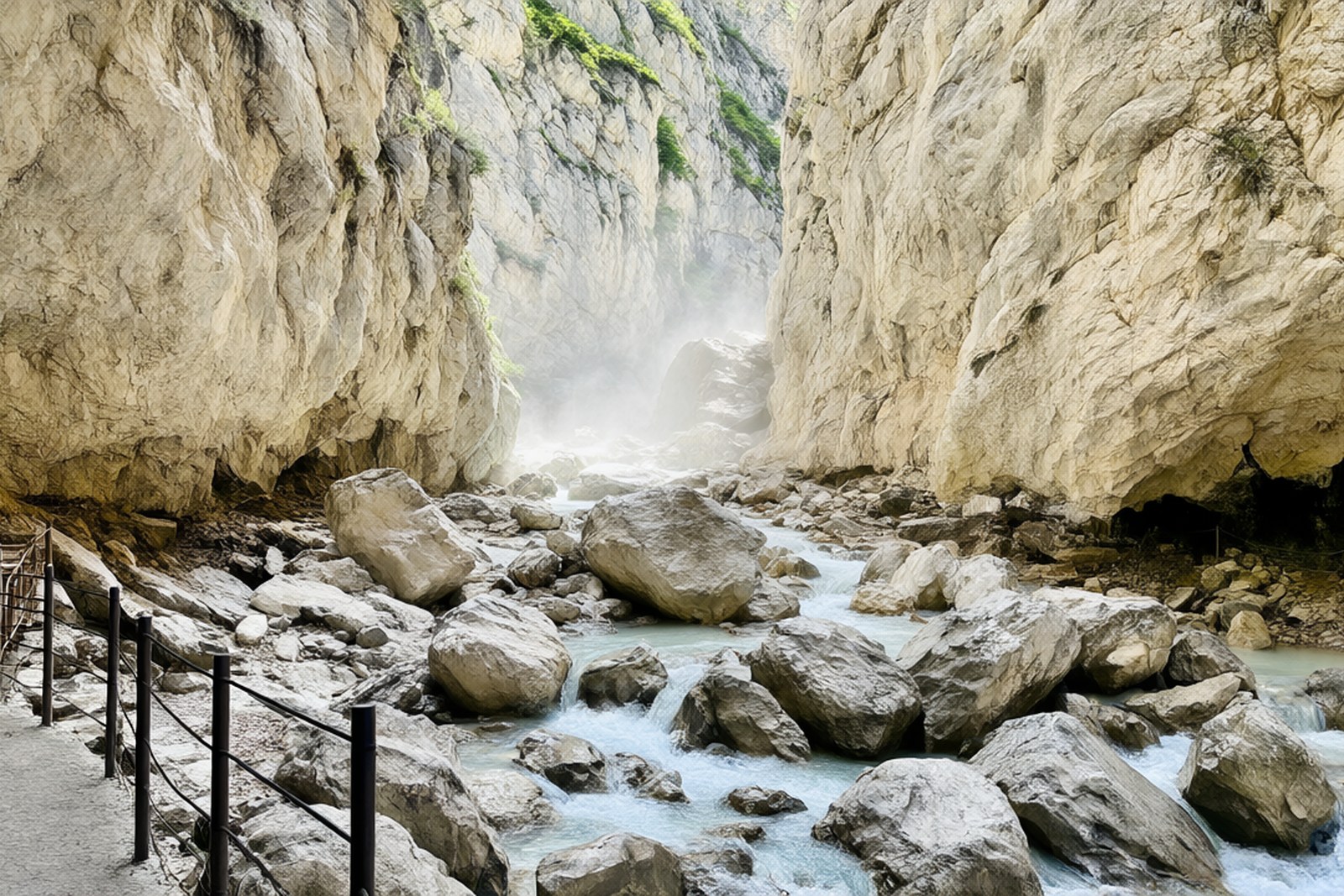
flowcloud would say that the difference between a canyon and a crack is a matter of how it was made, and that 广东大峡谷 is worth 1,386 steps down a 50-degree staircase because the thing at the bottom is the evidence itself: a plateau that simply came apart along its own fractures ten million years ago, with a river in the seam and a 222-metre fall over the lip, which is a more interesting proposition than any valley could have been.
Getting there: 广东大峡谷 is at 大布镇 Dà bù zhèn in 乳源瑶族自治县 Rǔ yuán Yáo zú zì zhì xiàn, 韶关市, about 68 kilometres south-west of the county town by way of the S258 provincial road and about three hours from Guangzhou or Foshan off the 京珠 Jīng zhū expressway with an hour and a half of that from 韶关市; by public transport it is a bus from the 韶关西河汽车站 Sháo guān xī hé qì chē zhàn to the 乳源客运站 Rǔ yuán kè yùn zhàn, eight services a day, then the 大布镇 shuttle at 09:30 or 15:00 only and a fifteen-minute walk to the gate, so a car is by far the more reliable way in, and 韶关丹霞机场 Sháo guān dān xiá jī chǎng is the nearest airfield.