
Guangfulin Relics Park: The Prehistoric Site of a 4,000-Year-Old Culture on the Shore of its Own Lake, with the Underwater Museum’s Three Triangular Roofs Floating on the Water, Rebuilt Village Houses Half-Sunk in Ponds and the Campus Edge of Songjiang University Town in Songjiang District, Shanghai
四千年月沉湖底,三片斜檐浮水间。Sì qiān nián yuè chén hú dǐ, sān piàn xié yán fú shuǐ jiān – Four thousand years of moonlight have sunk beneath the lake; three slanted roofs float between the waters.
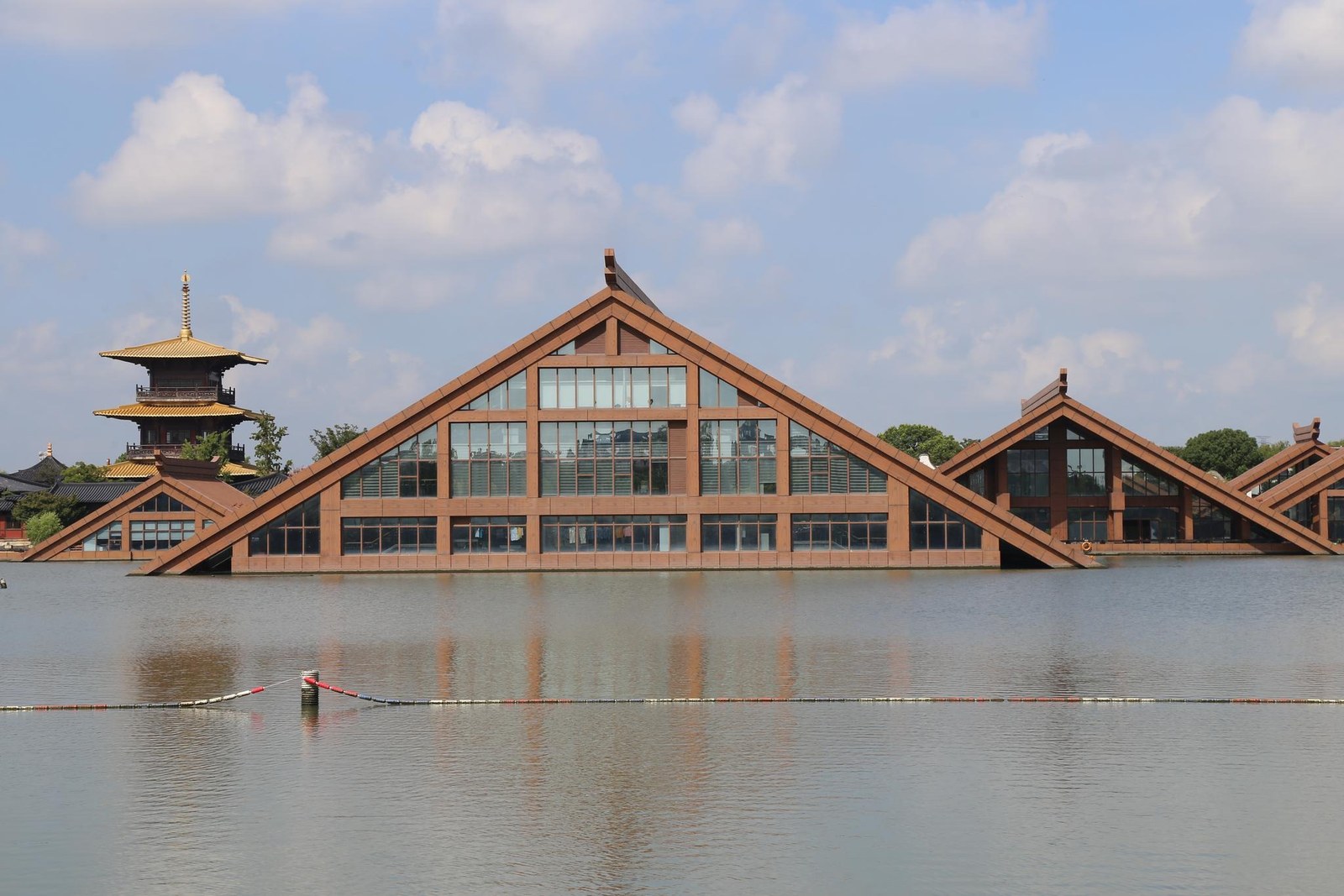
广富林文化遗址 Guǎngfùlín Wénhuà Yízhǐ Guangfulin Relics Park is not a park decorated with a museum — it is, plainly put, the archaeological ground itself, opened to the sky and water: on the northern edge of 松江区 Sōngjiāng Qū Songjiang District beside 松江大学城 Sōngjiāng dàxuéchéng Songjiang University Town, excavation trenches here yielded a prehistoric culture so distinctive it was named after the place — 广富林文化 Guǎngfùlín wénhuà the Guangfulin culture, a four-thousand-year-old layer of migrants from the central plains who settled this lakeside and left pottery, tools and house-post holes that rewrote the region’s story. The park has been arranged so the ancient ground and a working landscape of lakes, rice paddies and reconstructed dwellings can be walked in one circuit, its centrepiece the 广富林文化展示馆 Guǎngfùlín Wénhuà Zhǎnshìguǎn the Guangfulin Culture Exhibition Hall, a museum sunk into the lake with nothing visible above water but three great triangular gable roofs, like the fossil of a village. What you actually visit is prehistory kept wet, walkable and unembarrassed.
Call it honestly: the park grounds take a general ticket and the indoor exhibition halls carry their own tickets, with the underwater museum operating timed entry that runs out fast on fine weekends (worth confirming the details for current ticket combinations, museum time slots and any exhibition-hall closures before you set out), and the site sits on the northern fringe of the district, reached comfortably by metro to 大学城 dàxuéchéng University Town area stations plus a short ride. The honest warning is the scale: this is a large landscape park, distances between the museum, the reconstructed 关帝庙 Guāndì Miào temple quarter and the old street are real, and a summer noon on open banks is honest sun. Weekdays give you herons, students and empty boardwalks. Give the park three hours with the underwater museum, half a day with the lake circuit and lunch.
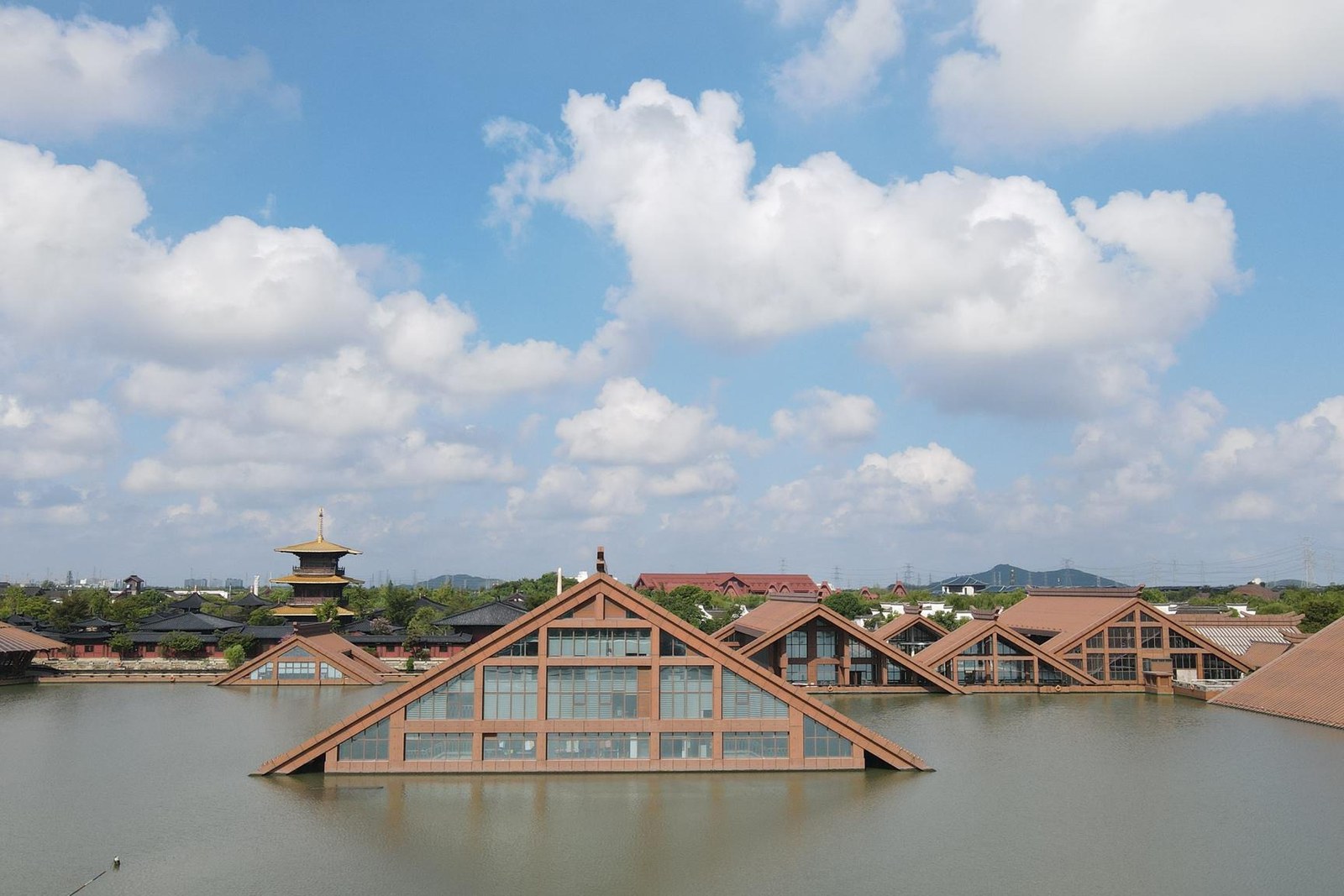
The honest star is the underwater museum itself — the trio of steep 三角屋顶 sānjiǎo wūdǐng triangular roofs standing on the lake like dark wooden sails, the exhibition descending below the waterline into a walk through reconstructed prehistoric village life, flood layers and the dig itself, so that visitors literally read the site from under its own lake, the single most memorable museum threshold in the Shanghai suburbs. What gets oversold is the “ancient town” flavour of the surrounding rebuilt streets: the temple halls and shopfronts around the lake are handsome modern reconstruction, not surviving history, and the honest architecture here is the archaeology — the real thing is under the lawn and the water, in the soil profile displays and the post-hole ghosts of four-thousand-year-old houses (worth confirming the details for which halls run timed entry on your day before you plan the circuit). What repays the effort is walking the shore path at low sun, when the roofs mirror perfectly and the university towers disappear behind the treeline. Book the museum first, then walk the lake. Come for the layering of the place: roof, then water, then the culture beneath.
The self-aware postscript: I was on the west shore path one clear October afternoon, photographing the three roofs mirrored in the flat lake, when a student from the university across the water volunteered the local view. “We revise for exams looking at those triangles,” she said, nodding at the museum, “people think it’s a photo spot — but four thousand years ago someone stood roughly where we’re standing and fired pots in that same wind; the lake makes you quiet about time”. That is the visit in miniature. From the west shore at golden hour, roofs doubled in the water, paddies behind and campus towers half-hidden ahead, the park holds its whole argument in one frame — a suburb that decided to display its oldest chapter underwater. 广富林文化遗址 Guǎngfùlín Wénhuà Yízhǐ suits whoever treats it as a genuine archaeological landscape with one unforgettable sunken museum first and a pretty lakeside park second, and disappoints anyone expecting a dense antique street of genuine old buildings. The rest of this Songjiang list brackets it: the classical shade of 醉白池 Zuìbái Chí Zuibaichi Park and the tower lawns of 方塔园 Fāngtǎ Yuán Fangta Garden lie south toward the old town, the bamboo climbs of 佘山 Shèshān Sheshan Hill rise to the west, and the red brick of 泰晤士小镇 Tàiwùshì Xiǎozhèn Thames Town sits south in the new city — all inside the same 松江区 Sōngjiāng Qū Songjiang District whose deepest past this lake keeps.
Practicalities
- Rating: ★★★★☆ — a four-thousand-year-old archaeological culture displayed on its own lakeside ground, with the underwater museum’s three triangular roofs as Shanghai’s most striking museum silhouette; book the descent, then walk the shore.
- Tickets: Park entry plus separate tickets for the exhibition halls, the underwater museum on timed entry (worth confirming the details for current combinations and time slots).
- Address: 广富林文化遗址 Guǎngfùlín Wénhuà Yízhǐ, 广富林路 Guǎngfùlín Lù Guangfulin Road, 松江区 Sōngjiāng Qū Songjiang District, Shanghai — on the northern edge by 松江大学城 Sōngjiāng dàxuéchéng Songjiang University Town.
- Time needed: Three hours with the underwater museum; half a day with the full lake circuit and lunch.
Words and Names
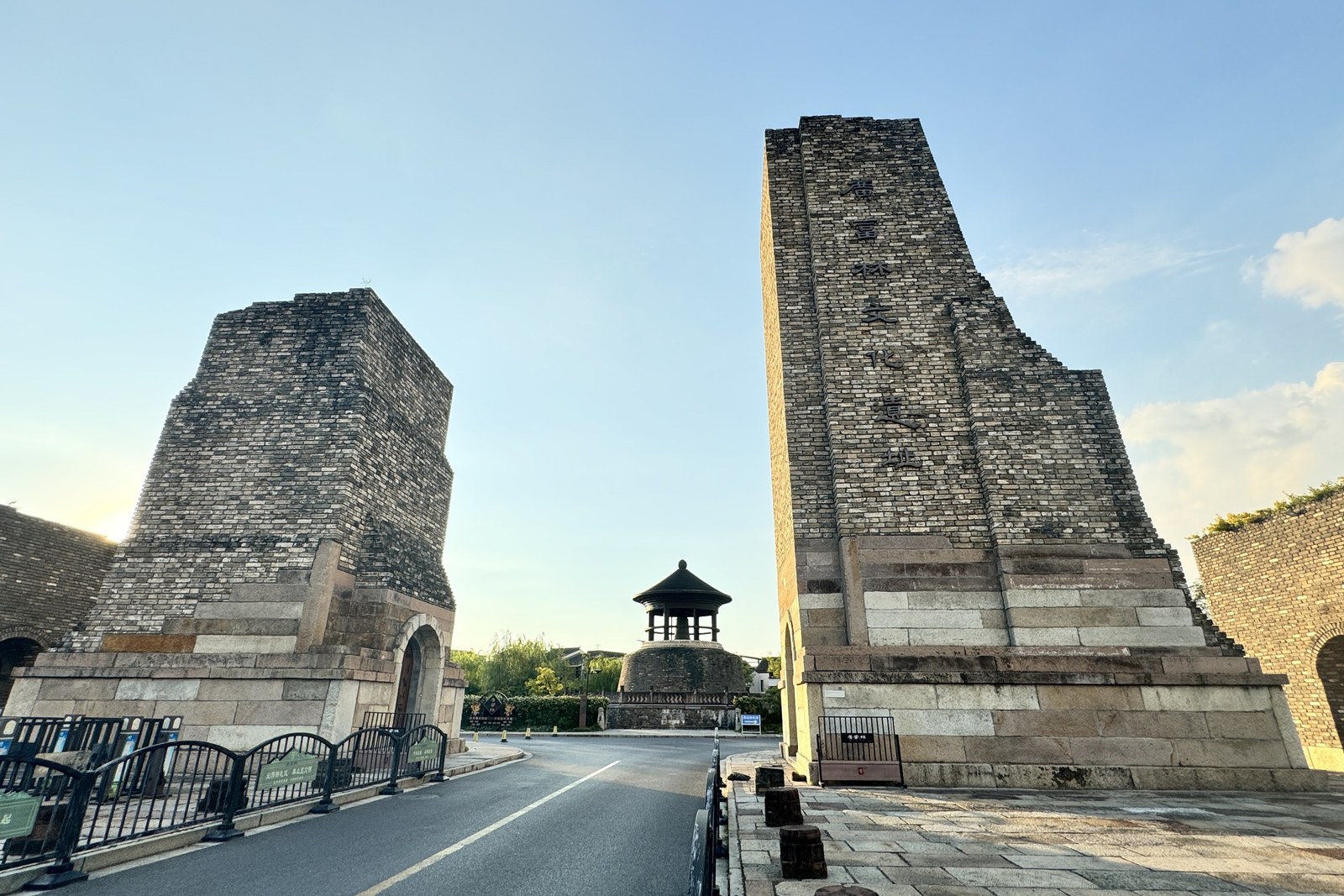
广富林文化遗址 Guǎngfùlín Wénhuà Yízhǐ Guangfulin Relics Park · 广富林文化 Guǎngfùlín wénhuà the Guangfulin culture, a 4,000-year-old prehistoric culture named for the site · 广富林文化展示馆 Guǎngfùlín Wénhuà Zhǎnshìguǎn the Guangfulin Culture Exhibition Hall, the underwater museum · 三角屋顶 sānjiǎo wūdǐng the triangular roofs floating on the lake · 松江大学城 Sōngjiāng dàxuéchéng Songjiang University Town, on the park’s doorstep · 关帝庙 Guāndì Miào the Guandi Temple quarter by the lake · 松江区 Sōngjiāng Qū Songjiang District
flowcloud would say that 广富林文化遗址 Guǎngfùlín Wénhuà Yízhǐ is the rare park that lets you stand on top of its own deepest chapter — a lakeside archaeological ground beside 松江大学城 Sōngjiāng dàxuéchéng Songjiang University Town in northern 松江区 Sōngjiāng Qū Songjiang District, where the 广富林文化 Guǎngfùlín wénhuà Guangfulin culture of four thousand years ago left its pottery and post-hole ghosts in the ground, and where the 广富林文化展示馆 Guǎngfùlín Wénhuà Zhǎnshìguǎn exhibition hall sinks below its own lake so that only the 三角屋顶 sānjiǎo wūdǐng three triangular roofs ride the water like a village remembered in silhouette (worth confirming the details for ticket combinations and the underwater museum’s timed-entry slots before you set out) — and that the honest move is a weekday golden-hour shore walk after the museum descent, because the antique-town expectation is the poster half and the mirrored triangles, the soil profiles under the lawn and the same wind that fired the first pots are the real half, and the park repays whoever lets four thousand years stay wet and quiet. All checked October 2026.
Getting there: Metro Line 9 to 松江大学城 Sōngjiāng Dàxuéchéng Songjiang University Town station, then a taxi or shuttle north to the park’s lakeside entrance (worth confirming the details for the underwater-museum reservation rule, which caps daily entries); the 三角屋顶 sānjiǎo wūdǐng triangle roofs photograph best from the bridge. All checked October 2026.