
Bells over the Old Town: Guangji Temple
辽韵风铃井南巷,古刹钟声渡宝坻 Liáo yùn fēnglíng Jǐngnán xiàng, gǔchà zhōngshēng dù Bǎodǐ – Liao-era chimes ring down Jingnan Lane; the old monastery’s bells carry Baodi across
广济寺 Guǎngjì Sì rebuilds the great monastery that ruled the old town of 天津市宝坻区 Tiānjīn Shì Bǎodǐ Qū Baodi District for a thousand years – a Liao-dynasty foundation whose halls, bell towers and courtyards anchor the county’s Buddhist life to this day. Behind Jingnan Hutong’s low lanes the complex opens into timber halls with layered brackets, carved ceilings and the working courtyard of a parish that still rings for services, not just for tourists.
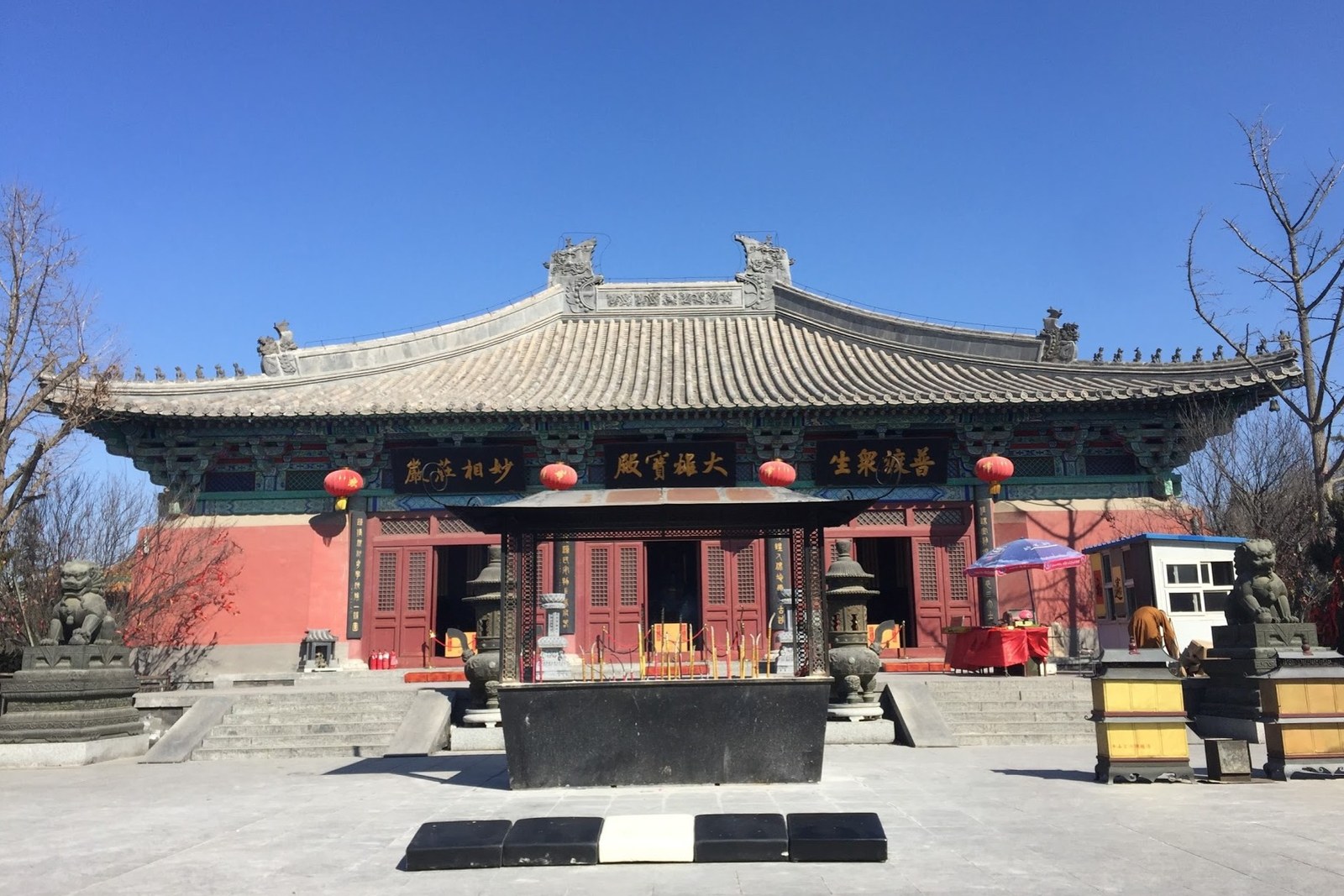
The gate sequence is the temple’s first lesson. Stone lions flank the entrance, the plaque calls the faithful up the axis, and the courtyard opens in stages – screen wall, censer, drum and bell towers – before the main hall lifts its double-eaved roof over the skyline. Photographers should come early: the low-angle morning light on the grey bricks is the temple’s best card.
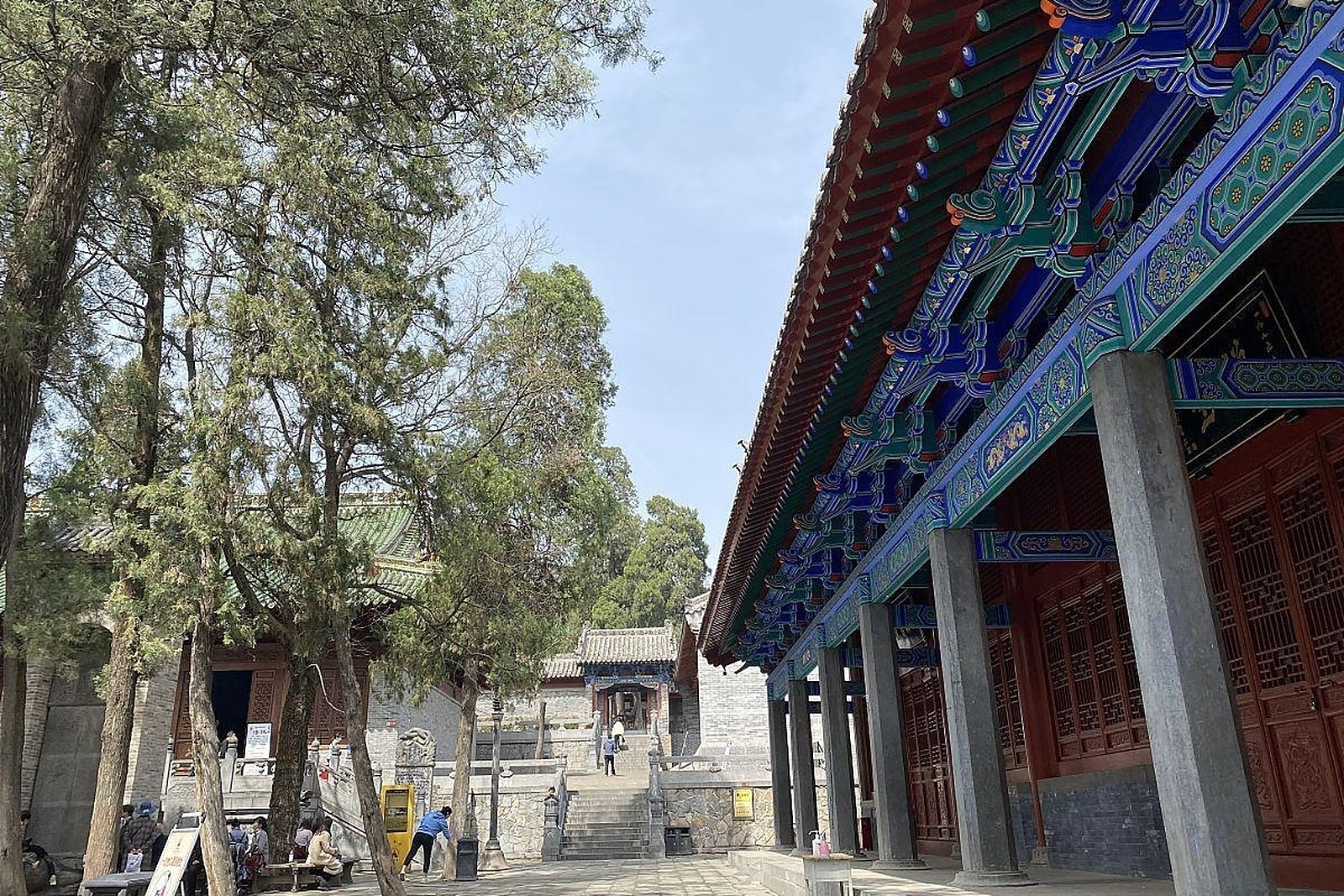
The main hall holds the congregation. Statuary rises in the gloom, side altars carry the local guardian figures, and the ceiling’s painted coffers reward the neck-craners. The monastery is a working one – incense queues on the first and fifteenth of the lunar month, temple fairs pack the lane at new year, and the lay volunteers who sweep the courtyards will happily explain which hall to visit in what order.
Around the compound, the old town keeps the pilgrimage going. The stone sutra pillar a few lanes north dates the Buddhist presence back a thousand years; the cultural square and the Confucian-temple quarter extend the heritage walk; and the food lanes between them keep pilgrims fed the way they have since the fairs began. Half a day covers temple and town comfortably.
Practicalities
- The temple keeps morning and afternoon service hours – festival days bring the fairs and the crowds.
- Dress modestly and keep voices low in the halls; photography is fine in the courtyards, check inside.
- First and fifteenth of the lunar month are incense-queue days – arrive early or come another day.
- The stone sutra pillar and cultural square make an easy same-walk heritage loop.
Words and Names
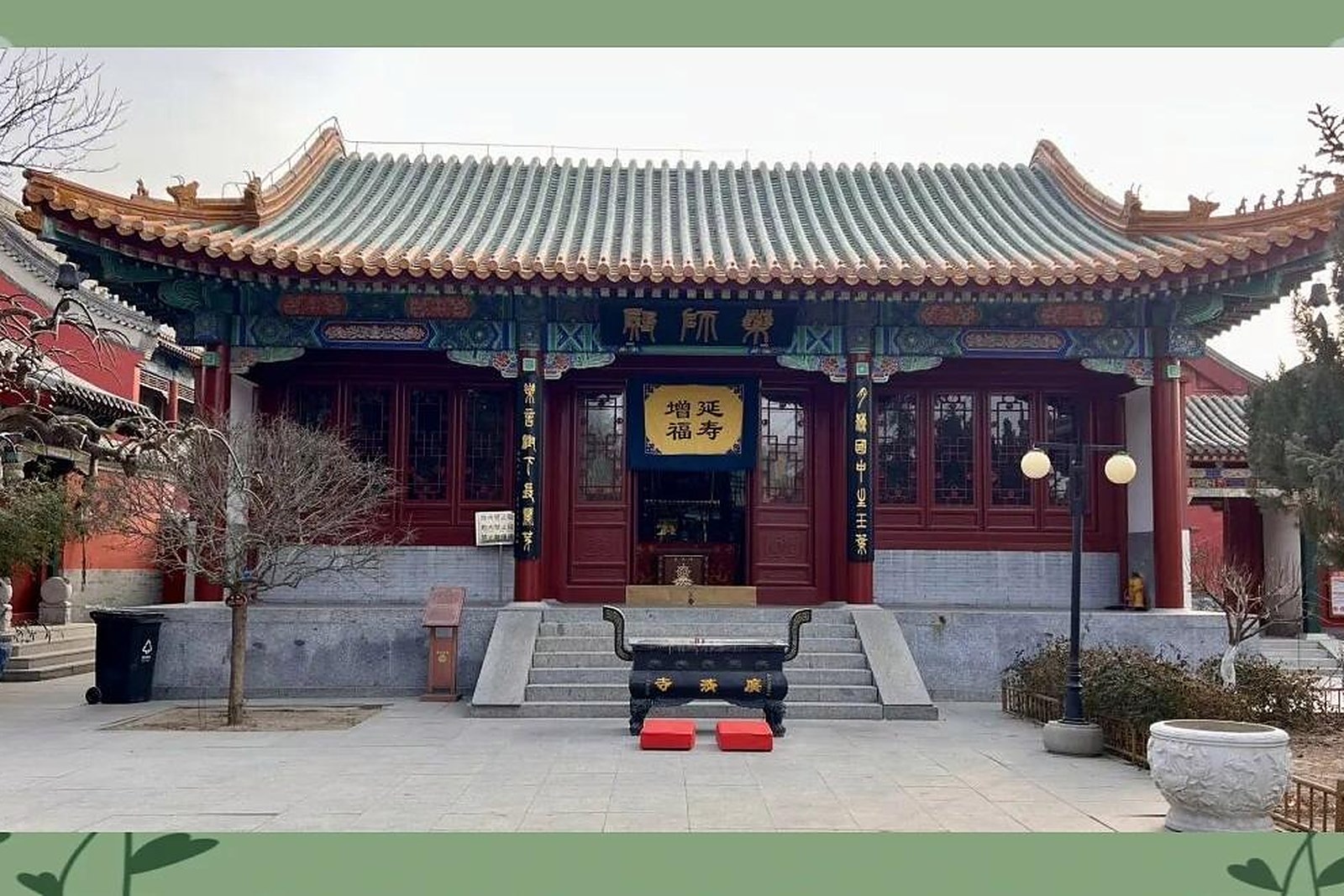
广济 Guǎngjì “broad relief,” the temple’s mercy name; 辽 Liáo the Liao dynasty that founded the site; 大雄宝殿 Dàxióng Bǎodiàn the main hall; 香炉 xiānglú the great courtyard censer; 石经幢 shí jīngchuáng the stone sutra pillar of the old town. Beyond the bells, the same 天津市宝坻区 Tiānjīn Shì Bǎodǐ Qū Baodi District keeps more places worth the detour: 潮白河国家湿地公园 Cháobái Hé Guójiā Shīdì Gōngyuán the Chaobai River Wetland Park, 了凡公园 Liǎofán Gōngyuán the Liaofan Park, 晶宝温泉农庄 Jīngbǎo Wēnquán Nóngzhuāng the Jingbao Hot Spring Farm, or 小辛码头村 Xiǎoxīn Mǎtóu Cūn the Xiaoxin Matou wharf village – four more doors into the same Baodi District. After the incense, our Baodi food map fills the table.
flowcloud would say Guangji Temple is the old town’s deep anchor: Liao bones, working bells and a lane that still smells of incense on the right days – faith at neighborhood scale. All checked November 2026.
Getting there: The temple hides on Jingnan Hutong in the old town – drive to the street-mouth lots or walk from the cultural square two blocks north. All checked November 2026.