
Gubei Water Town: A Northern Water Town of Canals and Lanterns at the Foot of the Simatai Great Wall, with Night Illuminations and Hot Springs Below the Old Gubeikou Pass in Miyun District, Beijing
古镇灯痕摇水巷,长城月色落人家。Gǔzhèn dēnghén yáo shuǐxiàng, chángchéng yuèsè luò rénjia – In the old town, lantern light sways along the water lanes; the moon over the Great Wall falls upon the rooftops below.
古北水镇 Gǔběi Shuǐzhèn Gubei Water Town is not a surviving ancient village that grew by a river — it is, plainly put, a built water town with a real wall behind it: a carefully constructed resort of canals, stone bridges and grey-brick courtyard houses in the northern style, laid along the 汤河 Tānghé Tang River at the foot of 司马台长城 Sīmǎtái Chángchéng Simatai Great Wall in the north of 密云区 Mìyún Qū Miyun District. Its trick is the pairing — most Chinese water towns sit in soft southern lowlands, while this one stands beneath a raw Ming wall, so every bridge view ends in a mountain rampart. The lanes hold working touches rather than empty shopfronts: a 染坊 rǎnfáng dye workshop with cloth drying in blue yards, a distillery simmering 司马小烧 Sīmǎ xiǎoshāo local liquor, tea houses, and 温泉 wēnquán hot-spring baths piped from the local geothermal water. What you actually visit is a strollable, lantern-lit stage set with genuine heights behind it, not a museum.
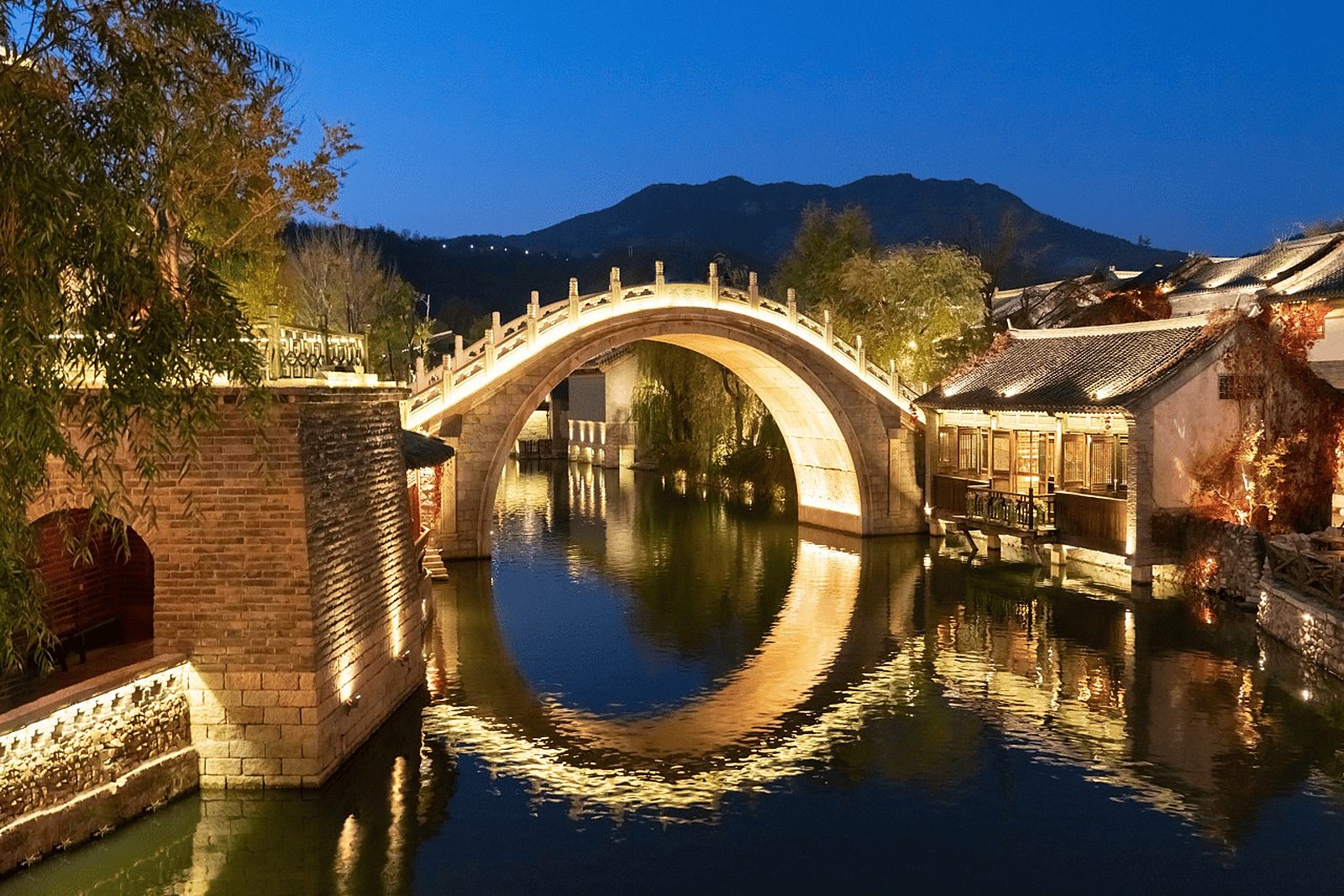
Call it honestly: the town charges a combined entry fee, with hot-spring baths, night-tour extras, boat rides and the Simatai wall ticket all priced separately, and the fullest effect arrives after dark when the 灯光 dēngguāng illuminations switch on (worth confirming the details for current admission, spring prices and wall-package combinations). The honest warning is artificiality and crowds, not cost — this is a designed town on a designed river, so come for the composition rather than the antiquity, and come late: daytime weekends pack the lanes, while the evening shift thins them, cools the air and lights the wall above. Winter is a quiet pleasure, with steam off the springs and snow on the battlements. Give it half a day and stay for the lights, or overnight in a courtyard inn.
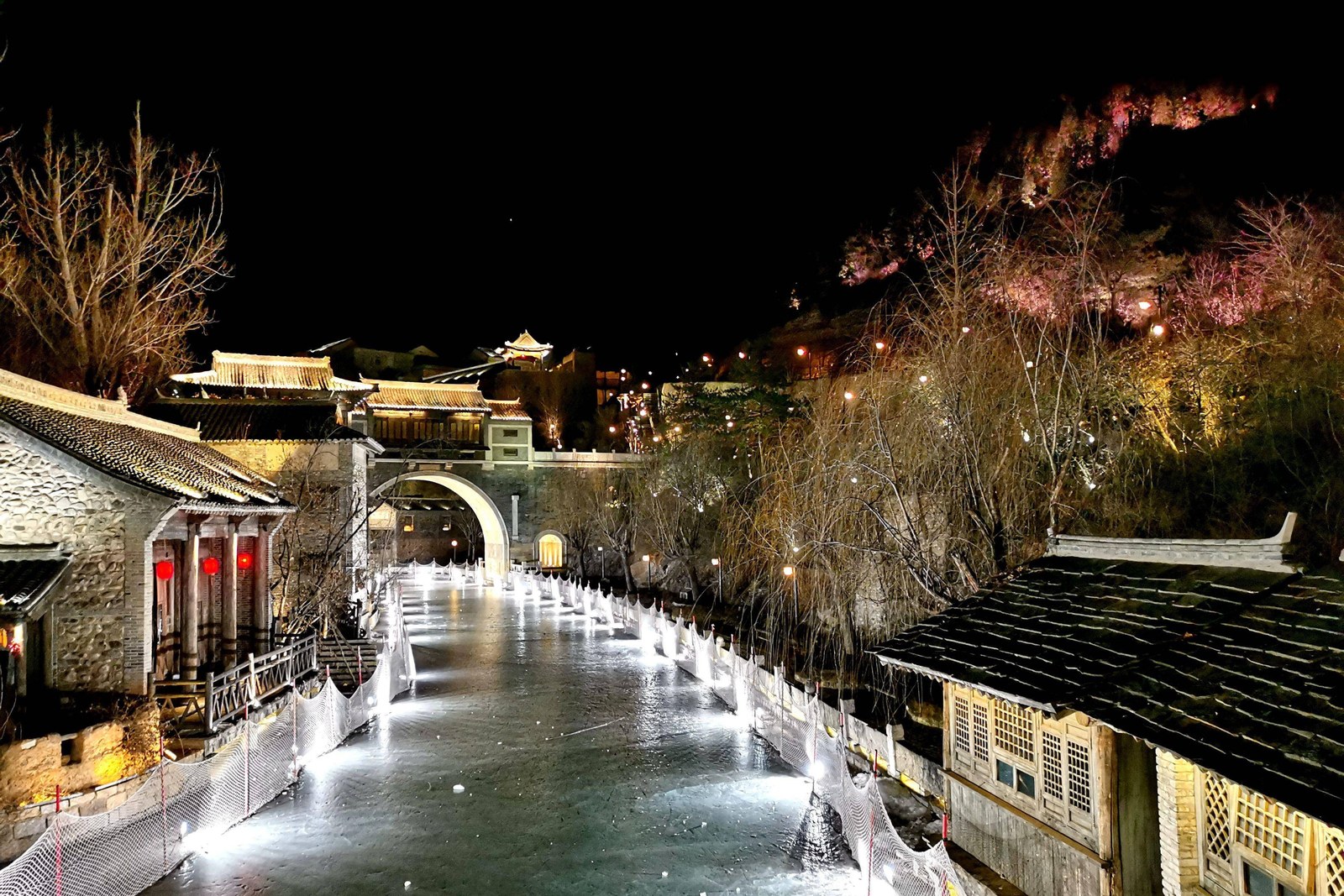
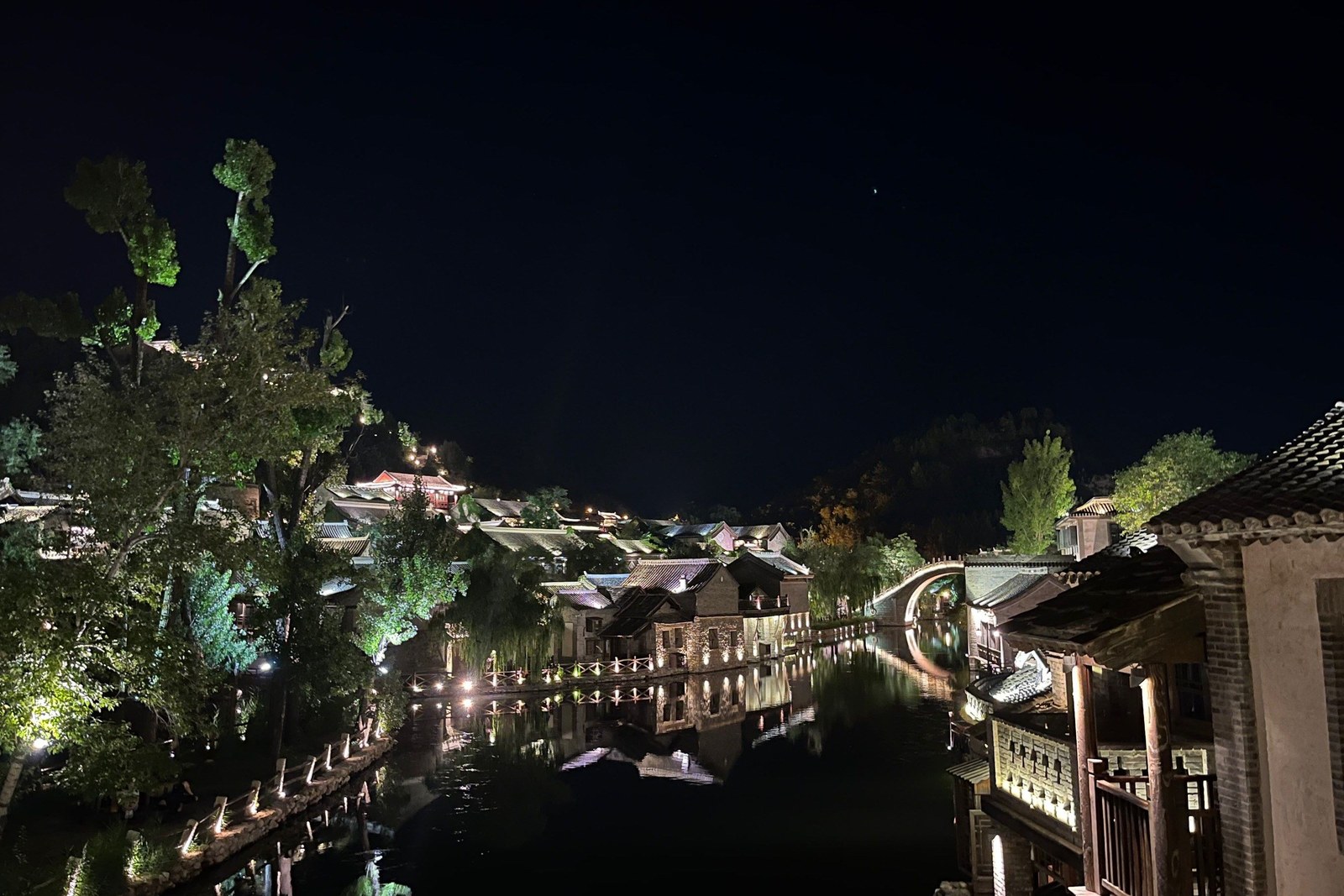
The honest star is the double view — lantern strings doubled in the canal, the smell of roasting chestnuts in the alleys, and above it all the black line of the Great Wall holding its watchtowers against the sky (worth confirming the details for which lanes, shows and viewpoints are lit on your evening). What gets oversold is the word “ancient”: the town is young, and its honesty is in staging, not in patina. What repays the effort is the completeness of the day it makes possible — climb an original wall in the morning, soak in a hot spring at dusk, and watch a fortress town glow below the same towers the garrison once watched from. Come for the layering of the place: lane, then bridge, then the lit wall above.
The self-aware postscript: I shared a bench by the canal with a family from the south who had come to see the “northern version” of their own water towns, and when I asked for the verdict the grandmother said, “ours are older, but theirs has a Great Wall for a roof — we win by age, they win by view”. That is the visit in miniature. 古北水镇 Gǔběi Shuǐzhèn suits whoever treats it as a lantern-lit resort evening with a wall on top first and a history lesson second, and exhausts anyone seeking untouched vernacular streets. Everything else on this Miyun list lies within the same district: the original masonry of 司马台长城 Sīmǎtái Chángchéng directly above this town, the great protected water of 密云水库 Mìyún Shuǐkù Miyun Reservoir to the southwest, the pine ridges of 云蒙山 Yúnméng Shān Yunmeng Mountain and the chain of falls at 黑龙潭 Hēilóngtán Heilongtan — all in the same 密云区 Mìyún Qū that built a water town with a fortress for a backdrop.
Practicalities
- Rating: ★★★★☆ — a designed northern water town under the Simatai wall; the evening lights and the hot-spring soak outrank the shop-lined lanes; arrive late afternoon and stay after dark.
- Tickets: Combined entry fee, with hot springs, boat rides, shows and the Simatai wall ticket priced separately (worth confirming the details for current admission, spring prices and wall-package combinations).
- Address: 古北水镇 Gǔběi Shuǐzhèn, 古北口镇 Gǔběikǒu Zhèn Gubeikou town, 密云区 Mìyún Qū, Beijing — along the 汤河 Tānghé Tang River at the northern foot of the Simatai Great Wall.
- Time needed: Half a day into evening for lanes, bridges and the illuminations; an overnight stay adding the hot springs and a morning wall climb.
Words and Names
古北水镇 Gǔběi Shuǐzhèn Gubei Water Town · the lantern-lit water town below the wall 汤河 Tānghé Tang River · the stream the town’s canals are cut from 温泉 wēnquán hot springs · the geothermal soaks piped into the courtyards 染坊 rǎnfáng dye workshop · the blue cloth drying in the yards 司马小烧 Sīmǎ xiǎoshāo Sima Xiaoshao · the strong local liquor simmered on site 灯光 dēngguāng illuminations · the evening light show that makes the town
flowcloud would say that 古北水镇 Gǔběi Shuǐzhèn is a stage set that earned its backdrop — a built water town of canals, 染坊 rǎnfáng dye yards and 温泉 wēnquán hot springs on the 汤河 Tānghé Tang River, laid deliberately at the foot of 司马台长城 Sīmǎtái Chángchéng in 密云区 Mìyún Qū — and that the honest move is an afternoon arrival that stays for the 灯光 dēngguāng illuminations when the crowds thin and the wall glows above the lanes, because admission, spring prices and wall packages all shift (worth confirming the details), the ancient-village image is the poster half and the designed lantern town with a Ming rampart for a roof is the real half, and the town repays whoever comes for the composition rather than the patina. All checked October 2026.
Getting there: Direct tourist coaches link 东直门 Dōngzhímén Dongzhimen with 古北水镇 Gǔběi Shuǐzhèn Gubei Water Town on most days, and the 980 bus to 密云城区 Mìyún chéngqū connects onward by taxi (worth confirming the details for timetable changes by season); self-drive follows the 京承高速 Jīngchéng gāosù G45 to the signed water-town exit and its big gate-side car parks. All checked October 2026.