
龟峰塔 Guī fēng tǎ, the Tortoise Peak Pagoda, stands on the hill of the same name on 南堤路 in 源城区 Yuánchéng qū, 河源市 Héyuán shì, at the point where the 东江 Dōng jiāng and the 新丰江 Xīn fēng jiāng come together, and it is the oldest building in the city by a very long way. It was raised in the second year of the Shaoxing era of the Southern Song, which is 1132, it is the first of the 河源八景, the eight views the city used to count, and it is known as 东江第一塔, the first pagoda of the East River. It is also, and this is what makes it matter to specialists, the only early Southern Song brick pagoda in Guangdong with an absolutely datable year.
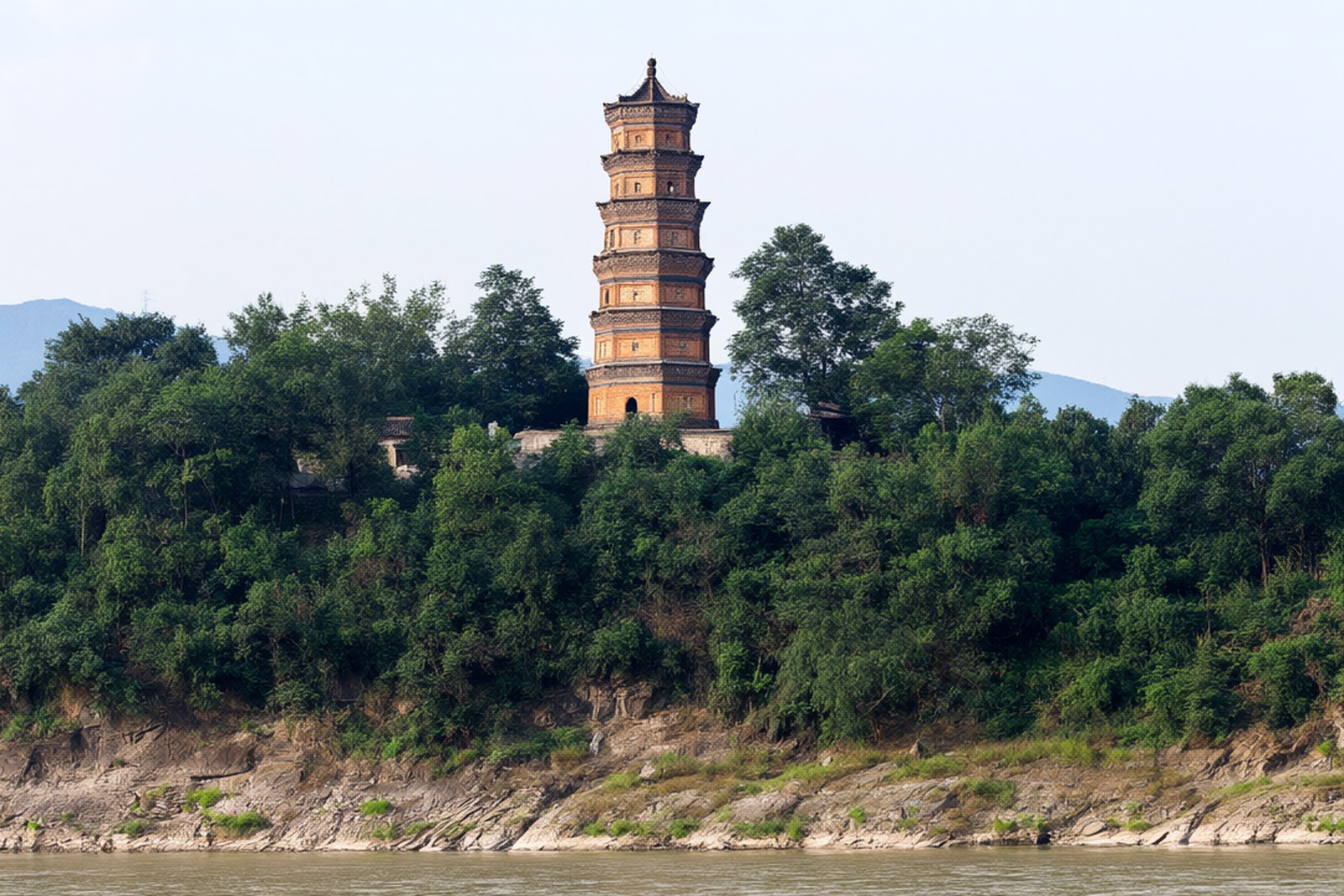
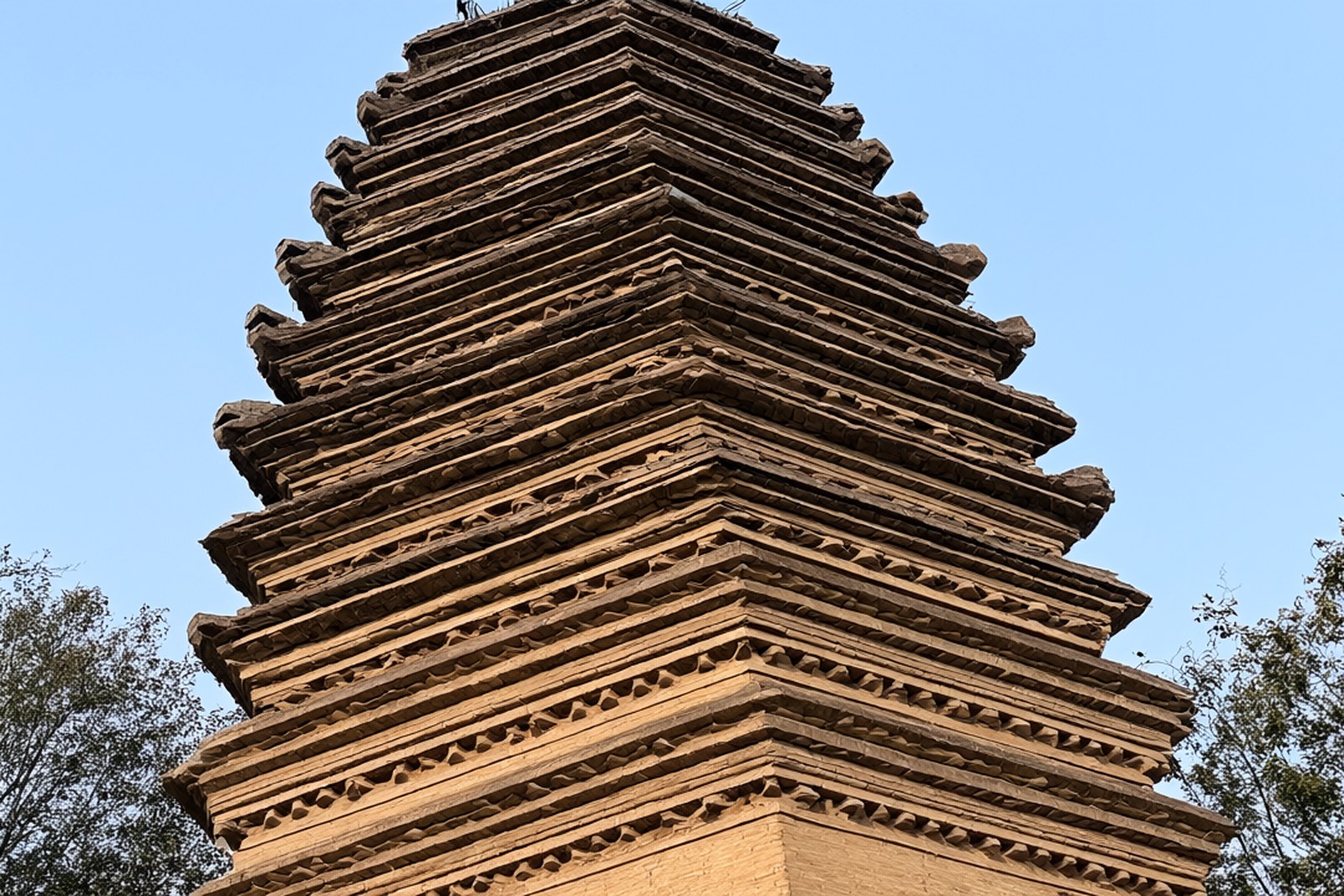
The tower is a 穿壁绕平座楼阁式砖室塔, a brick chamber pagoda with timber galleries, and the description is worth unpacking because it explains the walk up. Outside it shows seven storeys, and inside it has fourteen, because the storeys alternate between a bright level with a gallery around it and a dark level inside the wall; a visitor climbs through the wall, comes out onto a balcony, crosses it and goes back in. It is hexagonal in plan, the outer wall of the first storey is some five metres wide to a side and three metres thick, and the whole thing stands a little over forty-two metres. The eaves step out on rows of dog-tooth brick, the corners of every level carry a column with a rail between them, and the effect imitates timber construction in a material that outlasts it.
The dating was settled by the building rather than by the records. In the 1989 restoration a bearing timber for the finial mast was found at the sixth level, and dated bricks were turned up on the third and the seventh: 绍兴二年壬子十月二十九日塔砖, a brick of the twenty-ninth day of the tenth month of 1132, and 万历三十年修, a repair brick of 1602. Those finds closed the question of when it was built and confirmed that it was repaired under the Ming; the county annals had recorded, in the 1852 entry, that the top storey fell, which in practice meant the finial. The 1989 work put back an iron finial of a bowl, a vase, nine rings and a pearl, and a further repair in 2009 finished the job and lit the tower at night.
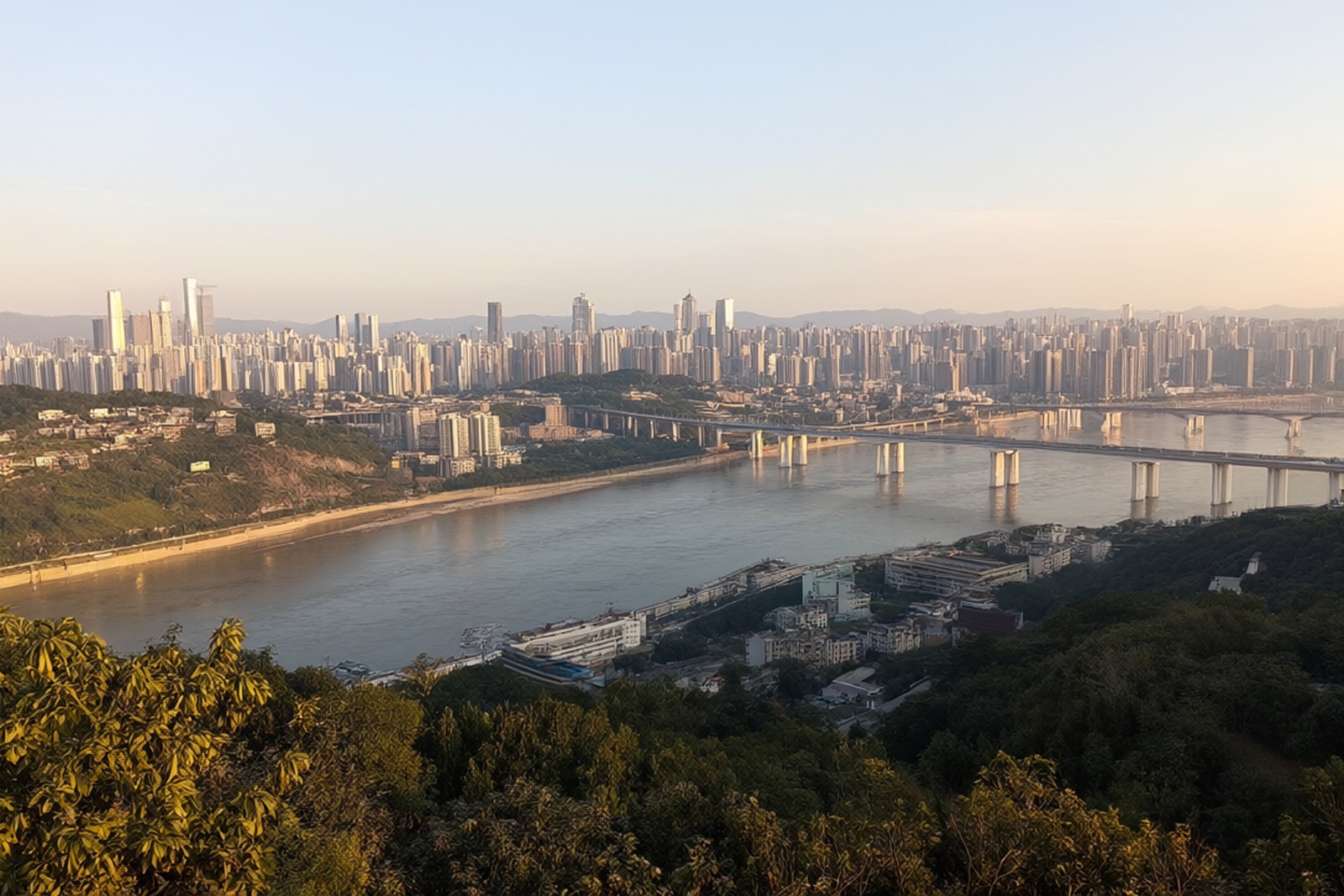
What is around the tower is half the visit. The hill is a small park at the corner of the two rivers, and the legend the city tells about it concerns a water demon that drowned the town every year until the gods dropped a great tortoise where the rivers meet, turned it into the hill and built a tower on the tortoise’s back to hold the water down. From the top, with the repairs done, the old and new city, the confluence, the bridges and the long green reach of the 东江 are all laid out below. The pagoda shares its compound with the 河源市博物馆, which is free and holds the local history and the Hakka collections, and with the 河源恐龙博物馆, whose eighteen thousand fossil eggs are the other reason visitors come to this hill; the 太平古街, the 鳄湖公园 and the 李焘故居, which with the pagoda make up the 老城四宝, the four treasures of the old town, are all a short walk away. Come in the late afternoon for the light on the water, and allow two hours for the tower, the free museum and the walk.
Practicalities
Tickets. The pagoda charges a small admission, generally ¥5 to ¥10, and has been free during some periods. The dinosaur museum in the same compound is around ¥24 to ¥30 and the municipal museum is free, so the cheapest version of the visit is the free museum and the tower.
Opening hours. The pagoda is open 09:00 to 17:00, with the last tickets at about 17:00. It shares the Monday closing of the museums in the compound; the park on the hill is open every day. Two hours covers the pagoda, the free museum and the walk down to the riverside.
Getting there. The tower is on 南堤路 in 源城区, 河源市, in the 龟峰公园 at the confluence of the 东江 and the 新丰江. It is ten minutes by taxi from the centre of the city and about twenty from 河源东站 Héyuán dōng zhàn on the 赣深 high-speed line, and it is a walk from the riverfront hotels.
Closing day. The pagoda and both museums close on Mondays, except in the golden-week holidays. The riverfront around the hill is open at all hours, and the tower is lit at night and visible from the bridges.
flowcloud would say that a tower put up in 1132 to hold a water demon down, dated only by the bricks that were found inside it eight hundred and fifty-seven years later, has quietly outlasted the river’s temper, the two dynasties that repaired it and the finial that fell off, which is a good record for a piece of flood control.
Getting there: 龟峰塔 is on 南堤路 in 源城区, 河源市, on the hill at the meeting of the 东江 and the 新丰江, ten minutes by taxi from the city centre and about twenty from 河源东站 on the 赣深 high-speed line; the pagoda, the free municipal museum and the dinosaur museum are all in the same compound.