
古劳水乡 Gǔláo shuǐ xiāng is a human-made landscape, and it is better for being one. Six hundred years ago this was the flood plain of the 西江 Xī jiāng, the West River, which is the largest of the rivers that feed the Pearl River delta and which floods this bank every year. The families who settled it did not build dykes and farm dry land, as their neighbours did. They dug ponds for fish, and they used the spoil to make 围墩 wéi dūn, embanked islets a metre or two above water level, and they planted their houses, their mulberry and their vegetables on those. Between the islets they left channels for the boats. What you walk through today is the result: a mosaic of water and raised land, connected by hundreds of stone slab bridges, and roofed by banyan trees that were planted at the corners of the plots long enough ago to have become structures in their own right, their aerial roots reaching down into the ponds and hardening into columns.
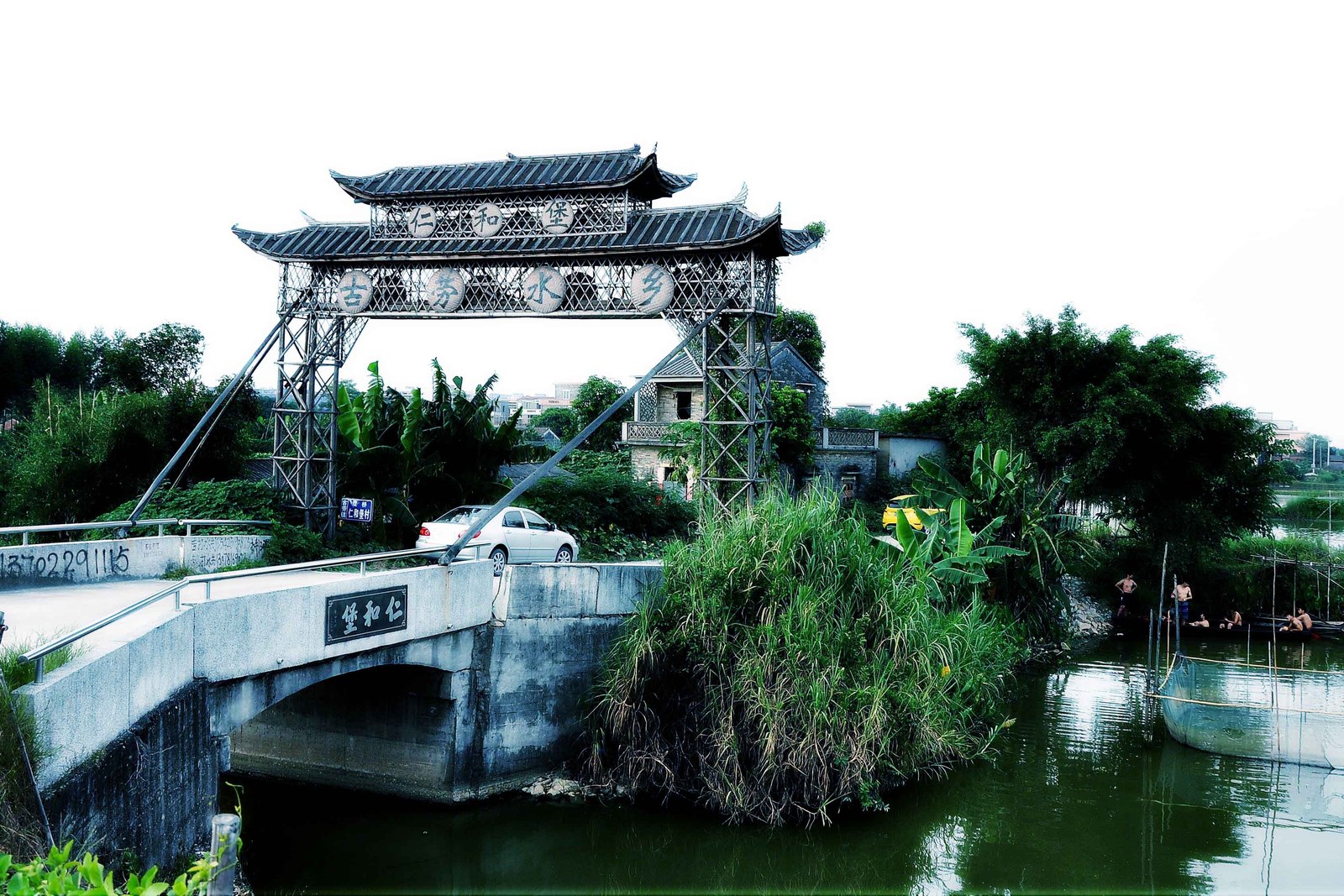
The bridges are the thing to look at first. They are made of two or three long slabs of granite laid side by side on stone piers, no parapet, sometimes only a metre wide, and they are everywhere – single spans over a channel, doubles and triples at the junctions where three ponds meet, always just wide enough for a person carrying two baskets on a shoulder pole. People still use them because there is no other way across. The banyans are the second thing: 榕树 róng shù, the species that the whole of southern China plants for shade, and here they grow out over the water until the branches touch the surface and root into it, so that a single tree becomes a grove and an archway. The village of 上升 Shàngshēng has the densest concentration of both, and it is where the boat jetties are, and where the tea houses put their tables out under the trees.
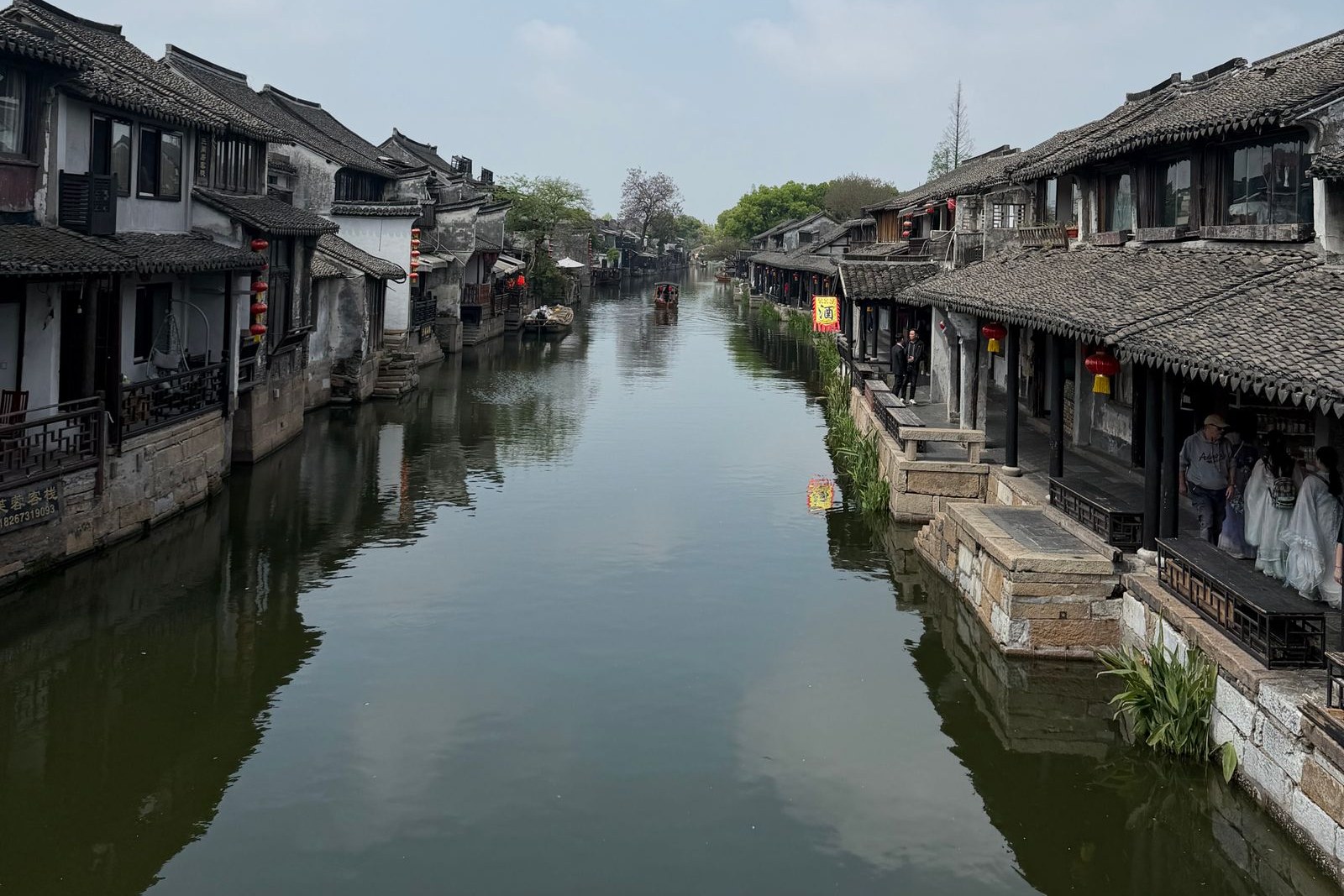
The best way to see it is from the water. Small flat-bottomed boats take visitors through the channels for forty minutes or so, and the route goes under the bridges and past the ponds, past the lotus in summer and the 荷叶 hé yè, the lotus leaves, being cut in autumn, and past the 围墩 wéi dūn where families still keep ducks and grow vegetables on a strip of raised earth a few metres wide. On foot, the embankments are walkable and cyclable and go on much further than the tourist route, out into the working part of the wetland where nobody is selling anything. 古劳 Gǔláo is also the birthplace of 梁赞 Liáng Zàn, the nineteenth-century Wing Chun master, whose 故居 gù jū, his family house, and a small martial arts hall stand in the village of 东便 Dōngbiàn; the local schools still train there, and on a weekday evening you may find a class going on.
Practicalities
Tickets. Entry to the 古劳水乡 Gǔláo shuǐ xiāng scenic area is ticketed, in the region of ¥50 to ¥80 a person, and the boat trip through the channels is a separate charge of roughly ¥50 to ¥100 depending on the length of the route and the size of the boat. Walking the free embankments outside the ticketed core costs nothing. Prices at the time of writing.
Opening hours. The scenic area runs about 08:30 to 17:30 daily, with boats operating through most of that period and slowing noticeably after four in the afternoon. The lotus is at its best in June and July and the ponds are being harvested in September and October; the light over the water is best in the hour before sunset, when most day groups have gone.
Getting there. From 鹤山市 Hèshān shì, a taxi or the local bus to 古劳镇 Gǔláo zhèn takes about fifteen minutes; from 江门 the coach to 鹤山 takes an hour and then a taxi is cheap. By road, leave the 佛开高速 Fókāi gāosù at the 古劳 exit and follow the signs, parking on the edge of the wetland since the islets are reached on foot or by boat. The nearest railway is 鹤山站 Hèshān zhàn, with limited passenger service.
Closing day. The wetland is open every day of the year with no weekly closing day, but the boat service stops during typhoon warnings and after heavy rain, when the channels rise and the bridges go under, which happens a few times each summer. The martial arts hall at 梁赞故居 Liáng Zàn gù jū keeps its own hours and does close on some weekdays, so check before going for that specifically.
Getting there: 古劳水乡 Gǔláo shuǐ xiāng is in 古劳镇 Gǔláo zhèn in the north-west of 鹤山市 Hèshān shì, ten minutes by car from 鹤山 city centre and about an hour from 江门. Arrange a boat at the 上升村 Shàngshēng cūn jetty rather than from the road, and allow two hours on the water and on foot together.
flowcloud would say that the finest thing here is not the scenery but the fact that the bridges are narrow because they were built for people carrying things, and that a landscape made entirely by hand over six hundred years has a better claim to be called natural than most of what is called nature.