
The Old Face of Tianjin: Ancient Culture Street
津门故里千帆远,古街灯影话流年 Jīnmén gùlǐ qiān fān yuǎn, gǔ jiē dēngyǐng huà liúnián – From the old home of Tianjin a thousand sails have gone; the lantern shadows on the old street still tell the passing years
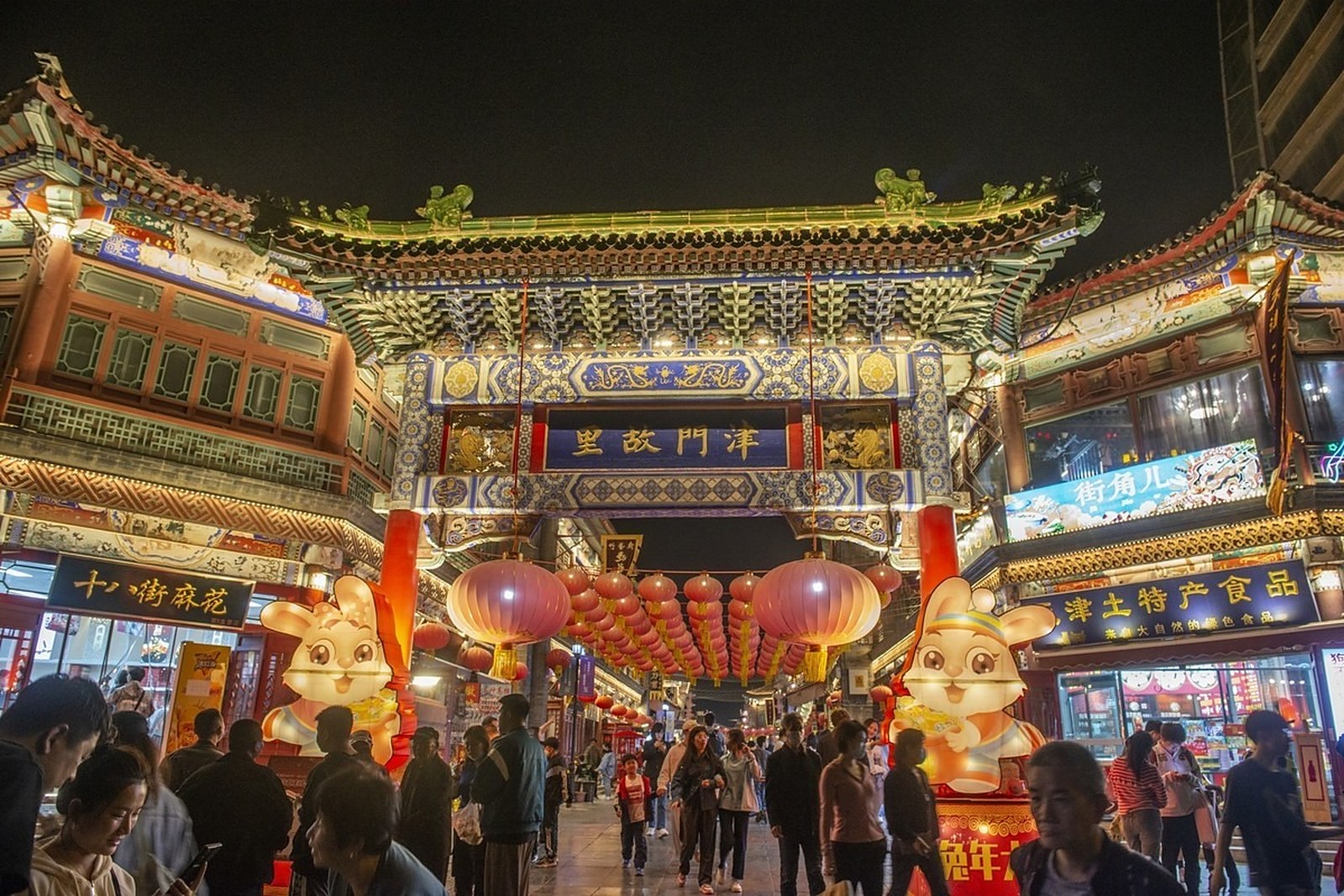
古文化街 Gǔ Wénhuà Jiē The Ancient Culture Street is 天津市南开区 Tiānjīn Shì Nánkāi Qū Nankai District’s postcard row – a pedestrian street of Qing-style shopfronts running from the 津门故里 Jīnmén Gùlǐ “Old Home of Tianjin” archway down to the Haihe, rebuilt on the footprint of the city’s oldest market quarter. The calligraphy over the north gate and the palatial 天后宫 Tiānhòu Gōng Tianhou Palace at its heart anchor a street that has traded since the river carried the city’s salt and grain.
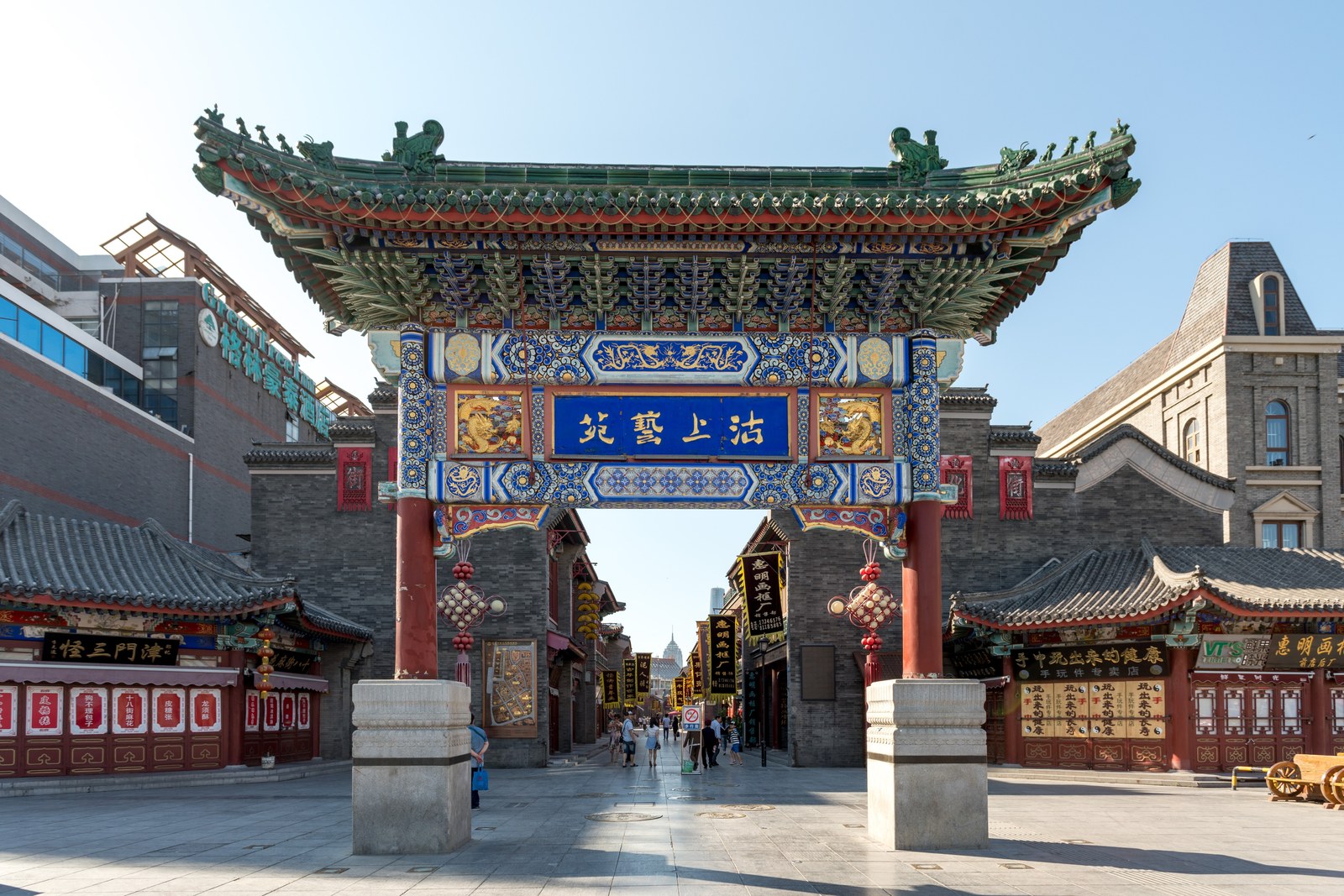
The palace is the reason the street exists. Tianhou Palace, raised in 1326 for Mazu, the sea goddess the boatmen trusted, is one of the three great Mazu temples of China’s north, and its courtyard still fills for temple fairs – 皇会 huánghuì – that bring stilt walkers, drum troupes and lion dancers through the incense smoke. Step through the main hall and the museum rooms explain the river cult that built old Tianjin.
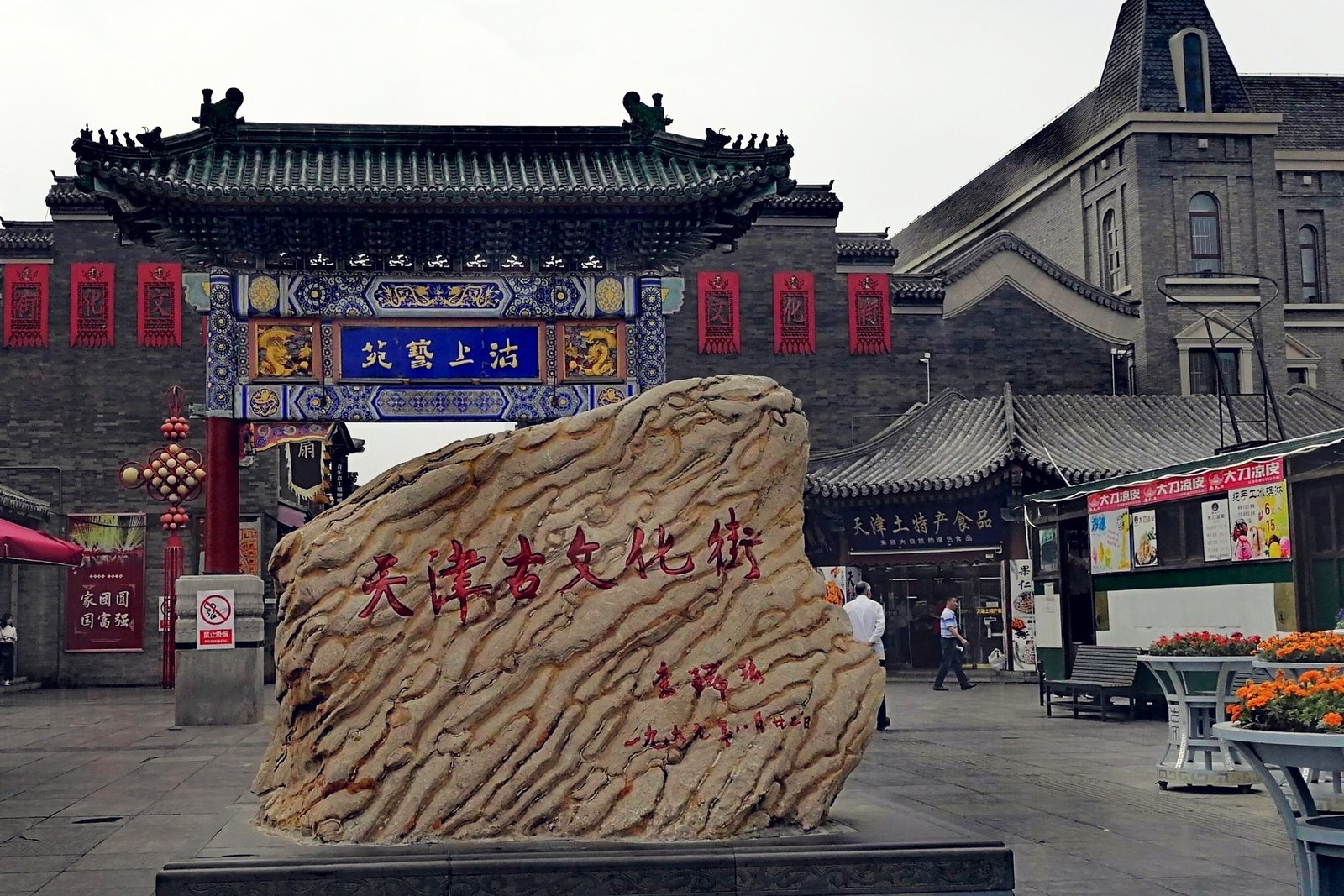
Off the incense, the street runs on crafts. 泥人张 Nírén Zhāng the Zhang clay figurines and 杨柳青年画 Yángliǔqīng niánhuà the Yangliuqing woodblock prints both keep shops here, and the glass-fronted workshops let you watch a figure take color or a print take its final block. Snack counters crowd in between – sugar figures, tea, and the fried-dough smell that follows you the whole length.
Come in the early morning before the tour buses and the street is Tianjin at neighborhood pace: shutters going up, tea poured, the palace gate creaking open. Come at dusk and the lanterns take over, the archway glows gold, and the Haihe bridge at the street’s foot hands you the evening river walk for free. Either way, the entry costs nothing and the metro lands you two minutes off.
Practicalities
- Street open all day and free; Tianhou Palace keeps its own modest ticket and closes around 16:30.
- Metro Line 2 to 东南角 Dōngnánjiǎo Southeast Corner station puts the north archway at the exit.
- Temple-fair days – lunar New Year and Mazu’s festival – pack the street; arrive before ten.
- The full street plus palace runs about ninety minutes; add the Haihe embankment loop after.
Words and Names
津门故里 Jīnmén Gùlǐ the “Old Home of Tianjin” archway inscription; 天后宫 Tiānhòu Gōng Tianhou Palace, the 1326 Mazu temple; 皇会 huánghuì the great temple fair; 泥人张 Nírén Zhāng the Zhang clay-figure house; 杨柳青年画 Yángliǔqīng niánhuà the New Year woodblock prints. Beyond the street, the same 天津市南开区 Tiānjīn Shì Nánkāi Qū Nankai District keeps more places worth the detour: 水上公园 Shuǐshàng Gōngyuán the Water Park, 周恩来邓颖超纪念馆 Zhōu Ēnlái Dèng Yǐngchāo Jìniànguǎn the Zhou-Deng Memorial, 天津鼓楼 Tiānjīn Gǔlóu the Drum Tower, or 广东会馆 Guǎngdōng Huìguǎn the Guangdong Guild Hall – four more doors into the same Nankai District. Once the street has had its morning, our Nankai food map fills the table.
flowcloud would say the Ancient Culture Street is the city’s memory wearing its best clothes: a goddess who kept the boatmen, craftsmen who keep the color, and a gate that still greets the river. All checked November 2026.
Getting there: The street starts at the north archway off Tongbei Road – Metro Line 2 to Southeast Corner station exits onto the block, and the palace signs itself from the gate. All checked November 2026.