
Guyaju Caves: More Than a Hundred Rooms Chiselled Into a Granite Cliff, a Date and a People Nobody Has Settled, and the Silence Above the Valley in Yanqing District, Beijing
谁向崖腰凿百室,千年不答问来人。Shuí xiàng yáyāo záo bǎi shì, qiānnián bù dá wèn láirén – Who chiselled a hundred rooms into the cliff’s waist? A thousand years give no answer to the one who asks.
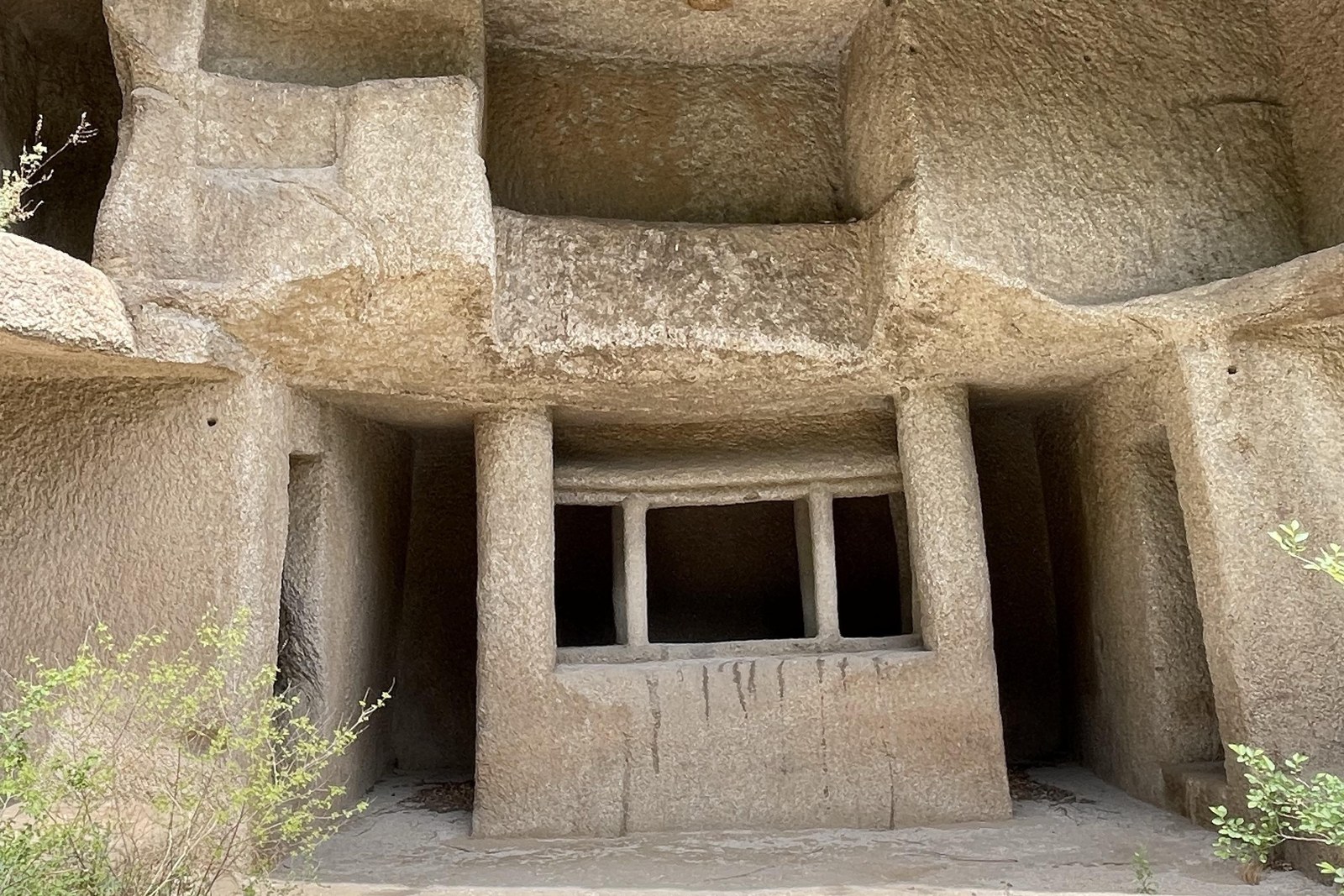
古崖居 Gǔyájū Guyaju is not a cave temple and not a cliff village in the usual sense — it is, plainly put, a cliff that somebody hollowed out: a granite face in the hills of 张山营镇 Zhāngshānyíng Zhèn Zhangshanying town, in the northwest of 延庆区 Yánqìng Qū Yanqing District, pierced with more than a hundred chambers cut straight into the rock, some of them two and three rooms deep. There are doorways with proper lintels, windows set at seated height, 火炕 huǒkàng heated sleeping platforms carved as raised slabs, chimney holes, lamp niches blackened by soot, and stairways cut into the cliff linking one level to the next. The counts vary with who is counting, but the effect does not. Nobody knows who made them. The guesses run from a Tang-era garrison to a bandit stronghold to a monastic retreat to a resettled 奚 Xī people, and the honest position is that the date and the builders remain unsettled. What you actually visit is a piece of architecture with no documented architect.
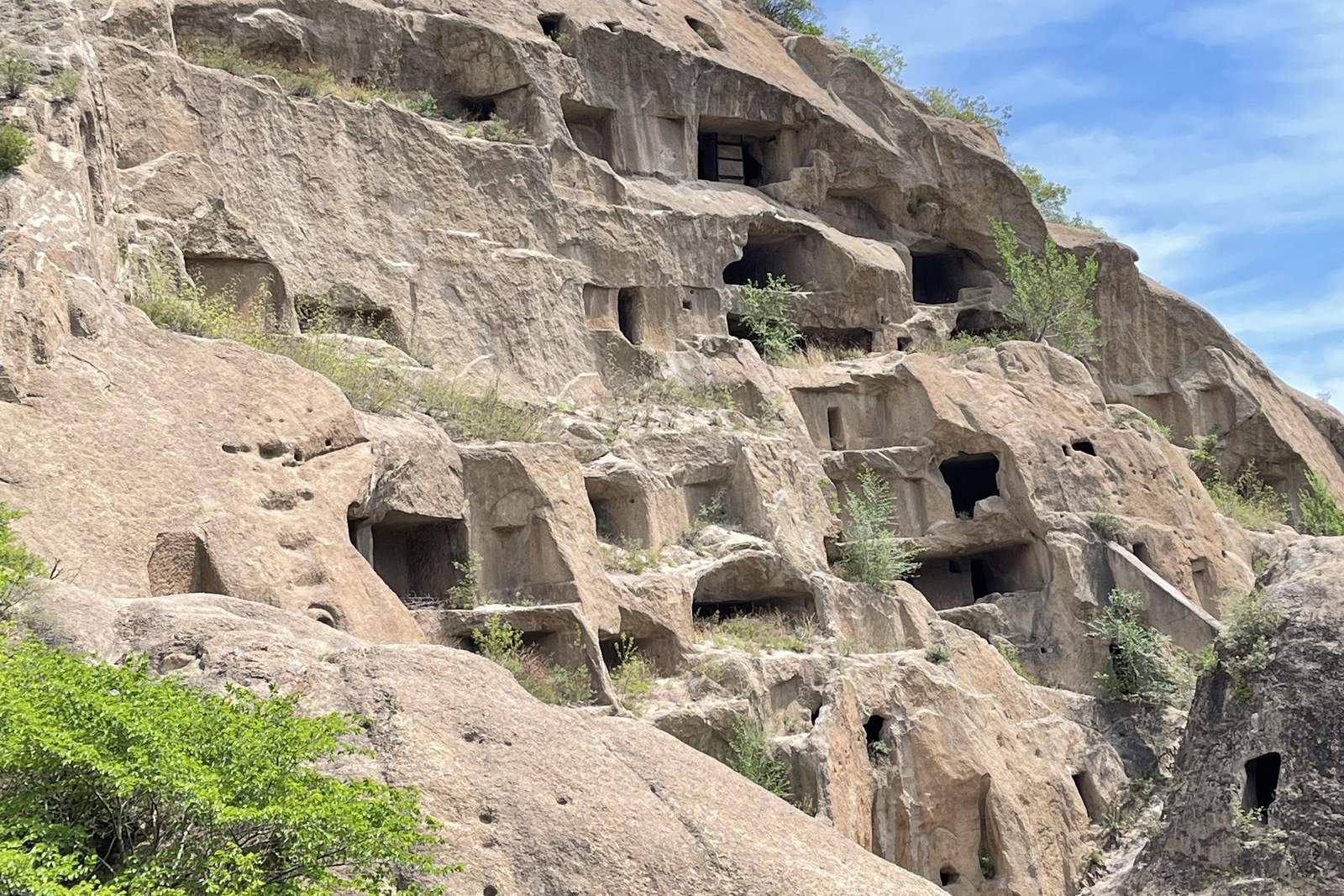
Call it honestly: the site charges a modest gate fee, with no cable car and no internal transport, and the whole visit is a stepped path that climbs past the cliff face and back down (worth confirming the details for current admission, seasonal opening and whether the upper path is open after rain). The honest warning is scale, not difficulty. This is a small place — forty minutes of slow walking covers it — and anyone who has been sold a “mystery of the ages” will arrive expecting a complex and find a single face of rock. Come in the morning when the light rakes across the openings and the rooms read as rooms rather than shadows, come in late autumn for the colour below the cliff, and come knowing that the pleasure is proximity: you can put your hand inside a window that somebody cut a thousand years ago for reasons nobody wrote down.
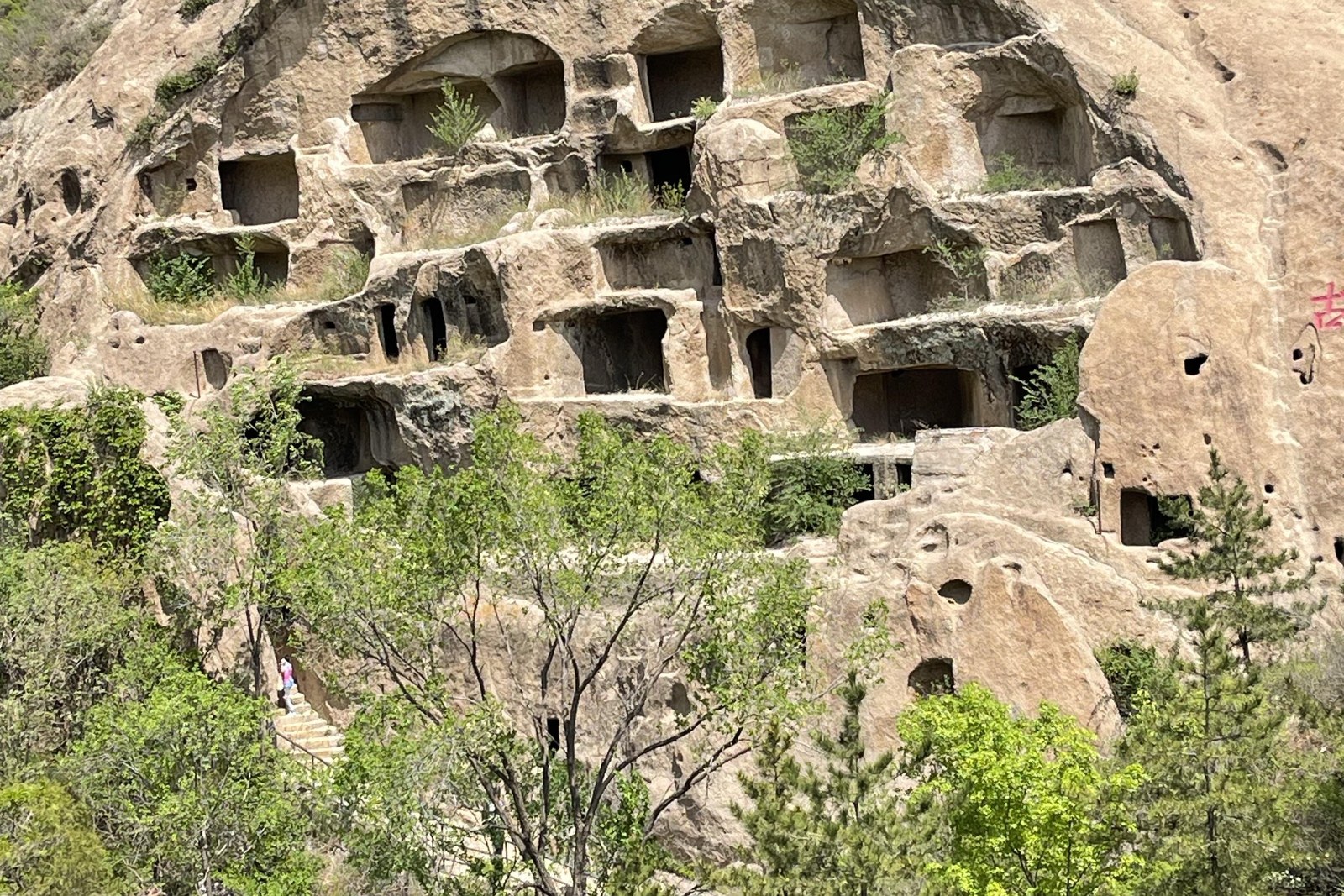
The honest star is the domestic detail — the soot in the lamp niches, the worn sill of a doorway, the way the 火炕 huǒkàng slabs are just wide enough for a person to lie on, all of it insisting that this was lived in rather than carved as a monument (worth confirming the details for which chambers are open to enter and which are roped off). What gets oversold is the mystery industry: the alien theories, the lost-kingdom talk, the guides who convert an absence of evidence into a narrative. What repays the effort is the modesty of the thing. Somebody chose this cliff, cut rooms that were warm in winter and defensible in trouble, and left no name — and the building is more eloquent for it than any plaque could be. Come for the layering of the place: window, then room, then the valley the rooms were built to watch.
The self-aware postscript: I sat on the path while the caretaker swept dust off the lower steps with a broom of bound twigs, and when I asked him who he thought had lived up there he said, “every year a professor comes and tells me something different; I only know that the broom fits my hands and the steps fit my feet, and that is enough of an answer”. That is the visit in miniature. 古崖居 Gǔyájū suits whoever treats it as a quiet half-hour of close looking first and a historical revelation second, and exhausts anyone needing a story with a name in it. Everything else on this Yanqing list lies within the same district: the Ming brick of 八达岭长城 Bādálǐng Chángchéng Badaling Great Wall on the southern edge, the boat between the cliffs of 龙庆峡 Lóngqìng Xiá Longqing Gorge to the east, the streams and meadows of 玉渡山 Yùdù Shān Yudu Mountain in the same western hills, and the river road of 百里山水画廊 Bǎilǐ Shānshuǐ Huàláng Baili Gallery away in the northeast.
Practicalities
- Rating: ★★★☆☆ — a genuinely strange cliff of hand-cut rooms with an unsolved date; the domestic detail outranks the mystery marketing; small, quiet, and over in under an hour.
- Tickets: A modest gate fee, no cable car and no internal transport, all on foot up a stepped path (worth confirming the details for current admission, seasonal opening and upper-path access after rain).
- Address: 古崖居 Gǔyájū, 张山营镇 Zhāngshānyíng Zhèn Zhangshanying town, 延庆区 Yánqìng Qū, Beijing — on a granite face in the western hills, a short drive north of the 延庆 Yánqìng plain.
- Time needed: Forty minutes to an hour for the cliff path and the chambers; half a day pairing it with 玉渡山 Yùdù Shān or the 官厅 Guāntīng reservoir shore.
Words and Names
古崖居 Gǔyájū Guyaju · the “ancient cliff dwellings”, a name given long after the fact 崖居 yájū cliff dwelling · rooms cut into rock rather than built on it 火炕 huǒkàng heated platform · the carved sleeping slabs with flues beneath 奚 Xī Xi · one of the peoples suggested as the builders, on thin evidence 洞室 dòngshì chamber · the counted unit of the site, over a hundred of them 张山营 Zhāngshānyíng Zhangshanying · the town whose hills hold the cliff
flowcloud would say that 古崖居 Gǔyájū is architecture with its paperwork missing — more than a hundred chambers cut into a granite face above 张山营镇 Zhāngshānyíng Zhèn in 延庆区 Yánqìng Qū, complete with 火炕 huǒkàng platforms, soot-black lamp niches and doorways that still take a hand, and no agreed answer on who cut them or when — and that the honest move is a morning visit in raking light with an hour to spare, because admission, seasonal opening and upper-path access all shift (worth confirming the details), the lost-people legend is the poster half and the worn door sills under your palm are the real half, and the cliff repays whoever comes to look closely rather than to be told. All checked October 2026.
Getting there: The 919 Express from 德胜门 Déshèngmén Deshengmen to 延庆城区 Yánqìng chéngqū Yanqing town, then a 920-series local bus toward 张山营 Zhāngshānyíng and a taxi for the last few kilometres to the cliff (worth confirming the details for current rural bus numbers, which thin out in winter); self-drive follows the 京藏高速 Jīngcáng gāosù G6 to the 延庆 Yánqìng exits, then the 110 国道 guódào northwest toward 张山营 Zhāngshānyíng and the signed turn to the site. All checked October 2026.