
Guyi Garden: A Ming Jiajing-Era Countryside Classical Garden Named for Lush Green Bamboo, with Yiye Hall, Goose-Playing Pond, a Nine-Bend Bridge and Famous Summer Lotus at Huyi Highway 218 in Jiading District, Shanghai
绿竹猗猗存古意,荷风曲水绕亭台。Lǜzhú yīyī cún gǔyì, héfēng qūshuǐ rào tíngtái – Lush green bamboo keeps the ancient meaning; lotus breeze and winding water circle the pavilions.
古猗园 Gǔyī Yuán Guyi Garden is not a downtown showpiece transplanted to the suburbs — it is, plainly put, the countryside’s own classical garden: the garden spreads at 沪宜公路 Hùyí Gōnglù Huyi Highway 218 in 南翔镇 Nánxiáng Zhèn Nanxiang Town, first laid out in the 明嘉靖年间 Míng Jiājìng niánjiān Jiajing era of the Ming dynasty and named for the verse 绿竹猗猗 lǜzhú yīyī “the green bamboo, so lush” — a promise the garden has spent four centuries earning. Its halls and waters carry the bamboo through: 逸野堂 Yìyě Táng Yiye Hall, the Hall of Leisurely Wildness, anchors the ground, 戏鹅池 Xì’é Chí Goose-Playing Pond folds the water through the middle, and 白鹤亭 Báihè Tíng White Crane Pavilion and 九曲桥 jiǔqū qiáo the Nine-Bend Bridge thread among the low rises of 竹枝山 Zhúzhī Shān Bamboo Branch Hill. Among the five great classical gardens of Shanghai it stands alone as the only true 郊野园林 jiāoyě yuánlín countryside garden — a garden of the open edge rather than the walled town. What you actually visit is a Ming garden still earning its bamboo name.
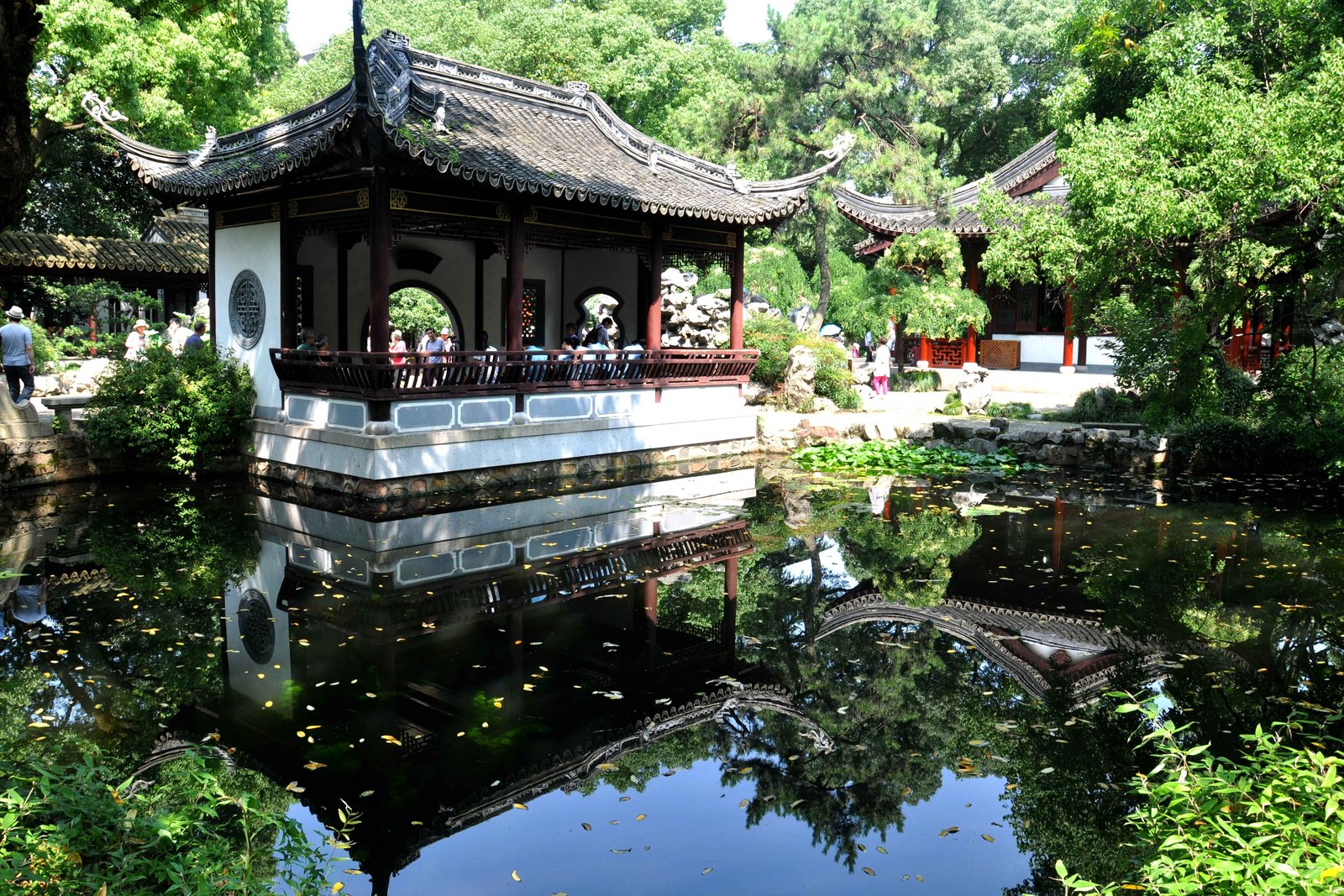
Call it honestly: entry keeps a modest ticket and the garden keeps seasonal hours (worth confirming the details for current admission prices, concession rules and opening times before you set out), and 南翔站 Nánxiáng Zhàn Nanxiang station on Metro Line 11 sets you down for a short walk or taxi hop through a real working town to the gate. The honest warning is the calendar: summer belongs to the lotus, when the 荷花 héhuā lotus blooms ride every pond and the garden fills with photographers and ducklings, while winter can leave the beds bare and the waters quiet — beautiful, but a different garden. Weekday mornings give the nine bends to the regulars; festival weekends hand the lawns to the crowds. The bamboo, mercifully, stars all year. Give the garden two unhurried hours, half a day in lotus season, and eat in town afterwards — the local 小笼包 xiǎolóngbāo soup dumplings are a story of their own.
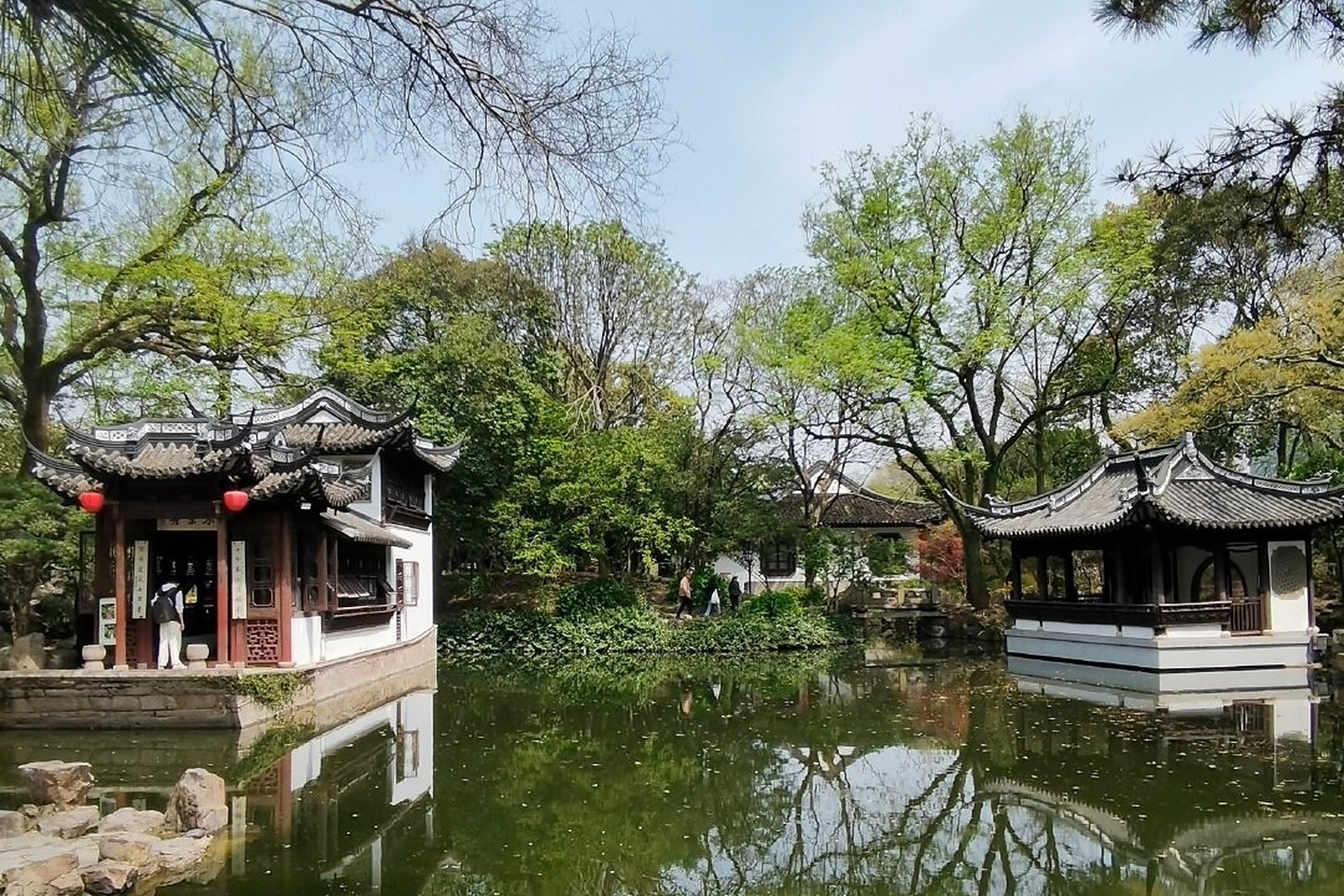
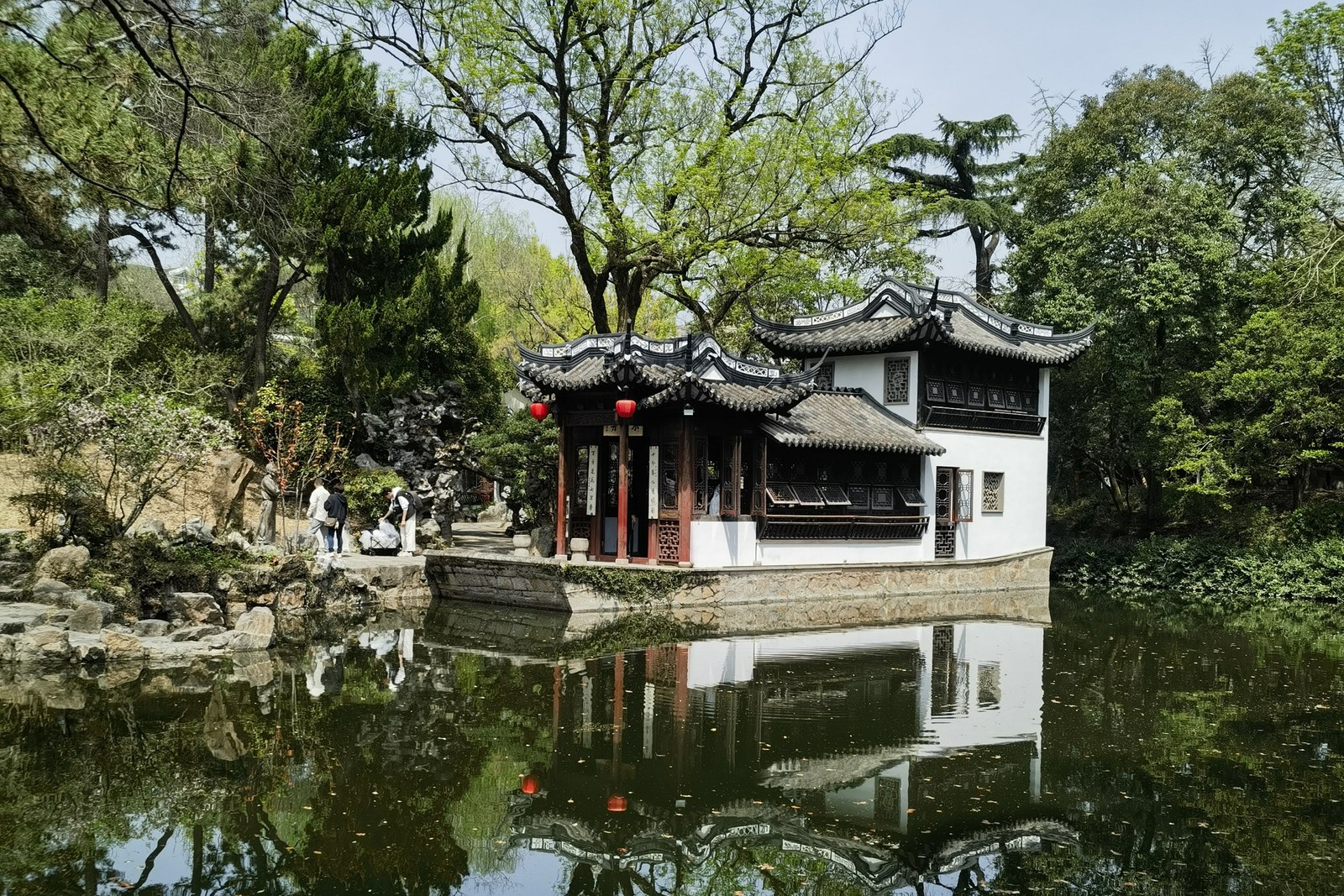
The honest star is 戏鹅池 Xì’é Chí Goose-Playing Pond at the garden’s heart — the water that every hall, pavilion and bridge on the grounds seems to have agreed to face, and the stage on which the summer 荷花 héhuā lotus performs its citywide-famous season. What gets oversold is the word “classic”: travellers arriving expecting Suzhou-grade carved corridors find a plainer, greener, more rural manner — honest brick, honest wood, honest fields close by — and the garden’s charm depends on accepting that openness (worth confirming the details for which halls are currently open or under restoration). What repays the effort is the walking: cross 九曲桥 jiǔqū qiáo the Nine-Bend Bridge the long way on purpose, climb the little rises of 竹枝山 Zhúzhī Shān Bamboo Branch Hill for the roofs-and-water view, sit inside 逸野堂 Yìyě Táng Yiye Hall where the Ming arrangement still frames the pond, and let 白鹤亭 Báihè Tíng White Crane Pavilion explain its crane. Come for the layering of the place: bamboo, then water, then the open sky the town gardens never had.
The self-aware postscript: I was photographing lotus buds from the nine-bent railing one July morning when an old man doing slow stretches by the pond volunteered the local view. “City gardens have walls; we have horizon,” he said, nodding past the far shore, “and when the lotus opens, the whole town comes out to watch”. That is the visit in miniature. From the bridge’s middle bend, looking back through lotus leaves toward hall roofs and bamboo, the garden holds its whole identity in one frame — classicism at ease with farmland. 古猗园 Gǔyī Yuán suits whoever treats it as a green, unhurried, lotus-season countryside garden first and a Ming relic second, and disappoints anyone expecting dense architectural confection. Nearly everything else on this Jiading list lies within a short ride: the twin brick pagodas of 南翔老街 Nánxiáng Lǎojiē Nanxiang Old Town wait a stroll away in the same 南翔镇 Nánxiáng Zhèn Nanxiang Town, the red autumn of 秋霞圃 Qiūxiápǔ Qiuxiapu Garden burns on 嘉定镇 Jiādìng Zhèn Jiading Town’s 东大街 Dōngdà Jiē East Street 314, and the vintage cars of the 上海汽车博物馆 Shànghǎi Qìchē Bówùguǎn Shanghai Auto Museum wait in 安亭镇 Āntíng Zhèn Anting Town — all inside the same 嘉定区 Jiādìng Qū Jiading District whose greenest room this garden keeps.
Practicalities
- Rating: ★★★★☆ — the countryside member of Shanghai’s five great classical gardens, with the city’s best lotus season; come in summer for the ponds, any season for the bamboo.
- Tickets: Modest entry ticket in operation (worth confirming the details for current prices and seasonal hours).
- Address: 古猗园 Gǔyī Yuán, 沪宜公路 Hùyí Gōnglù Huyi Highway 218, 南翔镇 Nánxiáng Zhèn Nanxiang Town, 嘉定区 Jiādìng Qū Jiading District, Shanghai — from Nanxiang station on Metro Line 11 plus a short walk or taxi hop.
- Time needed: Two unhurried hours; half a day in lotus season with lunch in town.
Words and Names
古猗园 Gǔyī Yuán Guyi Garden · 绿竹猗猗 lǜzhú yīyī “the green bamboo, so lush”, the garden’s namesake verse · 逸野堂 Yìyě Táng Yiye Hall, the Hall of Leisurely Wildness · 戏鹅池 Xì’é Chí Goose-Playing Pond · 白鹤亭 Báihè Tíng White Crane Pavilion · 九曲桥 jiǔqū qiáo Nine-Bend Bridge · 竹枝山 Zhúzhī Shān Bamboo Branch Hill · 郊野园林 jiāoyě yuánlín countryside garden, its rank among the five greats · 荷花 héhuā lotus, the summer star · 沪宜公路 Hùyí Gōnglù Huyi Highway 218 · 南翔站 Nánxiáng Zhàn Nanxiang station, Metro Line 11 · 嘉定区 Jiādìng Qū Jiading District
flowcloud would say that 古猗园 Gǔyī Yuán is what a classical garden looks like when it keeps its countryside manners — a Ming Jiajing-era ground at 沪宜公路 Hùyí Gōnglù Huyi Highway 218 in 南翔镇 Nánxiáng Zhèn Nanxiang Town, named for 绿竹猗猗 lǜzhú yīyī “the green bamboo, so lush” and laid out around 戏鹅池 Xì’é Chí Goose-Playing Pond, where 逸野堂 Yìyě Táng Yiye Hall, 白鹤亭 Báihè Tíng White Crane Pavilion and 九曲桥 jiǔqū qiáo the Nine-Bend Bridge among the rises of 竹枝山 Zhúzhī Shān Bamboo Branch Hill make it the only true 郊野园林 jiāoyě yuánlín countryside garden among Shanghai’s five great classical gardens, and where the summer 荷花 héhuā lotus season draws the city out to watch (worth confirming the details for current tickets and seasonal hours before you set out) — and that the honest move is a weekday morning entered through 南翔站 Nánxiáng Zhàn Nanxiang station on Metro Line 11, because the Suzhou-confection expectation is the poster half and the bamboo, the horizon and the lotus pods are the real half, and the garden repays whoever crosses the nine bends slowly and eats in town afterwards. All checked October 2026.
Getting there: Metro Line 11 to 南翔 Nánxiáng Nanxiang station, then a short walk to the garden on 沪宜公路 Hùyí Gōnglù Huyi Highway 218 (worth confirming the details for summer lotus-viewing hours, which extend at peak bloom); the 逸野堂 Yìyě Táng Yiye Hall anchors the pond circuit. All checked October 2026.