
The Fortress on the Rock: Gyantse Dzong
宗山石堡镇古陌,一段雄魂守雪原 Zōngshān shíbǎo zhèn gǔmò, yī duàn xiónghún shǒu xuěyuán – The stone fortress holds the old roads from its rock; a heroic spirit keeps watch over the snow plain
江孜宗山古堡 Jiāngzī Zōngshān Gǔbǎo Gyantse Dzong holds the summit of the rock spine at the center of Gyangtse in 西藏自治区日喀则市 Xīzàng Zìzhìqū Rìkāzé Shì Shigatse – a compact fortress of grey stone walls, crenellated towers and a central keep that shows above the old town from miles around. Garrison forts like this once governed trade on the Lhasa-to-India road, and Gyantse’s became the stage of the town’s last stand in 1904, when Tibetan defenders held the hill against a British expedition before the walls fell.
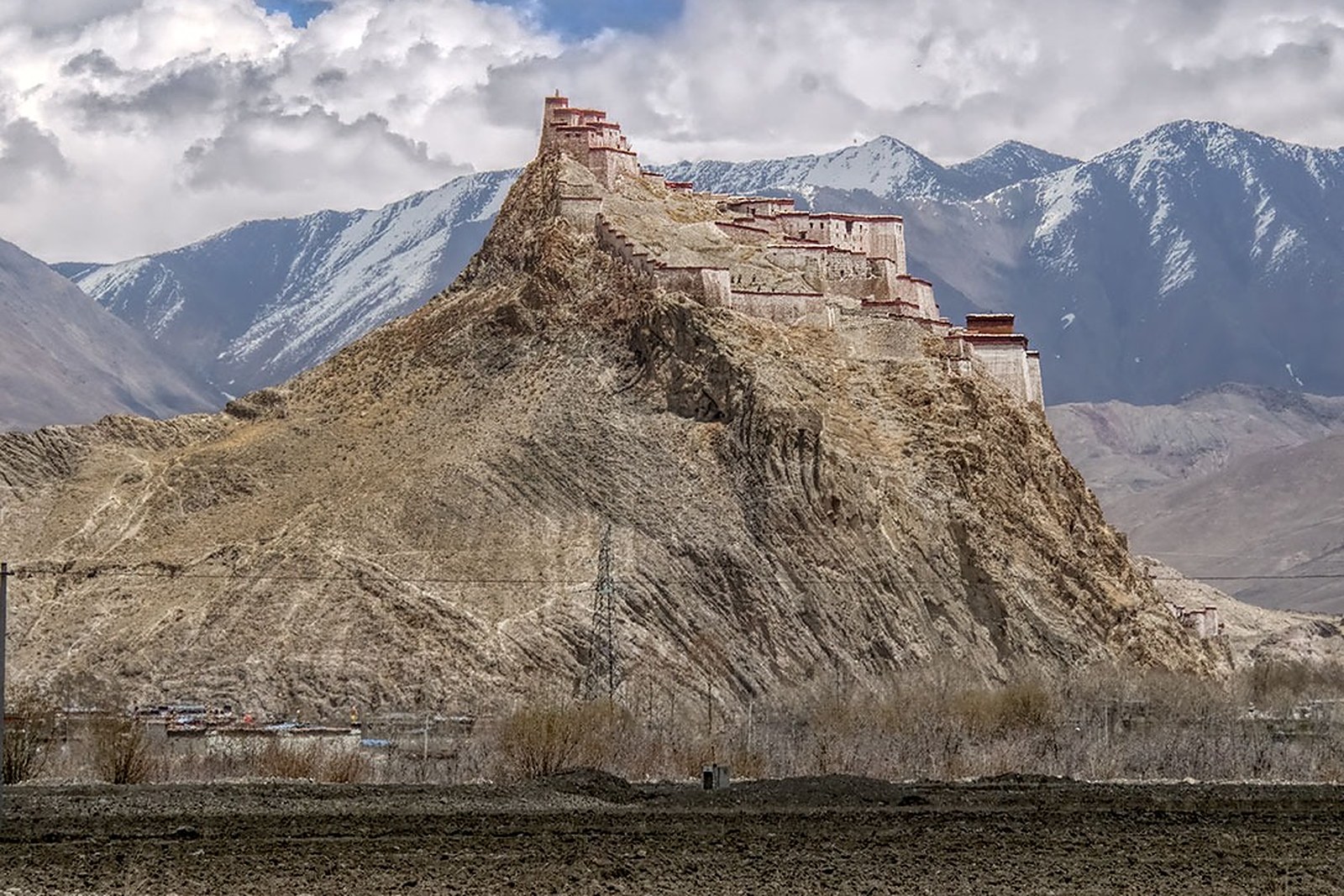
The climb is the visit. The trail from the old town switchbacks up the rock past restored gatehouses, a small monastery chapel and the foundations of the garrison buildings, and the higher you go the more the fortress unfolds – guardwalks stitched along the cliff edges, lookouts over the Nyang valley, and the central keep with its exhibition rooms of maps, rifles and eyewitness accounts of the 1904 siege. Half an hour of stone stairs at 4,000 meters makes the summit honest work.
From the top the whole geography of the town snaps into place. The Kumbum’s white bulk and golden canopy sit at the monastery’s northern edge; the old town’s flat roofs and lanes fill the plain below; the memorial square marks the story’s later chapters; and beyond it all the barley fields run to the snow ridges that close the valley. Photographers get the classic frame here – fortress walls in the foreground, the stupa mid-distance, the high snow peaks behind.
What the dzong means is written in the town’s memory. Gyangtse calls itself the hero town, and the anti-British defense of 1904 is the story every schoolchild carries; the memorial square below the rock, the preserved guns at the gates and the exhibition rooms all retell it. Walk the walls at closing light, when the tour groups have gone and the wind comes up the valley, and the fortress reads less like a monument than like a garrison that only just emptied.
Practicalities
- The dzong trailhead sits at the north end of the old town; entry is ticketed and the summit climb takes 30-45 minutes.
- The upper ramps are uneven stone – wear grippy shoes, and mind the wind on the exposed guardwalks.
- Mornings give the clearest high-peak views; afternoons often fill the valley with dust haze.
- Combine with the Kumbum the same morning – the two monuments are a 10-minute walk apart.
Words and Names
宗山 Zōng Shān the dzong hill, the fortress rock; 宗堡 zōngbǎo the dzong, a district fortress-governor’s seat; 江孜宗山抗英 Jiāngzī Zōngshān kàng Yīng the 1904 defense against the British expedition; 炮台 pàotái the gun platforms on the walls; 英雄城 yīngxióng chéng the hero town, Gyangtse’s own title; 白居寺 Báijū Sì the Kumbum monastery at the dzong’s foot. Beyond the fortress, the same 西藏自治区日喀则市 Xīzàng Zìzhìqū Rìkāzé Shì Shigatse keeps more places worth the detour: 白居寺 Báijū Sì the Kumbum stupa below the same rock, 扎什伦布寺 Zhàshílúnbù Sì the Panchen Lamas’ seat in Shigatse, 萨迦寺 Sàjiā Sì the striped-wall monastery of the west, or 珠峰大本营 Zhūmùlǎngmǎ Dàběnyíng the camp under the highest peak – four more doors into the same Shigatse. Once the walls are behind you, our Shigatse food map fills the table.
flowcloud would say the dzong is Gyangtse in one silhouette: climb the rock once and the town’s wool-road wealth, its stubborn 1904 defense and its two great monuments all fall into place below you. All checked November 2026.
Getting there: The dzong trailhead sits at the edge of the old town, a 10-minute walk from the Kumbum; the summit climb takes 30-45 minutes. Wear grippy shoes – the upper ramps are uneven stone. All checked November 2026.