
Haifeng’s Red Palace and Red Square, 红宫红场 Hóng gōng hóng chǎng, stand a few hundred metres apart in Haicheng town Hǎi chéng zhèn and are the reason most visitors come to 汕尾市 Shàn wěi shì at all. Shanwei is old 海陆丰 Hǎi lù fēng, the two counties whose name the prefecture carried until 1988: a Teochew-related tongue in the fishing towns, Hakka in the hills of 陆河 Lù hé behind them. Here three layers of settlement left a Ming Confucian school, a granary yard beside it and, in November 1927, a peasant movement that painted both red. The State Council listed the site nationally on 4 March 1961, in the first batch, numbered Ⅰ-15.
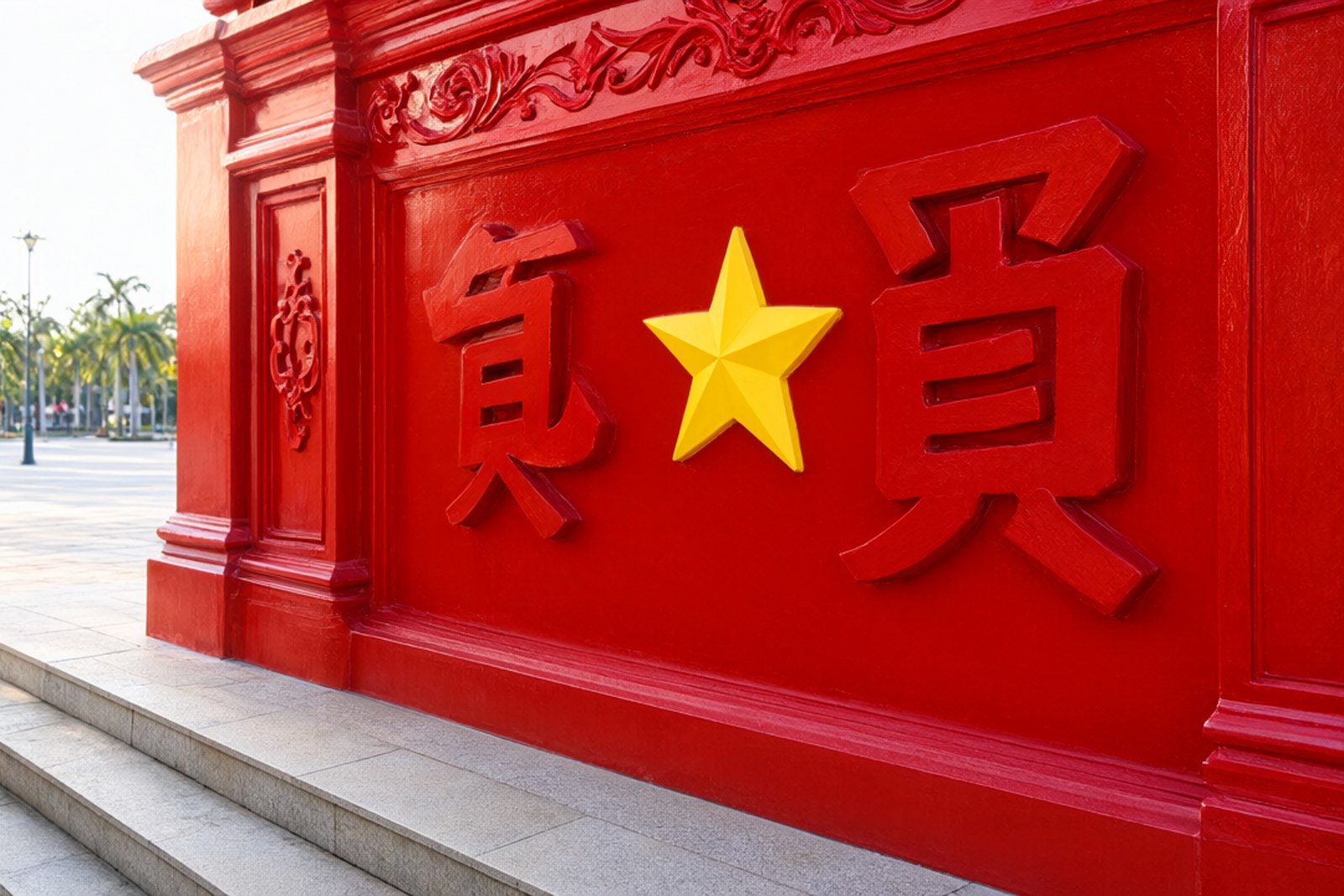
The Red Palace is a Confucian temple and always was, built in 1379 by the magistrate Zheng Yuan Zhèng Yuán as the county school, 1,850 square metres of halls around a semicircular pond. On 18 November 1927 the Haifeng congress of workers, peasants and soldiers met there with 311 delegates, Peng Pai Péng Pài reported to them, and on the fourth day the Haifeng County Soviet Government was proclaimed. The walls were painted red and the temple has been the Red Palace since. The square beside it was a Ming granary yard, Dongcangpu Dōng cāng pǔ, and Peng Pai ordered a square built on it in ten days and nights; the two characters 红场 over the gate are his own handwriting, and on 1 December more than fifty thousand people filled the ground to hear him.
Peng Pai is why the place is more than a monument. Born in Haifeng in October 1896, he studied at Waseda University in Tokyo from 1918 and came home in May 1921 to organise in his own county; in July 1922 he and five other men formed the first peasant association of Hailufeng. On 1 January 1923 the Haifeng General Peasant Association was founded with him as chairman, the first county-level peasant organisation in China, and by July it had reached ten counties and two hundred thousand members. The papers gave him the name that stuck, the King of the Peasant Movement: a landowner’s son who burned his own title deeds and went to live among the people who farmed them.
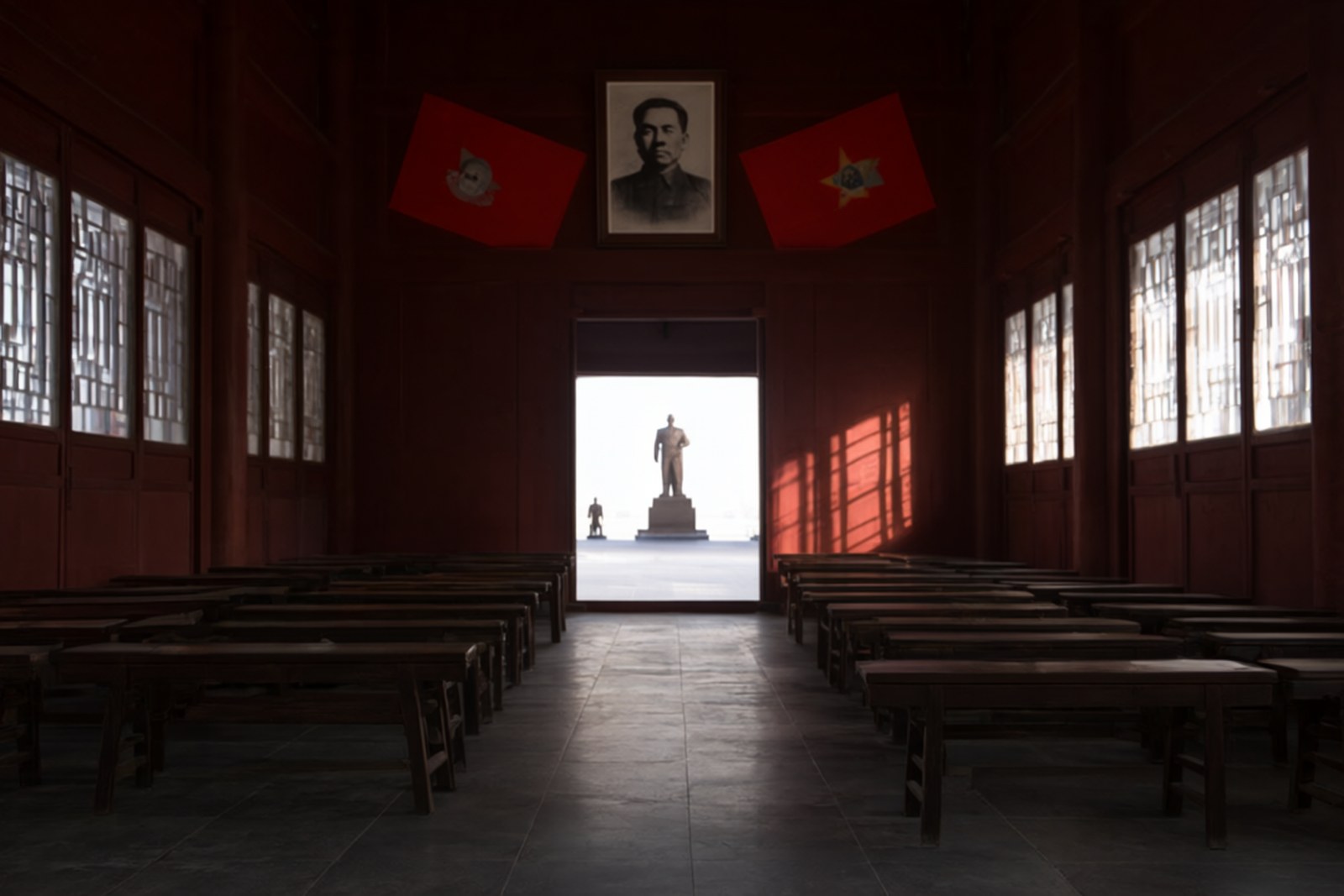
He reached the Central Committee’s Political Bureau in November 1928, was arrested in Shanghai after a betrayal on 24 August 1929, and killed at Longhua on 30 August, aged thirty-three. The bronze in the square went up in 1986, by the sculptor Pan He Pān Hè: 5.5 metres from base to crown, the figure 3.2 metres and two tonnes, on a pedestal inscribed by Marshal Xu Xiangqian Xú Xiàng qián. The museum recorded 945 objects in its 2024 return to the national heritage administration and 684 in 2019. The published area is a lesson in counting: 33,700 square metres in the national return, 24,000 in the encyclopaedias and 22,000 in tourist accounts, while the Red Square is given as 2,212 square metres in one entry and 22,221 in another section of the same entry.
The square held its other famous meeting in January 1928, when the Red Second Division, formed from survivors of the Nanchang rising under Dong Lang Dǒng Lǎng, joined the Red Fourth Division of the Guangzhou rising, whose commanders included Xu Xiangqian; most accounts give 5 January and a minority 2 January, so carry both dates. Beside it stood the county maternity hospital, which the Soviet renamed the People’s Hospital and ran on a rule that says more than any plaque: members paid no consultation fee and half price for medicine, and the poorest paid nothing. Three things are commonly got wrong: Hailufeng was two counties and is not one now, the claim to China’s first Soviet is made officially in two forms, and the Red Palace was never a palace, only a temple to Confucius.
Practicalities
Tickets. There is no admission charge and visitors register at the gate, so the price is the easy part. Third-party guides add a daily cap of about four thousand visitors and a limit of about two hundred inside the Red Palace at a time; no official notice publishes either figure, and none sets a price. Booking is by telephone or through the memorial’s WeChat account, 海丰红宫红场旧址纪念馆.
Opening hours. No single official timetable holds, and the report says the hours have several versions: 08:30 to 17:00 in the guidebooks; 08:30 to 17:30 with last entry at 17:00 and closure on Mondays except public holidays; 08:30 to 18:00 in the heritage administration’s 2019 return and 08:00 to 17:30 in its 2024 return.
Closing day. No closing day is confirmed by any official notice. The Monday closure is a third-party statement, while the national returns, which are official, show no rest day at all, so plan a Monday visit only after telephoning. The county’s figure of 363 open days a year implies two are shut and does not say which.
Getting there. In the county town the number 5 bus runs from the county government building to Lantian Square, about 804 metres on foot from the site. From Shanwei or Lufeng city it is a taxi or a car, with Lufeng forty to fifty minutes away. The site car park is small and the roadside is policed, so the documented advice is to use the Xinli Lantian parking building nearby.
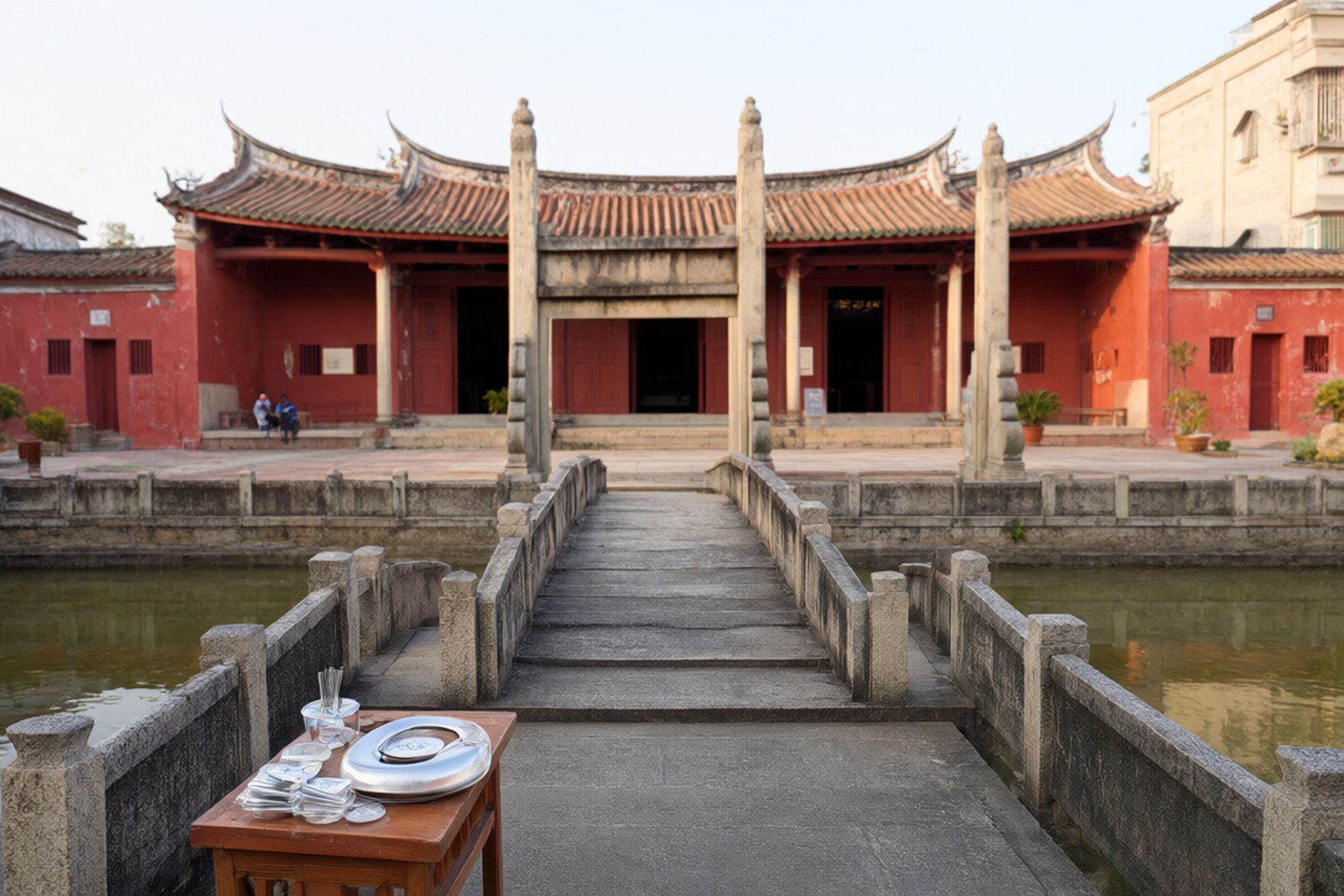
Give this an hour and a half and read the labels, because the labels are the argument: a Ming school for the Confucian classics became, in four days of November 1927, the chamber of a peasant government. The small pleasures are real, from three free commemorative stamps at a table by the entrance to a bronze of a thirty-three-year-old man standing where he once addressed fifty thousand people. Two things nearby are often confused with it: 五坡岭 Wǔ pō lǐng, north of the county town, is the hill where the Song minister Wen Tianxiang was captured, with a pavilion of 1515 and a stone reading 一饭千秋, while 莲花山 Lián huā shān, the county’s 1,337.3 metre peak, is a third trip again.
Getting there: 红宫红场 stands in the centre of Haicheng town in 海丰县, free to enter with registration, with the number 5 bus and a walk of about 804 m from Lantian Square; no official ticket price is published, the hours exist only in conflicting versions (08:30 to 17:00, 08:30 to 17:30, or 08:00 to 17:30 in the national return), the Monday closure is claimed by third-party guides and not by any official notice, and the small car park means parking off site.