
汕尾市 Shàn wěi shì keeps four stage traditions the rest of China has largely lost: 正字戏 Zhèng zì xì, sung in an old Mandarin official pronunciation and carried south by the Ming garrisons; 西秦戏 Xī qín xì, descended from a Shaanxi tune; 白字戏 Bái zì xì, the same theatre sung in local speech; and 陆丰皮影戏 Lù fēng pí yǐng xì, shadow puppetry carved from cowhide and the last surviving branch of the Chaozhou shadow tradition. All four entered the first national list of intangible cultural heritage in 2006, and in November 2011 Lufeng shadow puppetry entered the UNESCO register, the first and so far only world-level item in the city. This is old 海陆丰, a Teochew-related tongue on the coast and Hakka in the hills of 陆河.
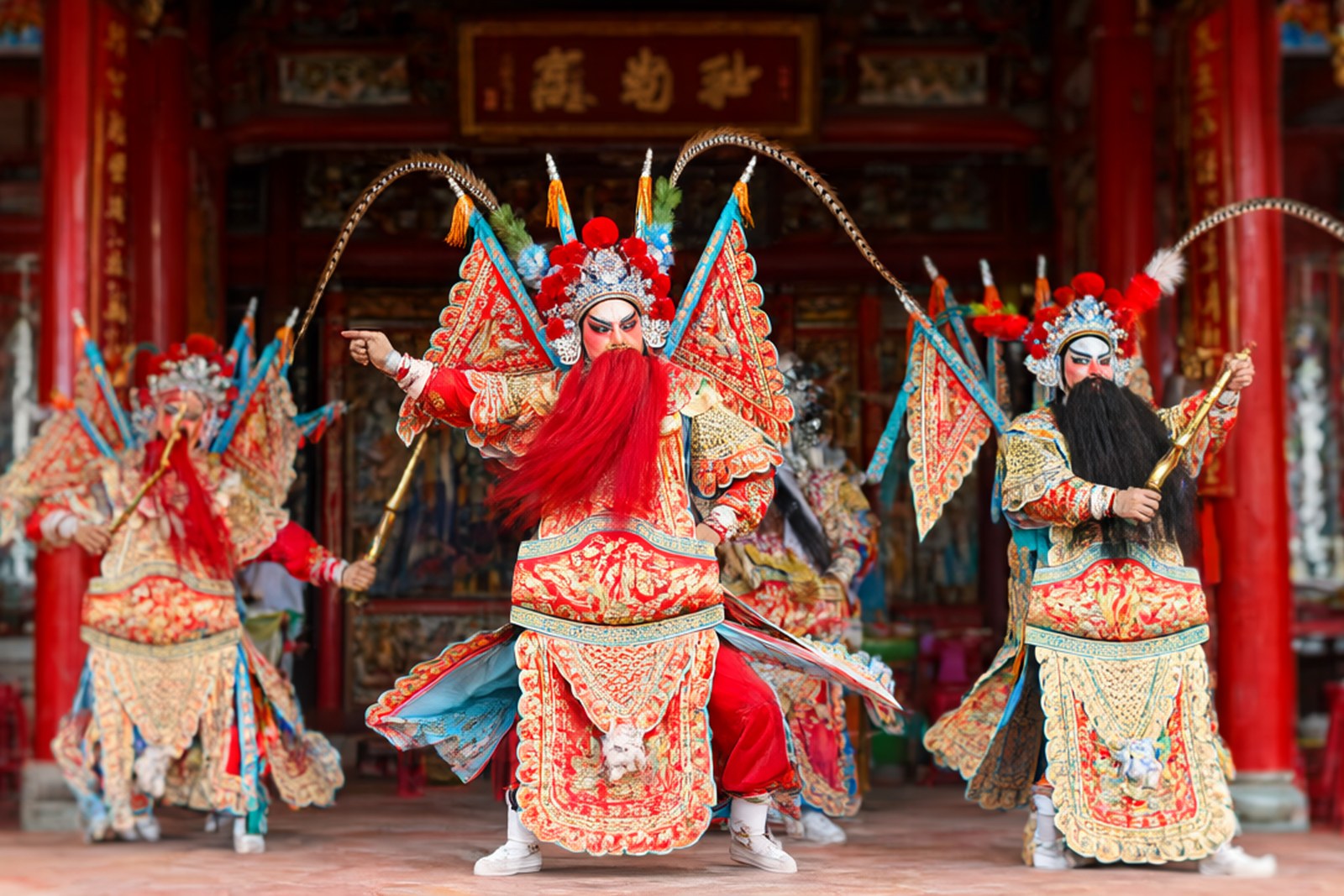
正字戏 is the parent form: its name means the true-character opera, because it is delivered in the Zhongzhou sound of official Mandarin rather than in the local vernacular, which is what 白字, plain speech, means. The Ming gazetteer of the Jieshi garrison records the mechanism: soldiers and officers from Anhui and Jiangxi posted there in the early Ming sent back to Yiyang and Wenzhou for proper companies, so the theatre came south with the army. The form carries a stock of more than 2,600 plays and keeps more than 130 Kun qupai, while all but eight of its own Zheng yin melodies have been lost. Its company is the only professional Zhengzi troupe in China, designated the number one troupe under heaven in 1992.
Where 正字戏 came from is a quarrel with three positions. The southern drama account holds that it formed before the Ming as a branch of Song and Yuan southern drama out of Wenzhou in Zhejiang, which puts it about 900 years old, the line of the troupe’s own publicity and the encyclopaedias. The Yiyang account holds that this cannot stand: the essayist on the Lufeng district political consultative conference site compared its war-dominated repertoire and painted-face-led roles against the standard history of Chinese drama and concluded it derives from the Yiyang tune and took shape in the early Ming, about 600 years ago. The third position came from the veteran scholar who wrote the Guangdong Zhengzi opera entry for the new edition of the Cihai dictionary, who first placed its formation in the early Qing out of the Qingyang and Siping tunes, then changed his mind and wrote it must have formed no later than the Yongle reign. The two counts measure from different starting points: the birth of southern drama, or the opera’s arrival in Guangdong.
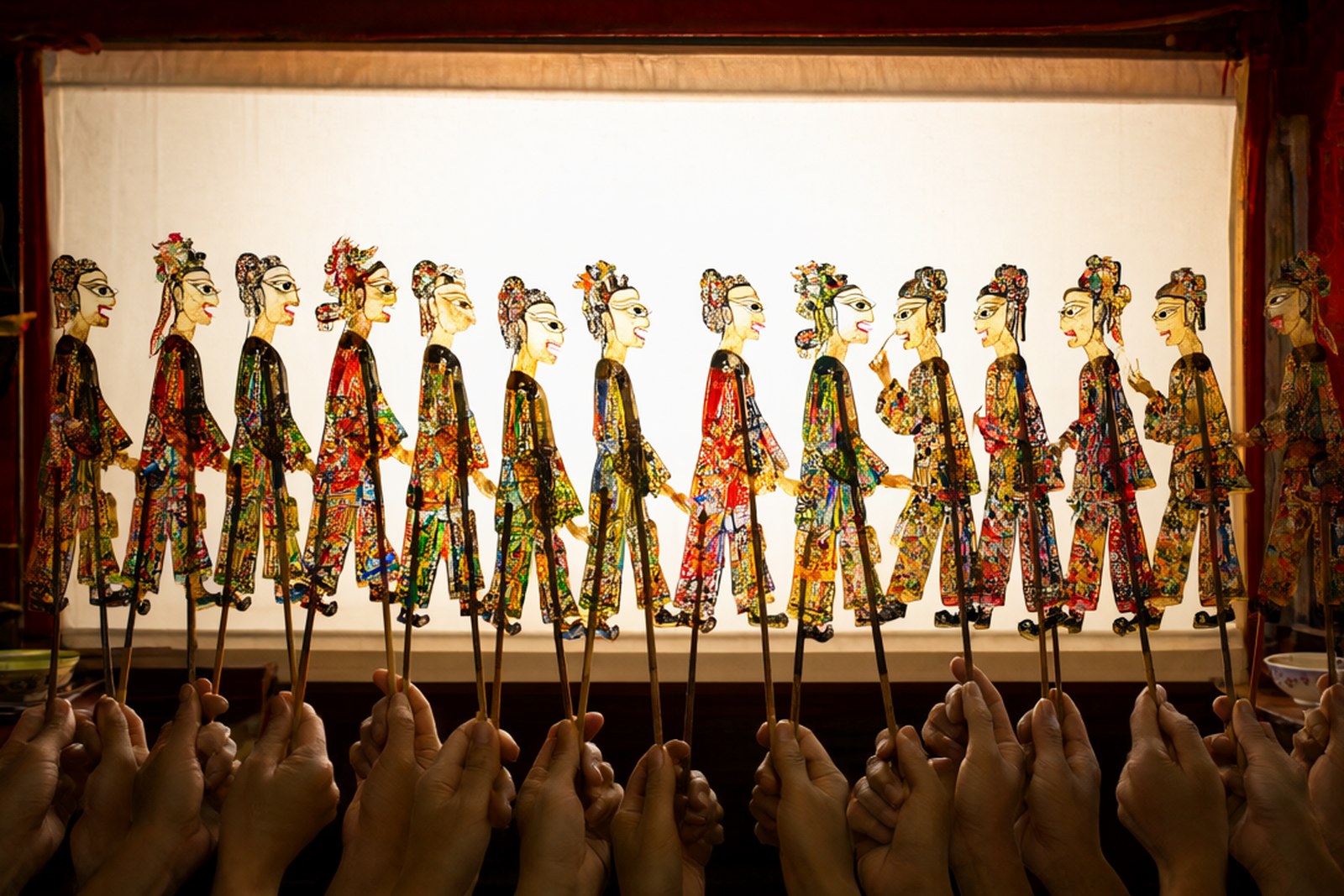
Shadow puppetry is the city’s world-level item. The Lufeng tradition is the only survivor of the Chaozhou branch, one of the three great shadow families of China, and it formed in the Song, older than the Shaanxi and Hebei schools. Its figures are cut from water-buffalo hide rather than donkey skin, painted, and built so that the eyes move and the mouth opens, about sixty centimetres tall with joints matched to a human skeleton. In 1978 the director Peng Meiyeng and her colleagues invented the frontal figure, the most important change the art has seen in centuries. The company is the only state shadow troupe in Guangdong.
西秦戏 is the loudest thing on this coast. Its ancestor is the Qinqin tune that arose in Shaanxi and Gansu in the Ming and fused with local speech and custom by the early Qing. It uses four families of melody and its repertoire runs past a thousand plays, sung in Guilin Mandarin by men in natural voice and women in falsetto. Its company has been the only Xiqin troupe in China since 1956. 白字戏 is the other half of the same coin: the same theatre in Haifeng and Lufeng speech, flowing in from southern Fujian at the end of the Yuan, owing its nickname to the refrain syllable 啊咿嗳 a yī ài. Its comedy role dominates to the point of a proverb, no clown, no play.
Practicalities
Tickets. None of the four traditions publishes a regular performance schedule or a ticket price, and the report says plainly that no reliable source could be found for either, so do not plan a booked evening. What exists is festival performance, paid for by whoever commissions it: a village or a temple books a company and the audience walks in free.
Opening hours. There is no building to open: three of the four are performed by heritage centres that spend most of their year on the road. The civic calendar is the honest substitute. The temple fair at 玄武山 in 碣石镇 falls once a decade in a 丙 year, and when it was revived in 1991 it ran seven days with Zhengzi opera at the temple stage. The Luhe plum festival from January to March brings puppet shows to Luodong village.
Closing day. No closing day is reported for any of the four, and the category does not really apply: there is no resident company performing nightly, no box office and no door. On an ordinary weekday in an ordinary month, in either county town, the chances of walking into a performance are close to nil. Theatres here open when a village pays them to, usually for a god’s birthday or the New Year.
Getting there. Plan by county town, because the companies are spread across two of them. The Zhengzi opera and shadow puppetry heritage centres are in Lufeng city, and the Xiqin and Baizi centres are in Haifeng county town. The Zhengzi troupe belongs with 玄武山, since the temple stage at 碣石镇 is its historic home. Ask at the county culture and tourism office before setting out, since nobody publishes a programme.
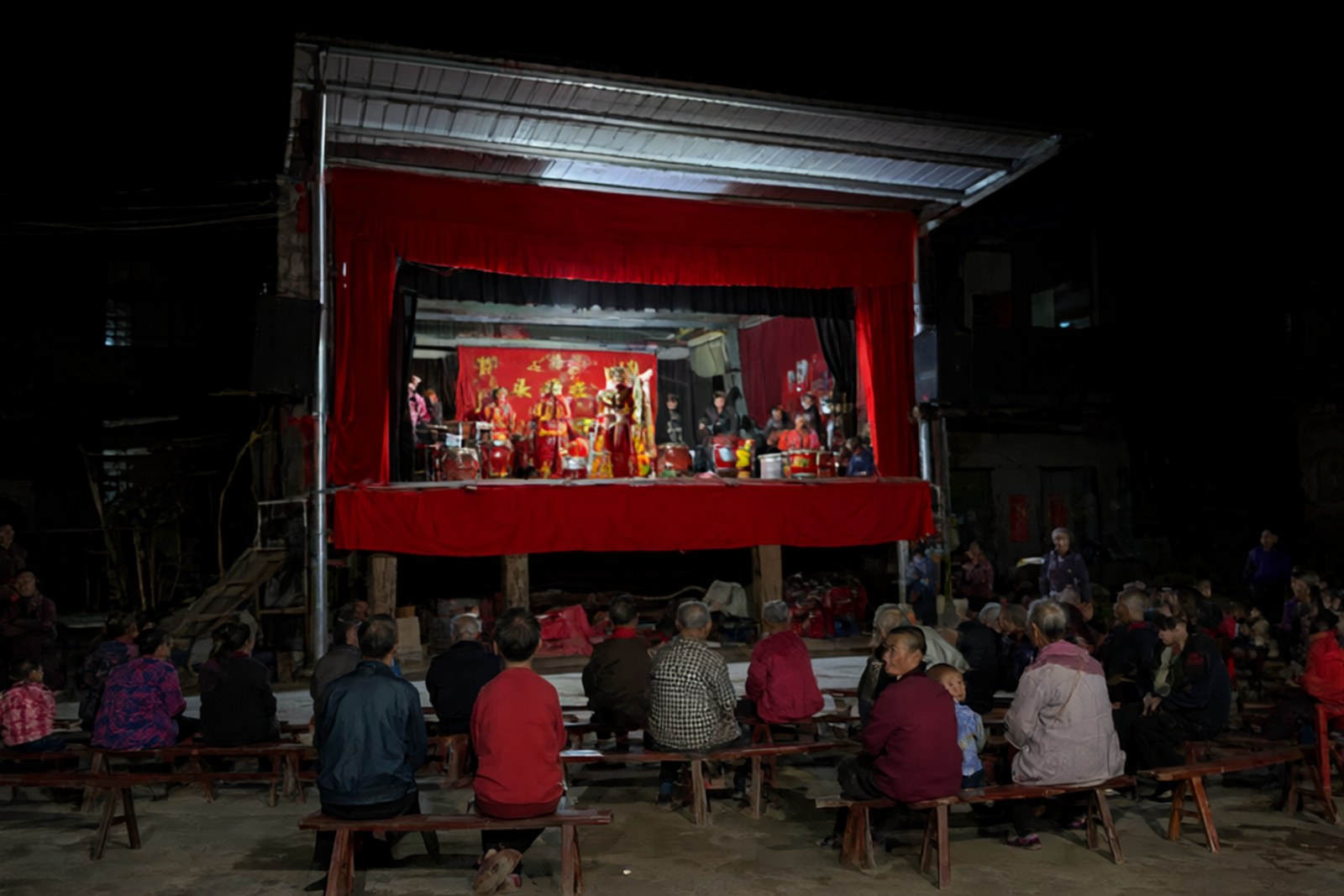
The four pieces tell one story: a coast that imported its theatre twice. The garrisons brought an official-language opera from the north and east and it settled into the temple stages; the villages sang the same thing in their own speech and it became something gentler; a Shaanxi tune arrived and became the loud one; and the shadow players turned a Song art into the last of its line. Two corrections: these operas are not 潮剧, a different tradition in a different speech, and the local saying about thunder and Hailufeng is not a warning about the people, since it records a Ming victory over raiders at Jieshi said to have rung in the emperor’s ears like thunder.
Getting there: The four Hailufeng operas have no published performance schedule or ticket price anywhere; the Zhengzi opera and shadow puppetry companies are in 陆丰市 and the Xiqin and Baizi companies in 海丰县城, the temple stage at 碣石镇 is the historic home of the first of them, and the practical way to see any of them is to time a visit to a festival and to ask the county culture office in advance.