
Haiwan National Forest Park: Shanghai’s Largest Woodland, the Plum Gardens of Late Winter and the Bird Lake at the Edge of Hangzhou Bay in Fengxian District, Shanghai
万木参天藏鸟语,一湖春水映梅红。Wàn mù cāntiān cáng niǎoyǔ, yī hú chūnshuǐ yìng méihóng – Ten thousand trees reach the sky and hide birdsong; a lake of spring water mirrors the plum red.
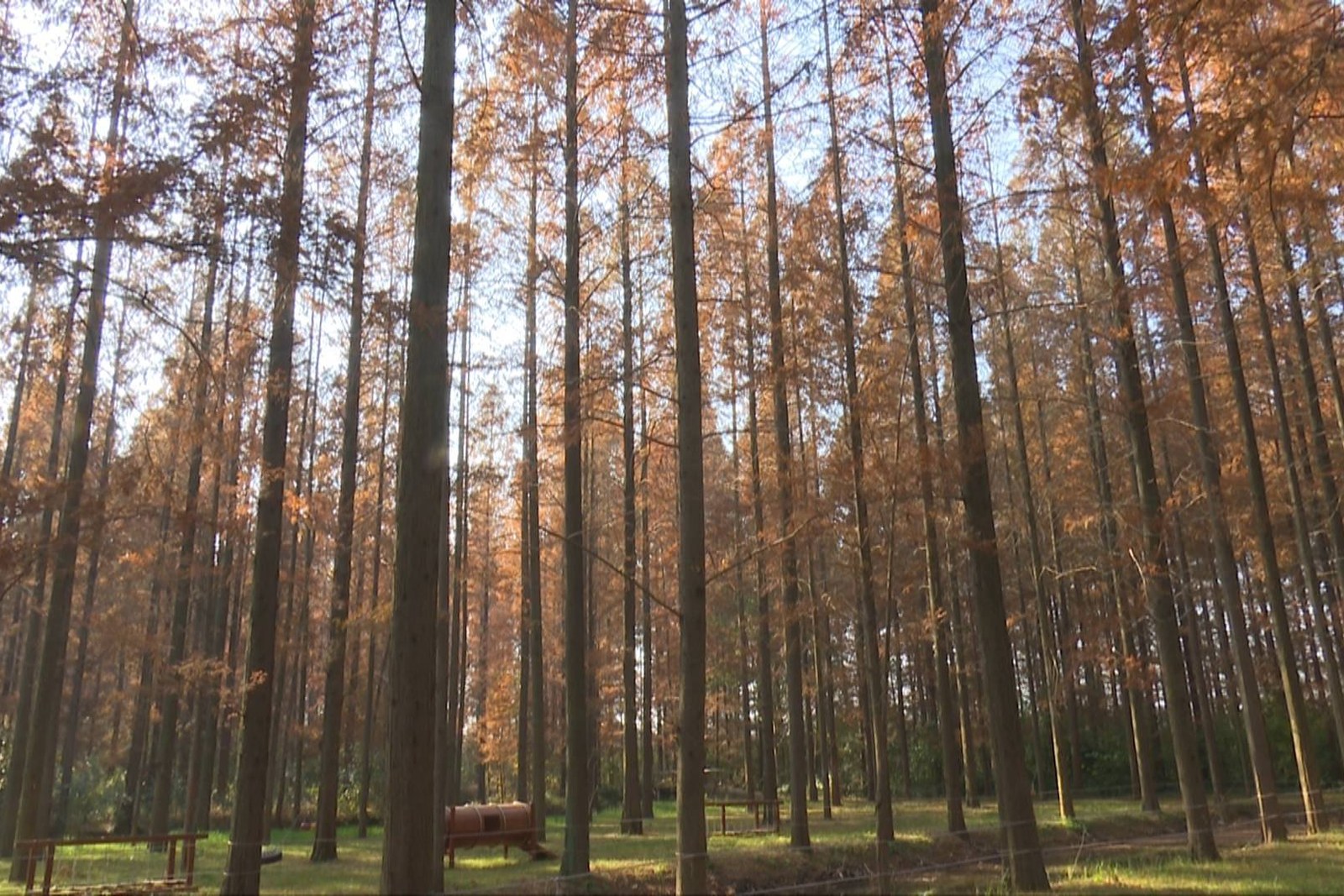
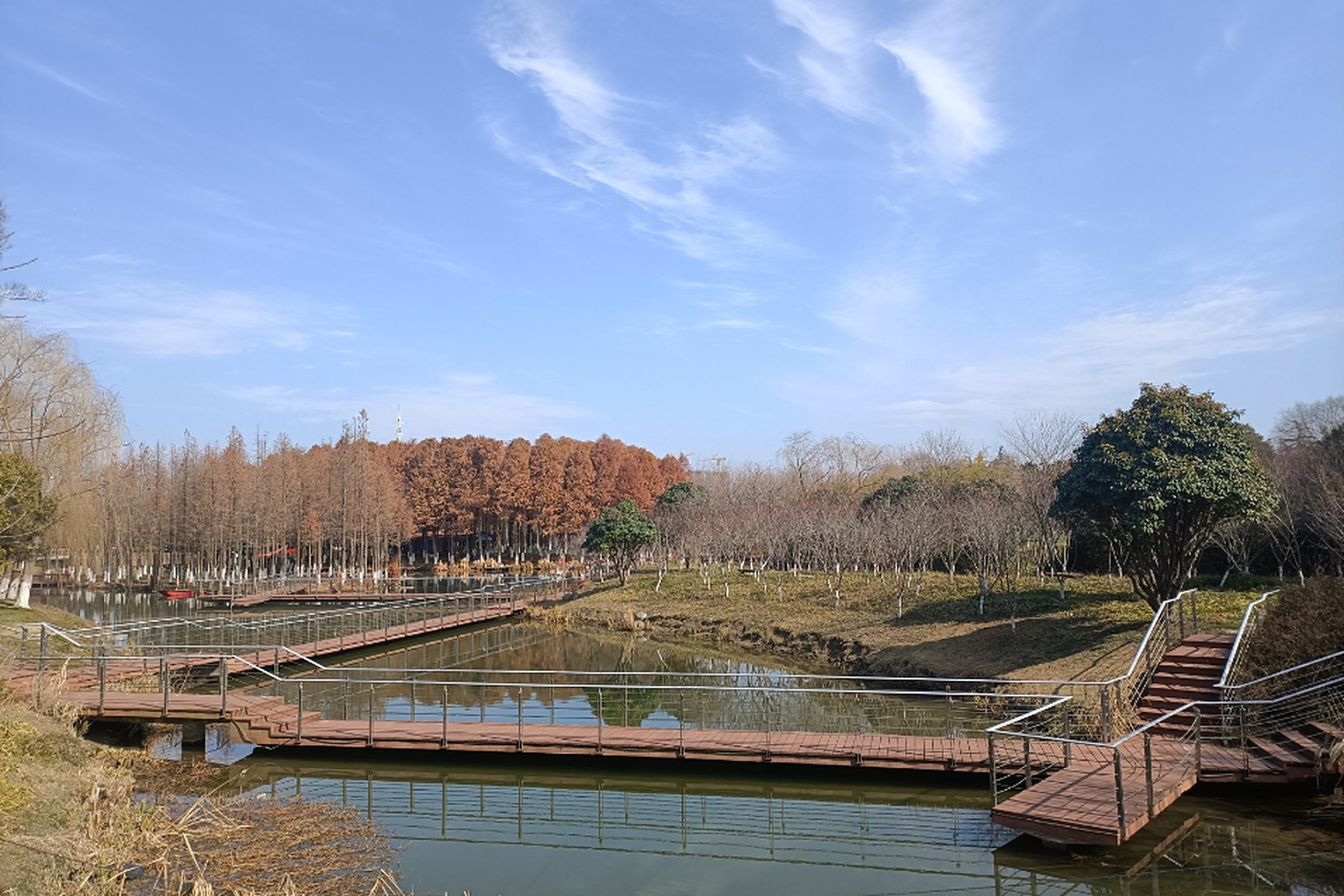
海湾国家森林公园 Hǎiwān Guójiā Sēnlín Gōngyuán Haiwan National Forest Park is the largest stretch of woodland inside metropolitan Shanghai, a planted forest of thousands of hectares on reclaimed land at the Hangzhou Bay edge of 奉贤区 Fèngxián Qū Fengxian District, Shanghai – rows of metasequoia and camphor and pond cypress grown so tall and so close that the city disappears entirely within a hundred paces of the gate. The park’s inland woods are its constant, and its calendar is set by two spectacles: the 梅园 Méiyuán plum garden, one of the largest in the Shanghai region, which erupts in late winter while the rest of the city is still grey; and 百鸟湖 Bǎiniǎo Hú Bird Lake, a shallow water body at the park’s wilder end where herons work the reeds and wintering waterfowl raft in serried ranks (worth confirming the details for the birding hides, which open with the seasons). Between them run cycle paths, barbecue meadows, a miniature train and the kind of green silence that Shanghai’s downtown parks attempt and cannot sustain. The register is full-day outdoors: families unfold on the lawns, photographers stalk the plum rows, and the forest absorbs them all.
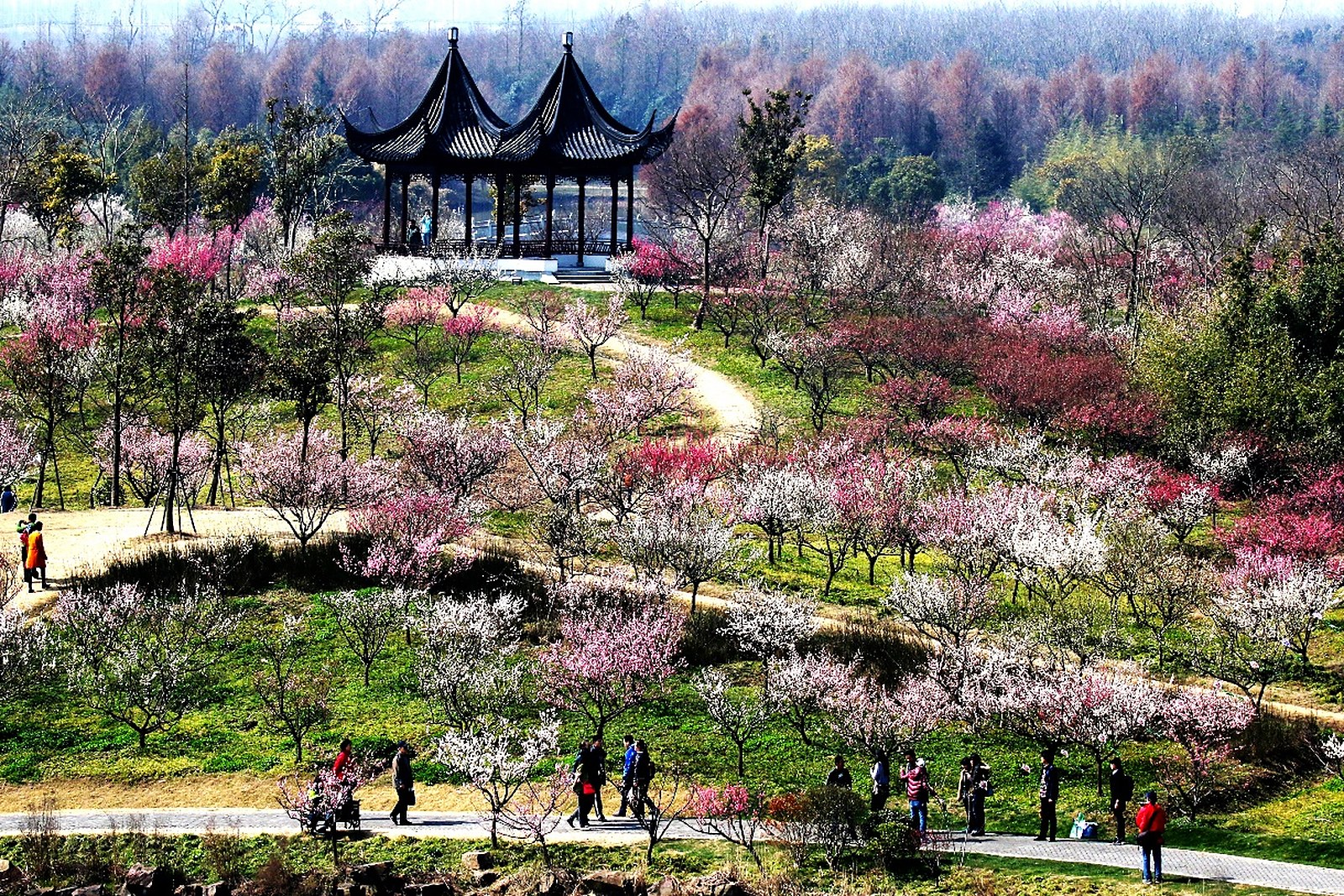
Two crowds keep the paths worn: plum-season day-trippers who come for the late-winter blossom and its attendant festival, and weekend campers and cyclists who treat the park as the city’s back garden – barbecues smoking at the legal pits, tandem bikes circling the loop, kites over the meadows (worth confirming the details for the barbecue-pit reservations, which fill on fine weekends). The stock answer in kind: a forest large enough to get lost in, water at the bird-lake end quiet enough that the city reads as rumour, and a plum garden whose February perfume justifies the long ride south.
Call it honestly: a forest is a forest, and between the two seasonal peaks – plum winter, barbecue summer – the park’s middle calendar can feel like a very long walk between tea houses. The attractions are distributed rather than concentrated; arriving without a plan can produce an afternoon of pleasant striding and no particular destination (worth confirming your route at the gate, where the seasonal map changes with the blooms). What the map repays is scale: this is the rare Shanghai green space where the horizon is made of trees on every side, where the bird lake at dusk delivers egrets in the hundreds, and where the plum garden in full flower is – briefly – the most beautiful place in the city’s administration. Against that: entry tickets modestly, the paths are genuinely accessible, and the park’s emptiness on weekdays is a feature the famous gardens cannot offer. Come for the plums, return for the birds, and give the barbecue lawns to the children – the forest will hold the rest.
Practicalities
Nearly everything else on this Fengxian list trades a different mood on the same map: choose 碧海金沙 Bìhǎi Jīnshā Bihai Jinsha for the diked blue-water beach, 上海之鱼 Shànghǎi zhī Yú the Shanghai Fish for the lake-side new city, 庄行老街 Zhuāngháng Lǎojiē Zhuanghang Old Street for the canal town and 奉贤博物馆 Fèngxián Bówùguǎn Fengxian Museum for the galleries on the water – four more doors into the same 奉贤区 Fèngxián Qū Fengxian District. Once the day is planned, our Fengxian food map fills the eating hours.
Practicalities
Words and Names
flowcloud would say that a Haiwan forest day is bought for the plums and the birds – blossom pilgrimage to heron dusk in the October 2026 snapshot, all worth confirming the details – and that the honest move is to pick a season, not a sight, because the park gives exactly what its month is selling, keep the plum-garden morning and the bird-lake evening as the plan, and let the long ride south feel like a journey. All checked October 2026.
Getting there: Metro Line 5 to the southern terminus area, then a bus or taxi along 随塘河路 Suítáng Hé Lù to the forest gates (worth confirming the details for the winter hours, which shorten with the daylight); the 梅园 Méiyuán plum garden peaks in late winter. All checked October 2026.