
Hanxiang Water Museum: A Quiet Water-Culture Garden of Relocated Ming and Qing Ancient Stone Bridges on the Huangpu River Bank at Maqiao Town in Minhang District, Shanghai
古桥迁来凌波住,活水源头岁月清。Gǔqiáo qiān lái língbō zhù, huóshuǐ yuántóu suìyuè qīng – Ancient bridges moved here to live above the waves; at the source of living water, the years run clear.
韩湘水博园 Hánxiāng Shuǐbóyuán Hanxiang Water Museum is not a glass-case museum about water — it is, plainly put, a garden built out of bridges: the park fills its quiet riverside ground at 马桥镇 Mǎqiáo Zhèn Maqiao Town on the bank of the 黄浦江 Huángpǔ Jiāng Huangpu River in 闵行区 Mǐnháng Qū Minhang District, a 水文化 shuǐ wénhuà water-culture garden assembled around a gathering of 明清古石桥 Míng-Qīng gǔ shíqiáo ancient stone bridges of the Ming and Qing dynasties, relocated and rebuilt stone by stone from elsewhere to stand here among ponds, causeways and old trees. The setting doubles the message: the park sits within a 取水口保护区 qǔshuǐkǒu bǎohùqū water-intake protection zone for the city’s drinking supply, so the banks stay clean, low-slung and free of the tower blocks that crowd the rest of the river’s edge. What you actually visit is a slow, green park of arches and reflections where the exhibits are bridges and the theme is the river itself.
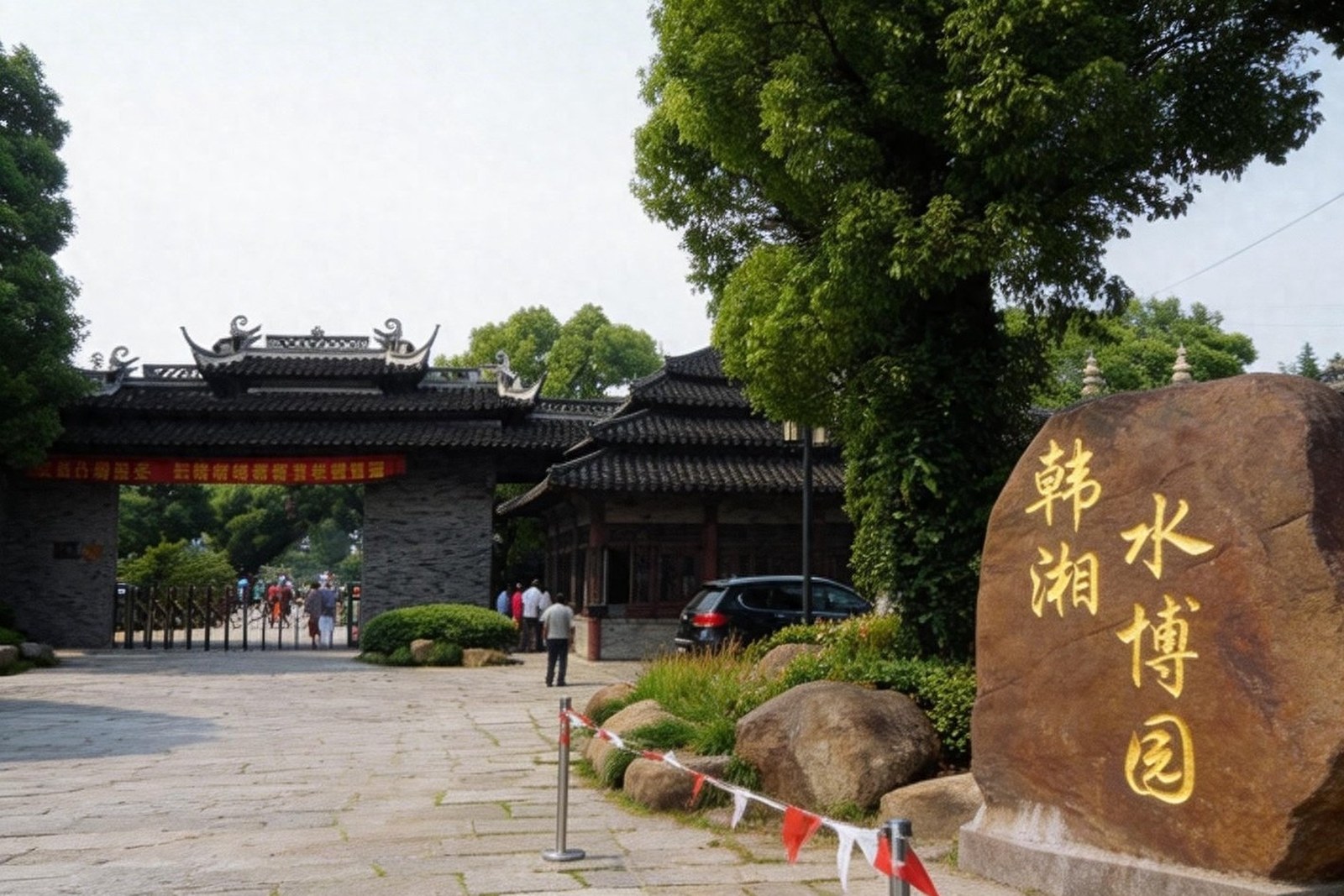
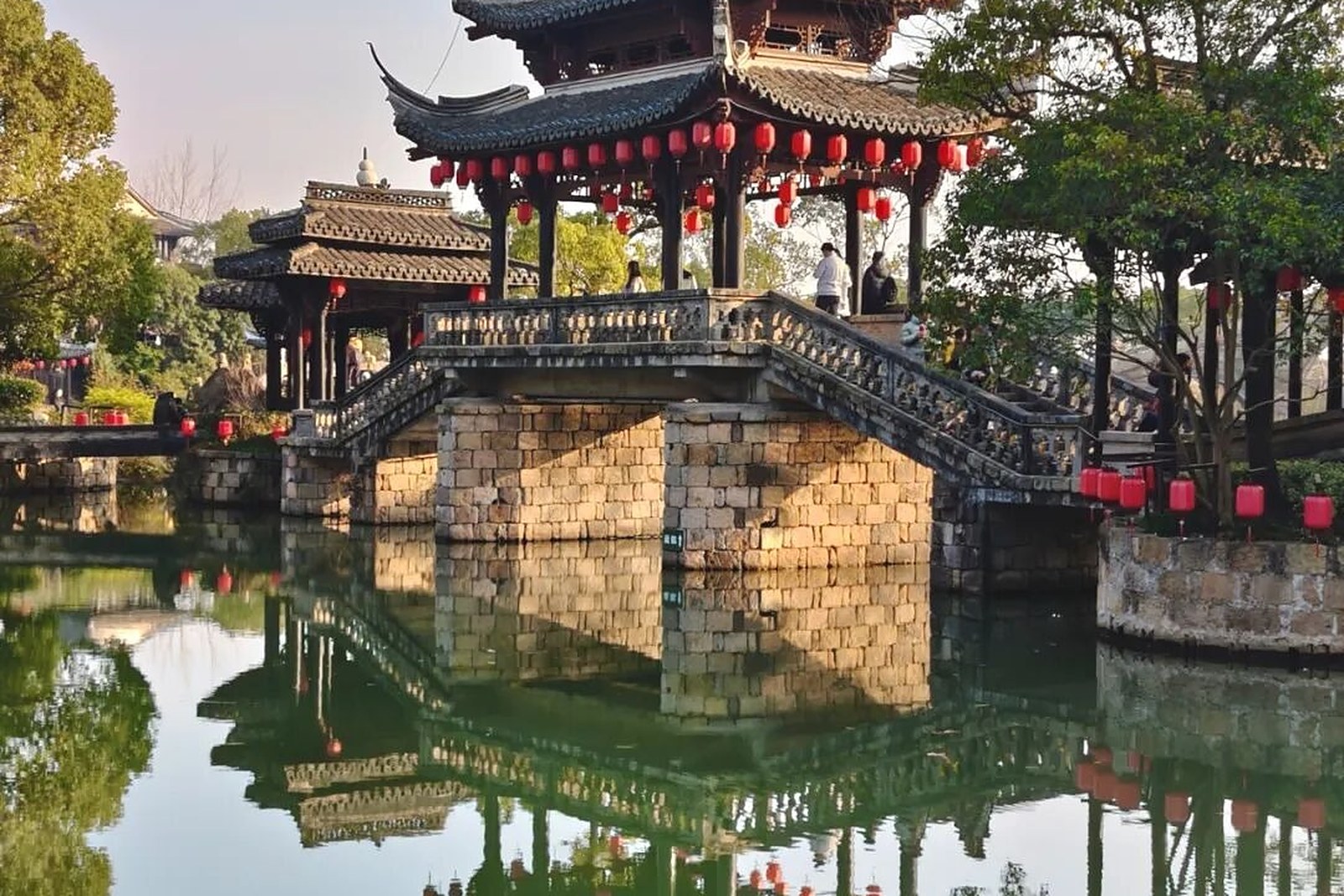
Call it honestly: the park charges an entry ticket at the gate and keeps daylight hours rather than evening ones (worth confirming the details for the current ticket price and opening hours before you set out), and the honest warning is access: 江川路站 Jiāngchuān Lù Zhàn Jiangchuan Road station on Metro Line 5 leaves you close but not at the door, and most visitors take a short taxi or shuttle hop for the last stretch through 马桥镇 Mǎqiáo Zhèn Maqiao Town. Inside, there is no fixed circuit and no audio guide — the pleasure is simply crossing every bridge you meet and finding the water beneath it. Weekdays leave the lawns and stone paths nearly empty; weekends bring picnic families from the district. Late afternoon sends the arches doubling into the ponds in the kindest light. Give it about two unhurried hours, and let the riverbank paths set your pace rather than any map.
The honest star is the bridge cluster itself — stone arch after stone arch carried here from drowned or demolished sites and rebuilt across the park’s waters, their worn steps and carved balusters still doing honest bridge duty, the single collection that makes the place feel like a rescued village rather than a landscaped garden. What gets oversold is the name “museum”: travellers expecting halls, vitrines and labels find open-air green instead, where the exhibits are the 明清古石桥 Míng-Qīng gǔ shíqiáo ancient stone bridges and the labels are the weathering on them (worth confirming the details for any guided tours or special exhibitions running during your visit). What repays the effort is the water story around the bridges: the intake-protection quiet of the Huangpu bank, the ponds threaded between the arches, the old wells, pumps and waterworks fragments set into the green as footnotes, and the long river views from the bank paths. Come for the layering of the place: gate, then bridges, then the river behind them.
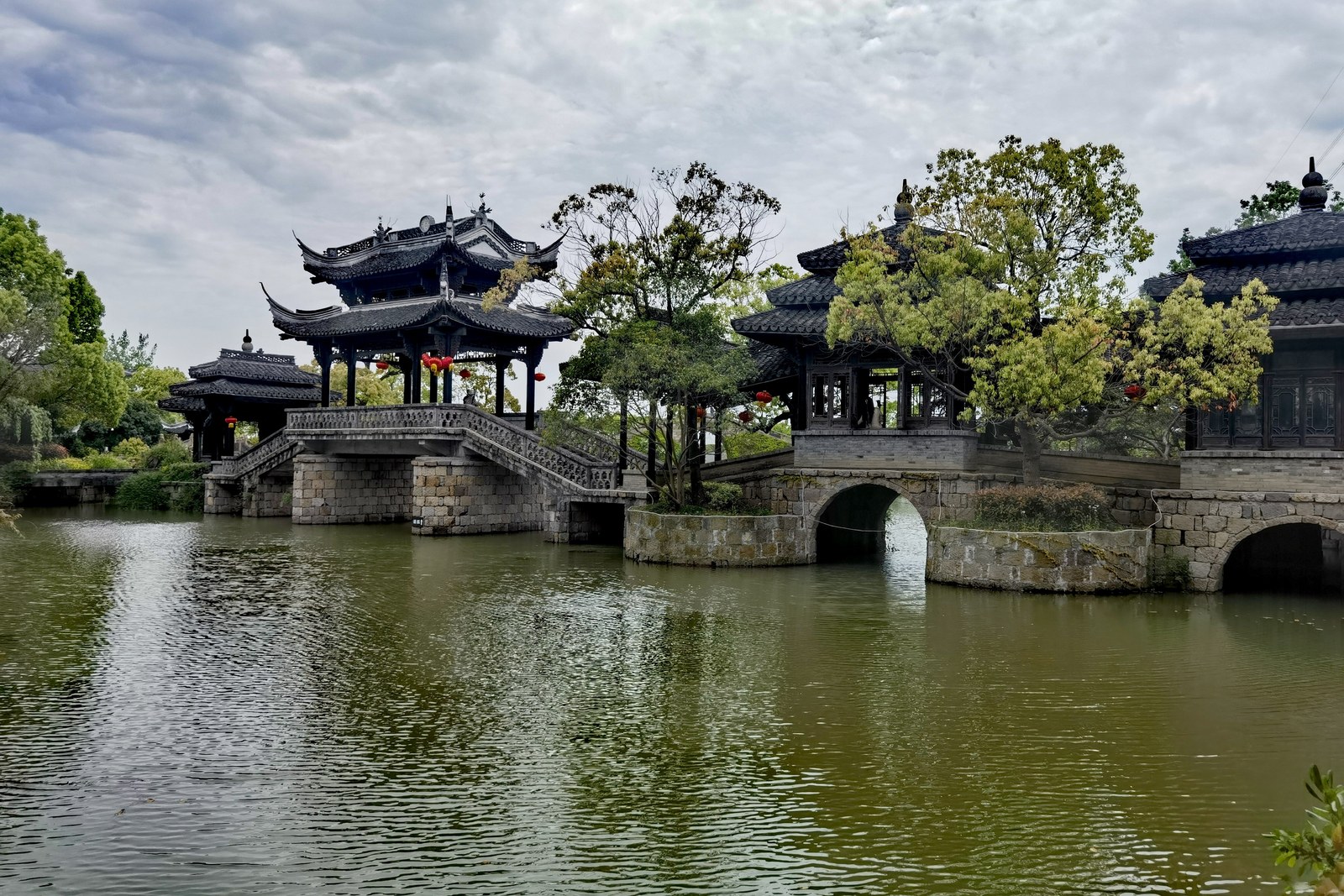
The self-aware postscript: I was sketching one of the arches from a pond-side bench one weekday afternoon when an old man walking his granddaughter paused behind me. “That bridge stood somewhere else before I was born,” he said, pointing with his walking stick, “they moved it here stone by stone when the water rose where it stood — my granddaughter learns to count on its steps now, and a bridge that carries children is never really demolished”. That is the visit in miniature. From the riverbank path, looking back through the trees at the bridges filing across the ponds, the park holds its whole argument in one frame — engineering as heritage, kept alive by remaining useful, the view no exhibition floor plan could arrange. 韩湘水博园 Hánxiāng Shuǐbóyuán suits whoever treats it as a quiet garden of rescued bridges first and a museum second, and disappoints anyone expecting a modern exhibition building, interactive displays and a café court with river views thrown in.
Nearly everything else on this Minhang list lies within a ride across the district: the thousand-year-old lanes of 七宝老街 Qībǎo Lǎojiē Qibao Old Town wait north on Metro Line 9, the lakes and library towers of the 上海交通大学闵行校区 Shànghǎi Jiāotōng Dàxué SJTU Minhang Campus stand at 东川路 Dōngchuān Lù Dongchuan Road 800, the flower shows and wetland boardwalks of 浦江郊野公园 Pǔjiāng Jiāoyě Gōngyuán Pujiang Country Park open beside 沈杜公路 Shéndù Gōnglù Shendu Highway, and the rail-side dining lanes of 老外街 Lǎowài Jiē Laowai Street wait at 虹梅路 Hóngméi Lù Hongmei Road Lane 3338 — all inside the same 闵行区 Mǐnháng Qū Minhang District whose quietest riverbank corner this bridge garden keeps.
Practicalities
- Rating: ★★★★☆ — a hushed garden of rescued Ming and Qing stone bridges on a protected riverbank; come unhurried, and cross every arch you meet.
- Tickets: Modest entry ticket at the gate (worth confirming the details for the current price and opening hours).
- Address: 韩湘水博园 Hánxiāng Shuǐbóyuán, 马桥镇 Mǎqiáo Zhèn Maqiao Town, 闵行区 Mǐnháng Qū Minhang District, Shanghai — from Jiangchuan Road station on Metro Line 5 plus a short taxi or shuttle hop.
- Time needed: About two unhurried hours for the bridges, the ponds and the riverbank paths.
Words and Names
韩湘水博园 Hánxiāng Shuǐbóyuán Hanxiang Water Museum · 明清古石桥 Míng-Qīng gǔ shíqiáo ancient stone bridges of the Ming and Qing dynasties · 迁建 qiānjiàn relocation and rebuilding of old bridges · 水文化 shuǐ wénhuà water culture, the garden’s theme · 取水口保护区 qǔshuǐkǒu bǎohùqū water-intake protection zone · 黄浦江 Huángpǔ Jiāng the Huangpu River · 马桥镇 Mǎqiáo Zhèn Maqiao Town · 江川路站 Jiāngchuān Lù Zhàn Jiangchuan Road station · 古桥 gǔqiáo old bridge, the park’s recurring figure · 闵行区 Mǐnháng Qū Minhang District
flowcloud would say that 韩湘水博园 Hánxiāng Shuǐbóyuán is what happens when a city saves its drowned bridges instead of losing them quietly — a 水文化 shuǐ wénhuà water-culture garden on the 黄浦江 Huángpǔ Jiāng Huangpu River bank at 马桥镇 Mǎqiáo Zhèn Maqiao Town in 闵行区 Mǐnháng Qū Minhang District, where a gathering of 明清古石桥 Míng-Qīng gǔ shíqiáo ancient Ming and Qing stone bridges, relocated and rebuilt stone by stone, now spans the ponds of a 取水口保护区 qǔshuǐkǒu bǎohùqū water-intake protection zone kept deliberately calm and green (worth confirming the details for the current ticket price, hours and any tours before you travel) — and that the honest move is an unhurried weekday afternoon reached via 江川路站 Jiāngchuān Lù Zhàn Jiangchuan Road station on Metro Line 5 plus a short hop, because the modern-museum expectation is the poster half and the worn steps, the doubled arches and the guardrails of the drinking-water quiet are the real half, and the garden repays whoever comes to cross bridges rather than read about them. All checked October 2026.
Getting there: Metro Line 5 to 江川路 Jiāngchuān Lù Jiangchuan Road station, then a short taxi ride south to the garden on the 黄浦江 Huángpǔ Jiāng Huangpu riverbank at 马桥 Mǎqiáo Maqiao (worth confirming the details for boat-season schedules, which the park publishes monthly); the relocated Ming-and-Qing stone bridges are the core sight. All checked October 2026.