
Fog, Log Cabins and Birch Gold: Waking Up in Hemu Village, Altay
晨雾炊烟绕木屋,白桦林边马踏霜 Chénwù chuīyān rào mùwū, báihuà lín biān mǎ tà shuāng – Morning fog and cooking smoke wrap the log cabins; by the birch forest, horses step through the frost.
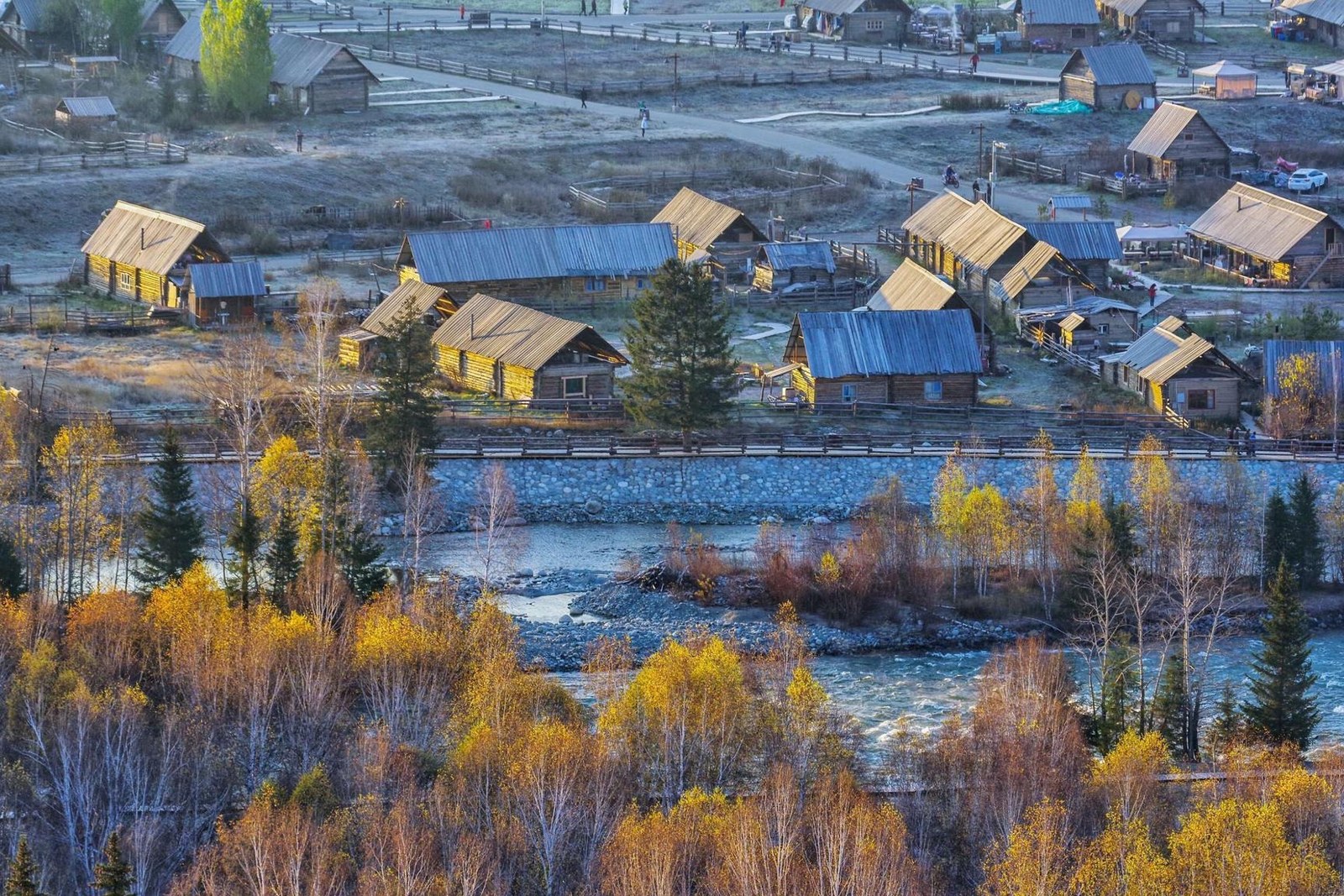
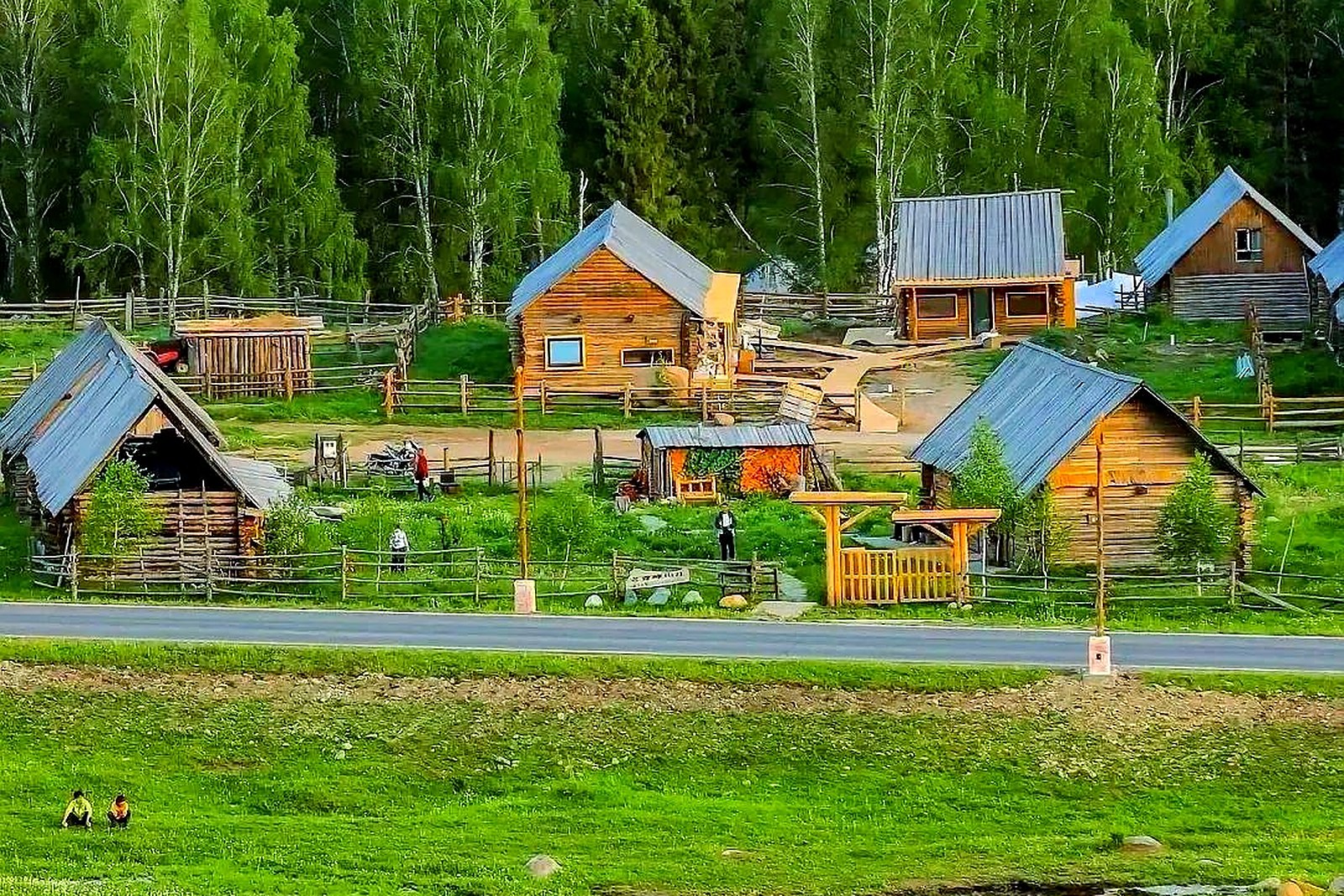
禾木 Hémù Hemu sits in a river bend two valleys east of Kanas – a Tuva and Kazakh village of squared-log cabins, fenced hay meadows and the densest birch forest in the prefecture, reached by a mountain road that closes its mind to anything larger than a park bus (worth confirming the details for the winter access, since the village becomes a snowbound ski outpost from November). The village lives on two clocks: the villagers’ clock – horses out at dawn, hay in before dusk – and the visitors’ clock, which begins at the Hadden viewing platform before sunrise, when a hundred chimneys light at once and the smoke stands straight in the cold air above the fog-filled river bend. September turns the birch stands to gold, and for roughly two weeks the village becomes the most photographed valley in Xinjiang.
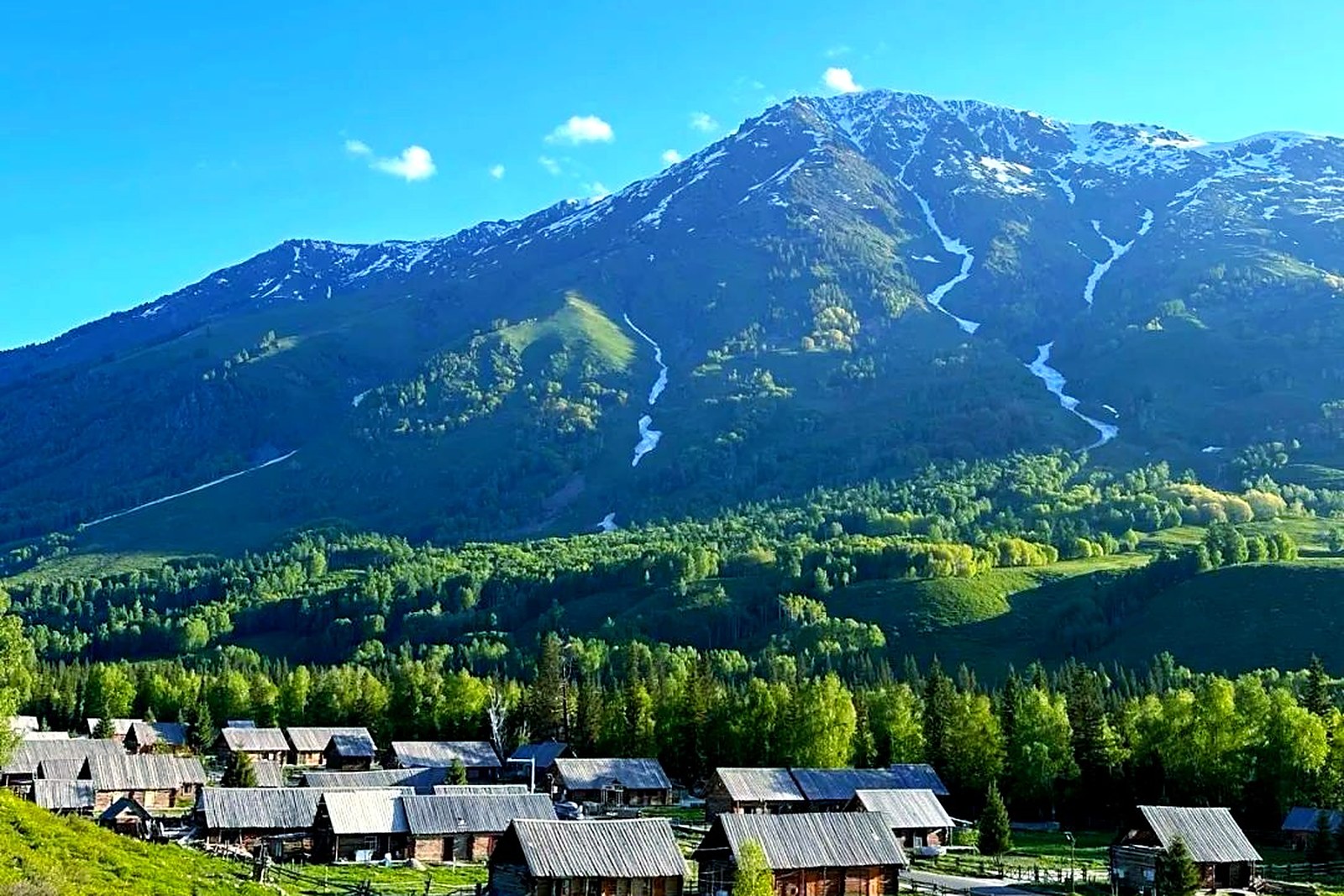
Two rhythms work here. The first is the sunrise circuit: climb the platform in the dark, watch the fog lift off the river, and walk down through the waking village for breakfast. The second is the slow version – ride horses up the side valleys, swim the Hemu river bends in summer, and spend the blue evenings in the guesthouse yards where the stars arrive before the heating stove cools. The stock answer in kind: book two nights rather than one, walk the birch forest path at first light, and keep the second evening for the bridge and the river stones, when the day crowds have gone back down the mountain.
Call it honestly: Hemu in peak season is a village under photographic siege, and the log cabins near the bridge turn over guests all day (worth confirming the details for the quieter new village, where the beds are simpler but the evenings stay quiet). What repays the trip is the two hours the buses ignore – the fog hour, when the valley floor is a white lake and only chimney smoke proves anyone lives under it. Come for those two hours, bring a warm layer for a September morning that can touch freezing, and eat breakfast slow: the village’s best hour is the one most visitors sleep through.
Practicalities
Nearly everything else on this Altay list trades a different mood on the same prefecture: choose 喀纳斯湖 Kānàsī hú the Kanas lake for the deep water, 白哈巴村 Báihābā cūn the Baihaba village for the border valley, 五彩滩 Wǔcǎitān the Wucaitan banks for sunset colour, or 可可托海 Kěkětuǒhǎi Koktokay for the granite gorge – four more doors into the same 阿勒泰地区 Ālètài Dìqū Altay Prefecture. Once the day is planned, our Altay food map fills the eating hours.
Practicalities
Words and Names
flowcloud would say Hemu is the prefecture’s alarm clock set to fog: the valley wakes an hour before the sun, and whoever climbs the platform gets the whole show. All checked November 2026.
Getting there: The village sits north of Burqin on the Kanas side-road system; park buses and shared vans run from the Jiadengyu hub and Burqin town, tickets are sold at the transfer centre, and private cars stop well below the village – keep the last bus down in mind when you book. All checked November 2026.