
河源恐龙博物馆 Héyuán kǒng lóng bó wù guǎn, the Heyuan Dinosaur Museum, stands on 滨江大道 in 源城区 Yuánchéng qū, at the foot of the hill that carries the 龟峰塔 Guī fēng tǎ, and it holds more fossil eggs than any other collection in the world: more than eighteen thousand of them, a figure that has earned it a Guinness record and the reputation that made 河源 Héyuán a 中华恐龙之乡, a hometown of Chinese dinosaurs. The eggs came out of the city’s own ground, they are still coming out of it, and the building exists to hold what the building sites keep turning up.
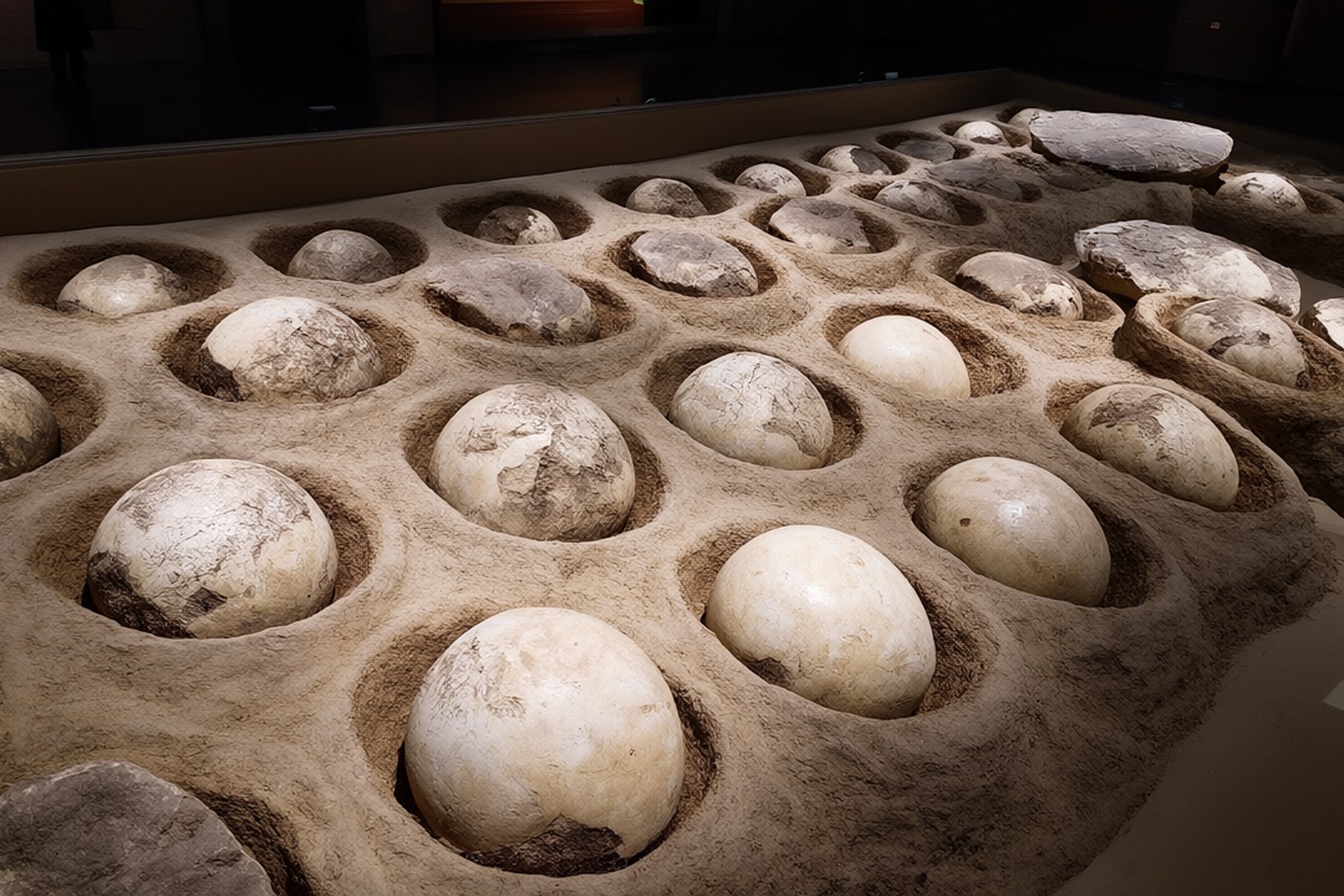
The reason is geological and simple: 河源 sits on a thick sequence of red beds, sandstones and mudstones laid down in the Cretaceous between roughly sixty-five and a hundred million years ago, when this was an inland basin with rivers, lakes and a great many dinosaurs. The first eggs came out of the ground during construction work in the 1990s, and the discovery of a whole nesting horizon changed what the city was. Unusually for a fossil site, 河源 has all three of the things palaeontologists want from one place, and the city describes it as 三位一体, a trinity: eggs, bones and footprints, from the same beds and the same period. The county has produced an oviraptorid, 黄氏河源龙 Heyuannia huangi, named for the city, and some of the eggs contain mineral crystals inside them, the 水晶蛋, which are among the most photographed objects in the museum.
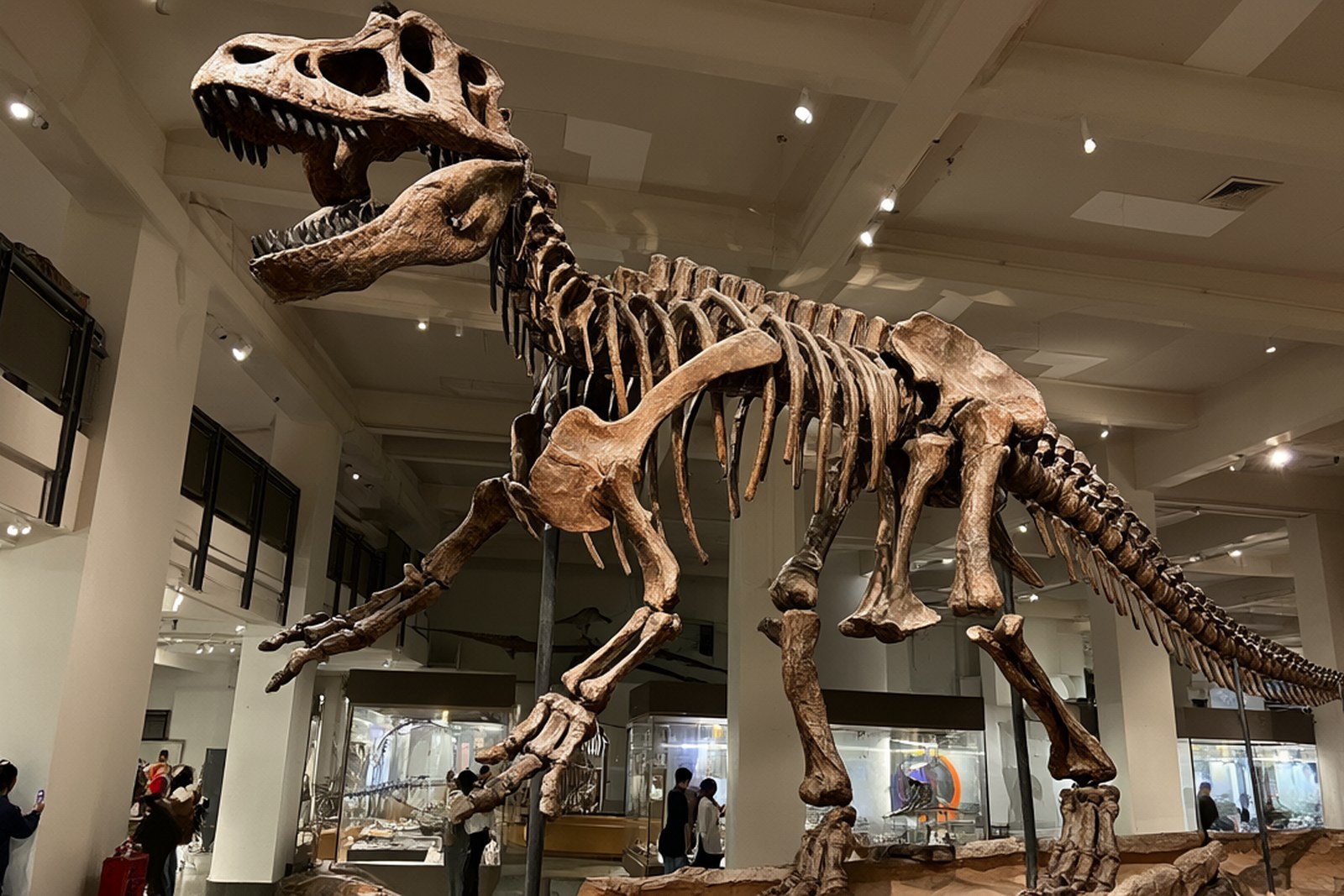
The compound around it, the 河源恐龙文博园, has been a 4A scenic area since 2020, and it holds three things worth a morning. The dinosaur museum itself opened in November 2010, was co-signed with the Institute of Vertebrate Palaeontology and Palaeoanthropology of the Chinese Academy of Sciences in 2013 as the 中国古动物馆恐龙蛋馆, and since 2022 has housed the 河源恐龙研究所, the first dinosaur research institute in South China. Inside, the ground floor runs three displays, 恐龙产房, 恐龙足迹 and 恐龙故乡, the dinosaur nursery, the footprints and the home country, with the eggs in their clutches, more than twenty dinosaur skeletons and parts of skeletons including oviraptorids, tyrannosaur teeth, sauropod vertebrae, ribs and limb bones, and ornithopod toes; the floors above hold ammonites and shells and a hall of insects. Outside there are life-size dinosaur models and a three-hundred-and-thirty-eight-metre sculpture wall.
What makes the visit worth more than an hour is that everything else in the compound is beside it. The 龟峰塔, the Southern Song brick pagoda of 1132, is up the hill in the same grounds, and climbing it gives the river and the whole city; the 河源市博物馆 next door is free and covers five thousand years of local history and the whole of the Hakka material culture in eight displays; and the confluence of the 东江 and the 新丰江, which is the reason the pagoda is on that hill at all, is a short walk from the gate. Pair it with the 太平古街 and the 鳄湖公园, the Qing commercial street and the lake in the old town, and the city’s own sights fill a full day without leaving 源城区. The museum is a good wet-afternoon stop and an excellent one with children, who tend to find eighteen thousand eggs more persuasive than any interpretive panel.
Practicalities
Tickets. The dinosaur museum charges a modest adult ticket, generally ¥24 to ¥30 depending on the channel, with children and older visitors paying half or less. The municipal museum in the same compound is free, and the pagoda costs a few yuan more.
Opening hours. The dinosaur museum runs 08:30 to 17:30, with the last tickets at about 17:00 and the gates shut half an hour later; the municipal museum runs 09:00 to 17:00. Allow two hours for the dinosaur collection and another hour for the free museum and the pagoda together.
Getting there. The compound is on 滨江大道 in 源城区, 河源市, ten minutes by taxi from the centre of the city and about twenty from 河源东站 Héyuán dōng zhàn on the 赣深 high-speed line. It is a walk from the riverfront hotels, and there is parking on the site.
Closing day. Both museums close on Mondays, except during the golden-week holidays, and both reopen the following day. The pagoda keeps the same Monday closing and runs 09:00 to 17:00; the park on the hill around it is open every day.
flowcloud would say that a city which kept digging up eighteen thousand eggs while it was building its own roads and apartments, and then built a museum and a research institute over the hole rather than a shopping centre, has done the rare thing of treating an accident of geology as a public inheritance.
Getting there: the 河源恐龙文博园 is on 滨江大道 in 源城区, 河源市, at the foot of the 龟峰塔 hill, ten minutes by taxi from the city centre and about twenty from 河源东站 on the 赣深 high-speed line; the dinosaur museum, the free municipal museum and the pagoda are all inside the same compound.