
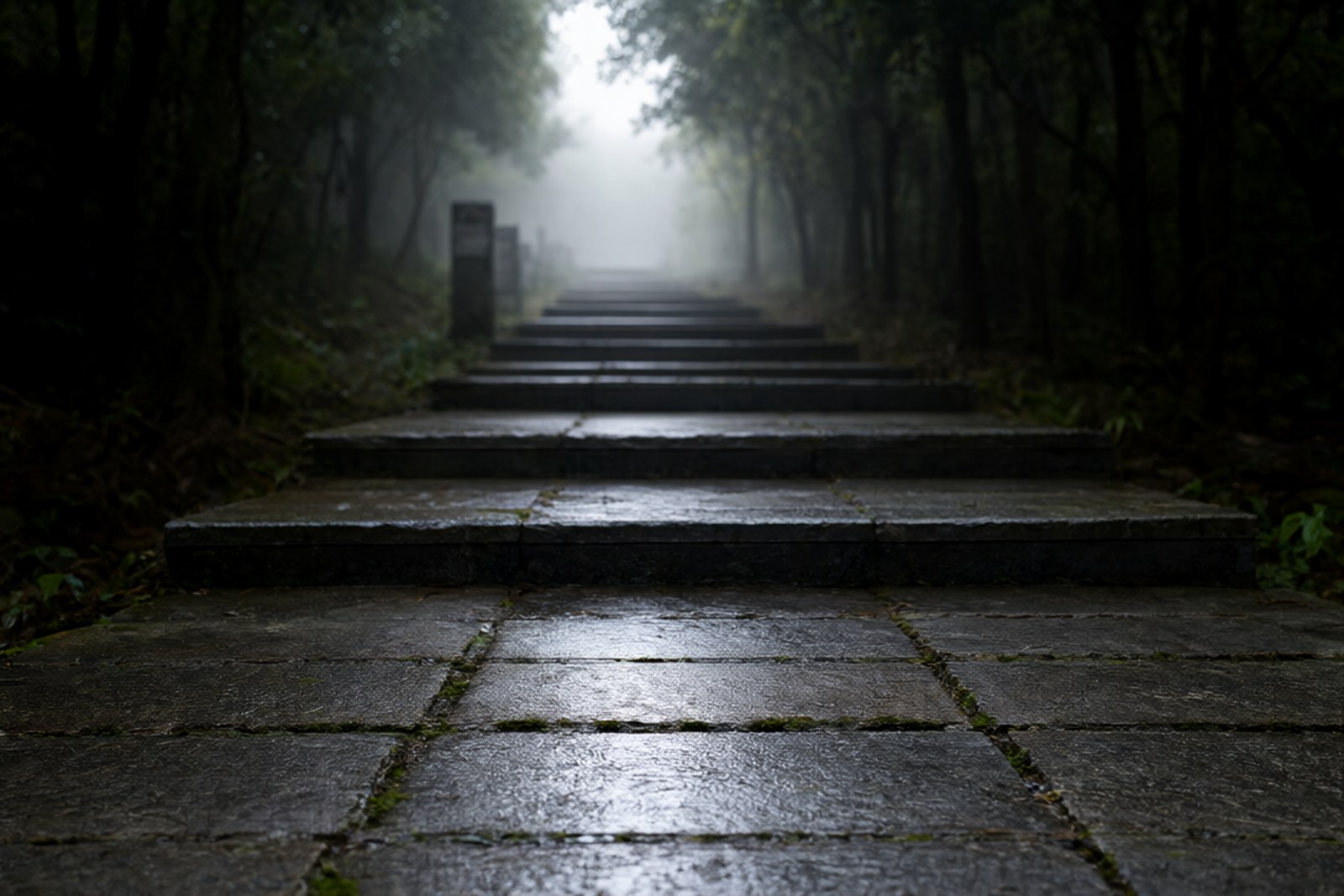
The staircase leaves the streets of 江北区 Jiāngběi Qū, Jiangbei District, at an unremarkable corner, and within a hundred steps the loudest thing is birdsong: two rows of osmanthus, spring water somewhere under the leaves, and the noise of Chongqing fading below. 鸿恩寺森林公园 Hóng’ēnsì Sēnlín Gōngyuán, Hong’ensi Forest Park – Chongqing being a municipality of southwest China – is a hill park of about 1,100 mu, roughly 73 hectares, opened in May 2009 and graded a national 4A scenic area, and it is named for a temple that has not stood here for decades. What the temple left behind is a name – the Temple of Great Kindness – ten thousand fragrant trees, and a seven-storey pavilion from which the whole built-up city spreads out like a relief map with two rivers drawn through it.
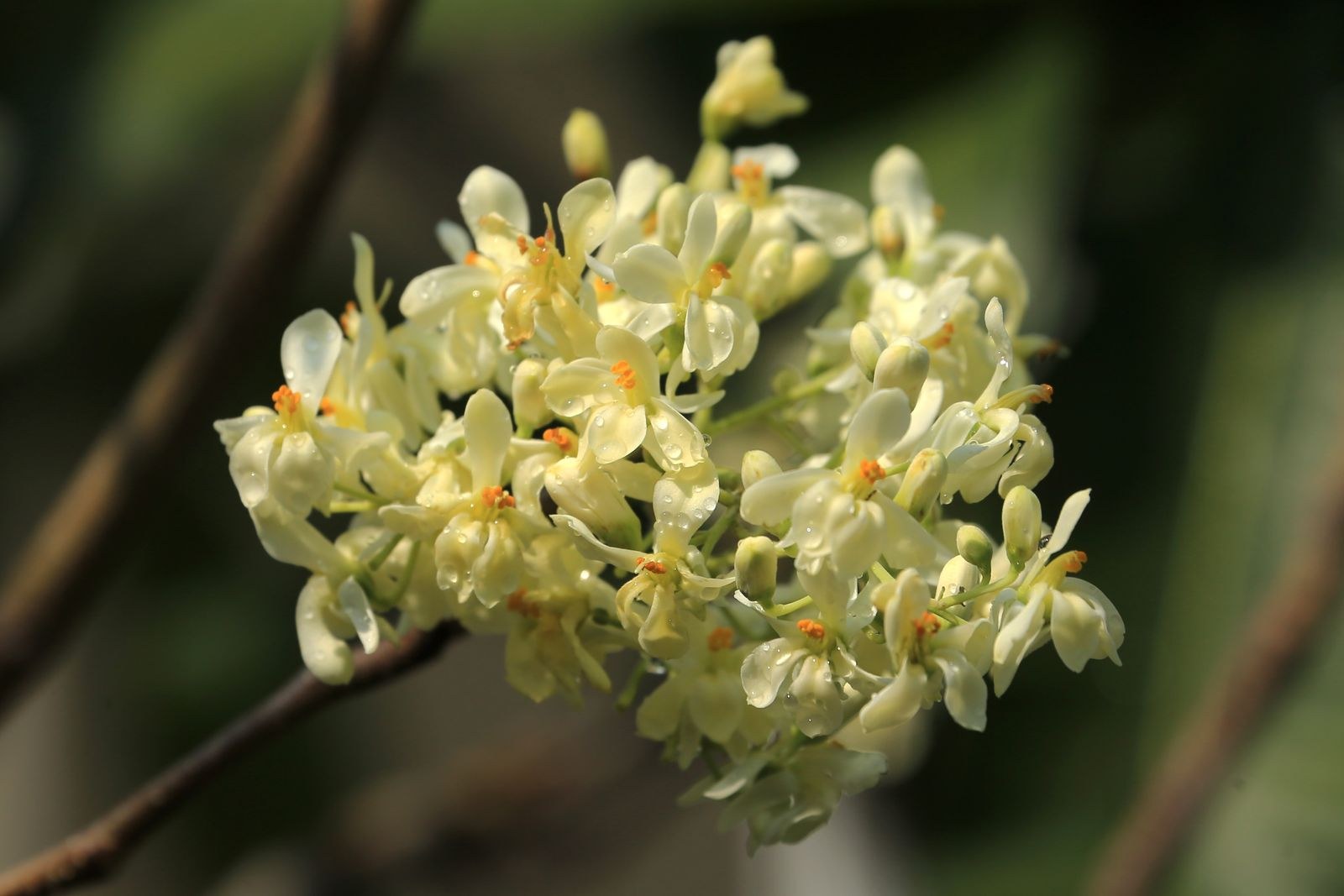
The temple’s biography is one of persistence and erasure. Founded, the records say, in the Yongle era of the Ming dynasty and first named 宏宁寺 Hóngníng Sì, Hongning Temple, it was later renamed 鸿恩寺 Hóng’ēn Sì, Hong’en Temple, the Temple of Great Kindness; it burned in the Qianlong years, and in 1838, the eighteenth year of the Daoguang reign, the local gentry scholar 任正玉 Rén Zhèngyù, Ren Zhengyi, donated his property to rebuild it. The twentieth century finished what fire started: the wartime years saw the buildings requisitioned as barracks and schoolrooms, and in the 1950s the remaining structures were demolished. What survived was the toponym. Chongqing is full of bridge names with no bridges; this is a temple name with no temple, and the hill answered in its own way, by covering itself with a forest park that carries the kindness forward in scent rather than incense.
The legend attached to the name is told strictly as legend. As the story goes, the Jianwen Emperor – 朱允炆 Zhū Yǔnwén, Zhu Yunwen, the Ming emperor displaced early in the fifteenth century – passed through this hill in flight, was saved or sheltered by a skein of wild geese, 鸿雁 hóngyàn, hongyan, and founded or blessed a temple in gratitude for the great kindness of the geese. The histories do not confirm a step of it, and the geese have never commented. What the tale explains is the character 鸿 in the name, which doubles as goose and as grand, and it gives the park a founding myth with wings, which is more than most municipal plantings get. Treat it as the local answer to why a hill above the northern districts should be called Great Kindness, and climb on.
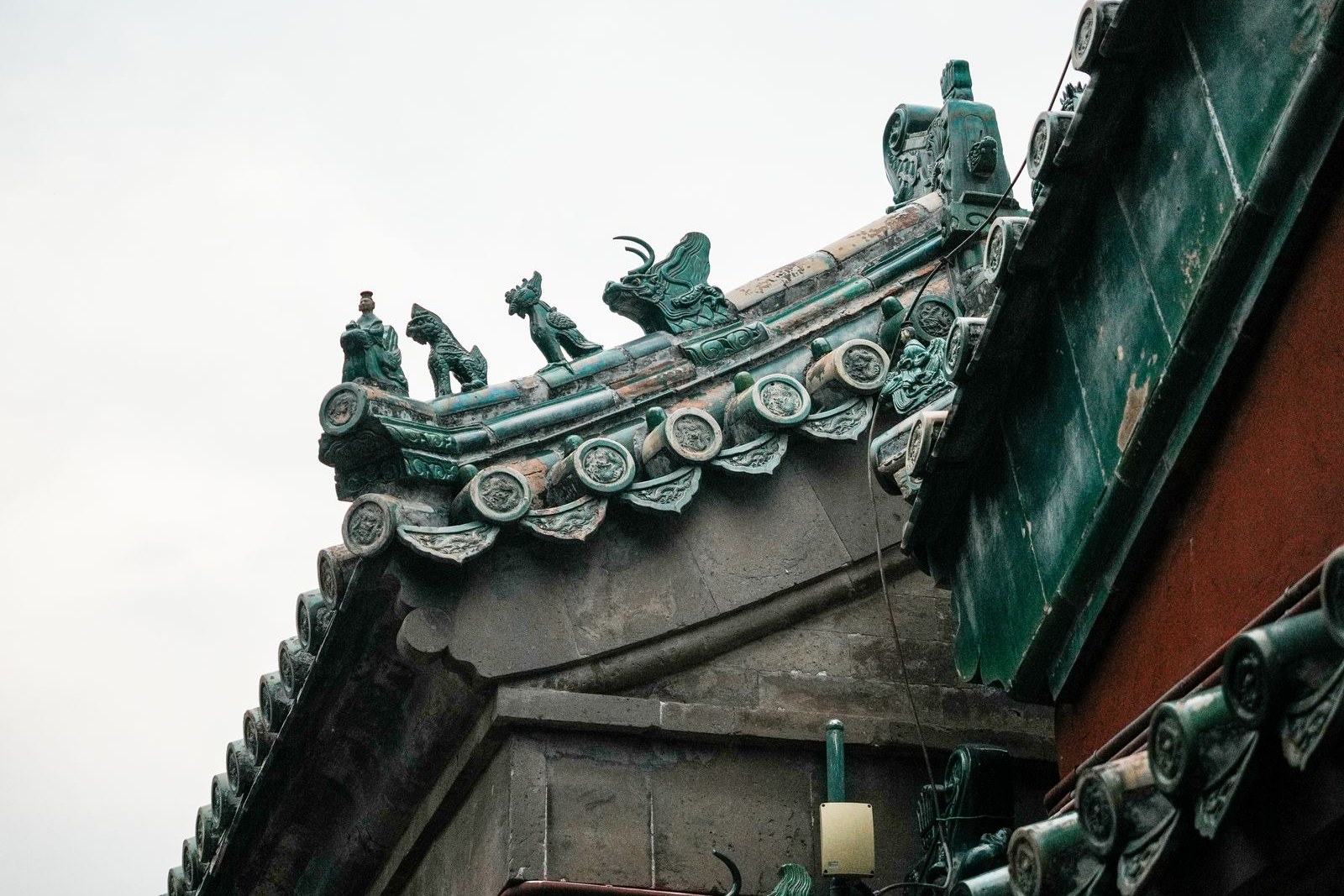
The park’s real claim is botanical. More than ten thousand osmanthus trees – 桂花 guìhuā, guihua – of some sixty varieties are planted across the slopes, among the larger such collections in Chinese city parks, and from late September into October the whole hill perfumes at once, which is why the autumn osmanthus culture festival has become the park’s yearly appointment. The guides count twelve scenic spots with names to match – 金桂溢香 Jīnguì Yìxiāng, golden osmanthus spilling fragrance, among them – but the practical itinerary is simpler: climb to 鸿恩阁 Hóng’ēn Gé, Hong’en Pavilion, the seven-storey antique-style tower on the summit at about 468 metres above sea level, often called the highest city viewpoint in Chongqing’s built-up districts. From the top the city arranges itself as geography rather than scenery: the Yangtze and the Jialing threading the districts, banks of towers, the ridgelines of the suburbs marching east. Come late afternoon, watch the lights come on district by district below you, and bring ID, because the pavilion asks for it at the door.
Practicalities
Tickets. The park is free, and so is the pavilion – the only toll is the ID card scanned at the tower door. The osmanthus festival events on the lawns are likewise free to wander. As of October 2026, subject to change – check before you go.
Opening hours. The park opens at 06:30 and closes at 21:30, with last entry at 21:00, a schedule built for morning exercisers and evening strollers alike. The clearest panoramas come early in the morning or in the hour before the evening shut-off.
Closing day. There is no fixed closing day: the park opens every day of the year, with special arrangements announced only for events such as the osmanthus festival, so check notices in holiday periods.
Getting there. Metro line 5 to 大石坝 Dàshíbà, Dashiba, exit 3A, leaves a walk of about sixteen minutes, mostly gently uphill, to the park entrance; buses 631 and 847 stop closer at the Hong’ensi Park stop. From Guanyinqiao’s neon it is about a quarter of an hour by car.
flowcloud would say that Hong’ensi is the rare park that outlived its own reason – a temple name with no temple, answered by ten thousand trees that do the remembering every autumn – and that the best viewpoints in a city are the ones it waters rather than tickets.
Getting there: Hong’ensi Forest Park is a hilltop park of about 1,100 mu in Jiangbei District, Chongqing, a municipality of southwest China, opened in May 2009 as a national 4A scenic area and named for a Ming-era Temple of Great Kindness first founded, the records say, in the Yongle years, burned in the Qianlong years, rebuilt in 1838 by the gentry donor Ren Zhengyi and demolished in the 1950s, with the tale of the Jianwen Emperor and the rescuing wild geese told only as legend; the park holds more than ten thousand osmanthus trees of some sixty varieties and the seven-storey Hong’en Pavilion at about 468 metres above sea level, often called the highest city viewpoint in the built-up city; entry is free, hours run 06:30 to 21:30 with last entry at 21:00, there is no fixed closing day, and the climb starts from metro line 5 at Dashiba exit 3A or buses 631 and 847 (checked October 2026, subject to change).