
遮浪半岛 Zhē làng bàn dǎo is a cape, and the first thing to get right about it is that it is not an island. It pushes into the sea between 红海湾 Hóng hǎi wān and 碣石湾 Jié shí wān, in Zhelang subdistrict of 汕尾市 Shàn wěi shì, and because the land lies across the water like a screen it splits the sea in two: the eastern side runs rough all year and the western side stays flat in every season. Beaches are measured officially at about 1.39 km on the east and about 0.95 km on the west, though other descriptions give the peninsula about 2 km of coastline, or 4 km of golden sand, or the bay 72 km of shore. The cape was rated AAAA in August 2016; this is old 海陆丰, and the 红海湾 zone is a functional development area carved out of 城区, not a county.
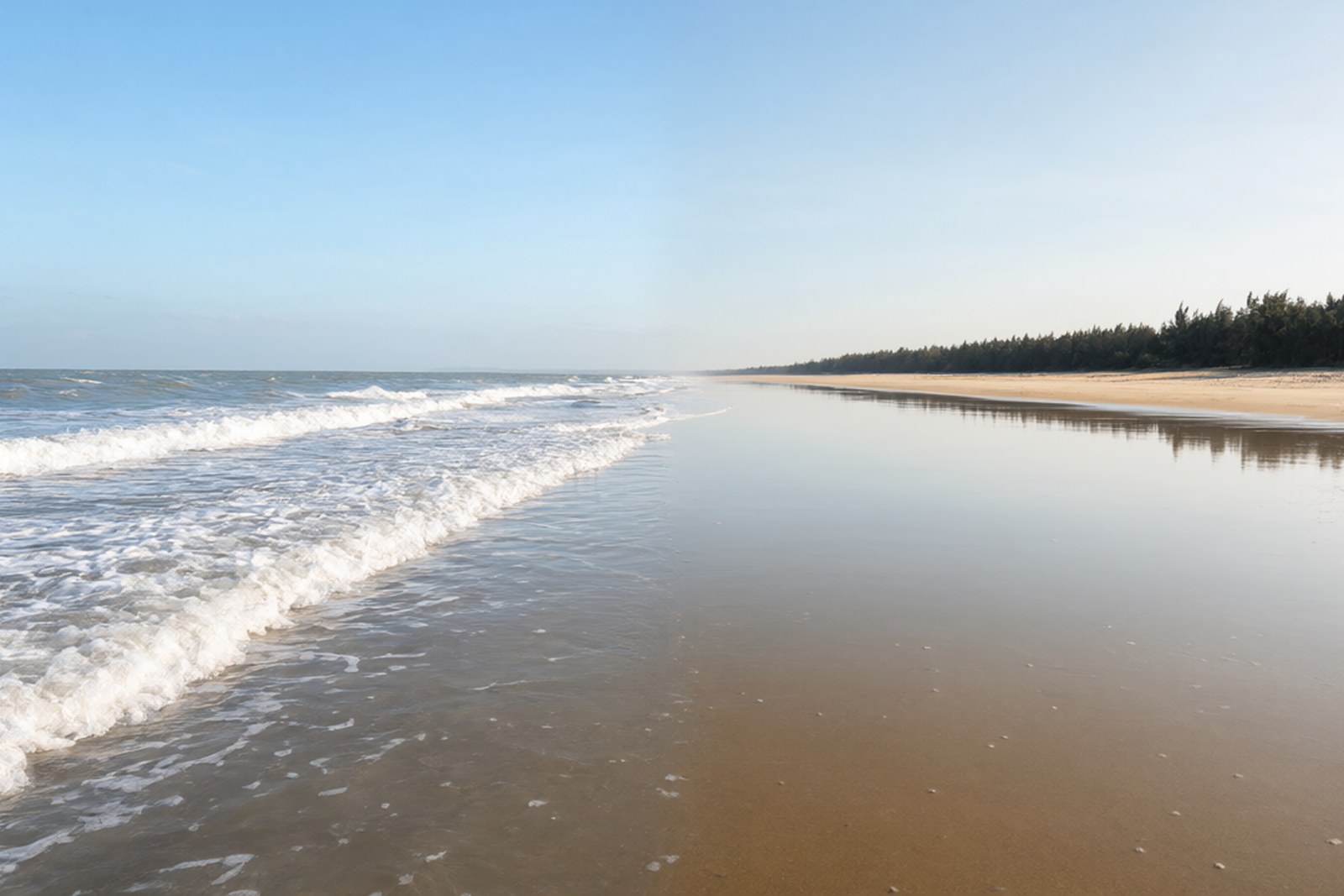
The contrast is geography rather than season. The cape’s western side lies close to the Nan’ao peninsula, only 0.16 km of channel away at the narrowest, and that land mass shelters the water behind it from the swell of the open sea, while the eastern side takes the swell head on. The water is classed national grade one with a water-health index above 90, which is why the cape is one of 25 nationally designated bathing beaches and one of Guangdong’s five noted natural sea baths. Some 73 per cent of the year is classed as suitable for swimming, which in practice means May to October. The reason for the two seas is 0.16 km of channel.
The cape has been a sailing venue for thirty years. Races were held here from 1995, the Asia-Pacific windsurfing championship came in 1996, and the sailing and windsurfing competition of the ninth National Games in 2002. In 2010 the cape hosted both the fourteenth Asian sailing championship and the sailing events of the sixteenth Asian Games in Guangzhou, a fact most often got wrong, since the venue is sometimes credited to the Beijing Olympics instead. National championships followed in 2014 and 2016, and the fifteenth National Games sailed here in 2025. The province calls the place the sailing capital of Guangdong, the district was approved in August 2017 as a coastal sports town, and more than 4.26 million visitors came in 2023.
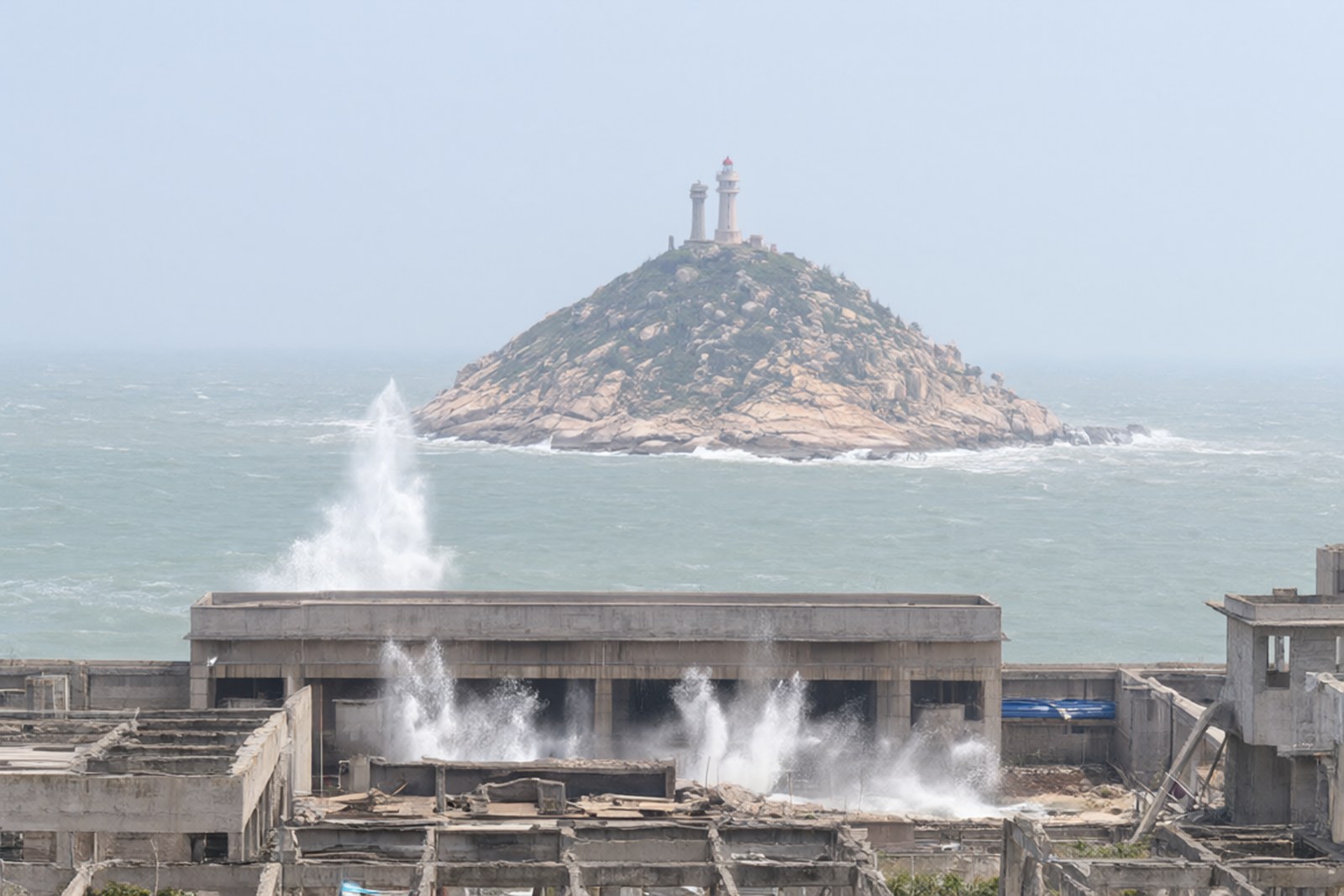
Out at the end of the cape the landmarks come in a cluster. Lighthouse island, 遮浪岩 Zhē làng yán, is a granite islet at the southeast tip, the divider between the two bays, with 1,454 metres of shoreline and a main peak 37.6 metres high. A mercury-vapour tower built by a Portuguese company in 1906 was destroyed in 1942 and replaced four times since, most recently by a 100-metre navigation tower in the 1980s, so the one you photograph is not the 1906 original. Near the cape’s eastern bay is the Guanyin shrine area, and inside it the concrete ruin of an abandoned wave-power station, which visitors named the sea fort and which is not a fort.
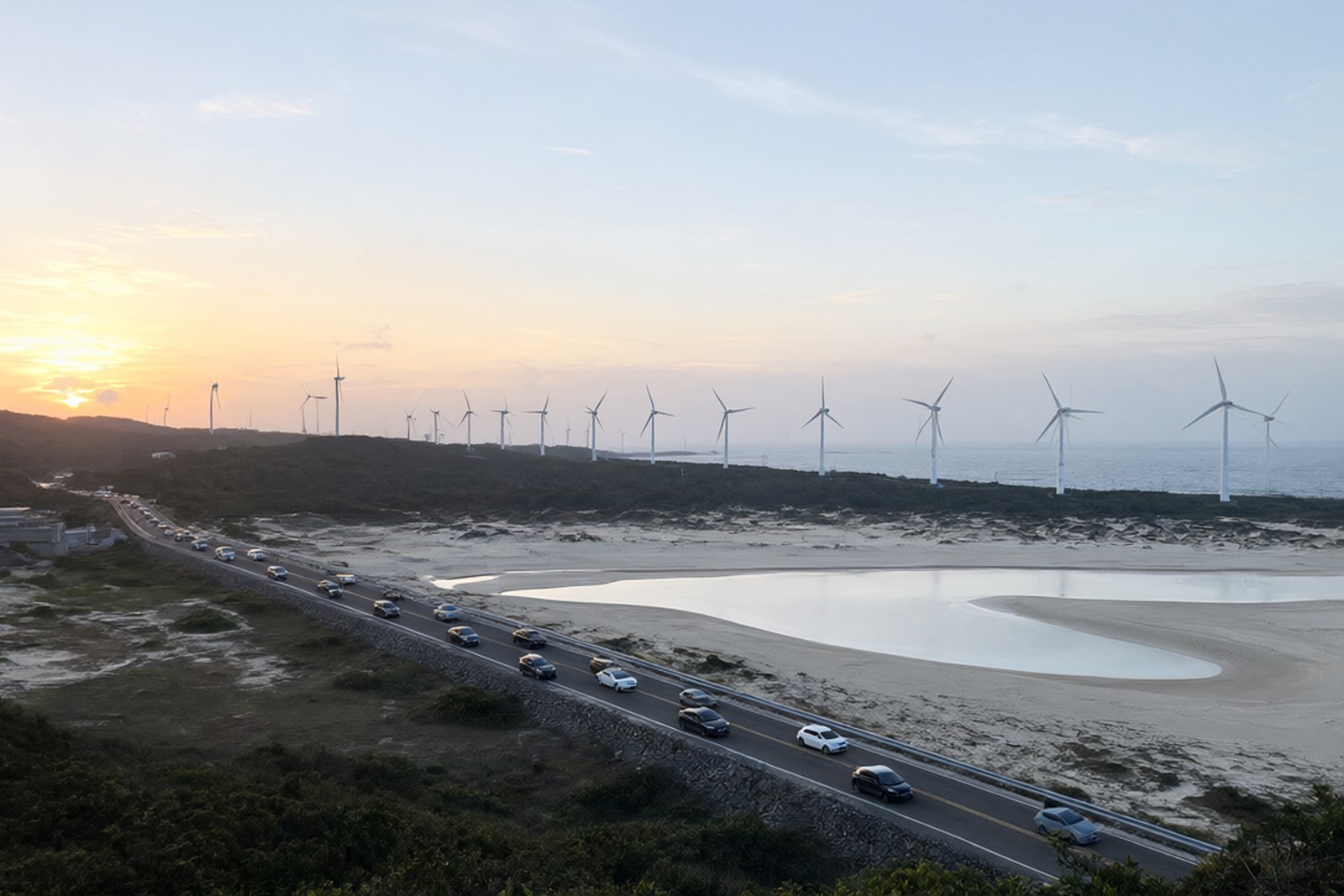
Across the water to the west, Shi Gong Liao Shī gōng liáo peninsula is known to everyone as Windmill island, and it is a separate piece of land rather than another name for the cape. It covers about 10 square kilometres, faces Jieshi bay on the north, and holds the saltwater lagoon of Baisha lake and a wind farm along the ridge. It also holds the oldest thing on this coast, the site at Bazaiwei, whose surface finds belong to the late Neolithic and push human occupation here back thousands of years. One warning from the official text should not be softened: much of the area inside the scenic boundary is undeveloped, with steep paths, slippery rock, deep water and sudden current.
Practicalities
Tickets. No official notice of prices has been found, so the figures that follow are third-party. The bathing beach at the cape, the one place with a gate, is reported at 16 yuan for an adult, 8 yuan for students and for visitors aged 60 to 69, and free for children under 1.2 metres and anyone over 70. The rest is free in the same sources: the sea fort ruin, the Guanyin temple, the beach at Hou’ao, Windmill island, the sunset beach at Shashewei and the tidal flats at Jinyu.
Opening hours. Again, nothing official. The bathing beach is reported as opening from 05:00 to 18:30 in one guide and from 08:00 to 18:00 all year in another. The reliable rule is the light: come between 16:00 and 18:30 for the backlit surf, the ruin and the two-sided view, and swim between May and October.
Closing day. No closing day is reported and none exists in the ordinary sense, because most of this coast is open shoreline with a public road and no gate, and the bathing beach is seasonal rather than weekly. What does change is the yearly rhythm: the summer fishing festival with its seafood fair, and the surfing competition with its music carnival, take over the beach for days at a time.
Getting there. From Shanwei station on the high-speed line, the number 116 tidal-flat shuttle runs to the Zhelang visitor centre and the seafront street, costs 5 yuan and takes about forty minutes; a shared car from the station is about 20 yuan a head and a private taxi about 80 yuan. By road from the Pearl River Delta it is two to two and a half hours. Inside the peninsula an electric scooter rents for 40 to 60 yuan a day.
Stand at the end of the ridge on a windy afternoon and the whole article is in one frame: white water on the east beach, a flat silver bay on the west, and the reason for the difference lying low on the horizon as the Nan’ao peninsula. Then walk west for the second half of the story. The wind farm on Shi Gong Liao, the ruin of a 1980s experiment in wave power, the battery of 1671 and a Neolithic site under the grass all sit within a few kilometres of one another, a fair summary of what this coast has done with the sea: taken fish from it, defended itself against it, tried to make electricity out of it, and now rents surfboards on it. Two corrections to carry with you: the cape is a peninsula, and its two colours are permanent geography rather than a change of season, and the bay here is not 潮汕.
Getting there: The 遮浪半岛 lies in Zhelang subdistrict of the urban district of 汕尾市, between 红海湾 and 碣石湾; take the number 116 shuttle from Shanwei high-speed station for 5 yuan, about 40 minutes, or drive two to two and a half hours from the Pearl River Delta on the expressway that opened in December 2023; the bathing beach is reportedly 16 yuan with no official price or hours published, everything else on the coast is open and free, and there is no closing day.