
红坎岭陶艺园 hóng kǎn lǐng táo yì yuán is a pottery yard built on top of a kiln site, and the kiln site is the more surprising of the two. It stands at 红坎岭 hóng kǎn lǐng in 桥头镇 qiáo tóu zhèn, the coastal town in the north-west of 澄迈县 Chéng mài xiàn, on a spread of grounds the county puts at five hundred mu and the park’s own material at rather less, and it was founded around 2000 on the site of the 福安古窑 fú ān gǔ yáo, the Fu’an ancient kilns. In May 2004 the 福安窑址 fú ān yáo zhǐ was excavated, and it was the first time a ceramic production workshop – an actual kiln site rather than a scatter of sherds – had been found on 海南岛 Hǎi nán dǎo. The porcelain that came out of it was Qing work for ordinary people: everyday vessels, plain in execution, but with glaze colours, forms and decoration that were specifically local, including blue-and-white pieces with characters and flower patterns and, most distinctively, a frog motif that occurs nowhere else in Chinese folk ceramics.
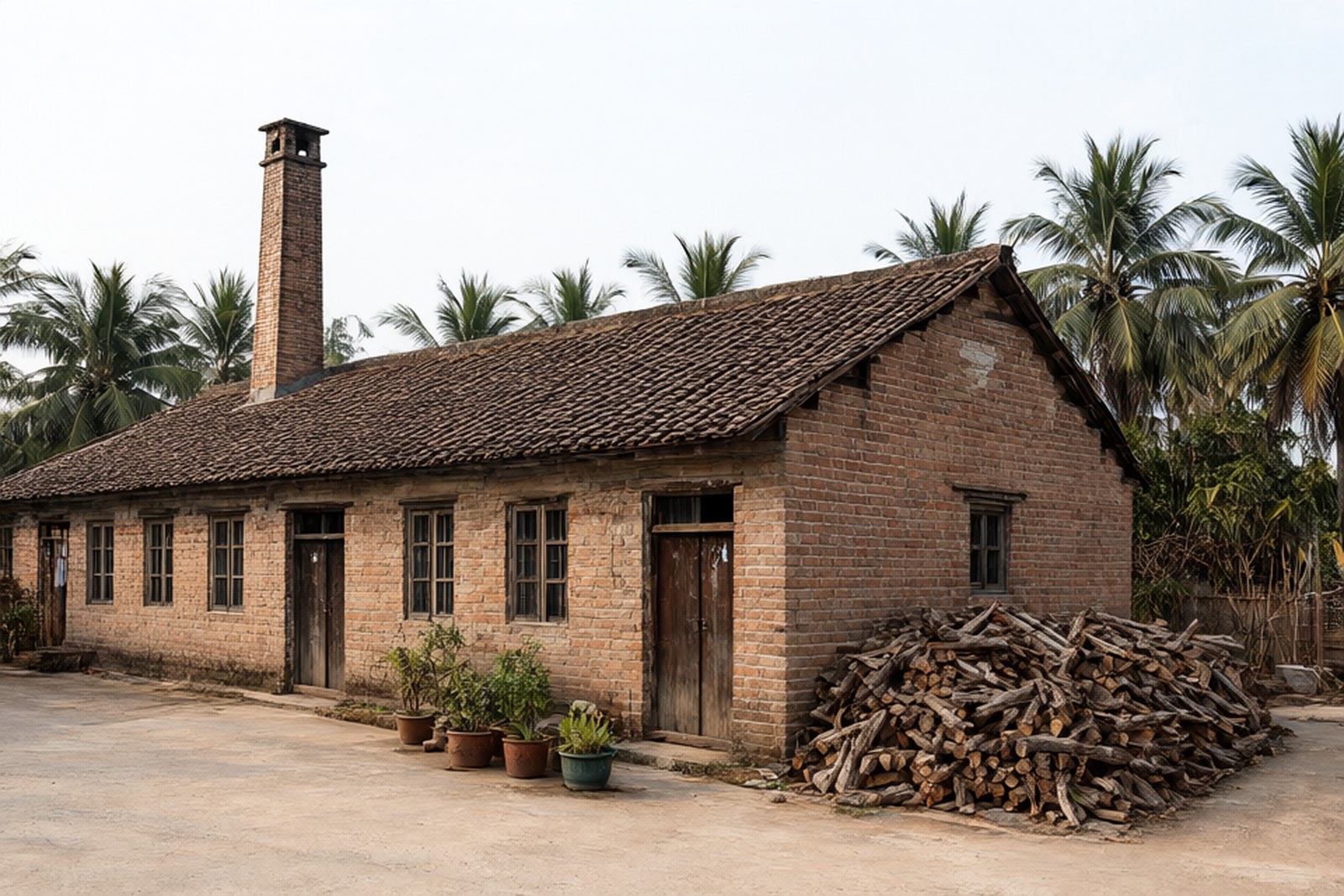
What stands on the site now is a working yard rather than a museum of it. The centrepiece is a five-chamber 仓式窑 cāng shì yáo, a chamber kiln with five firing chambers, described locally as the largest of its kind in southern China and nicknamed 中国南海第一窑 Zhōng guó nán hǎi dì yī yáo, the first kiln of the South China Sea. Around it are eighteen smaller kilns, a workshop of about a thousand square metres, and a layout the park calls 五院环湖 wǔ yuàn huán hú, five courtyards round a lake, which is a fair description of the place: low buildings and courtyards in a ring around water, with palms and fruit trees between them and the kilns at the back. The park works under its own brand, 红坎岭窑 hóng kǎn lǐng yáo, and its speciality is wood-firing, 柴烧 chái shāo, which is a slow and wasteful way to fire pottery and the only way to get the unpredictable ash glaze and colour shifts that the trade calls 窑变 yáo biàn, kiln transmutation.
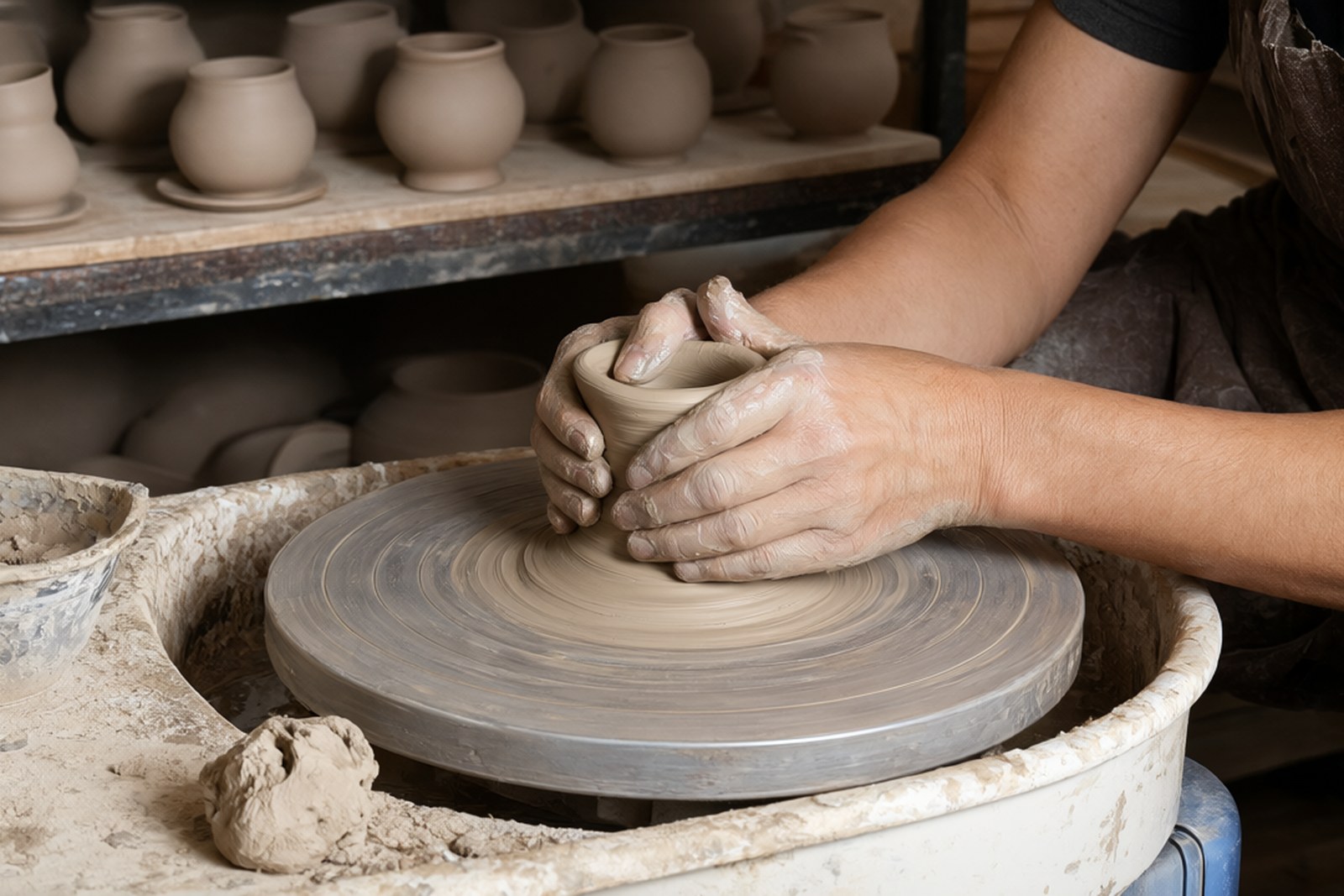
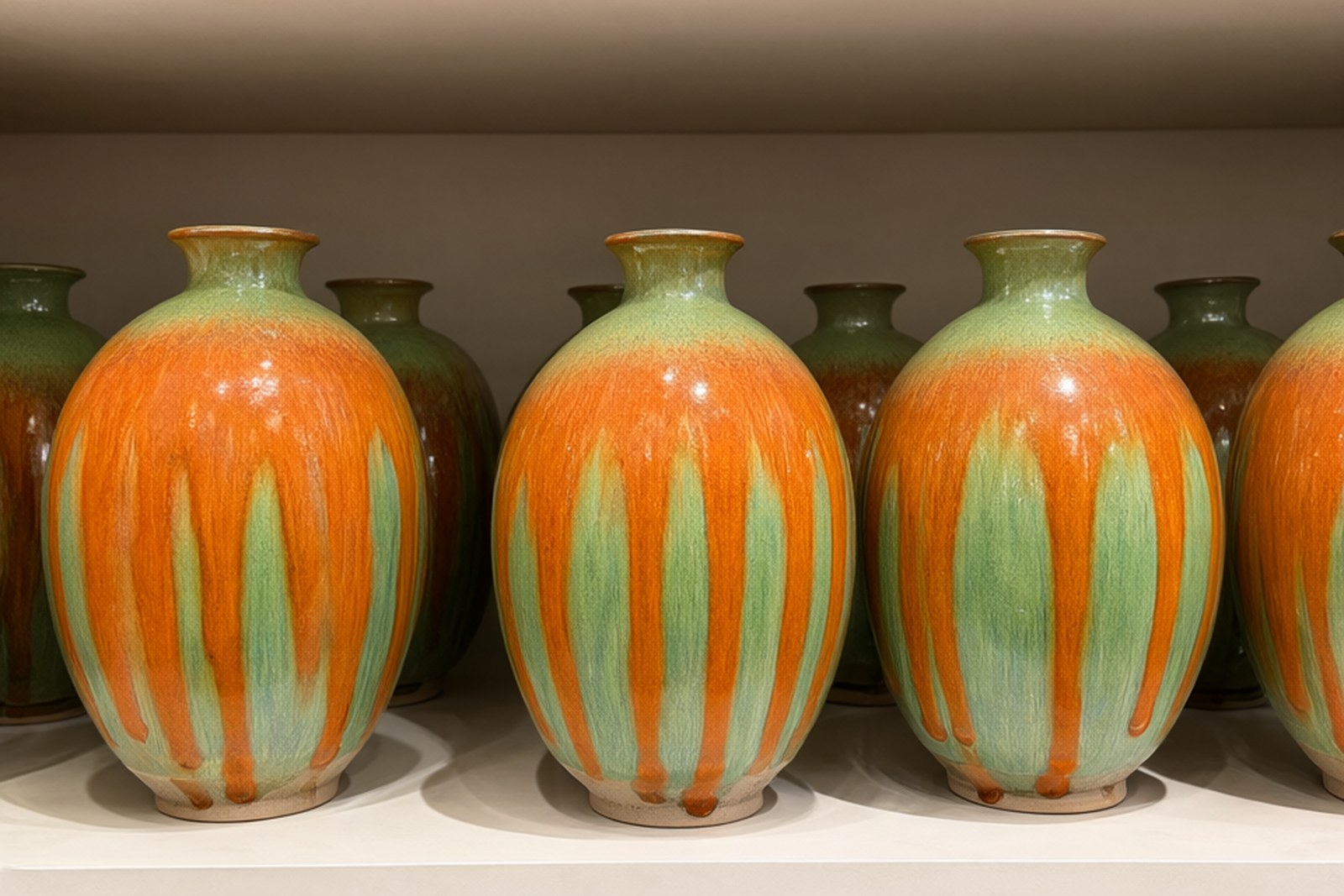
The island’s raw material is the reason any of this is possible. 海南 has unusually rich deposits of the clays that pottery wants – 紫砂泥 zǐ shā ní, the purple sand clay; 高岭土 gāo lǐng tǔ, kaolin; and ordinary pottery clay – and the volcanic weathering that gives the county its selenium also leaves good working material. The people who fire here say the local clay takes a wide range of temperatures and that a well-controlled firing produces unusually varied colour in the glaze, which is a technical point and also, at the level of a visitor walking round the courtyard, simply the reason the pots on the shelves are all slightly different colours. The park runs 炼泥 liàn ní, kneading the clay, 拉坯 lā pī, throwing on the wheel, and 乐烧 lè shāo, raku, as the three stages visitors can do, and the sessions run for an afternoon: you knead, you throw something, it goes into the kiln and you either wait for it or have it posted to you.
Around the craft the park has become a rural-tourism operation of the kind the county has been building since the mid-2010s. There is a restaurant, a set of lake-view rooms and star tents for overnight stays, walking and riding tracks through the grounds, and a programme of events: an annual 开窑节 kāi yáo jié, kiln-opening festival, and the 棕榈柴烧创作营 zōng lǘ chái shāo chuàng zuò yíng, a palm-wood wood-firing workshop that brings potters in from elsewhere and has run since 2022. It was listed in the national directory of rural enterprise parks in November 2021, and in 2025 the county recommended it as a 四椰级 sì yē jí, four-coconut-grade, rural tourism point and put it on the map of the 海南环岛旅游公路 Hǎi nán huán dǎo lǚ yóu gōng lù, the island ring road; in June of the same year the 福安窑制陶和柴烧技艺 fú ān yáo zhì táo hé chái shāo jì yì, Fu’an kiln potting and wood-firing, was entered on the county’s intangible-heritage list. Which means the park’s two identities – a craft workshop reviving an excavated kiln tradition, and a weekend destination with tents and a restaurant – have been formally recognised as the same thing.
Practicalities
Tickets. Entry to the park is free; what you pay for is the pottery sessions, the restaurant and the rooms. A throwing or wood-firing session is the thing to book, and a session is long enough that it is worth taking the whole afternoon rather than trying to fit it between two other stops.
Opening hours. The park opens in the morning and closes late in the afternoon, and the kilns are fired to a schedule rather than continuously, so the day a batch goes in is the day worth being there; ask before you go when the next firing is, because watching the kiln being opened is the part of the visit that cannot be staged.
Getting there. The park is at 红坎岭 hóng kǎn lǐng in 桥头镇 qiáo tóu zhèn, 澄迈县, on the 桥沙路 qiáo shā lù to the north-west of the town, about two or three kilometres from the centre of 桥头镇 and reached from 海口市 Hǎi kǒu shì by the 西线高速 Xī xiàn gāo sù, off at the 福山 exit, then around ten kilometres down towards the coast. There is no station nearby; the practical arrival is a car or a taxi, and the last stretch is a town road.
Closing day. There is no weekly closing day, but the park shuts on public holidays at short notice when it is booked for a private workshop, and the kiln schedule can close the firing yard for a day or two around a firing. If you are travelling any distance to watch a firing or to take a session, telephone ahead rather than trusting the posted hours.
flowcloud would say that the county found the island’s first pottery workshop under a field at 桥头, dug up the frog-patterned plates of a forgotten folk kiln, and rather than build a museum over them built a wheel, a wood kiln and a set of tents – which is the more honest way to keep a craft alive, and the more useful one.
Getting there: 红坎岭陶艺园 is at 红坎岭 in 桥头镇, the coastal town in the north-west of 澄迈县, two or three kilometres from the town centre on the 桥沙路; come from 海口市 by the 西线高速 Xī xiàn gāo sù and leave at the 福山 exit, then follow the signs down towards 桥头 and the coast, which is the same turn-off that serves the 福橙 orchards and the sweet potato fields. It is a drive-in site with parking, there is no station within reach, and the return leg through 福山镇 is the obvious place to stop for coffee.