
The Red Mansion on the Border Wind: Tacheng’s Russian-Era Landmark and Its Museum Rooms
百年红楼迎远客,一窗风雪话春秋 Bǎinián hónglóu yíng yuǎnkè, yī chuāng fēngxuě huà chūnqiū – The century-old red mansion welcomes guests from afar; through one window of wind and snow, it talks of springs and autumns.
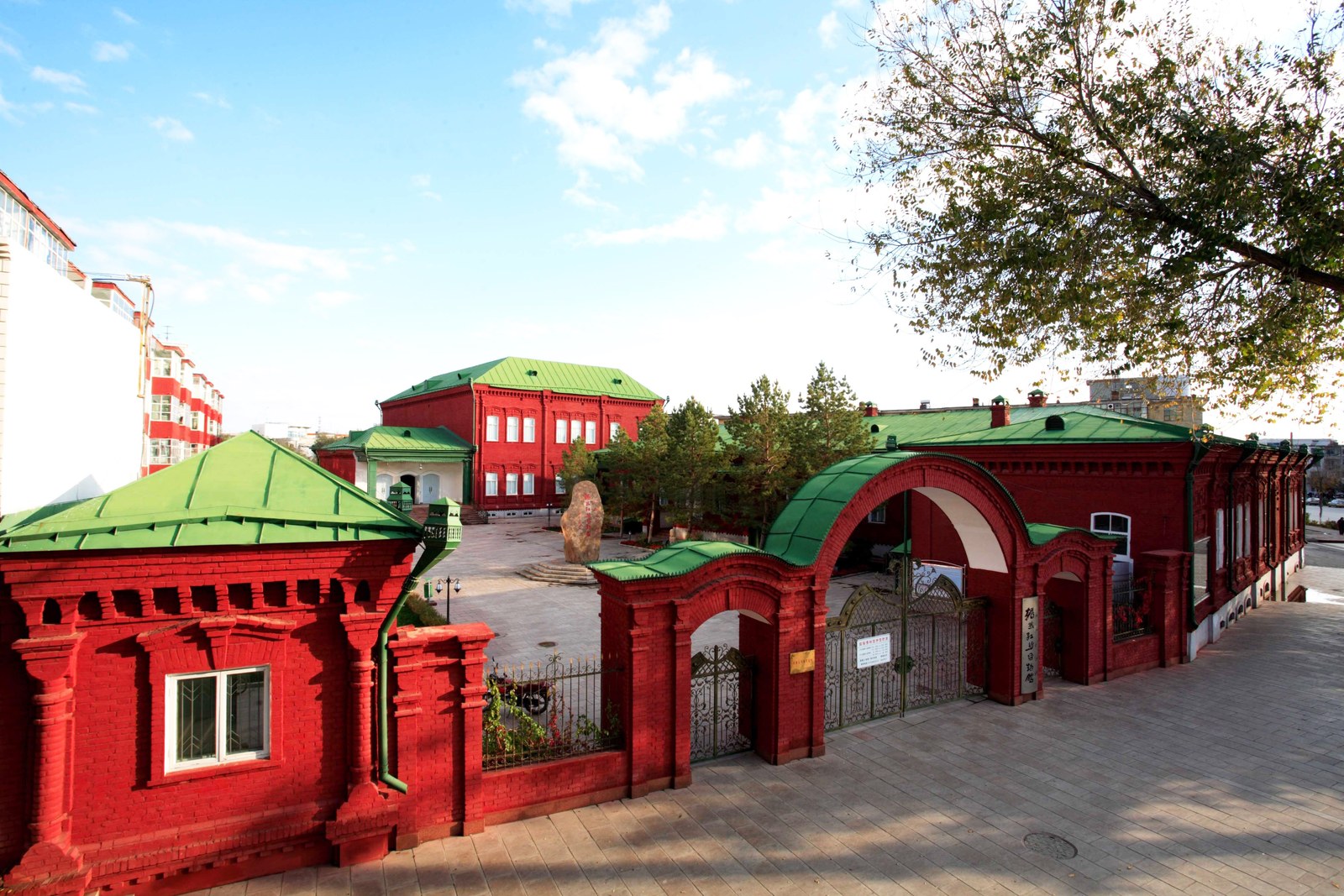
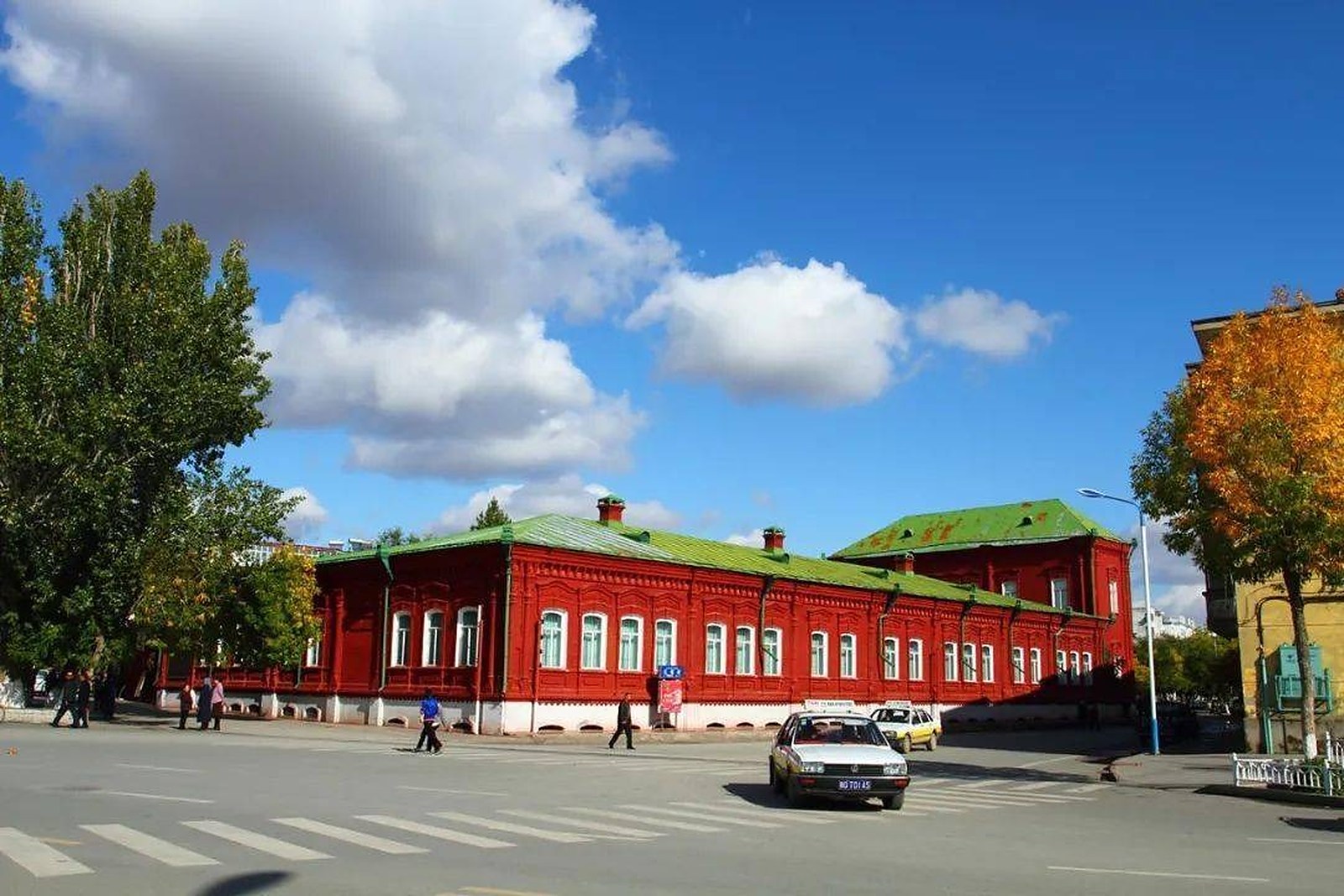
塔城红楼 Tǎchéng Hónglóu the Tacheng Red Mansion stands two streets back from the border-trade avenues of Tacheng city, an iron-red two-storey of arched windows and green tin roofs raised in the early twentieth century by the Russian trading houses that made this one of Xinjiang’s great frontier marts (worth confirming the details for the museum hours, since the building now serves as the city’s museum and closes on the usual public schedule). The brick is local, the plan is Russian, and the details – ridge finials, deep eaves, corner pilasters – were cut by craftsmen who worked both traditions at once. It is the most photographed facade in the prefecture, and rightly so.
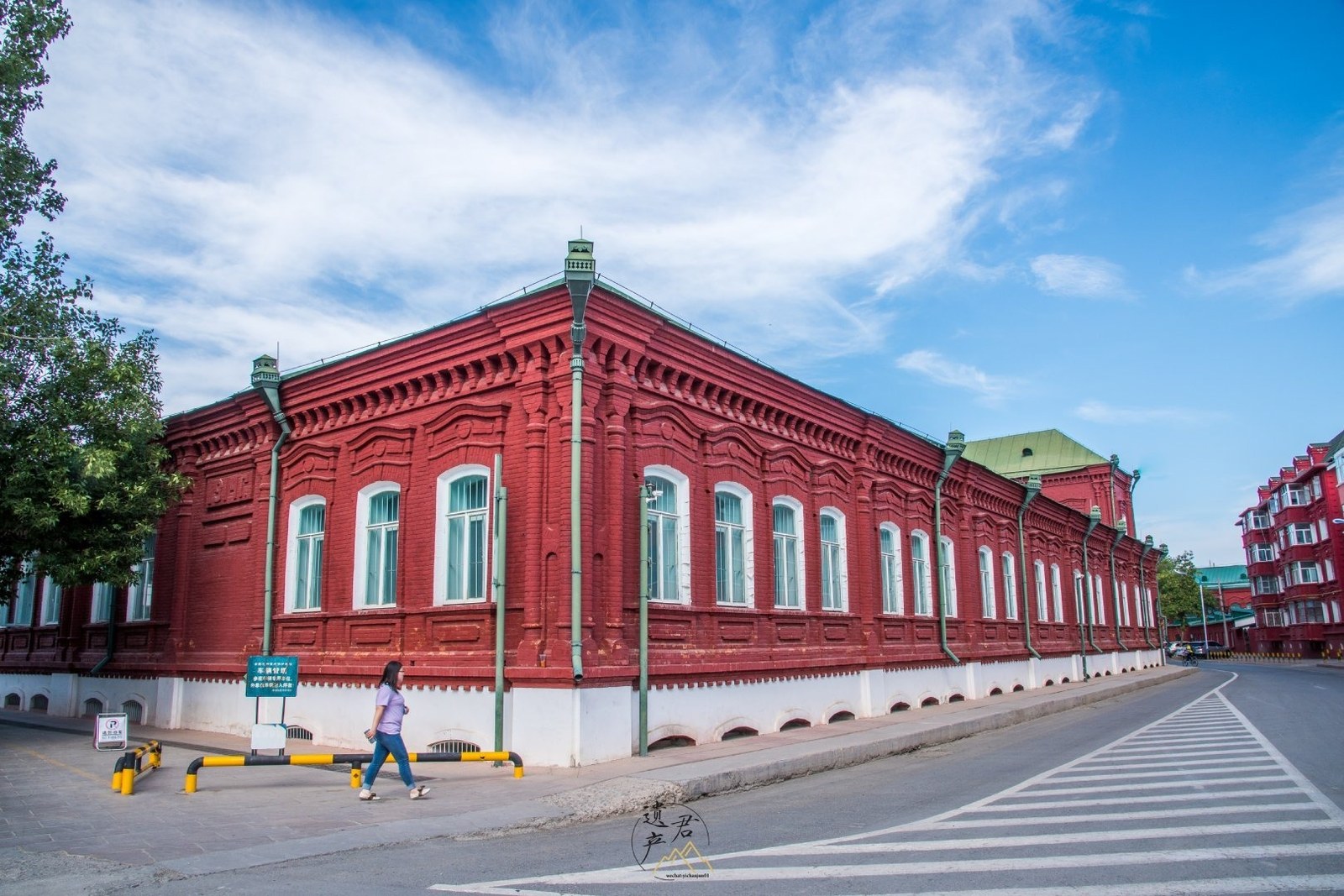
Two plans cover the visit. The first is the mansion itself: the exhibition rooms walk through the trade era, the multi-ethnic merchants’ quarter, and the city’s accordion-collecting habit, with labels that reward slow reading. The second is the walk around it – the streets nearby keep other Russian-era and Soviet-era houses, blue window frames against red brick, and the whole quarter fits inside an hour. The stock answer in kind: do the museum rooms first, then walk the quarter while the light is still on the facades.
Call it honestly: the Red Mansion is a small museum in a mid-size border city, and visitors expecting a provincial-scale institution will finish in forty minutes (worth confirming the details for the renovation calendar, which moves the opening rooms around). What stays with you is the mixture – Chinese, Kazakh, Uzbek, Russian and Tatar lines all meeting in one building – and the fact that the city still lives around it rather than behind glass. Pair it with the morning market two streets over.
Practicalities
Nearly everything else on this Tacheng list trades a different mood on the same prefecture: choose 安集海大峡谷 Ānjíhǎi Dàxiágǔ the Anjihai Grand Canyon for the red strata, 巴尔鲁克山 Bā’ěrlǔkè Shān the Barluk mountains for the wild almond slopes, 库鲁斯台草原 Kùlúsītái Cǎoyuán the Kurustai grassland for the wet meadows, or 江格尔文化城 Jiānggé’ěr Wénhuà Chéng the Janger Culture City for the epic halls – four more doors into the same 塔城地区 Tǎchéng Dìqū Tacheng Prefecture. Once the morning is planned, our Tacheng food map fills the eating hours.
Practicalities
Words and Names
flowcloud would say the Red Mansion is Tacheng’s handshake across a century: red brick on the outside, five languages in the display cases, and the border wind still testing the window frames. All checked November 2026.
Getting there: The mansion sits in central Tacheng city on the north side of the old commercial quarter, a ten-minute walk from the main bus station; city buses stop along the avenues two blocks east, and the museum keeps daytime hours with a low-season midday break. All checked November 2026.