
Hongluo Temple: The Ancient Buddhist Seat on a Spring Plum-Blossom Mountain, the Thousand-Year Monastery and Quiet Courtyards in Huairou District, Beijing
春梅满岭禅钟远,古刹红螺卧翠微。Chūn méi mǎnlǐng chán zhōng yuǎn, gǔchà hóngluó wò cuìwēi – In spring the plum blossoms fill the ridge and the temple bell rings far away; the old red-snail monastery lies nestled in the green hills.
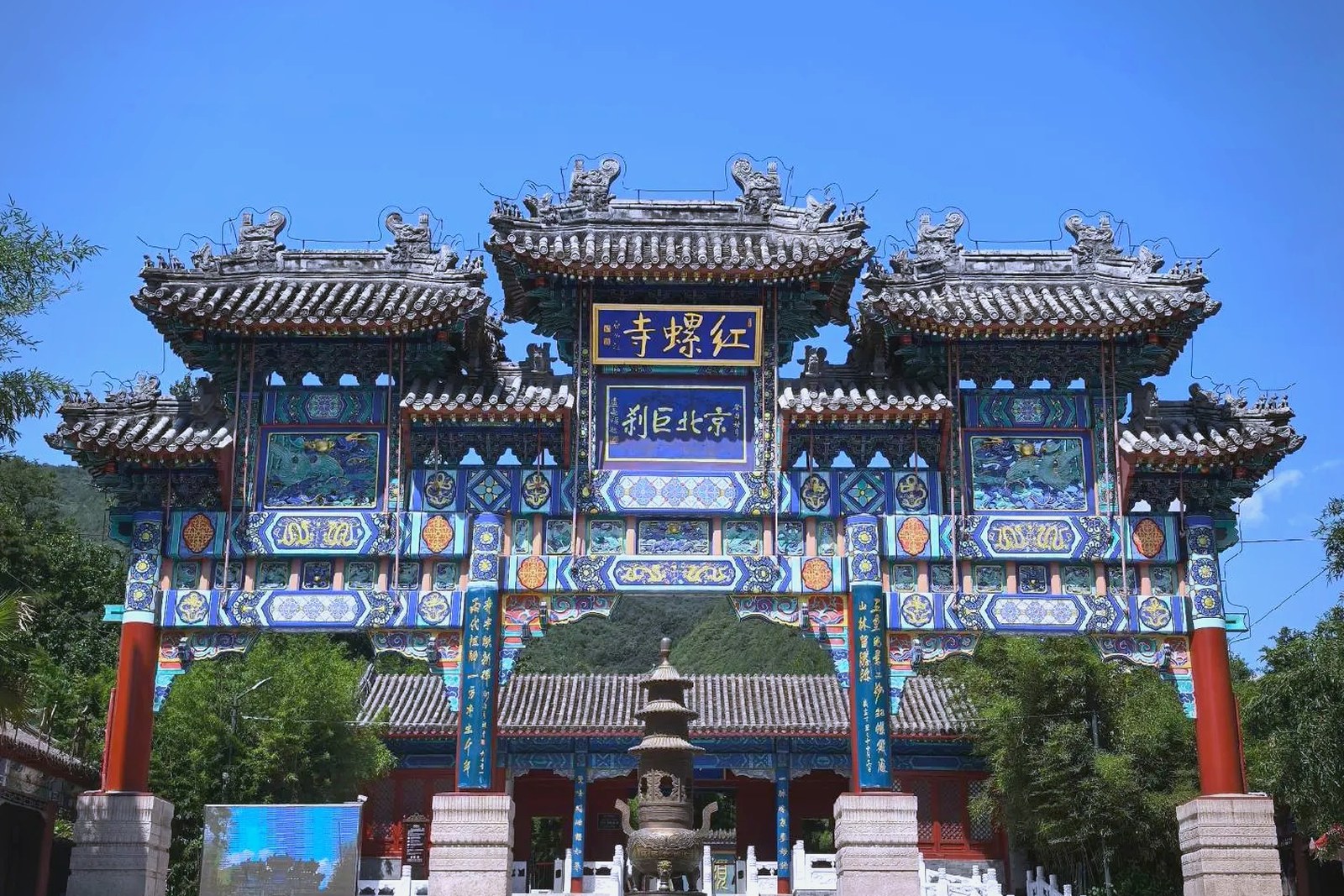
红螺寺 Hóngluó Sì Hongluo Temple is not a ticketed scenic complex with cable cars — it is, plainly put, one of the oldest monasteries still ringing its own bell in the northern mountains of Beijing: a working Buddhist seat climbing the wooded slope of 红螺山 Hóngluó Shān Hongluo Mountain in 怀柔区 Huáiróu Qū Huairou District, some forty-odd kilometres northeast of the old city wall. Its story runs deep — founded in the early Tang around 604 and rebuilt again and again down to the Ming and Qing, when it became the capital’s great 皇家寺院 huángjiā sìyuàn imperial monastery, patronised by empresses and court ladies who came up from the city to pray for luck and long life. The name itself is the local legend made stone: an ancient 螺 luó snail-shell said to have rested in these hills, giving the mountain and the temple their “red snail” name. What you actually visit is a calm, hillside two-courtyard-and-up monastery that opens onto real forest, not a flat plaza with show halls.
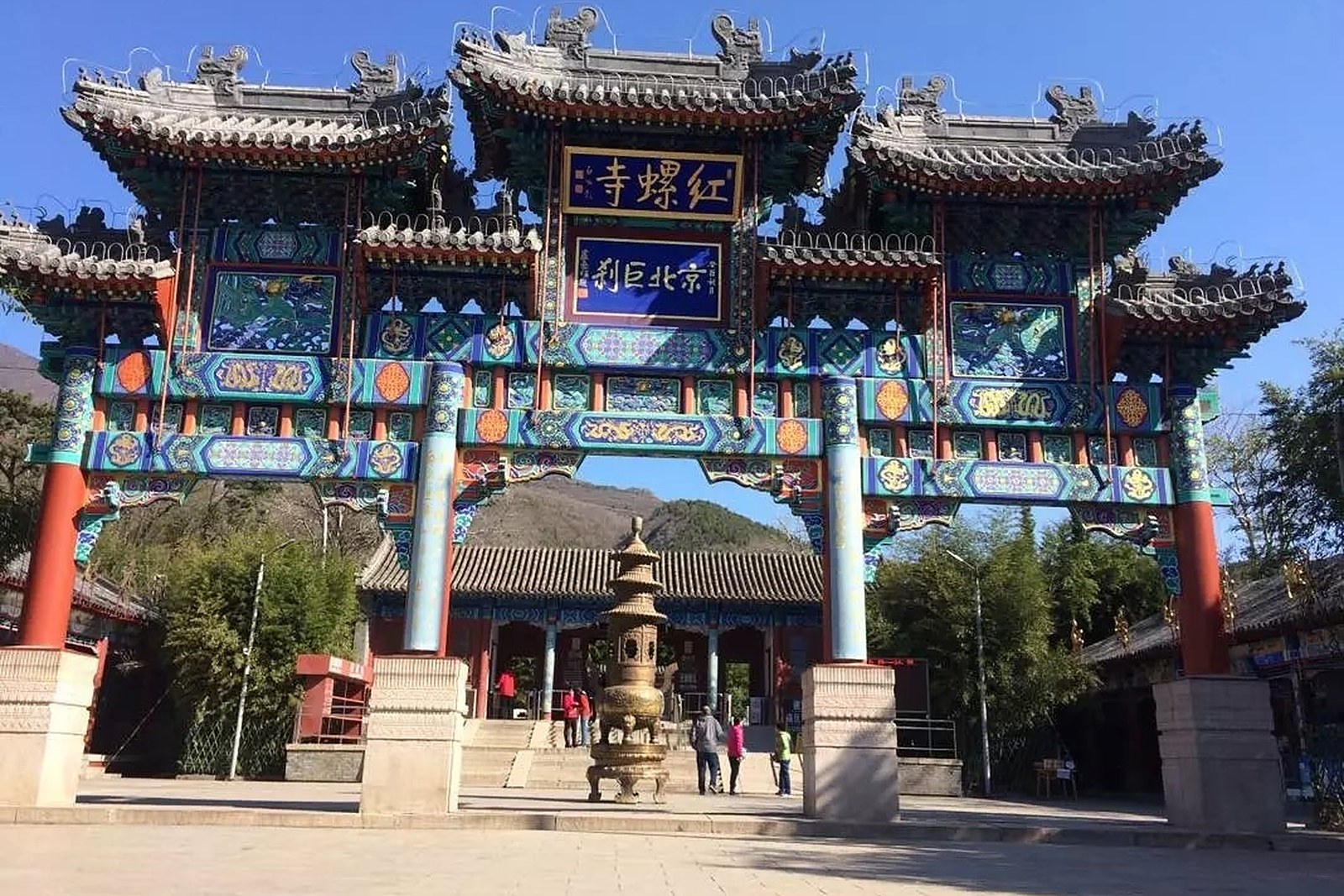
Call it honestly: the temple charges a modest gate fee, with hours that follow the usual morning-to-afternoon pattern and occasional closures for maintenance (worth confirming the details for current admission, opening days and any reservation rules). The honest warning is season, not price — the site is famous for its 春梅 chūn méi spring plum blossoms, so late March and early April draw the crowds, and the quietest moments are weekday mornings before the blossom-seekers reach the district. Spring puts white and pink against the grey walls, autumn cools the courtyard shade, and the best light comes low through the pines. Bring a light layer for the incense-hall interior, and leave room in your head for the view over the valley.
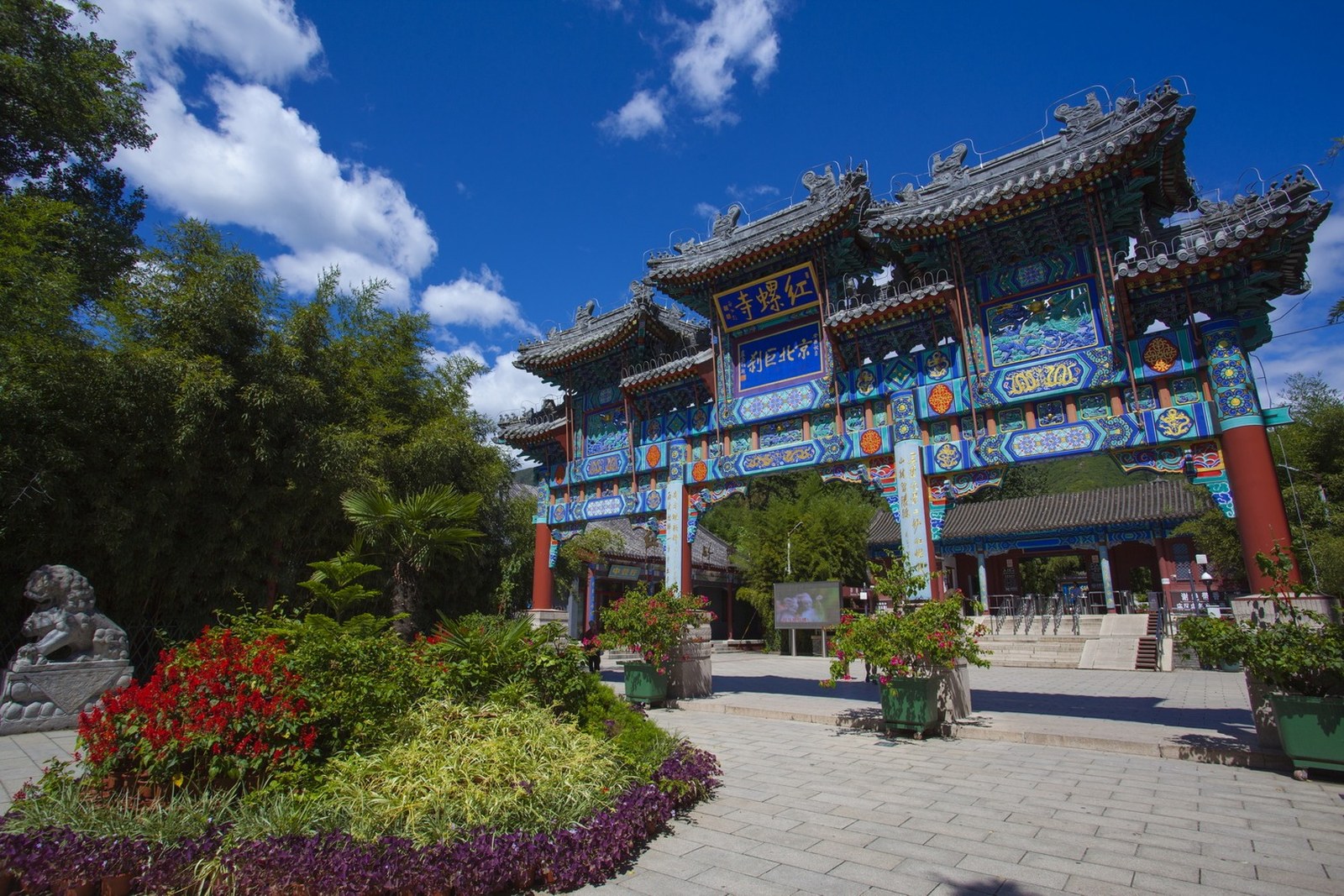
The honest star is the setting — the way the courtyards step up the mountain, the incense smoke drifting out into the open trees, the long view down the valley where the 怀河 Huái Hé Huai River bends in the distance (worth confirming the details for which halls and the 大雄宝殿 Dàxióng Bǎodiàn main hall are open on your day). What gets oversold is the “imperial monastery” title read as a sprawling palace of gold: this is a tight, genuinely lived-in mountain temple, and its pleasure is in the close reading of the courtyards, the hush of the pines and the one good view, not in counting gates. What repays the effort is the idea that a small northern district has kept a thousand-year dharma-lamp burning on a hillside while the city grew far below. Come for the layering of the place: gate, then courtyard, then the valley beyond.
The self-aware postscript: I stood at the top of the steps with a monk sweeping the front path, and when I asked how busy the temple was he said, “the bells have rung longer than the roads have been paved — that is why we keep the fire lit”. That is the visit in miniature. 红螺寺 Hóngluó Sì suits whoever treats it as a slow, incense-quiet read of one mountain seat first and a checklist of dynasties second, and exhausts anyone expecting a vast scenic compound with a lake and a cable car. Everything else on this Huairou list lies within the same district: the best-preserved 慕田峪长城 Mùtiányù Chángchéng Mutianyu Great Wall up the same ridgeline, the wetland 雁栖湖 Yànqī Hú Yanqi Lake a short drive south, the gorge of 青龙峡 Qīnglóng Xiá Qinglong Canyon and the waterfall valley of 幽谷神潭 Yōugǔ Shéntán Yougu Shentan tucked into the neighbouring hills — all in the same 怀柔区 Huáiróu Qū that has held a mountain dharma-lamp for fourteen hundred years and now parks a summit meeting beside it.
Practicalities
- Rating: ★★★★☆ — a thousand-year imperial Buddhist seat on a spring plum-blossom mountain; the hillside courtyards and the valley view outrank the gift counters; go early, go quiet.
- Tickets: Modest gate fee, with usual morning-to-afternoon hours and occasional maintenance closures (worth confirming the details for current admission, opening days and reservation rules).
- Address: 红螺寺 Hóngluó Sì, 红螺镇 Hóngluó Zhèn Hongluo town, 怀柔区 Huáiróu Qū, Beijing — up the wooded slope of 红螺山 Hóngluó Shān.
- Time needed: An hour and a half to two hours for the courtyards and the view; add time if you stay for a service or a walk among the plums.
Words and Names
红螺寺 Hóngluó Sì Hongluo Temple · the thousand-year imperial Buddhist seat of the district 红螺山 Hóngluó Shān Hongluo Mountain · the wooded slope the temple climbs 皇家寺院 huángjiā sìyuàn imperial monastery · the court-patronised status it once held 春梅 chūn méi spring plum blossom · the late-March flower the site is famous for 大雄宝殿 Dàxióng Bǎodiàn Great Hero Hall · the main worship hall of the temple 怀河 Huái Hé Huai River · the water that bends through the valley below
flowcloud would say that 红螺寺 Hóngluó Sì is a mountain dharma-lamp that outlived its own dynasty — founded in the early Tang, rebuilt down to the Ming and Qing, the imperial seat where court ladies came up to pray, crowned by spring 春梅 chūn méi plum blossoms and a long view down the 怀河 Huái Hé valley — and that the honest move is a weekday morning before the blossom-seekers arrive, because admission, opening days and which halls are open all shift (worth confirming the details), the imperial-monastery title is the poster half and the smoke-worn courtyards on the hillside are the real half, and the temple repays whoever lets the pines do the talking. All checked October 2026. Getting there: Metro Line 13 十三号线 Shísān hào xiàn to 望京西 Wàngjīngxī Wjing West, then a direct 怀柔 Huáiróu-numbered bus or taxi toward 红螺镇 Hóngluó Zhèn Hongluo town, with local services feeding the temple gate (worth confirming the details for current bus numbers and parking); self-drive leaves the 京承高速 Jīngchéng gāosù G45 or the 京密路 Jīngmì Lù corridor northeast and follows the signed lanes up the mountain to the gate-side lots. All checked October 2026.
Getting there: Metro Line 13 十三号线 Shísān hào xiàn to 望京西 Wàngjīngxī Wjing West, then a direct 怀柔 Huáiróu-numbered bus or taxi toward 红螺镇 Hóngluó Zhèn Hongluo town, with local services feeding the temple gate (worth confirming the details for current bus numbers and parking); self-drive leaves the 京承高速 Jīngchéng gāosù G45 or the 京密路 Jīngmì Lù corridor northeast and follows the signed lanes up the mountain to the gate-side lots. All checked October 2026.