
Hongshan Park: The Zhenlong Pagoda on the Red Cliff, the Stairway Panorama over the Skyline and the Twin Hills Facing Each Other Across the City in Urumqi, Xinjiang
一塔镇龙红崖上,半城灯火落眸中。Yī tǎ zhèn lóng hóngyá shàng, bàn chéng dēnghuǒ luò móu zhōng – One tower pins the dragon on the red cliff; half a city’s lights fall into the gaze.
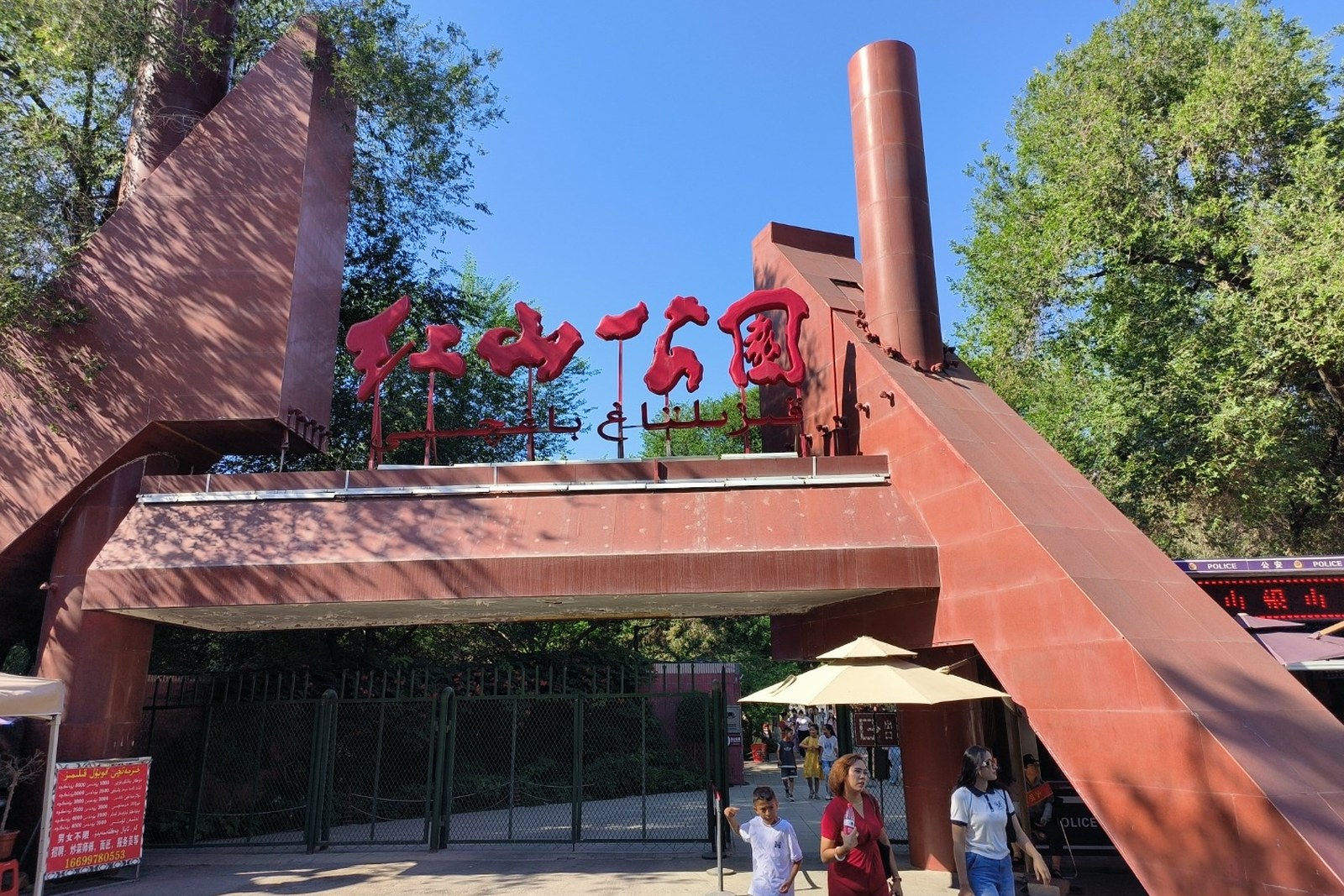
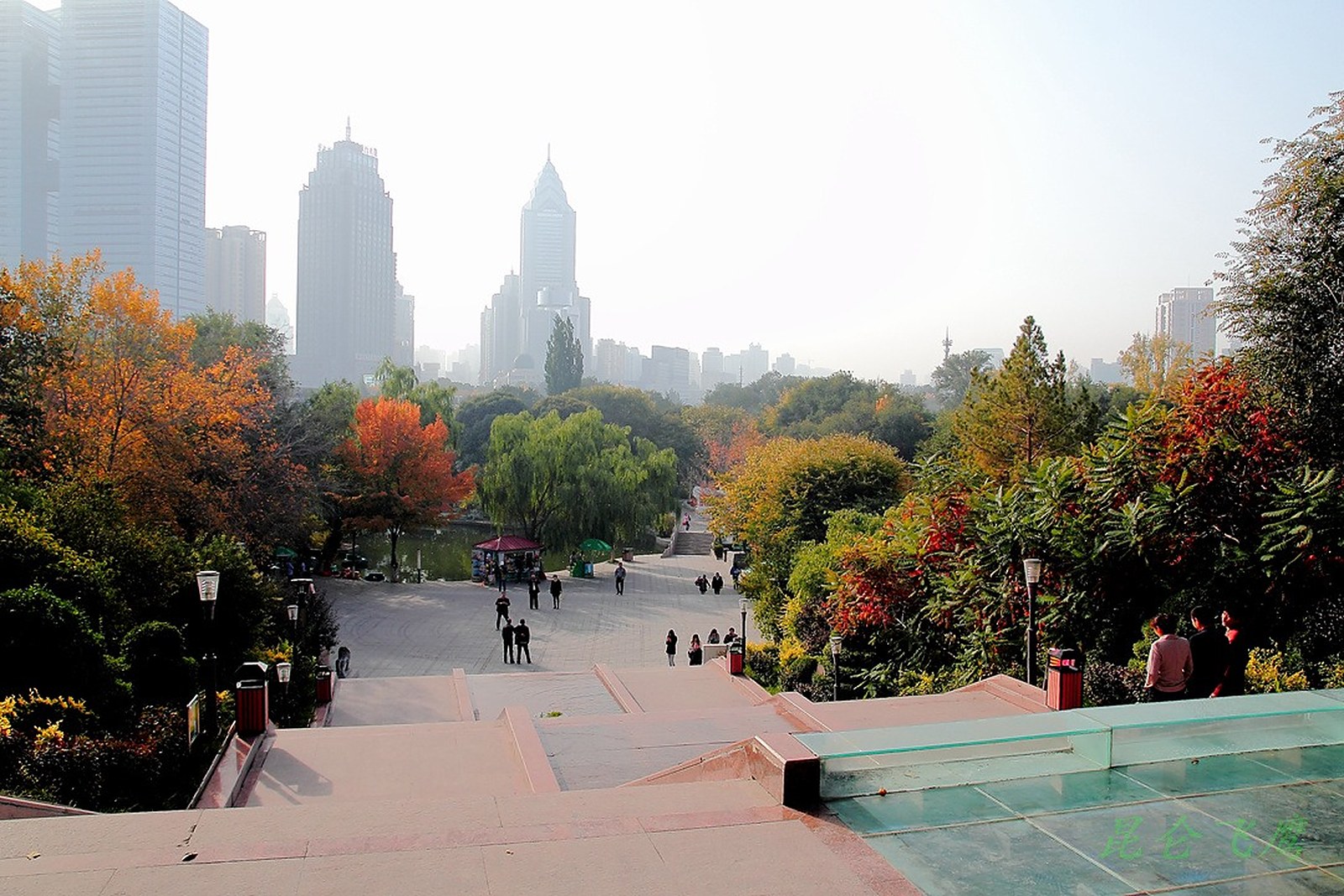
红山公园 Hóngshān Gōngyuán Hongshan Park stands on a rust-red rock ridge barely a street’s width from the commercial heart of 乌鲁木齐市 Wǔlǔmùqí Shì Urumqi City, and it is the rare capital park that charges nothing yet delivers the view the postcards trade in. Its protagonist is 红山塔 Hóngshān Tǎ the Red Mountain Pagoda, a slim grey-brick 镇龙塔 Zhènlóng Tǎ “dragon-suppressing” pagoda raised in the Qing dynasty on the lip of the red cliff – built, so the story goes, to quiet the floods that legend blamed on a restless dragon between two hills. That other hill is still there: 雅玛里克山 Yǎmǎlǐkè Shān Yamarick Hill faces the ridge across the city bowl, and from the pagoda platform one glance covers both, with the glass of the downtown towers rising in the gap between them. The park itself is a working hillside of stone stairs, pavilions, pine terraces and a small temple complex, and the morning register belongs to locals – taiji under the trees, retirees climbing with water bottles, families flying kites off the top lawn (worth confirming the details for seasonal opening hours and any charges for inner pavilions). Climb the stairs rather than admiring the cliff from below: the whole point of 红山 Hóngshān Red Mountain is what the city looks like from the top of it, and at dusk, when the pagoda goes to silhouette and the towers switch on, the panorama earns every step.
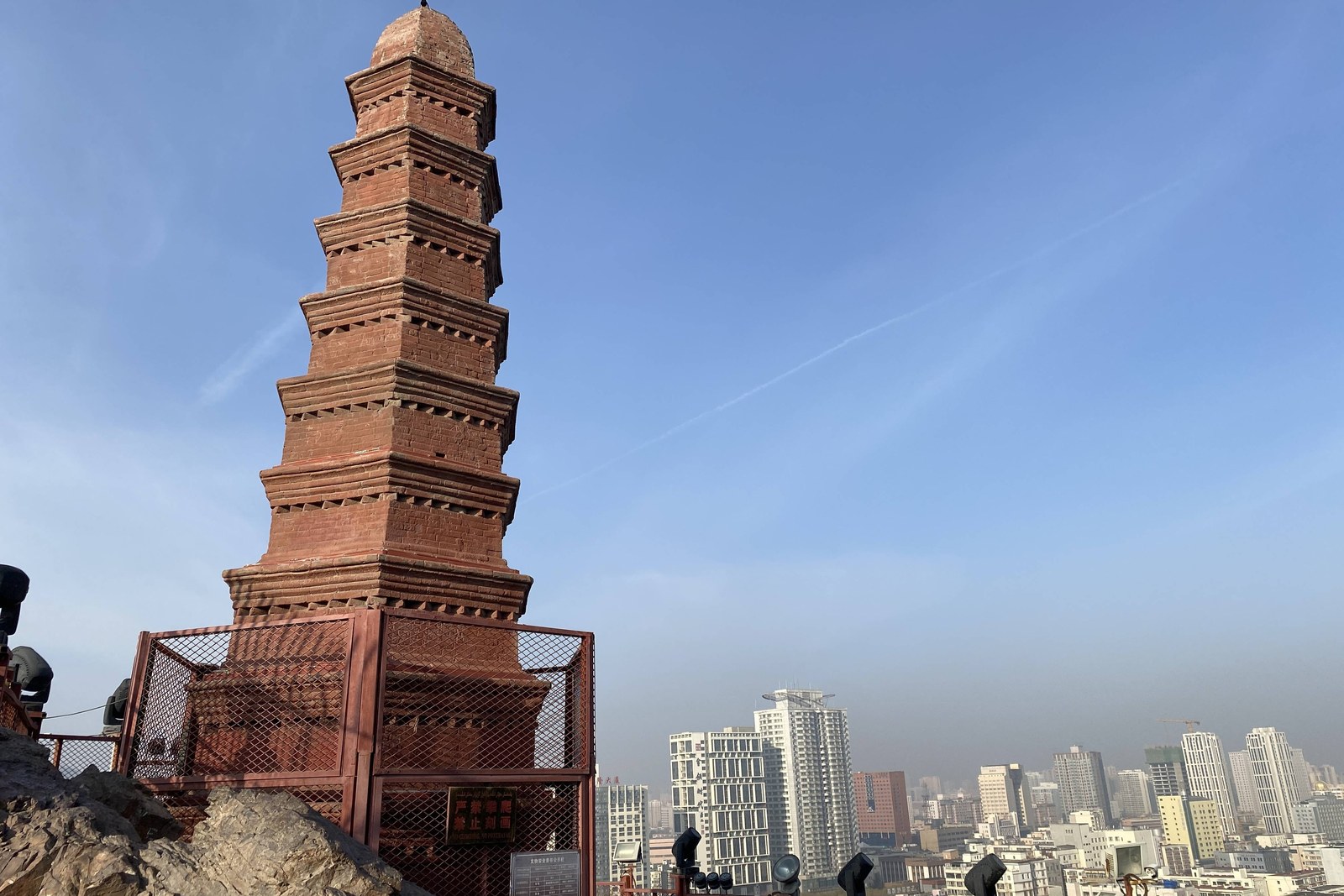
Two crowds keep the stairs worn: city residents who treat the ridge as their daily gym and know every pavilion bench by shade and hour, and first-time visitors down from the central hotels who arrive with cameras and one question – where does Urumqi actually begin and end. The stock answer in kind: a free climb of a few hundred steps, hill air above the traffic, and the one viewpoint where red rock, Qing brick and glass towers fit in a single frame.
Call it honestly: Hongshan is a city park, not a wilderness – the panorama includes power lines, cranes and a fair veil of dust over the far hills, and anyone expecting alpine silence will hear bus brakes instead (worth confirming the visibility on the day, because a hazy afternoon flattens the whole skyline). What repays the climb: the pagoda close enough to read the brick, the odd pleasure of a dragon-suppressing Qing tower parked against glass towers, and the sunset half hour when the red cliff does what its name promises. Come near dusk on a clear day, and bring steady legs – the stairways are the only way up, and the best platforms are the highest ones.
Practicalities
Nearly everything else on this Urumqi list trades a different mood on the same city: choose 新疆国际大巴扎 Xīnjiāng Guójì Dàbāzhā the Xinjiang International Grand Bazaar for the bazaar energy, 天山大峡谷 Tiānshān Dàxiágǔ Tianshan Grand Canyon for the high-country day out, 新疆维吾尔自治区博物馆 Xīnjiāng Wéiwú’ěr Zìzhìqū Bówùguǎn the Xinjiang Uygur Autonomous Region Museum for the Silk Road relics and 水磨沟公园 Shuǐmògōu Gōngyuán Shuimogou Park for the spring-valley walk – four more doors into the same 乌鲁木齐市 Wǔlǔmùqí Shì Urumqi City. Once the day is planned, our Urumqi food map fills the eating hours.
Practicalities
Words and Names
flowcloud would say that Hongshan is the city’s own front balcony – a Qing pagoda, a red cliff and a skyline thrown together for the price of a stairway – and that the honest move is to take the stairs at golden hour rather than noon, because the cliff earns its colour exactly when the towers switch on and the dragon story reads best from the top. All checked November 2026.
Getting there: The park sits right in the city core – buses and metro along 红山路 Hóngshān Lù Hongshan Road reach the gates within minutes of the centre (worth confirming the details for the evening lighting hours, which follow the season); the 红山塔 Hóngshān Tǎ red pagoda crowns the cliff above the stairs. All checked November 2026.