
The Reed Maze and Its Ten Thousand Wings: Hongze Lake Wetland, Sihong
芦花深处白鹭起,一篙撑进水云乡 Lúhuā shēnchù báilù qǐ, yī gāo chēng jìn shuǐ yún xiāng – Deep in the reed flowers the egrets rise; one pole pushes the boat into a country of water and cloud
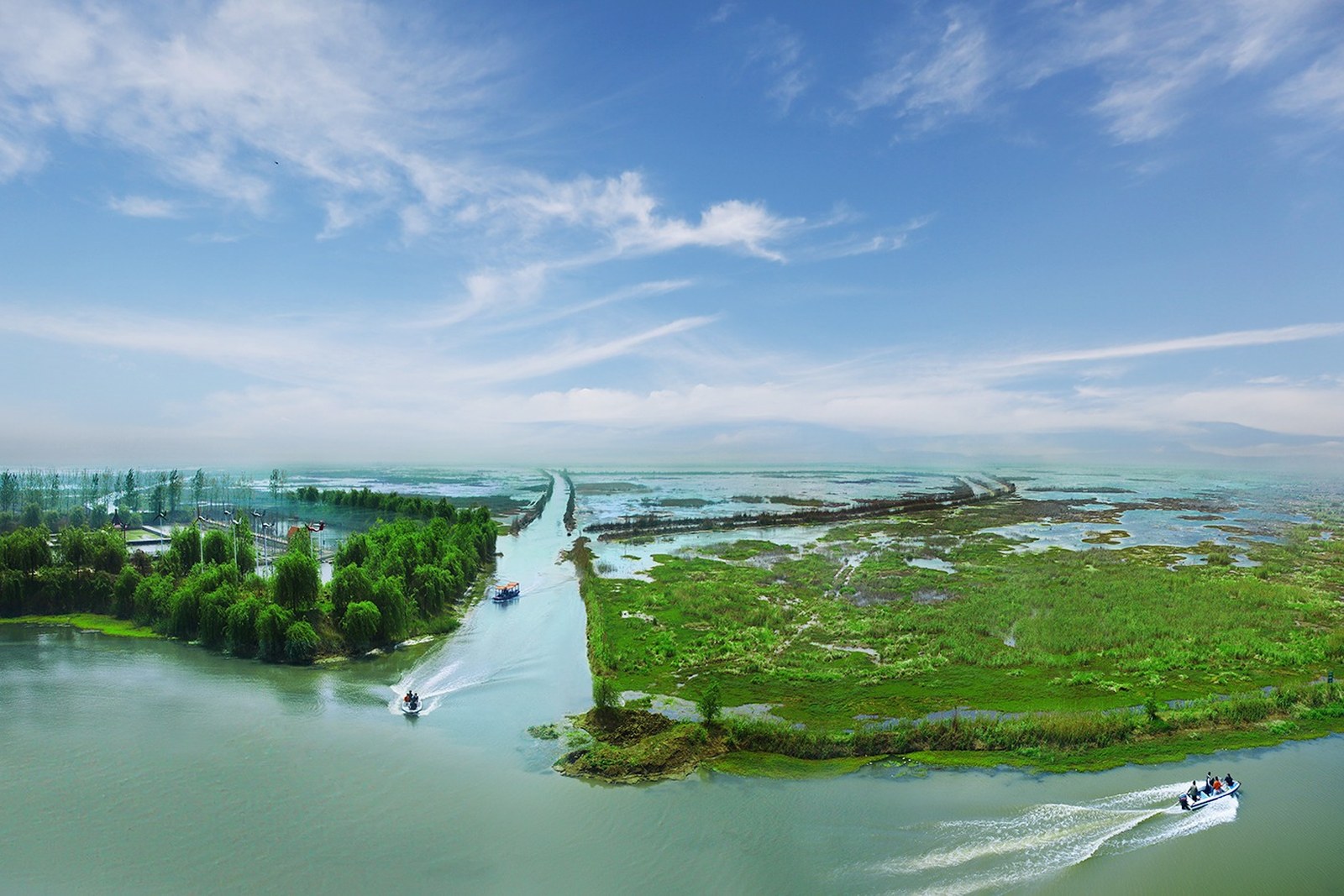
正文:洪泽湖湿地 Hóngzé Hú Shīdì the Hongze Lake Wetland is the great marsh at the lake’s western end – a national nature reserve outside 泗洪县 Sìhóng Xiàn Sihong County that ranks among coastal China’s most important freshwater wetlands. The reserve is a working landscape at lake scale: reed beds running to the horizon, channels cut for fishing boats and now for tour punts, fish traps and crab pens, and the bird colonies that made its name – egrets and herons in their tens of thousands, wintering geese and ducks by the spectrum, and the rare cranes and storks that pass in migration. The park’s infrastructure makes the marsh walkable and boatable: boardwalks over the reeds, hides at the deeper pools, and the famous 芦苇迷宫 lúwěi mígōng reed maze, where boats thread channels cut so the banks close overhead.
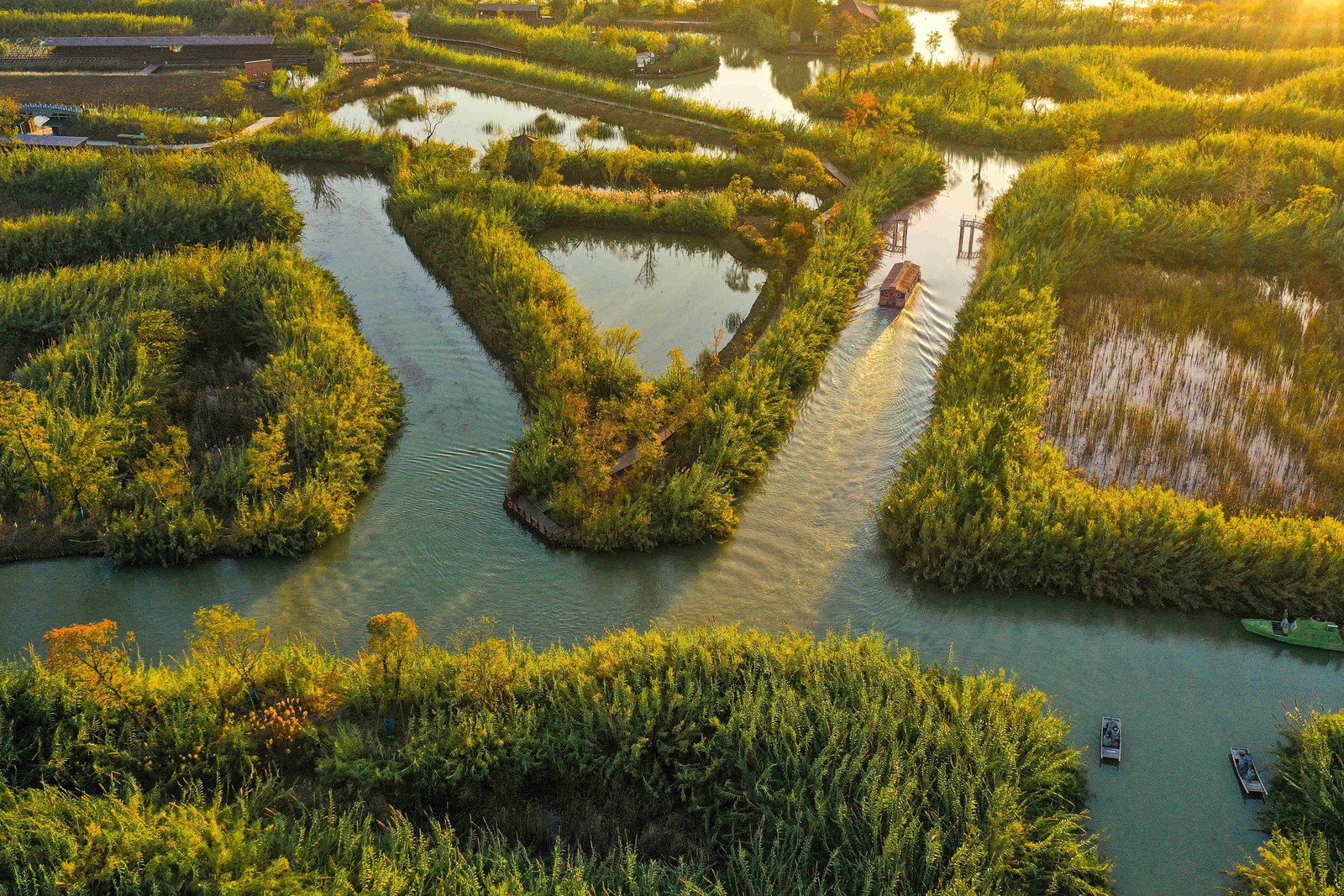
The reed maze is the reserve’s signature ride. Flat-bottomed boats work the narrow green corridors, banks closing to arm’s width, herons standing their ground at the bends – a half-hour of pure water-level immersion that ends, abruptly, back in the open lake light. In autumn the reeds go silver and the maze turns into the year’s best photograph.
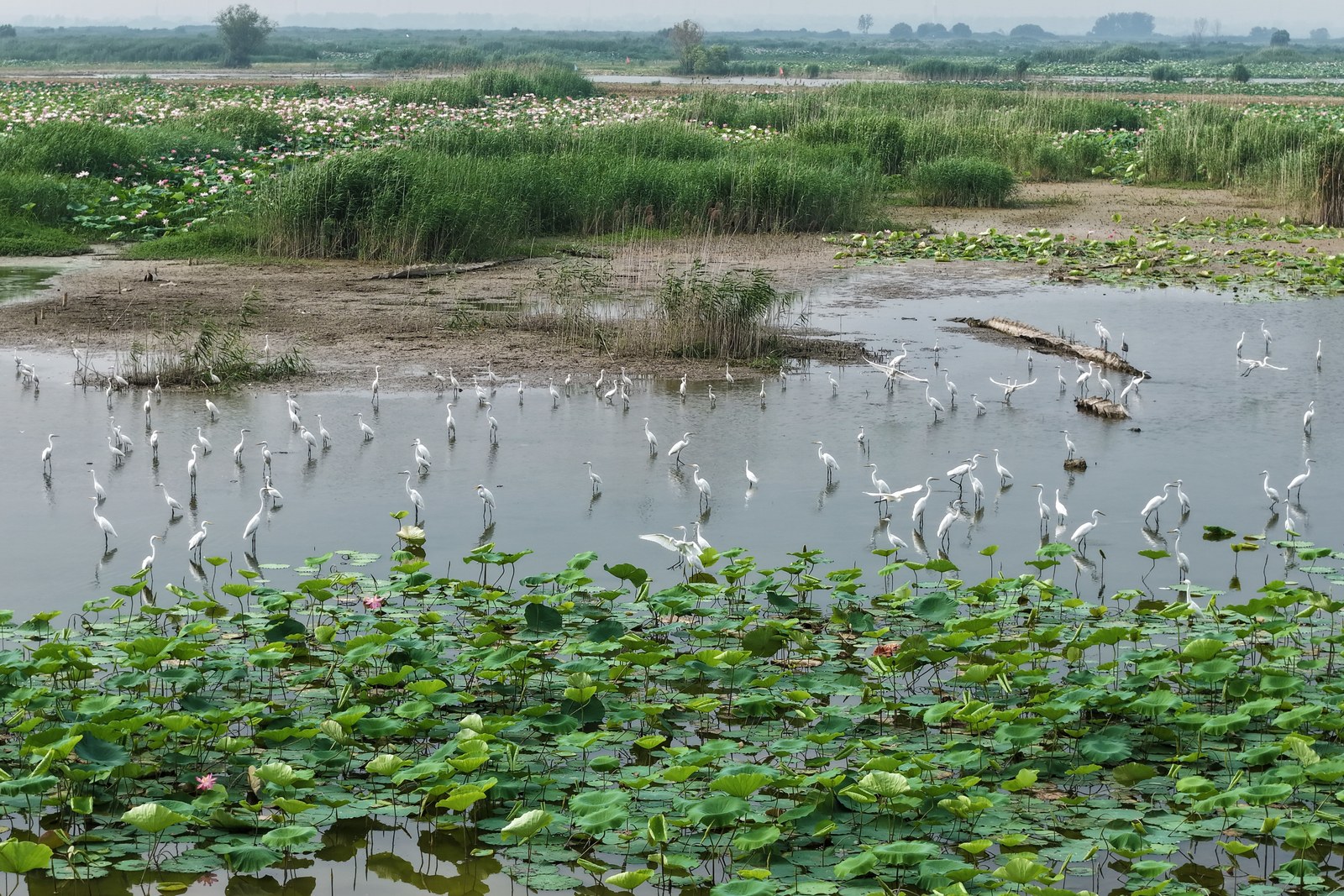
The birds do the counting. The egret colonies work the lotus shallows in squadrons, the winter months bring the geese and duck rafts, and the reserve’s hides and towers put the marsh’s mid-air traffic at eye level – this is one of the few places in East China where a beginner with binoculars runs out of daylight before names. The museum by the gate explains the flyway and the lake’s ecology; the boardwalks make it walkable.
Give the reserve a full day – it is an hour from central Suqian and rewards the trip. The boat circuit takes the morning, the boardwalks and hides fill the middle hours, and the golden hour belongs to the open-lake platforms; pair the day with Sihong’s crab restaurants in season, because the lake that feeds the birds also feeds the county. Autumn is the crown season – reeds, raptors and crab together.
Practicalities
Beyond the marsh, the same 宿迁市 Sùqiān Shì Suqian City keeps more places worth the detour: 骆马湖 Luòmǎ Hú Luoma Lake the northern beaches, 三台山 Sāntái Shān Santai Mountain the flower-sea forest, 项王故里 Xiàngwáng Gùlǐ the Conqueror’s compound, or 乾隆行宫 Qiánlóng Xínggōng the Qianlong Palace at Zaohe – four more doors into the same 宿迁市 Sùqiān Shì Suqian City. Once the maze is run, our Suqian food map fills the table.
Practicalities
Words and Names
flowcloud would say the Hongze wetland is the lake at working volume: reeds to the horizon, wings overhead in the thousands, and a maze cut so that visitors can hear what the marsh sounds like from inside. All checked November 2026.
Getting there: The reserve lies west of Sihong county town, about an hour from central Suqian by car – entry plus the boat circuit is ticketed, boardwalks and hides are flat and easy, and autumn migration is the birding high season; spring adds the reed’s fresh green. All checked November 2026.