
Five Stars Rise in the East: The Brocade That Made the Hotan Museum Famous
织锦出黄沙,五星耀东方 Zhījǐn chū huángshā, wǔxīng yào dōngfāng – A brocade emerges from the yellow sands; five stars shine in the east
正文:和田地区博物馆 Hétián Dìqū Bówùguǎn the Hotan Museum anchors the new-district avenue of 和田地区 Hétián Dìqū Hotan Prefecture in a white curved building that has become the city’s modern landmark – and inside it holds the single most celebrated textile ever dug from Chinese desert soil. The “Five Stars Rise in the East, Benefit the Central Plains” brocade, a stretch of eight-character warp-faced weave from the Han dynasty, surfaced in 1995 from a tomb at Niya north of here, and its room is the museum’s reason for pilgrimage: prophecy, technology and empire woven into an armband smaller than a rolled towel.
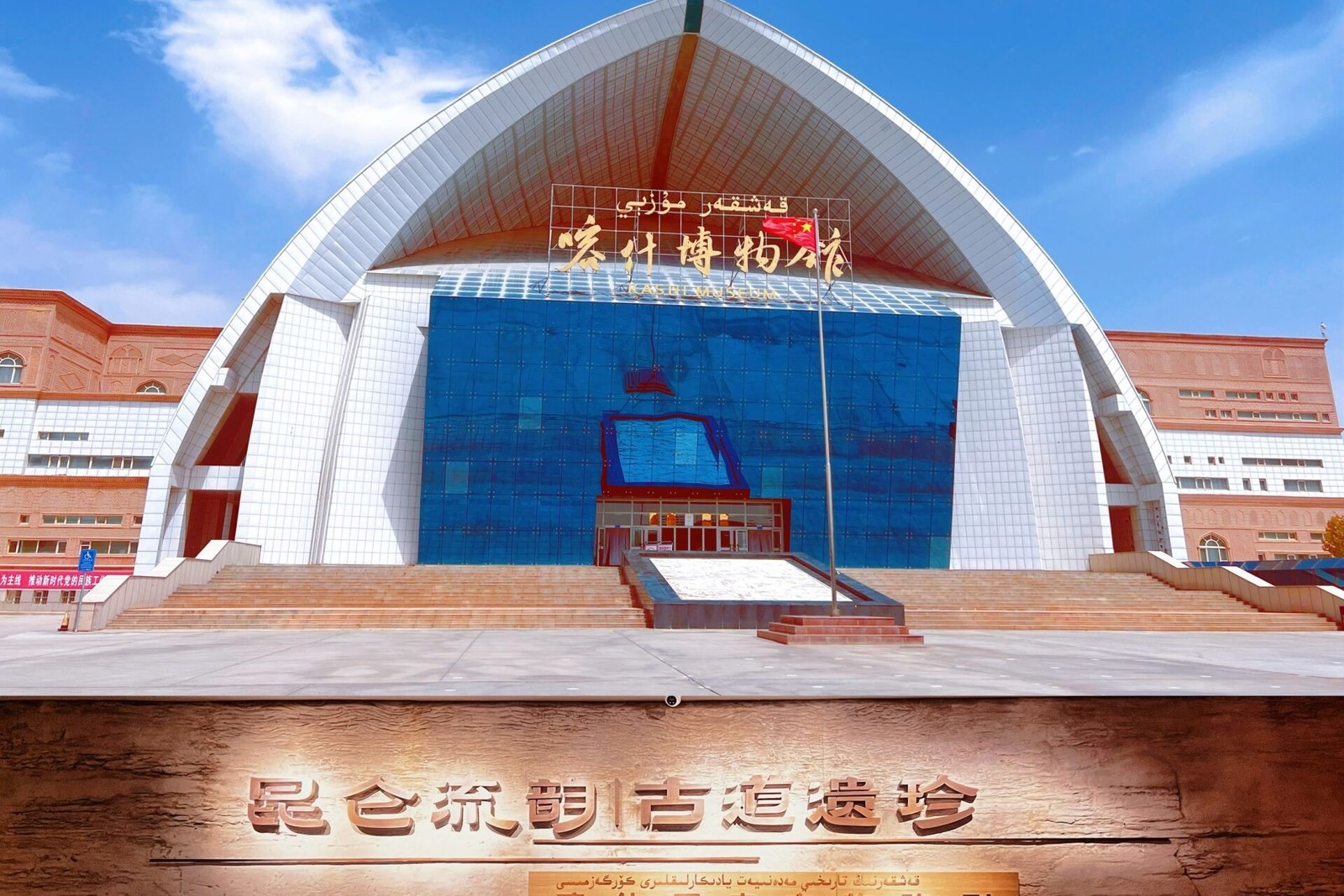
The building sets the tone before any case does. White walls curve like a dune in wind; the entrance court opens through a tall arch; and the galleries run cool and dim against the desert light outside. The permanent exhibition walks the oasis’s two thousand years in order – the jade-trade millennia first, then the kingdom of Khotan’s Buddhist centuries, the Tibetan interlude, the Islamic era, and the caravan economy that made this one of the richest stops between Chang’an and the West. Labels run in Uyghur and Chinese with English summaries, and the flow is genuinely educational rather than trophy-hunting.
The brocade room rewards patience. The armband itself sits in controlled light at the gallery’s heart, its eight characters reading across the warp in astonishingly fresh dye; the surrounding cases unpack the weaving technology that produced it – the loom reconstructions, the comparative silks, the mapping of every fragment found. Around it sit the rest of the Niya and Sampula hoards: wooden documents in Kharosthi script, painted coffins with their colours intact, the famous carpet fragments, and the glass and bronze that mapped the oasis’s trade routes onto a single shelf.
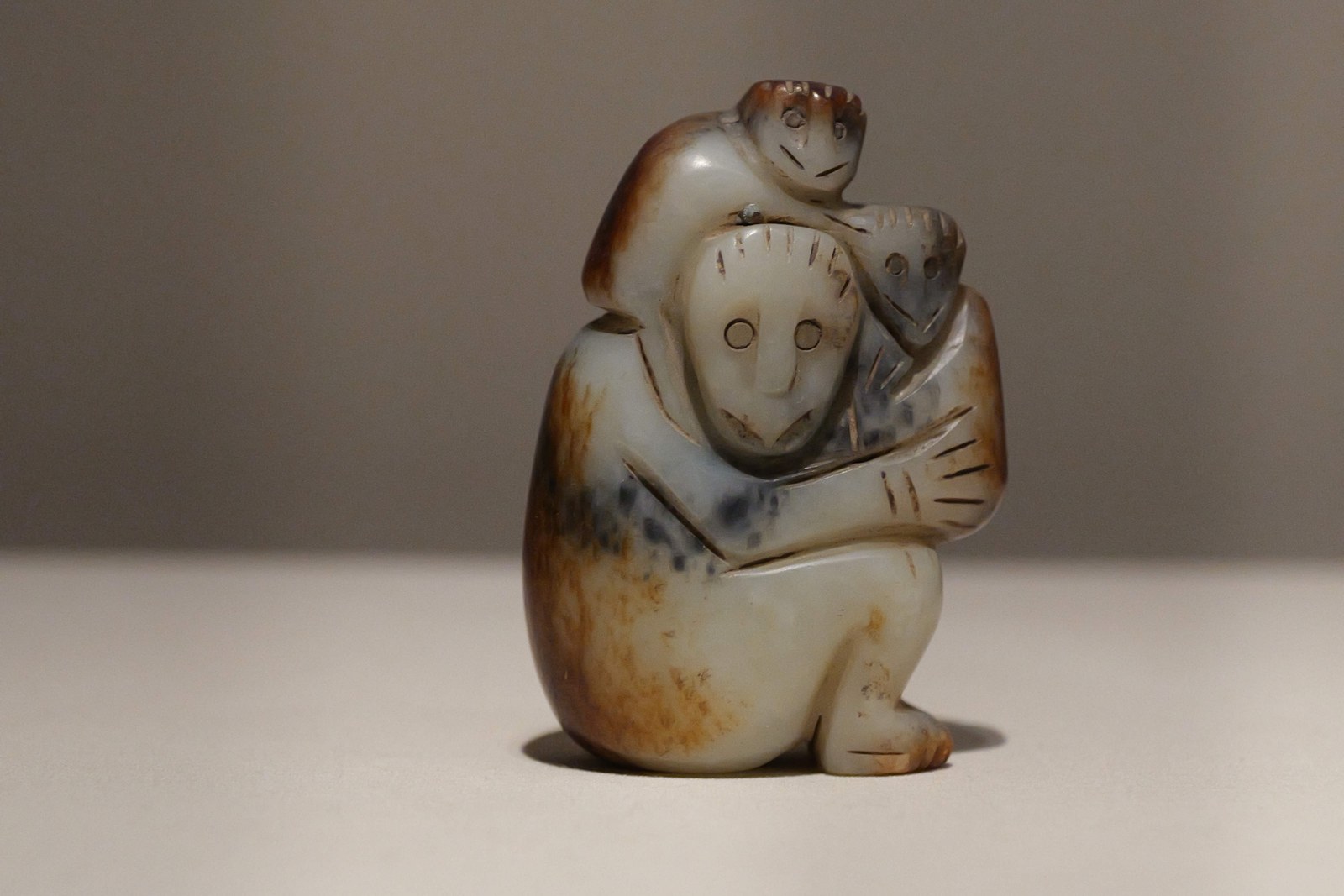
Beyond the classics hall, the museum’s other floors hold the region’s living crafts. The jade galleries trace the Yurungkash river’s trade from Neolithic axes to the Qing tributes; the textile rooms show the atlas silk whose ikat patterns the region still weaves; and the multimedia rooms reconstruct the mummies of Xiaohe and Niya with the discretion the subject deserves. Special exhibits rotate through the temporary hall – recent seasons have brought the painted panels of Dandan Oilik and the Buddhist statuary of Damago out of storage, and the museum’s own teams publish their finds at a serious pace.
The building’s scale can absorb a full morning, and the café and shop make that easy. The shop’s replicas – brocade bookmarks, atlas-silk squares, small jade pieces with certificates – are the best souvenirs of their kind in the prefecture, and the staff explain the difference between the real object and the copy with museum-standard candour. For travellers continuing to the sites themselves, the museum’s room of excavation photographs doubles as a preview and a briefing.
Practicalities first. Entry is free with passport or ID at the desk, the museum opens through the day with a Monday-afternoon closure, and photography without flash is welcome in most halls. Give the brocade room an unhurried hour, take the English leaflet at the entrance, and leave time for the jade floor – the story of the river is the story of the city.
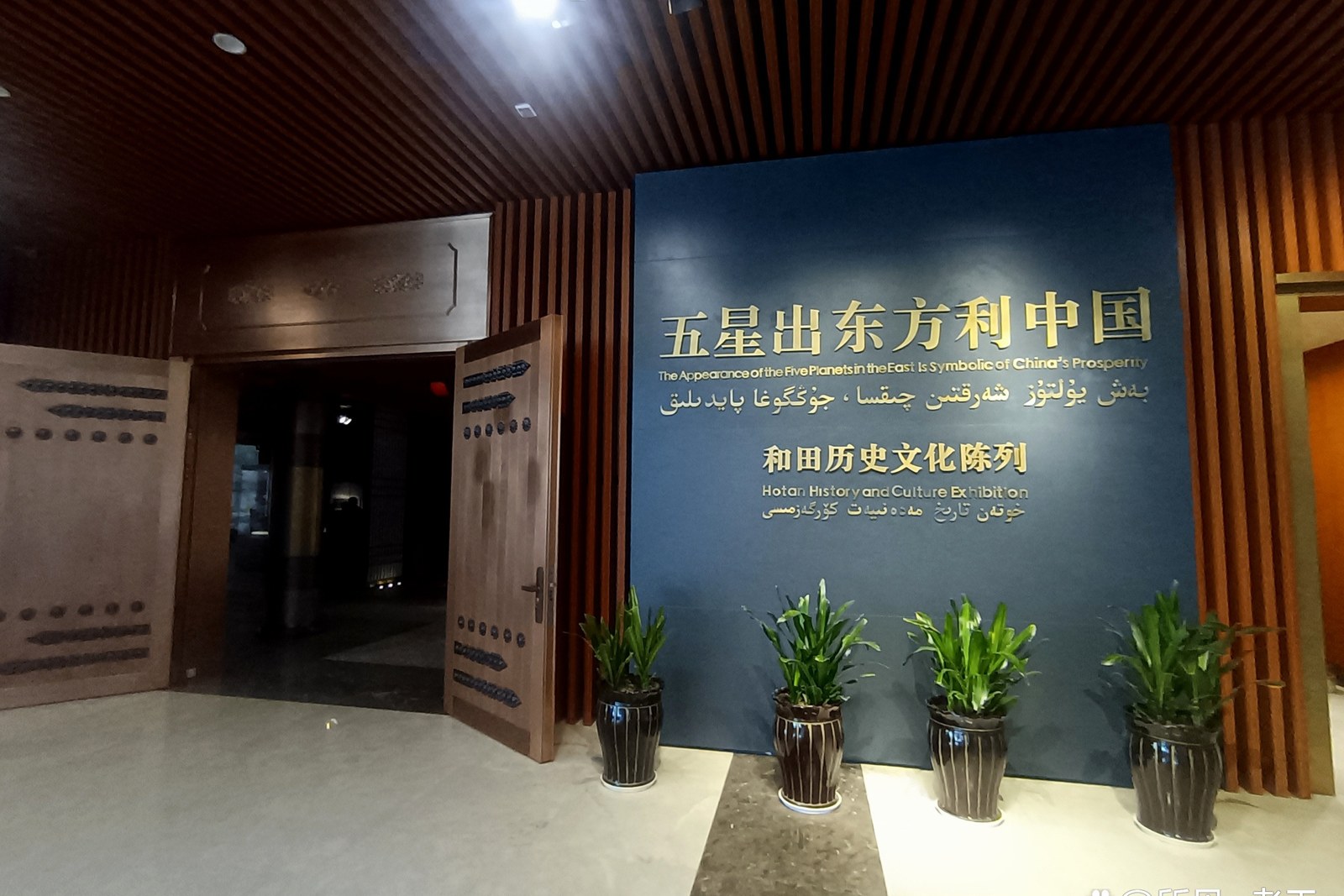
Widen the frame and the museum is the prefecture’s front door: everything a traveller will meet later – the river’s diggers, the corridor’s fruit, the old town’s carvings – is catalogued, explained and dated here first. Visit it before the sites and the sites speak.
And the brocade leaves its hook in every visitor: eight characters woven two thousand years ago, reading like a headline from yesterday – five stars rising in the east, and every one of them still up there.
Practicalities
Beyond the museum, the same 和田地区 Hétián Dìqū Hotan Prefecture keeps more places worth the detour: 约特干故城 Yuētègān Gùchéng the Yotkan ruins for the rebuilt city, 千里葡萄长廊 Qiānlǐ Pútao Chángláng the Grape Corridor for the shade, 团城老街 Tuánchéng Lǎojiē the Tuancheng old blocks for the carved lanes, or 玉龙喀什河 Yùlóngkāshī Hé the Yurungkash river for the jade beds – four more doors into the same 和田地区 Hétián Dìqū Hotan Prefecture. Once the galleries are seen, our Hotan food map fills the day.
Practicalities
Words and Names
flowcloud would say the Hotan Museum is where the desert hands over its evidence: a white building with the brocade that named a prophecy, jade from the river’s bed, and two thousand years of the Silk Road set out in one cool, unhurried circuit. All checked November 2026.
Getting there: The museum stands on the new-district avenue about 3 kilometres east of the old town; city buses along Tahe Road stop nearby and taxis cost a coffee. Free entry with ID, closed Monday afternoons – go morning for quiet galleries. All checked November 2026.