
It is a river that runs through a hill, and the hill is hollow enough to hold a temple inside it. 燕岩 Yànyán, the swallow cave, is a limestone passage in 怀集县 Huáijí Xiàn, in the far north of the 肇庆 Zhàoqìng prefecture, and the name comes from the thousands of swifts that nest in its roof. The cave is a single enormous hall rather than a maze: a river enters at one end and leaves at the other, the roof rises tens of metres above the water, and daylight reaches most of it through two large openings. Boats take visitors through in the low-water months, and inside there is a temple built against the wall, reached by steps cut into the rock.
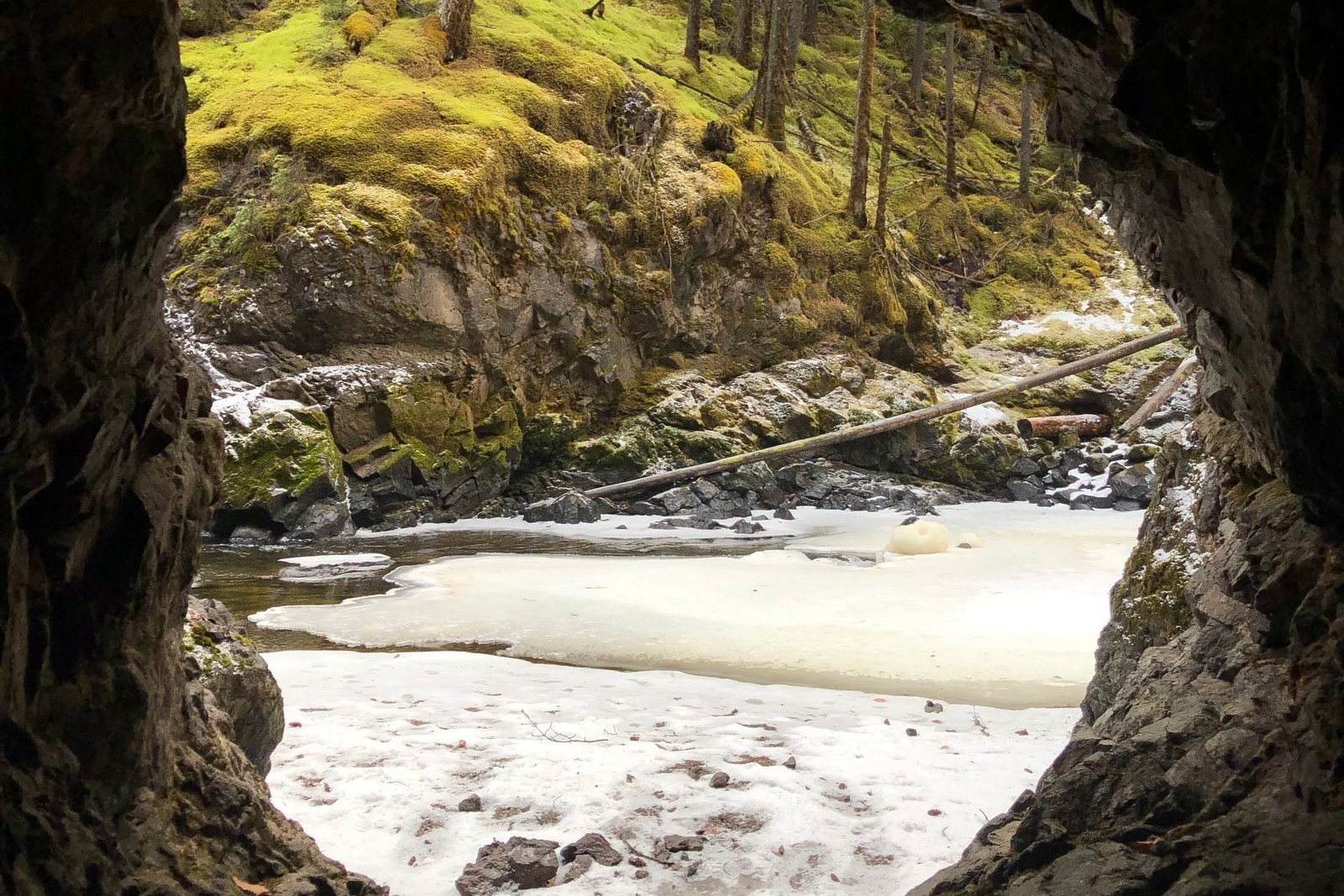
The swifts are the reason for the timing of a visit. They arrive in spring and nest through the summer, and the nests, which are the edible sort made of saliva, have been harvested from these roofs for centuries, by climbers who go up the rock face on ropes with no modern equipment. The harvest is a local tradition rather than a show, and in the season you may see the climbers working. The birds are not tame, and the noise inside the cave when they are active is considerable. Outside the season the cave is quieter and the boat trip is the main thing, which is a different and equally good visit.
Practicalities
Tickets. About ¥60, which covers the cave and the boat. The temple inside the cave is included; separate charges may apply for anything offered on the water.
Opening hours. Roughly 08:30 to 17:00 daily, with the last boats going out an hour or so before closing. The cave is at its best in the middle of the day, when the light comes down through the openings and the water is lit.
Getting there. 燕岩 Yànyán is in 桥头镇 Qiáotóu Zhèn in 怀集县 Huáijí Xiàn, around two hours by road from 肇庆市 Zhàoqìng Shì and about twenty-five minutes from the county town. 怀集站 Huáijí Zhàn on the high-speed line from Guangzhou puts the county around an hour and a half from the city, and taxis from the station to the cave are straightforward; a car is easier than the local buses.
Closing day. No closing day, though the boats do not run during high water after heavy rain, when the river inside the cave rises and the passage becomes unsafe. Phone the site or ask at the county town if there has been a storm in the preceding days.
The Cave and the County
怀集 is limestone country, and 燕岩 is one of a family of caves in the same belt of rock, which also runs across the border into Guangxi. The county has been poor and agricultural for most of its history, and the cave has been a local wonder and a source of fertiliser and nests rather than a tourist attraction until relatively recently. That shows in the site: the facilities are basic, the village at the mouth of the cave is a working one, and the temple inside is used rather than preserved.
The other thing to see in the same trip is the 桥头 Qiáotóu countryside itself, which is a small-scale version of the karst scenery of Guangxi, with conical hills, stands of bamboo and stone villages in the valleys. It is not on the main tourist circuit, which means the roads are empty and the fields are actually farmed, and the cave works well as the centre of a day rather than as a destination on its own.
Words and Names
燕岩 Yànyán is the cave: 燕 yàn a swallow, 岩 yán a rock or a cave in rock. 桥头镇 Qiáotóu Zhèn is the township it stands in, 怀集县 Huáijí Xiàn the county, and 肇庆 Zhàoqìng the prefecture. 燕窝 yànwō, bird’s nest, is what the climbers harvest, and 采燕人 cǎiyàn rén is what they are called. 溶洞 róngdòng is the general term for a limestone cave, and 竹 zhú is the bamboo that fills the valleys around 桥头.
flowcloud would say that 燕岩 is worth the drive because it has been left as a working cave, with a village at the mouth and a temple inside, rather than being lit and staged into an attraction.
Getting there: by road from 怀集县 Huáijí Xiàn to 桥头镇 Qiáotóu Zhèn, around two hours from 肇庆市 Zhàoqìng Shì and twenty-five minutes from the county town; 怀集站 Huáijí Zhàn on the Guangzhou high-speed line is the nearest railhead. Go between late morning and early afternoon for the light, check that the boats are running after rain, and stay to look at the karst valleys around 桥头 Qiáotóu rather than leaving immediately.