
Morning on 黄桷坪 Huángjié Píng, and the first thing the lane gives you is a tank: a Soviet T105 standing on the concrete apron at the end of the road, gun barrel pointing at nothing in particular, tracks bedded into the slab it was parked on for the better part of half a century. Past it the road runs on between workshop sheds with corrugated roofs and brick end walls, and those sheds are the reason anyone comes here. This is 坦克库艺术区 Tánkù Kù Yìshùqū, the Tank Depot art district, in 九龙坡区 Jiǔlóngpō Qū, Jiulongpo District, Chongqing, a municipality of southwest China: roughly twelve thousand square metres of former state metals-company warehousing that became the best-known address in the country for young artists, and that a closure notice has left in the air since 2021.
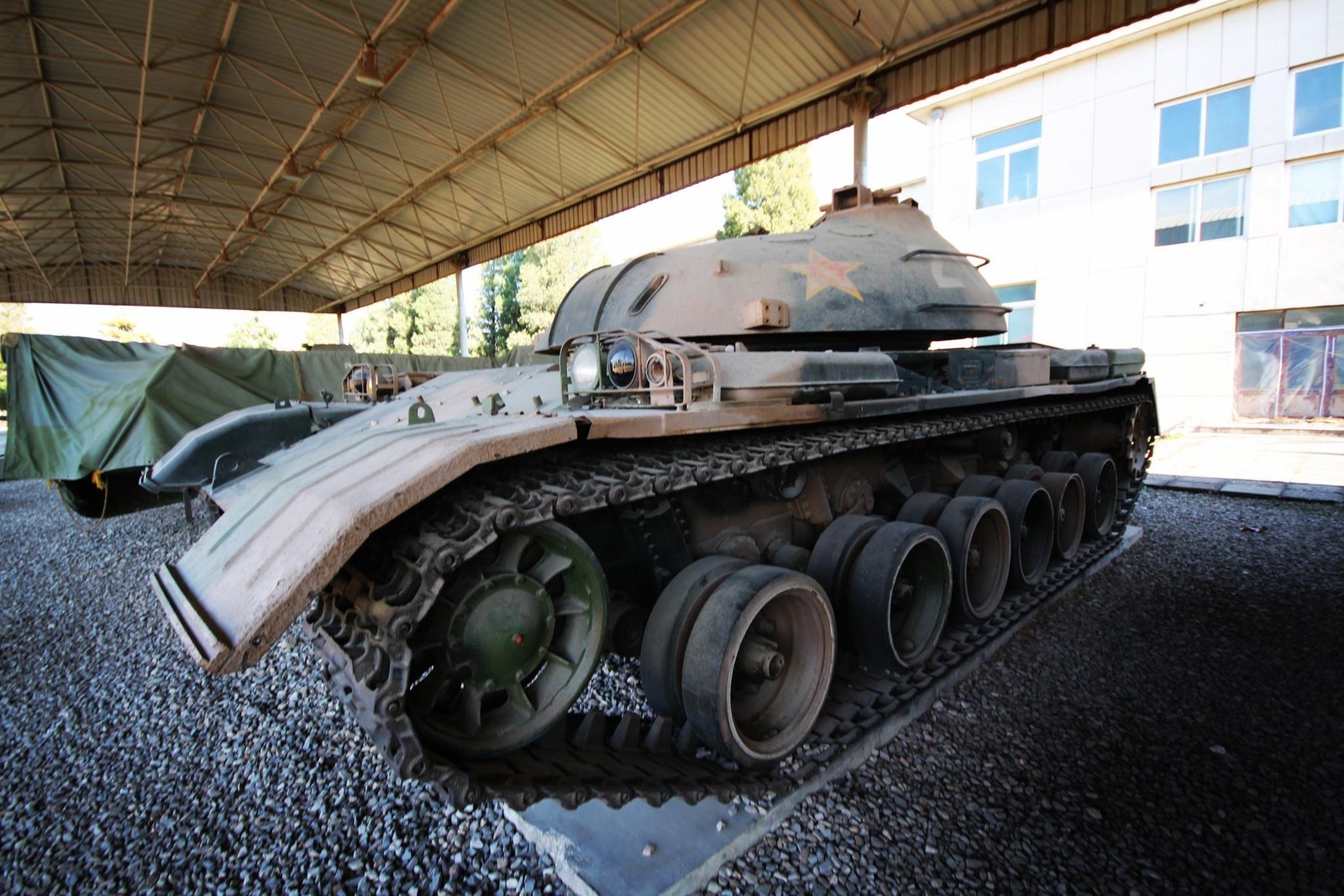
The site’s working life came first, and it was ordinary. In November 1966 a state metals company requisitioned the sheds; they went on storing material for years, and later stored tanks – actual tanks, parked nose to nose while the city grew around them. The T105 by the gate belongs to that second job, which is why it sits where it does and why nobody ever moved it. What the site became afterwards came out of the art school next door rather than out of the industry: 四川美术学院 Sìchuān Měishù Xuéyuàn, the Sichuan Fine Arts Institute, had been teaching in this quarter for decades, and when the academy wanted room for the studios its graduates could not afford anywhere else, these sheds were the answer.
The transaction is the story. At the end of 2000 the academy bought the compound back for about seven million yuan – the figure is reported differently in different accounts and the round number is the safe one – and in 2001 part of it was converted into teaching space. The name went up in summer 2004, and in 2005 the centre opened as a non-profit art space with more than two hundred studios let at a few hundred yuan a term on leases of one to two years. Two numbers do the work here: two hundred studios is a small industrial park of painters, and a few hundred yuan a term is roughly what a graduate can pay.
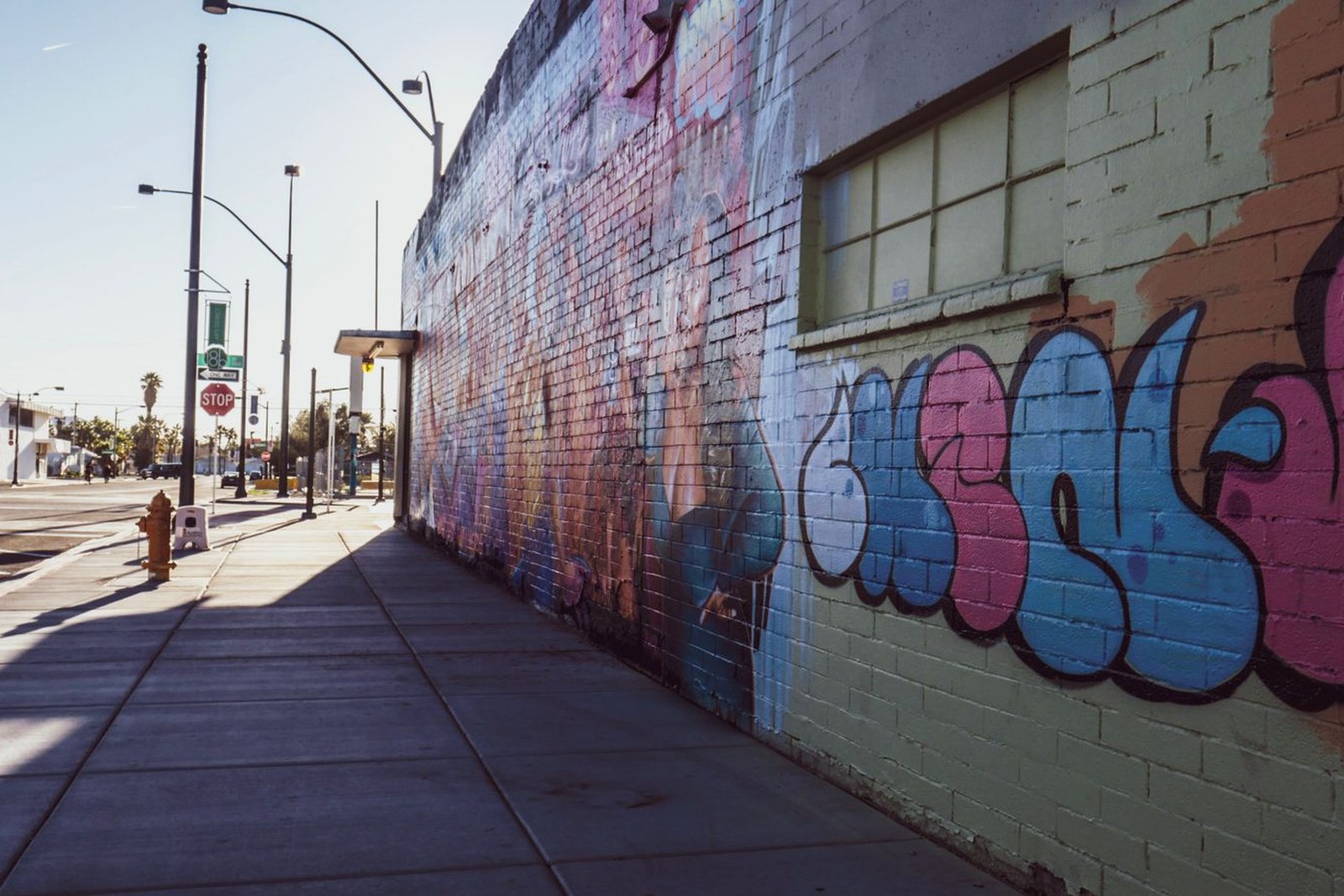
The academy’s own move is the other half of the story. Sichuan Fine Arts Institute was founded in 1940 by 李有行 Lǐ Yǒuxíng Li Youxing and 沈福文 Shén Fúwén Shen Fuwen and sat here for six decades. In 2005 it began moving to Huxi in University City, and the Huangjueping era closed in 2008 when the affiliated middle school and the adult-education college were wound up; the campus went, the studios stayed, and the district inherited the cheapest art address in the country. What grew in the gap is the 1.25-kilometre graffiti street, running from the old railway hospital to the 501 art base, painted wall to painted wall, with the depot’s tank at one end of the walk.
Practicalities
Tickets. There is no ticket gate and no admission charge for the district as a place: the lane, the tank and the street outside are open ground, and the depot is not sold as a sealed attraction. What is inside the sheds has always been let rather than gated – individual studios run their own doors and their own terms, and any temporary exhibition a tenant puts on may carry its own charge. Because the site has been under a closure-and-rebuild notice since November 2021, what is open inside the gate at any given month is a moving arrangement.
Opening hours. No hours are printed here, because the site has no single operator to publish them and its access has been unsettled since the 2021 notice. The lane and the graffiti street are ordinary public ground and can be walked at any hour; the sheds’ own arrangements – which doors are open, when a studio is at work, whether a rebuild is letting anyone in at all – are announced by the district and by the academy through their official channels, so check those on the day rather than building a timetable on this page.
Closing day. There is no fixed closing day for the district as a place: the street, the tank and the lane do not close, and the quarter around them is a working neighbourhood rather than an attraction with a weekly gate. The one thing that changes on a schedule is the interior of the sheds, and its arrangements follow the rebuilding notice and whatever has been published since – an exception that applies to individual buildings rather than to the district.
Getting there. Metro Line 2 reaches this part of the district at 杨家坪 Yángjiāpíng, Yangjiaping, and 动物园 Dòngwùyuán, Zoo, both on the west bank a short distance east of the depot; from either, the lane is a brief bus or taxi ride along the riverside roads, and the return is easier on foot than by flagging a car on an industrial road. Buses serve the Huangjueping quarter directly from the wider city, and cycling up from the riverside is the local shape of the trip. Confirm the current routing on the metro operator’s listing before setting out.
flowcloud would say that the Tank Depot is the rare case of a city buying its own industrial past back for the price of a department store and handing it to painters at a few hundred yuan a term – twelve thousand square metres of sheds, two hundred studios, a Soviet tank left on the apron because nobody had a reason to move it – and that the closure notice of 2021 is the one thing in this story that has not been resolved yet.
Getting there: the Tank Depot art district stands off the working road at 黄桷坪 Huángjié Píng, Huangjueping, in 九龙坡区 Jiǔlóngpō Qū, Jiulongpo District, Chongqing, a municipality of southwest China, in the riverfront valley west of Yangjiaping – the tank on its apron at the end of the lane, the sheds behind it, and the 1.25-kilometre graffiti street running from the old railway hospital to the 501 art base a short walk away. There is no charge for the district and no gate; the lane, the tank and the street can be walked at any hour, while what is open inside the sheds has followed the closure-and-rebuild notice of November 2021, which required tenants to be out by 15 January 2022, and no later milestone is claimed here. Metro Line 2’s Yangjiaping and Zoo stations are the nearest stops, with local buses into the quarter and the riverfront roads the last stretch (checked October 2026, subject to change).