
黄满磜瀑布群 Huáng mǎn qì pù bù qún is five falls in a row down a single gorge in the far east of 揭西县 Jiē xī xiàn, and it is the one place in 揭阳市 Jiē yáng shì where the prefecture is genuinely mountainous. It stands at 粗坑村 Cū kēng cūn in 京溪园镇 Jīng xī yuán zhèn, on the north side of the 大北山 dà běi shān, and it is a national 4A attraction and a 广东省地质公园 guǎng dōng shěng dì zhì gōng yuán, a provincial geopark, on the strength of the rock alone: a valley of granite and volcanic formations cut into steps by water, with the whole fall system dropping more than 300 metres from the top of the gorge to the pool at the bottom, in five separate leaps. It is billed as 岭南第一瀑 lǐng nán dì yī pù, the first waterfall of Lingnan, and the claim is about the height of the drop and the number of steps rather than about any one sheet of water.
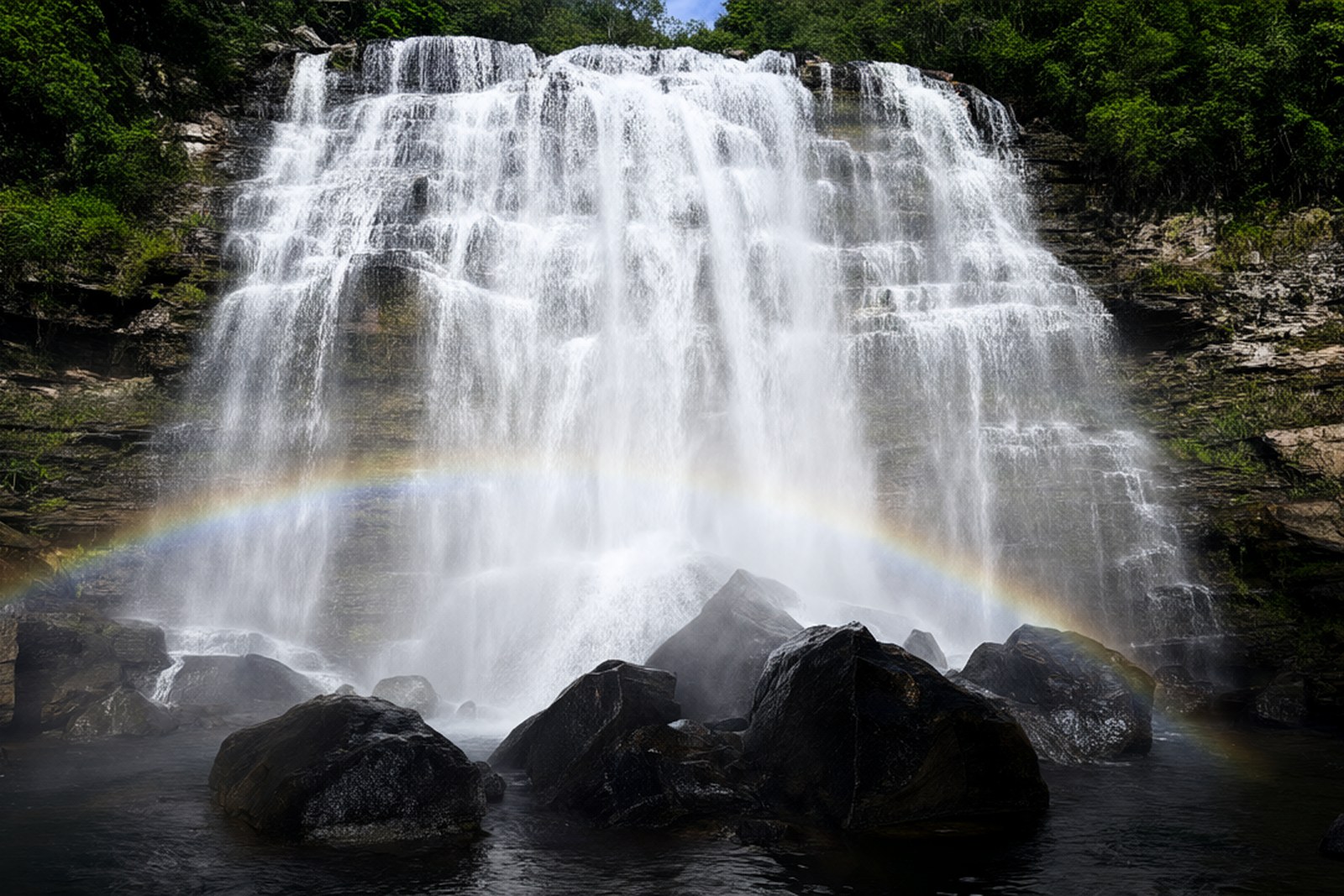
The five have names, and they are meant to be read in order down the hill. 飞虹瀑布 fēi hóng pù bù is the main fall and the one the whole place is sold on: 82 metres across and 56 metres from lip to pool, so it is a curtain rather than a ribbon, and on a bright morning with the sun coming up the valley it throws a rainbow across the middle of itself, which is what the name means – 飞虹, the flying rainbow. 银河崆瀑布 yín hé kōng pù bù is the second, a fall that breaks into spray as it comes out of a slot in the rock, which local descriptions compare to stars scattered down into the world. 落九天瀑布 luò jiǔ tiān pù bù is the third and the most violent, described in the county’s own language as the Milky Way poured out and a giant bolt of silk hung from the sky; the third is the one where people who stand at the foot of the viewing platform have to shout to be heard. 三叠谷瀑布 sān dié gǔ pù bù is the fourth, falling in three steps as if it could not bear to give itself up all at once, and the local phrase for it is that it is soft-hearted. 斗方崆瀑布 dǒu fāng kōng pù bù is the fifth and lowest, and from the side it looks like a bushel measure with ten thousand pearls poured into it. Below all of it the water collects in a still green pool called 寿星潭 shòu xīng tán.
The climate is the quiet argument for the place. This is 揭西, the Hakka half of the prefecture, and the county is high enough that the seasons barely move: the annual average is about 21.5 degrees, and in summer the gorge runs at about 25, which in a 广东 July is the difference between walking and not walking. The path is boardwalk and stair, mostly under the canopy, with the mist off the falls coming over the rail on the near sections, and the whole route is cooler than the road down to it by several degrees. That, rather than the height of the drop, is what makes it a summer destination here.
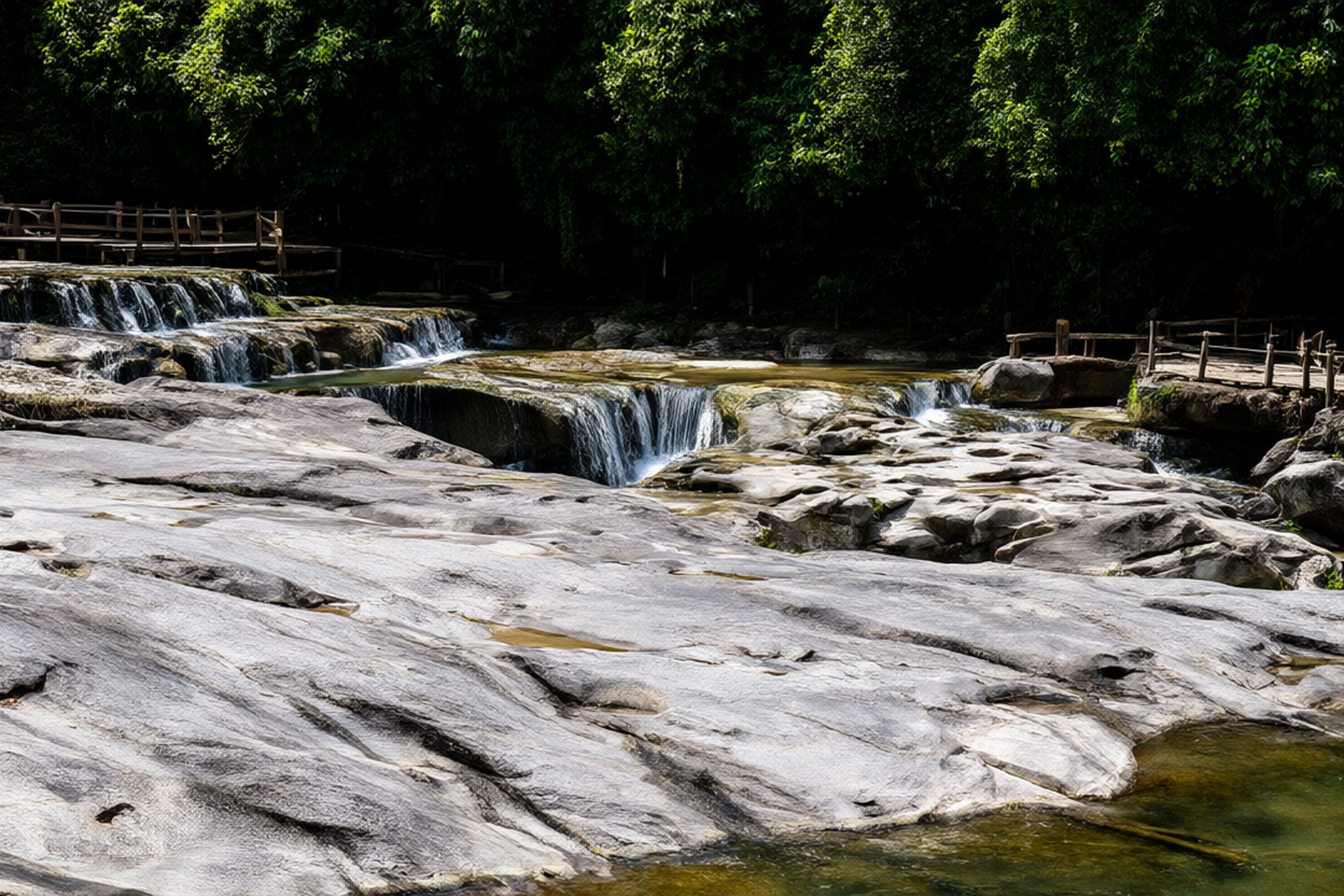
Seeing it properly is a half day, and the county gives you two versions of it. The easy line covers 飞虹 and 银河崆 and back, about two hours of walking, which is the right call with small children or in the heat; the full line does all five and the pool, three and a half to four hours and 1,680 steps, and it is the one worth doing if you have the legs, because the fourth and fifth falls are the quiet ones and the crowd stops at the first. An electric shuttle, 20 yuan, saves the climb back up for anyone who needs it. The season matters more here than at any of the other places in this batch: from April to June the rain is on and the falls are at their widest and loudest, and after September the water thins out into something much smaller and much quieter – which some people prefer, because the gorge empties of visitors and the pools go clear. Non-slip shoes, a waterproof bag for a phone and mosquito repellent are the three things worth putting in a daypack, and the rail at the foot of the third fall is genuinely wet. The walk down and the drive out are both through 揭西’s working landscape rather than a park. 粗坑村 itself, at the top of the gorge, is the 创刊地 chuàng kān dì, the founding place, of the 团结报 tuán jié bào, which became the 汕头日报 Shàn tóu rì bào, the Shantou daily, and it is one of the villages in the province’s first batch of 百千万工程 bǎi qiān wàn gōng chéng model villages. It farms tea over more than 5,000 mu of hillside and 苦笋 kǔ sǔn, bitter bamboo shoot, over another 3,000, and the tea terraces on the slope above the village are the reason the whole area is a hot-spring and resort district as well as a waterfall: 京明温泉度假村 Jīng míng wēn quán dù jià cūn is about twenty minutes away by road, and the 大洋国际生态旅游度假区 and the 大北山森林公园 are on the same circuit, which is how the county sells 揭西 to people from 汕头 and 潮州 – a day of water and a night in a hot pool, an hour and a half from the coast.
Practicalities
Tickets. A gate ticket in the region of ¥80 for an adult, with concessions for children by height, students in full-time education and the older brackets; the electric shuttle up and down the gorge is ¥20 and is charged separately at the bottom, and there are small extras for the glass-bottomed viewing platforms that have gone in above the main fall. Buy at the gate rather than through a reseller, since the price is fixed and the resellers sometimes sell the shuttle separately as if it were part of the entry.
Opening hours. Roughly 08:00 to 17:30 in the high season and 08:30 to 17:00 outside it, with the last admission about an hour before the gate shuts. Four hours for the full five falls and two for the short line, so an arrival after about half past two in the afternoon is an arrival for the short line only, and in winter the light goes off the gorge early because the valley walls are steep.
Getting there. The falls are at 粗坑村 Cū kēng cūn, 京溪园镇 Jīng xī yuán zhèn, in the east of 揭西县 Jiē xī xiàn, about twenty kilometres from 河婆 Hé pó, the county town, roughly an hour and a half by road from 揭阳市 Jiē yáng shì and about two hours from 汕头 Shàn tóu, on the 汕湛 and 潮惠 expressways with the last stretch on a narrow county road up through the tea. 揭西 has no railway and the nearest stations are on the 厦深 Xià shēn line outside the county, with 揭阳潮汕国际机场 Jiē yáng cháo shàn guó jì jī chǎng about an hour and a half off, so this is a place reached by car or by a hired one; the long-distance buses come as far as 京溪园镇 and no further.
Closing day. No weekly closing day, and the site opens every day of the year. What shuts it is water rather than a timetable: the gorge takes heavy rain in the June and July typhoon season, and the sections at the foot of the third and fifth falls are closed when the flow is up, and there is an annual maintenance week in the depth of winter that is announced locally rather than nationally. Ring the scenic area before driving up in a wet week, because a closed boardwalk at the bottom of a gorge is a long way to have come.
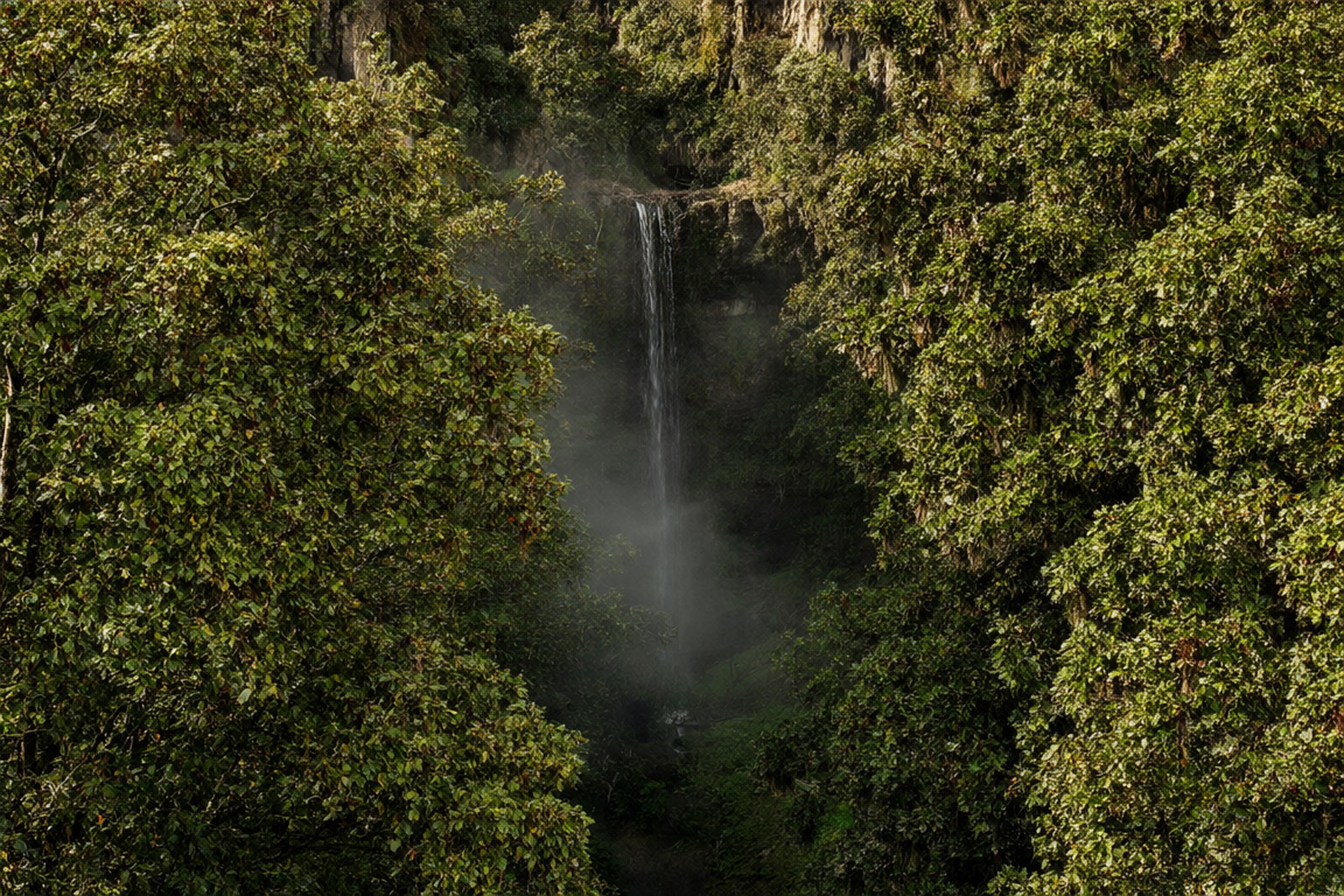
flowcloud would say that the difference between a waterfall and a national geopark is that one makes a photograph and the other explains why the photograph is possible, and that the argument for walking all 1,680 steps down this valley in April, wet through and shouted at by the third fall, is that you come back up knowing what the rock has been doing for the last few million years to earn it.
Getting there: 黄满磜瀑布群 is at 粗坑村 Cū kēng cūn in 京溪园镇 Jīng xī yuán zhèn, east 揭西县 Jiē xī xiàn, 揭阳市, about twenty kilometres from 河婆 Hé pó and an hour and a half from the prefecture city by road off the 汕湛 and 潮惠 expressways, with the last stretch on a narrow county road through tea terraces; 揭西 has no station of its own, so the nearest railheads are on the 厦深 Xià shēn high-speed line outside the county, 揭阳潮汕国际机场 Jiē yáng cháo shàn guó jì jī chǎng is about an hour and a half away, and the county buses stop at 京溪园镇 rather than at the village, which makes a car the practical way in.