
New Incense by the Haihe: Huasheng Temple
殿阁重新香火盛,海河岸上梵音长 Diàngé chóngxīn xiānghuǒ shèng, Hǎihé àn shàng fànyīn cháng – Halls rebuilt and incense thriving; by the Haihe bank the Buddhist chanting runs long
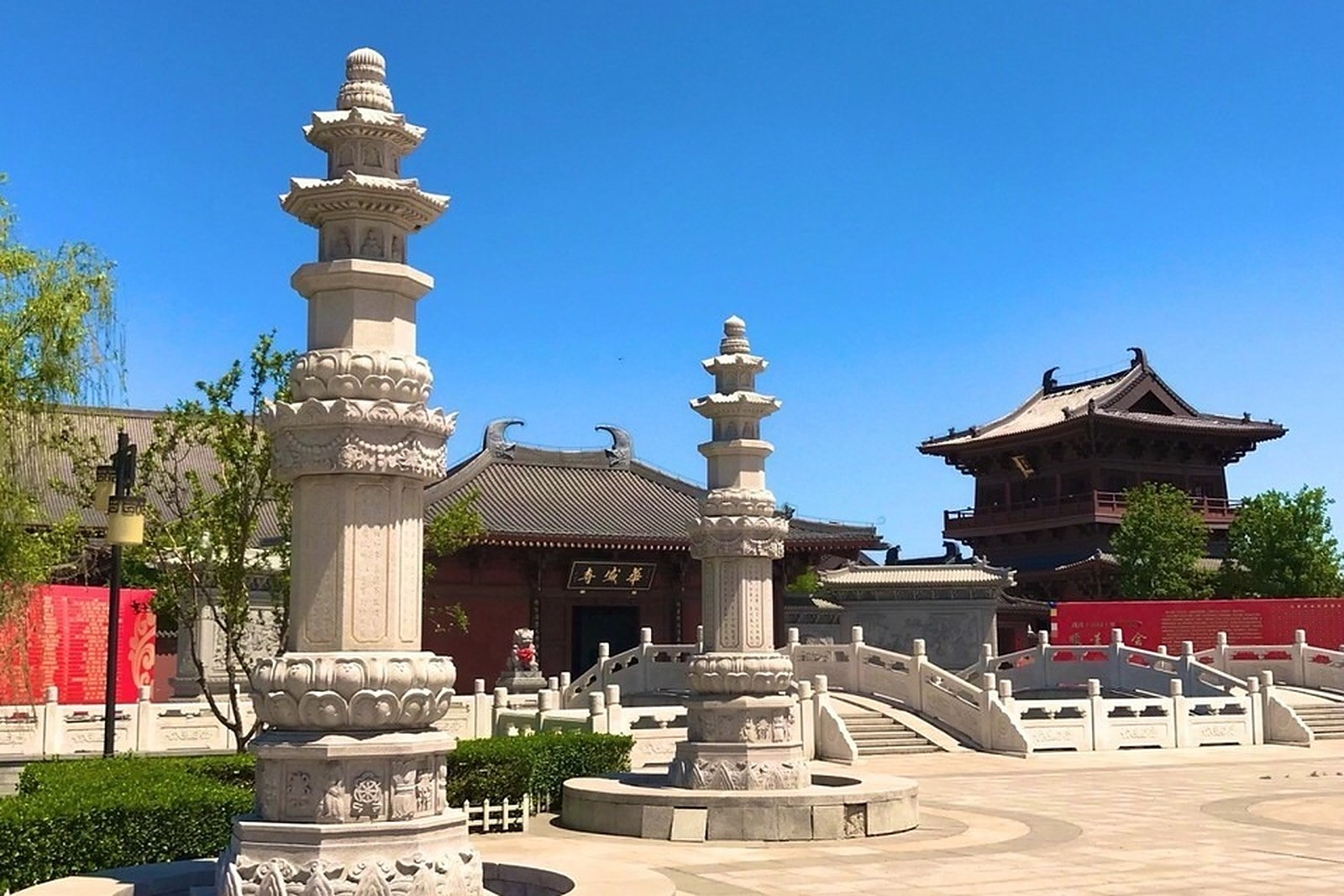
华盛寺 Huáshèng Sì Huasheng Temple is 天津市津南区 Tiānjīn Shì Jīnnàn Qū Jinnan District’s young giant – a modern temple complex on the Haihe’s southern bank whose paired halls, bell tower and gilded roofs have made it the anchor of the district’s Buddhist calendar. The compound is new in fabric but traditional in grammar: axial gates, flanking halls, and a great central Buddha hall built to the full classical pattern.
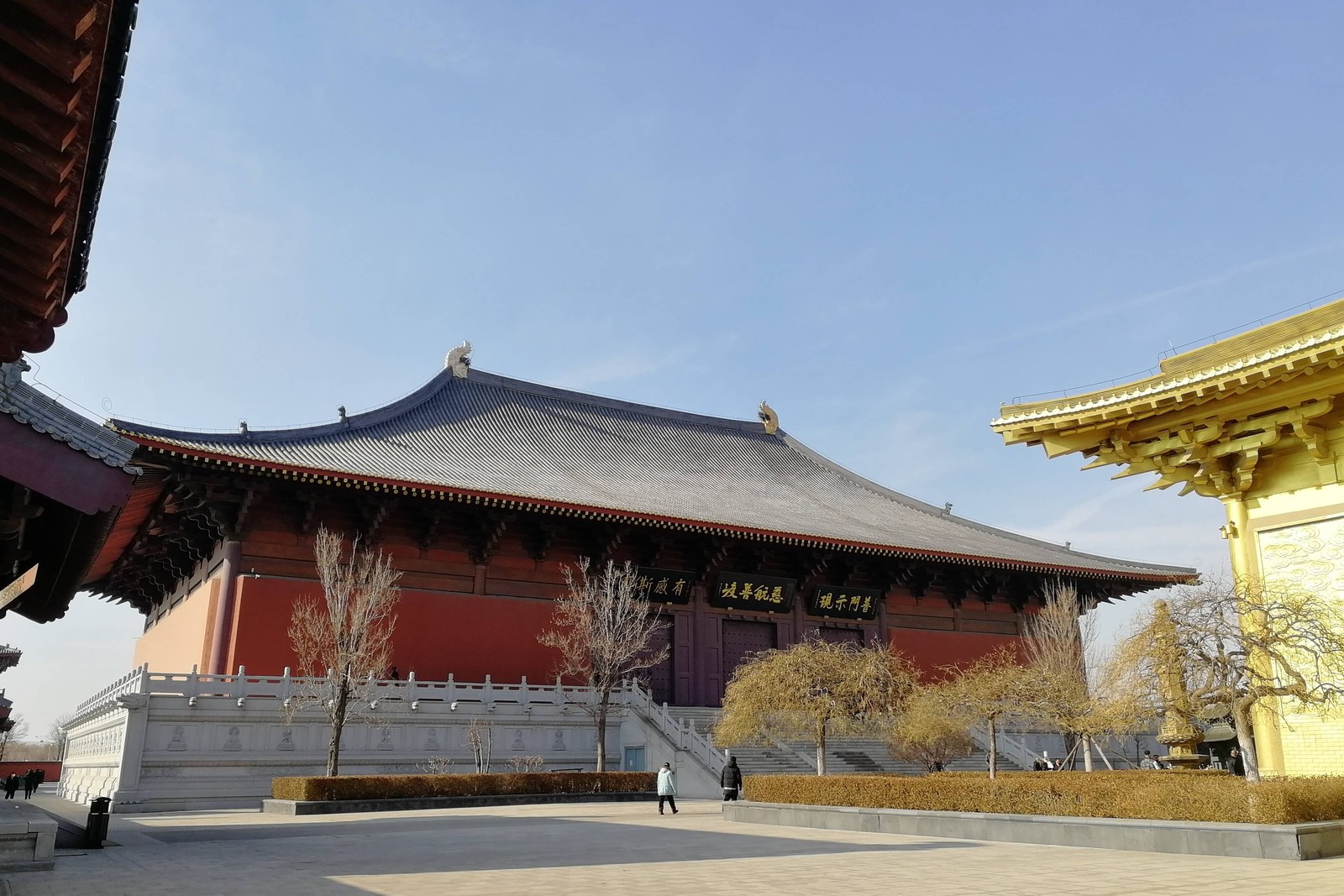
The main hall anchors the axis – a broad facade of red columns and deep eaves, stepped up on a terrace so the roofline reads against the sky. On festival days the forecourt fills with incense smoke and folding tables; on weekdays it holds a quiet you can hear the pigeons in.
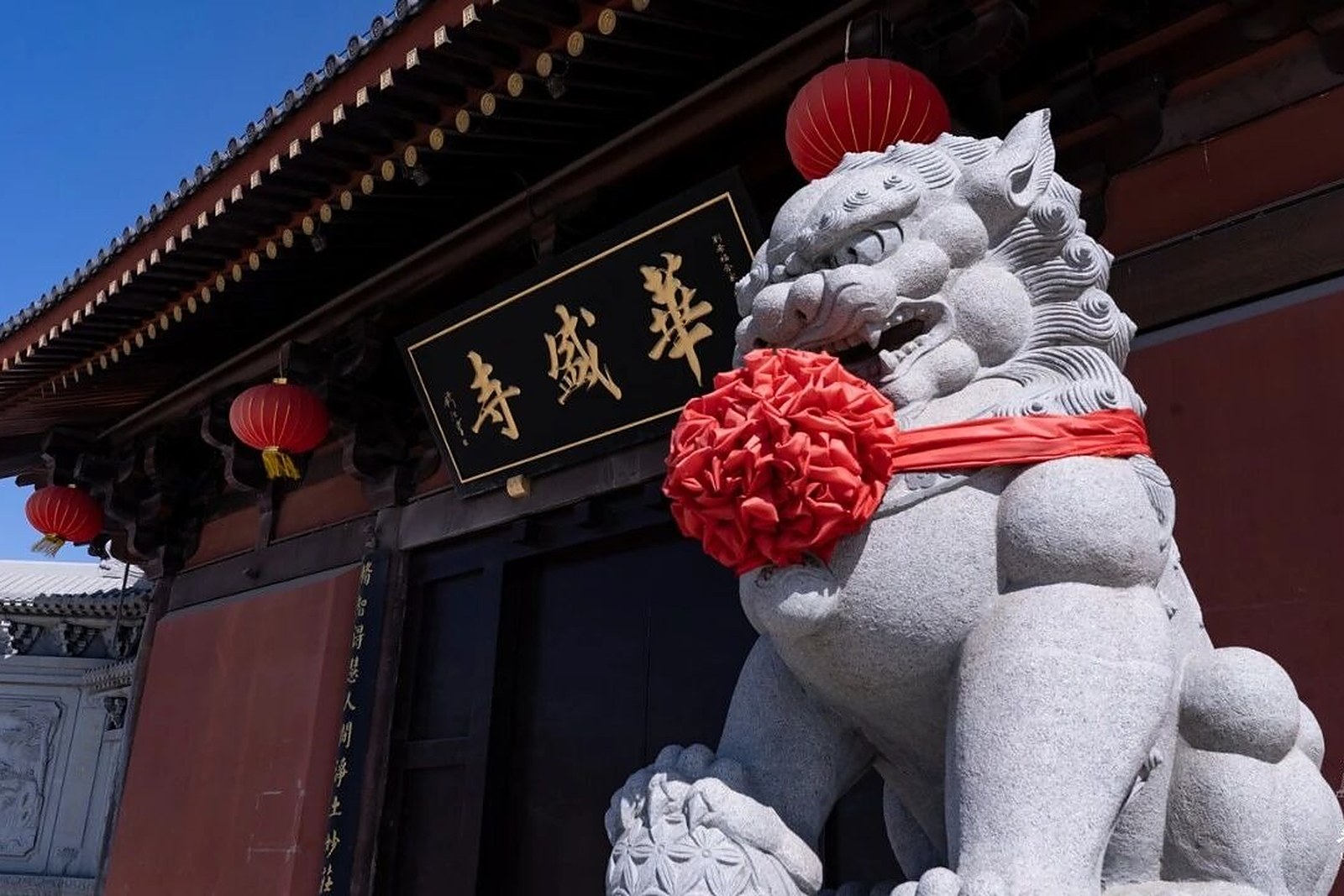
The mountain gate keeps the threshold theater – stone lions on their plinths, the temple’s name in gilded characters, and the twin pillars of every proper Chinese temple entrance. It is the photograph everyone takes, and it earns the stop.
Details repay attention: the gilded finial hardware on the roof ridges, the blue-and-gold plaques over each doorway, and the bell that sounds the hours. The temple’s youth is an asset – paint bright, carvings crisp, and the whole compound legible to visitors who have never read a temple floor plan before.
Practicalities
- Entry is free; incense is sold at the forecourt stand and light sticks are welcome.
- Buses along the river route stop at the gate; drivers reach it in about forty minutes from downtown.
- Festival dates crowd heavily; weekday mornings are near-empty.
- Dress modestly; the halls are active worship spaces, not museum sets.
Words and Names
华盛寺 Huáshèng Sì the temple’s name; 山门 shānmén the mountain gate; 大雄宝殿 Dàxióng Bǎodiàn the Great Buddha Hall; 香火 xiānghuǒ incense, and by extension a temple’s fortune; 海河 Hǎihé the Haihe, the river it fronts. Beyond the halls, the same 天津市津南区 Tiānjīn Shì Jīnnàn Qū Jinnan District keeps more places worth the detour: 葛沽妈祖文化园 Gēgū Māzǔ Wénhuà Yuán the Mazu Culture Park, 小站练兵园 Xiǎozhàn Liànbīng Yuán the Drill Ground, 天嘉湖 Tiānjiāhú Tianjiahu Lake, or 米立方 Mǐlìfāng the Mitsui Cube – four more doors into the same Jinnan District. Once the incense has had its hour, our Jinnan food map fills the table.
flowcloud would say Huasheng is the district’s new old soul: young timber, old grammar, and a bell that sounds like it has been ringing for centuries. All checked November 2026.
Getting there: The temple fronts the Haihe bank road in Shuangqiaohe – buses along the river route stop at the gate, and drivers from downtown reach it in about forty minutes. All checked November 2026.