
湖光岩 Hú guāng yán is a lake in a hole, and the hole was made in a single afternoon about a hundred and fifty thousand years ago. It sits seventeen kilometres south-west of 湛江市 Zhànjiāng shì, in the low hill country of 麻章区 Má zhāng qū on the road out to 广东海洋大学, and it is a 玛珥湖 mǎ ěr hú, a maar: not a cone with a crater in the top but a bowl blown straight down into flat ground, when rising magma met groundwater, flashed to steam and tore the rock apart from underneath. What was left is a near-circular depression about two kilometres across with a low ring of tuff around it, and inside it two and a quarter square kilometres of still water, twenty-two metres deep at the deepest point, with no stream running in and none running out.
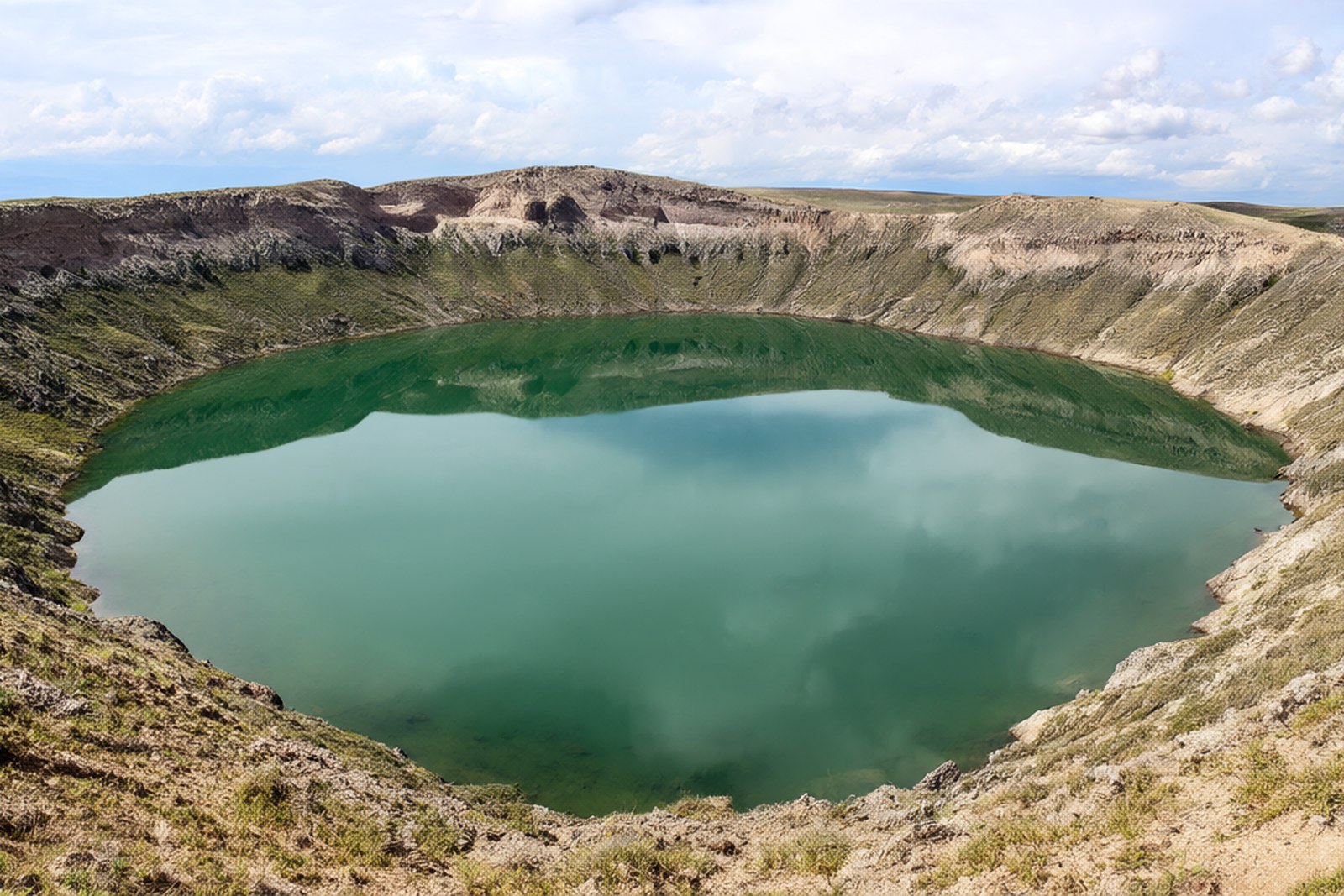
That closed geometry is what makes the place scientifically valuable rather than merely pretty. A crater with no inlet, no outlet and no connection to the water table loses water only to evaporation and gains it only from rain, so anything that has ever blown or fallen into it has stayed there in layers, undisturbed, for the whole of its existence. The sediment on the bottom is a continuous record of the climate, the vegetation and the wind over more than a hundred thousand years, and there is no other lake in the country that offers quite that sequence. 湖光岩 is the type locality of the Chinese maar; the 中国地质科学院 has a research station on the rim; and it is a large part of why this peninsula is a 世界地质公园 shì jiè dì zhì gōngyuán, the 雷琼 UNESCO Global Geopark listed in September 2006, which takes in the basalt country on both sides of the strait and uses the crater lake as its northern showpiece. In 2004 it was twinned with the 艾菲尔 Ài fēi ěr maars in the Eifel in Germany, which are the European textbook example of the same phenomenon.
The lake also carries a set of local stories, and they are what brings the crowds. The water is said neither to fall in drought nor to rise in flood; the fallen leaves and the dead fish are said to vanish rather than rot on the surface; the frogs that should be everywhere in a place this wet are said not to be heard around it; and the four-line description that everyone in 湛江 knows runs 上无叶、中无蛙、下无底 shàng wú yè, zhōng wú wā, xià wú dǐ, no leaves on the top, no frogs in the middle, no bottom underneath. There are explanations for all three and the guides will give them, but the fact that the stories survive at all tells you what kind of place this is: a body of water that behaves like nothing else nearby, in a landscape where everything else is a low red plain.
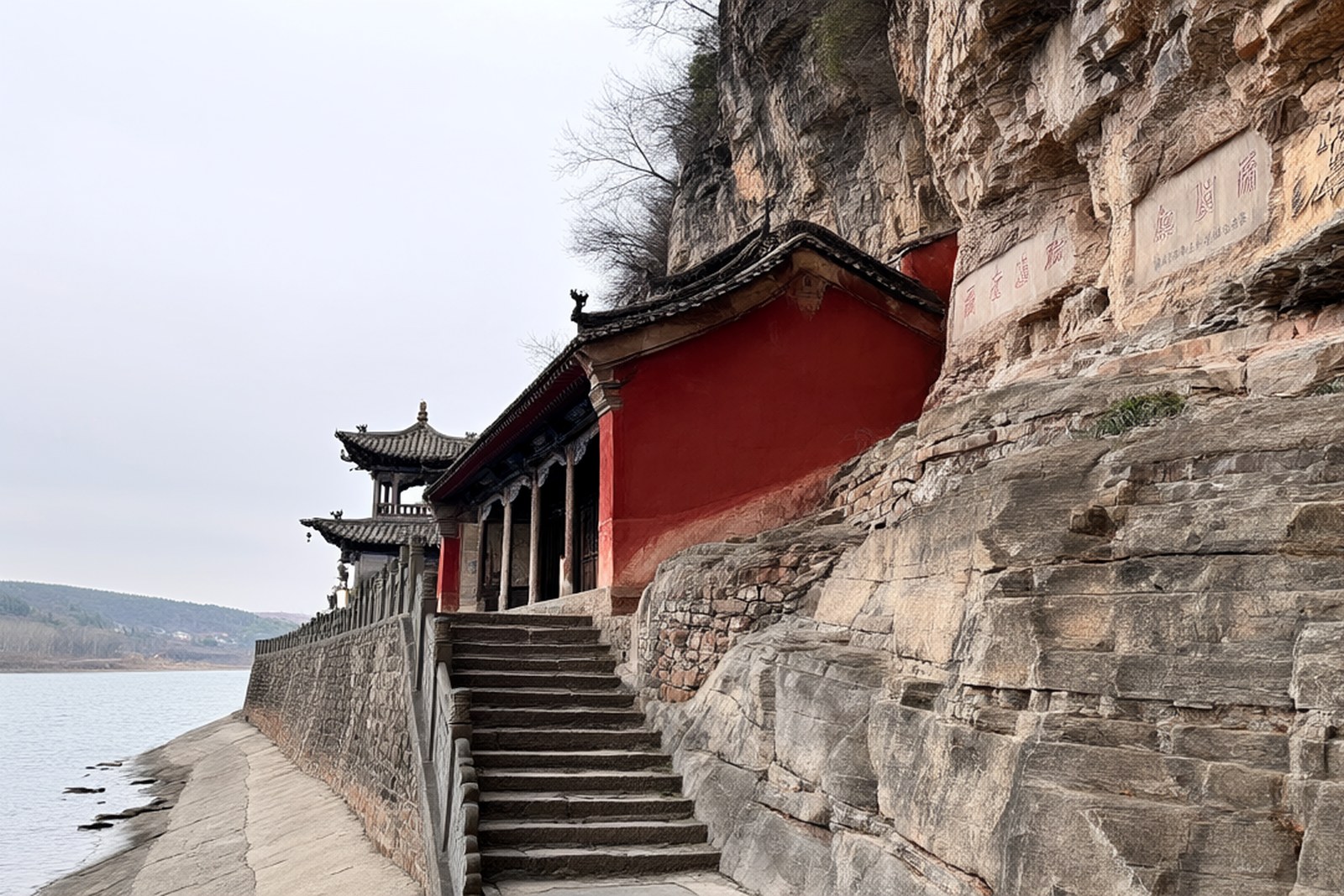
The built part of the site is Buddhist and it is old. 楞严寺 Léng yán sì was founded in the Sui and the Tang and has been repaired under every dynasty since; the 白衣庵 Bái yī ān, the shrine of the White Robed Guanyin, stands on the opposite shore above a cave that local tradition connects to the lake’s older name of 陷湖 xiàn hú, the sunken lake. The name 湖光岩 dates from 1129, when 李纲 Lǐ Gāng, the Song statesman on his way into exile in 海南, was put up here by the monks and wrote the three characters out on a rock. The 望海楼 Wàng hǎi lóu on the rim was raised later, and the 雷琼世界地质公园 Léiqióng shì jiè dì zhì gōngyuán hall on the site is where to go if you want the geology rather than the legend. The forest on the rim is dense and the air is measurably clean: the county measures negative ion counts above a hundred thousand per cubic centimetre at the best spots, the vegetation cover over the core area is counted at ninety-seven per cent, and the walk around the rim under the banyan and the eucalyptus takes a couple of hours at an easy pace.
Practicalities
Tickets. About ¥40 for an adult, with concessions at roughly ¥25 for older visitors and ¥15 for students, and the price covers the park. The boats on the lake and the electric carts that run the rim road are charged separately, and there is nothing else to pay once inside.
Opening hours. Roughly 07:30 to 18:30 every day, with the last entry about half an hour before the gate shuts. The rim walk takes two hours and the temple, the shrines and the museum another two, so half a day is right; come early, because the middle of the day is hot and much of the rim road has little shade on it.
Getting there. 湖光岩 is about seventeen kilometres south-west of the centre of 湛江市, in 麻章区, on the road out towards 广东海洋大学. 湛江西站 Zhànjiāng xī zhàn on the 深湛 high-speed line is twenty minutes away by road, which makes the lake an easy stop on the way in or out of the city; the 湖光岩 stop is on the city bus routes, and a taxi from the 霞山 waterfront is about ¥40 to ¥60.
Closing day. There is no closing day. The park is open every day of the year, including the Spring Festival and the October week, which are also the busiest days of it, and the museum keeps shorter hours and closes on Mondays.
flowcloud would say that a hole blown in the ground by steam, which then filled with rain and has spent a hundred and fifty thousand years quietly writing down what the climate was doing while everything around it was conquered, farmed and built over several times, is a reminder that the most reliable witness in a landscape is usually the one that cannot walk away.
Getting there: 湖光岩 is in 麻章区, 湛江市, on the south-western edge of the city about seventeen kilometres from the centre, twenty minutes from 湛江西站 on the 深湛 high-speed line and about ¥40 to ¥60 by taxi from the 霞山 waterfront.