
旧时王谢堂前燕,飞入寻常百姓家。Jiù shí wáng xiè táng qián yàn, fēi rù xúncháng bǎixìng jiā – The swallows that once nested before the halls of Wang and Xie now fly into the homes of ordinary families.
会泽古城 Huìzé Gǔchéng Huize Ancient Town is the old county town of 会泽 Huìzé Huize, on the 乌蒙山 Wūméng Shān Wumeng slopes of northern Qujing, about two hours by road from the prefecture seat worth confirming. Its wealth came from copper: the district was mined for some three thousand years, the Qing state made it the empire’s chief source of coin metal – the 宝云局 Bǎoyún Jú Baoyun mint founded here in 1734 was the second largest in the country – and for 134 years the 南铜北运 Nán Tóng Běi Yùn southern-copper-northward convoys hauled metal from these hills to Beijing, a trade that earned the town its epithets 天南铜都 Tiānnán Tóngdū “bronze capital of the south” and 钱王之乡 Qiánwáng Zhī Xiāng “town of the money king.” The town itself was laid out in 1731 under the 东川府 Dōngchuān Fǔ Dongchuan prefect 崔乃镛 Cuī Nǎiyōng Cui Naiyong, on a grid of stone lanes some two kilometres long, and the merchant associations that handled the trade raised 会馆 huìguǎn guild halls across it: 108 halls and temples stood in Ming-Qing times, 38 survive, and the 八大会馆 Bā Dà Huìguǎn Eight Great Guild Halls are protected as a national key cultural-relic group. The 嘉靖通宝 Jiājìng Tōngbǎo Jiajing coin cast here is the largest ancient coin yet found anywhere; a 22.6-metre sculpture of it stands in 会泽公园 Huìzé Gōngyuán Huize Park. In 2013 the State Council named 会泽 Huìzé a national historic and cultural city, the 121st in China.
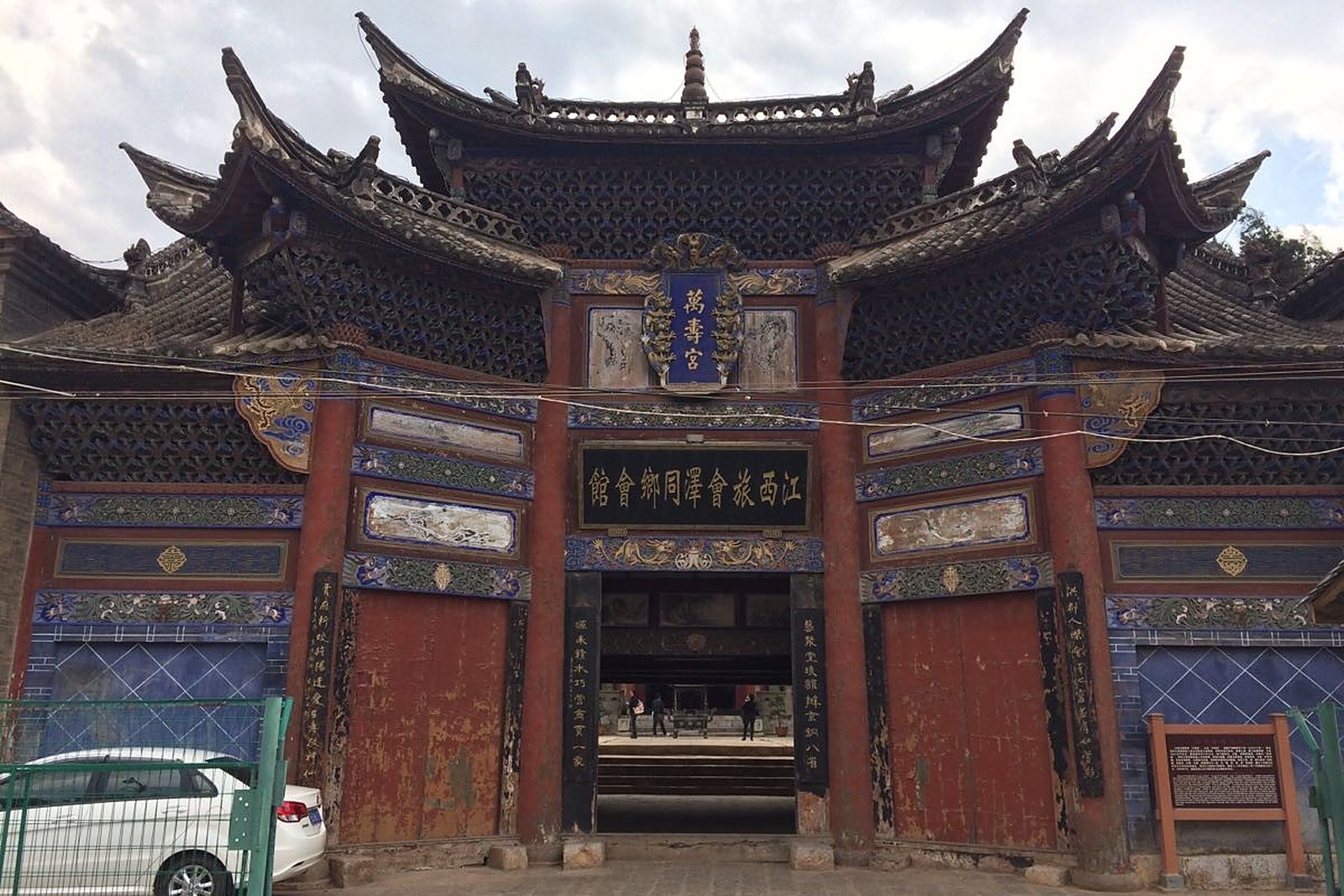
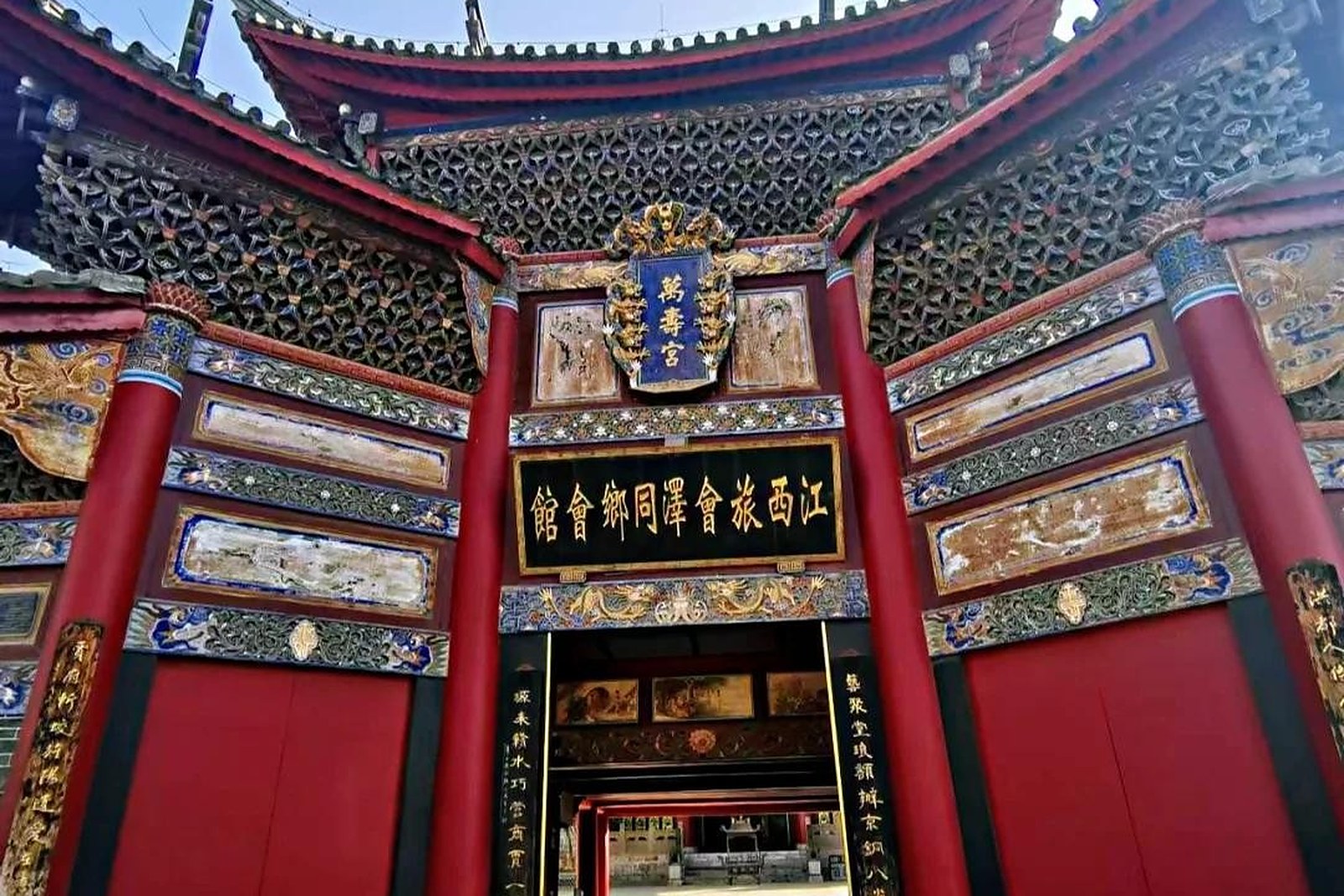
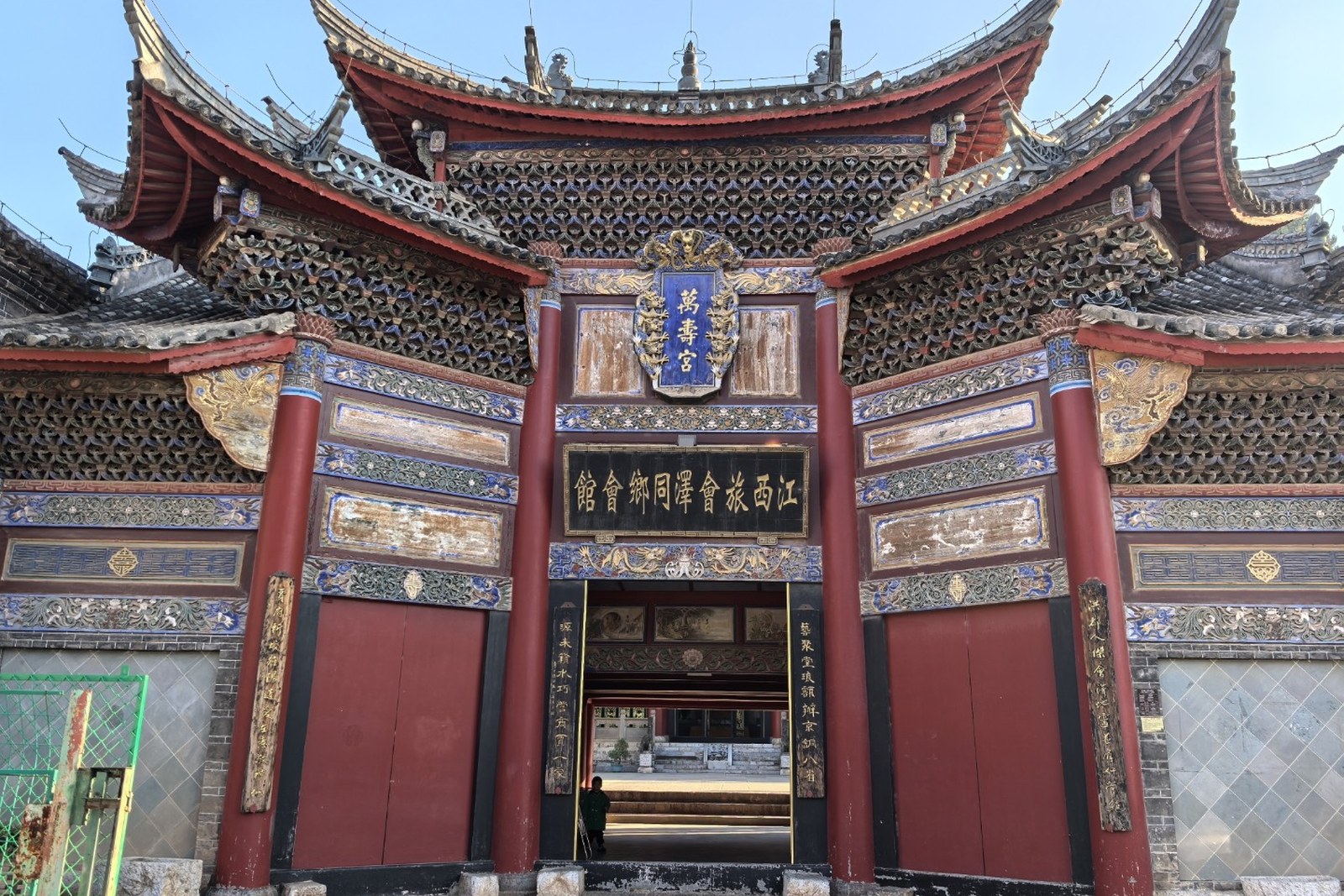
The honest appeal is that the town is still lived in, not staged: the lanes between 头道巷 Tóudào Xiàng First Lane and 三道巷 Sāndào Xiàng Third Lane are working neighbourhoods of coppersmiths and breakfast stalls, and the old town costs nothing to walk. 唐继尧故居 Táng Jìyáo Gùjū the former residence of 唐继尧 Táng Jìyáo Tang Jiyao (1883-1927), the 会泽 Huìzé-born general of the 护国战争 Hùguó Zhànzhēng National Protection War, at 三道巷29号 Sāndào Xiàng 29 Hào No. 29 Third Lane, is a plain Qing courtyard – free, open roughly 8:00-17:30, closed Mondays with the county museum worth confirming. The showpiece is the 江西会馆 Jiāngxī Huìguǎn Jiangxi Guild Hall, also called 万寿宫 Wànshòu Gōng Wanshou Palace: first raised in 1711 worth confirming, a three-courtyard complex of some 7,500 m² whose gate-stage carries 42 carved 翼角 yìjiǎo eave-angles, and which now houses the county museum; entry is a modest 20 yuan or so worth confirming. Nearby, 铜匠街 Tóngjiàng Jiē Coppersmith Street is the home of 会泽斑铜 Huìzé Bāntóng Huize variegated bronze, a national-level intangible-heritage craft whose 生斑 shēngbān raw-bronze pieces flash with natural crystal patterns, and the workshops along the lane let you watch the forging. The 水城 Shuǐchéng Shuicheng memorial marks the 1,500 men the Red Army’s Ninth Corps recruited here in 1935. Buses run from 昆明 Kūnmíng Kunming’s north station in about three and a half hours; the Chongqing-Kunming high-speed line will eventually call here worth confirming.
Give the town a slow day and an early start. The light is best at dawn on the 石板路 shíbǎnlù stone lanes before the shutters go up, and again at dusk when the guild-hall lanterns come on; between the two, walk the 十字街 Shízì Jiē crossroads outward – 东内街 Dōngnèi Jiē, 西内街 Xīnèi Jiē, 北外街 Běiwài Jiē – and finish at the 嘉靖通宝 Jiājìng Tōngbǎo coin square, where locals still crawl through the coin’s eye for luck. Breakfast is the town’s ritual: a bowl of 稀豆粉 Xīdòufěn mashed-pea soup with 油条 yóutiáo fried dough costs a few yuan, and the 羊八碗 Yángbāwǎn eight-dish mutton banquet is the set-piece dinner. The town pairs naturally with two neighbours – 娜姑镇 Nàgū Zhèn Nagu Town’s 白雾村 Báiwù Cūn Baiwu village, a national historic village of caravan-road ruins up the 小江 Xiǎo Jiāng Xiaojiang valley, and 念湖 Niàn Hú Nian Lake, where some two thousand 黑颈鹤 Hēijǐng Hè black-necked cranes winter from November to March. If you want the mountain half of the county, 大海草山 Dàhǎi Cǎoshān lies a couple of hours further up the mountain road. Summers are cool and often wet, autumns clear and dry, and winters cold at the county town’s 2,100 m worth confirming. All checked October 2026.
Practicalities
- Rating: 会泽古城 Huìzé Gǔchéng is a national historic and cultural city (named by the State Council in 2013, the 121st in China) – the old county town of 会泽 Huìzé on the 乌蒙山 Wūméng Shān slopes of northern Qujing, about two hours by road from the prefecture seat (worth confirming the details).
- Tickets: The old town costs nothing to walk; the 江西会馆 Jiāngxī Huìguǎn (万寿宫 Wànshòu Gōng) housing the county museum charges a modest 20 yuan or so (worth confirming the details), and the 唐继尧故居 Táng Jìyáo Gùjū is free, open roughly 8:00-17:30, closed Mondays with the county museum (worth confirming the details).
- Address: 会泽 Huìzé county town, northern Qujing – buses from 昆明 Kūnmíng Kunming’s north station in about three and a half hours; slow trains halt at 会泽站 Huìzé Zhàn on the 内昆铁路 Nèi-Kūn Tiělù (worth confirming services).
- Time needed: A slow day with an early start – dawn on the 石板路 shíbǎnlù stone lanes before the shutters go up, the guild halls by mid-morning, and dusk when the lanterns come on.
Words and Names
会馆 huìguǎn merchant guild halls · 八大会馆 Bā Dà Huìguǎn the Eight Great Guild Halls · 斑铜 bāntóng variegated bronze, a national intangible-heritage craft · 嘉靖通宝 Jiājìng Tōngbǎo the world’s largest ancient coin, cast here · 钱王之乡 Qiánwáng Zhī Xiāng “town of the money king”
Getting there: the stone lanes between 头道巷 Tóudào Xiàng and 三道巷 Sāndào Xiàng in 会泽古城 Huìzé Gǔchéng, northern Qujing – free to walk the old town, the 江西会馆 Jiāngxī Huìguǎn museum about 20 yuan (worth confirming the details), buses from 昆明 Kūnmíng about three and a half hours, and the honest hour is dawn on the lanes before the shutters go up. All checked October 2026.