
Hunan Museum
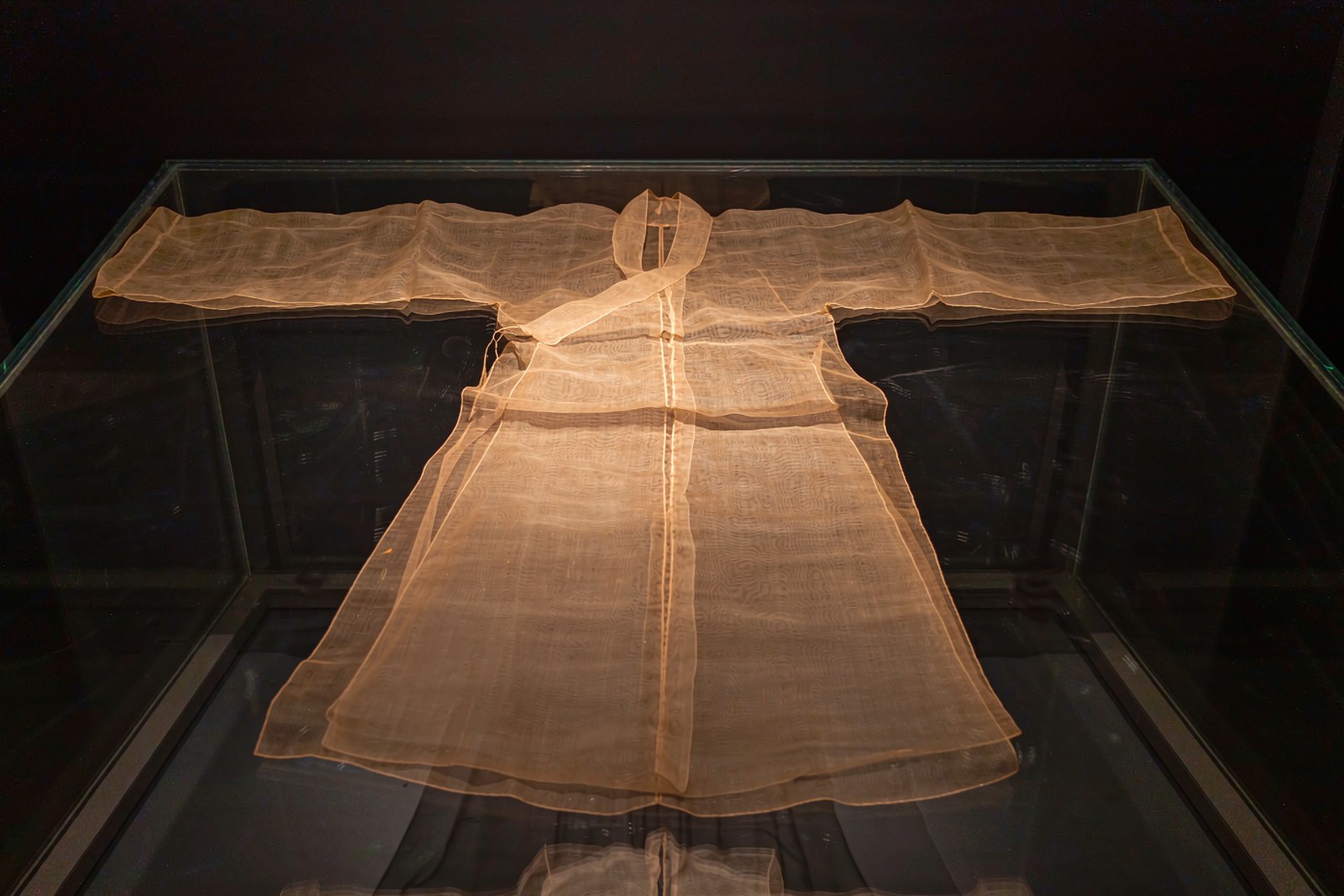
There is a piece of silk in a glass case on the third floor of the 湖南博物院 (Hunan Museum) that weighs 49 grams.
It is a robe. A full-length garment, with sleeves, that a woman wore. Woven from silk so fine that the entire thing weighs less than a slice of bread, and folded, when it was found, into a space the size of a matchbox. Modern weavers have tried to reproduce it; a Chinese research institute got close in the 1980s and produced a garment that was still heavier. Nobody has matched it.
That robe is one of three objects that justify the trip. The second is a painting on silk, T-shaped, more than two metres long, made to cover the innermost coffin — a diagram of the universe in three registers, heaven above, the living world in the middle, the underworld beneath, its colours still readable after 2,100 years. The third is the body of the woman they were buried with: 辛追 (Xin Zhui), wife of the Marquis of Dai, dead around 168 BC, excavated in 1972 from a tomb at 马王堆 (Mawangdui) on the eastern edge of the city, and found intact — skin, hair, joints, the last meal still in her stomach.
She is on the ground floor. Photography is forbidden, and the room is quiet in a way that the rest of the museum is not.
Why This Museum
There are bigger museums in China. There are not many with a single excavation this good.
The 马王堆 tombs were dug between 1972 and 1974 and they gave up one of the most complete elite households of the Western Han: lacquerware, textiles, musical instruments, food and drink, medicines, a set of silk manuscripts and two enormous painted coffins nested one inside another. Almost all of it is displayed. The museum building itself is large, modern and well organised, with the marquee collection on three and the province’s broader history on two.
The other permanent exhibition, “湖南人 — 三湘历史文化陈列”, is the province’s story from the Neolithic forward, and it is strong on the bronzes — including a 人面纹铜方鼎, the only known bronze ding decorated with a human face, and a 豕形铜尊, a Shang ritual vessel shaped as a wild boar. There is also a 皿方罍, a huge late-Shang bronze wine vessel known in Chinese as 方罍之王 — “king of the square lei” — which is worth a detour even if you think you have seen enough bronzes.
The Route That Works
The collection is spread over four floors and doing it in the wrong order wastes about an hour of walking. Do it this way:
- Third floor — 长沙马王堆汉墓陈列. All of it. The silk robe, the T-shaped painting, the nested coffins, the lacquer. This is the museum.
- First floor — 辛追夫人. Take the stairs down rather than the lift; you come out at the foot of the tomb’s reconstruction and then into the room where she lies.
- Second floor — 湖南人. The bronzes, the province, and the quiet end of the visit.
Three to four hours. A rushed version is 90 minutes and you will regret it.
Practicalities — the Part That Actually Matters
Tickets. The basic exhibitions — the Mawangdui display, the 湖南人 display and the free thematic rooms — cost nothing. But you cannot walk in. Admission is by timed online booking only.
Booking. Reservations open five days ahead (not counting the day of your visit) and the new day’s allocation is released at 20:00 every evening. Book through the museum’s official channels: the website, the official WeChat account 「湖南博物院」, or the official Alipay mini-programme. Tickets for weekends and public holidays are typically gone within a minute or two of release. Each booking can hold up to five tickets; each account is capped at three bookings a week and six a month, and cancellations count against you. Bring the physical ID you booked with — mainland visitors can use only a second-generation ID card — or you will not be admitted.
Green channel. If you are 65 or over, or a disabled visitor, serving or retired military personnel, or a family member of a fallen service member, you may enter the basic exhibitions without booking, on production of the original supporting documents. Tickets for paid special exhibitions are separate, typically ¥50 with a ¥25 concession.
Opening hours. Tuesday to Sunday, 9:00–17:00, with last entry at 16:00. Closed Mondays, except where a public holiday falls on one. During national holidays the museum runs adjusted schedules and sometimes extended hours — check the notice board on the official site before a holiday visit.
Getting there. Address: 开福区东风路 50 号, beside 烈士公园 (Martyrs’ Park). Metro line 6 to 烈士公园南 (湖南省博物馆) station, exit 1A, or to 湘雅医院 station, exit 2 — from there it is a short walk. Buses 3, 112, 113, 131, 136, 146, 150, 203, 222, 358, 367 and 901 stop at 省博物馆 or 省展览馆. Do not drive if you can avoid it: the museum’s own parking is not open to visitors, and the surrounding car parks are scarce and expensive.
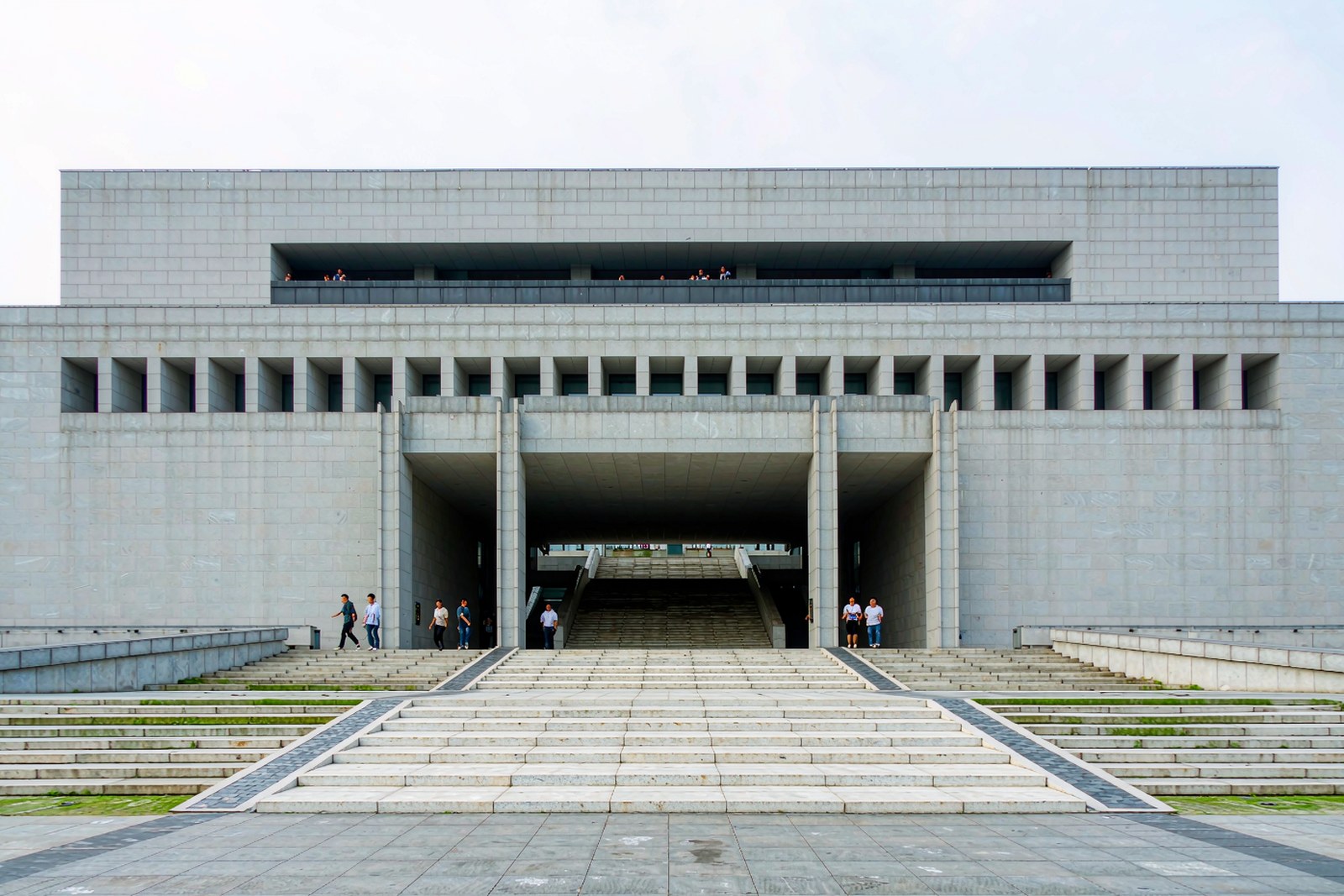
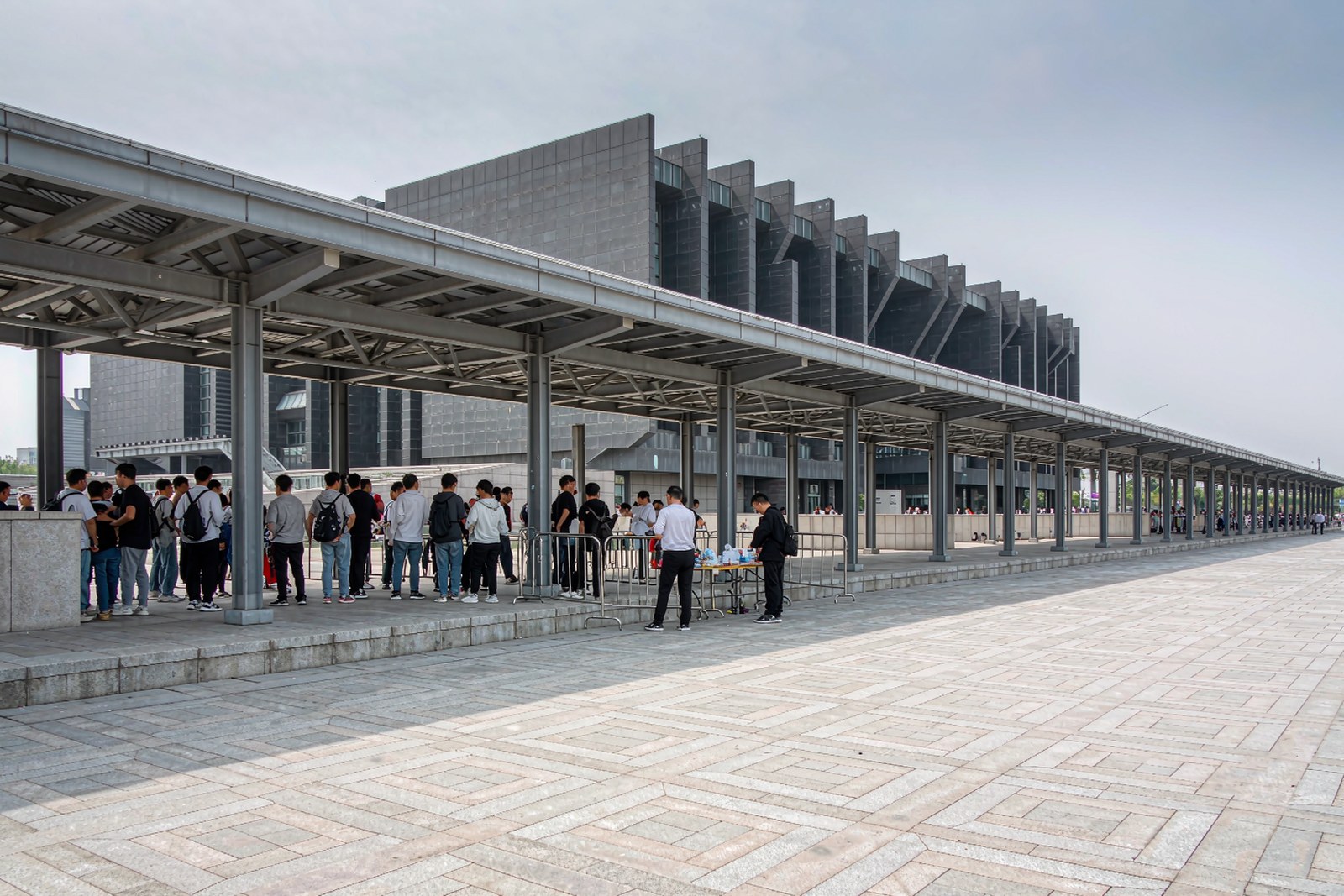
The building changed in 2026. From April the museum and 烈士公园 have been run as a single integrated campus, and the way in is no longer up 东风路. Entry now runs: 融合广场 → the covered queue corridor → pre-check → visitor centre → turnstiles → museum west plaza → security → exhibition building. Exit is by the south ramp back to 融合广场. Look for the signs rather than the old entrance.
What you cannot bring. Selfie sticks, tripods, flash, lighters, flammables, knives. Also drinks in cups — including milk tea — and pets. Luggage storage is available in several places, including the visitor centre and the basement of the exhibition building; travel light and use it.
Free extras. Volunteer-guided tours leave from the service desk in the main hall daily at 10:00, 11:00, 14:00 and 15:00, lasting about 70 minutes — genuinely good, and free. The WeChat account also carries a free audio guide. If you want hardware, a standard audio guide rents for around ¥40 and an AR guide for around ¥50.
A Note on the Name
You will see this place called both 湖南省博物馆 and 湖南博物院. They are the same institution — the Chinese name changed as the museum expanded, and both are still in circulation, including on the building. In English it is the Hunan Museum. If you are searching for the official booking channel, try the WeChat account name 湖南博物院.
The 马王堆 tomb site itself is a separate, modest attraction out at 古汉路 89 号 on the old burial ground, and it costs ¥2. It is worth knowing it exists. It is not worth rearranging a trip for.
flowcloud would say that the only honest test of a museum is whether it changes your sense of scale — and that a 49-gram robe and a woman who has not decomposed in twenty-one centuries between them do that more efficiently than most buildings full of marble.
Getting there: 湖南博物院 (Hunan Museum), 开福区东风路 50 号, Changsha. Metro line 6 to 烈士公园南 (湖南省博物馆), exit 1A. Free, but booked online only, five days ahead, released at 20:00. Closed Mondays. Bring your ID. Allow three hours.