
霍山 Huò shān is the red sandstone mountain in 田心镇 Tiánxīn zhèn, 龙川县 Lóngchuān xiàn, in the north-east of 河源市 Héyuán shì, and it is one of the seven mountains that old Guangdong reckoned among its greatest. It is a 丹霞 dān xiá landscape in the strict sense: red beds of Cretaceous sandstone and conglomerate, laid down as sediment in an inland basin, lifted and cracked by joints, and then cut by water into cliffs, mesas, ravines and slot canyons. The rock is coarse and strongly coloured, the vegetation is dense in the gullies and thin on the tops, and the whole massif rises out of a valley of ordinary hills that makes it look taller than it is.
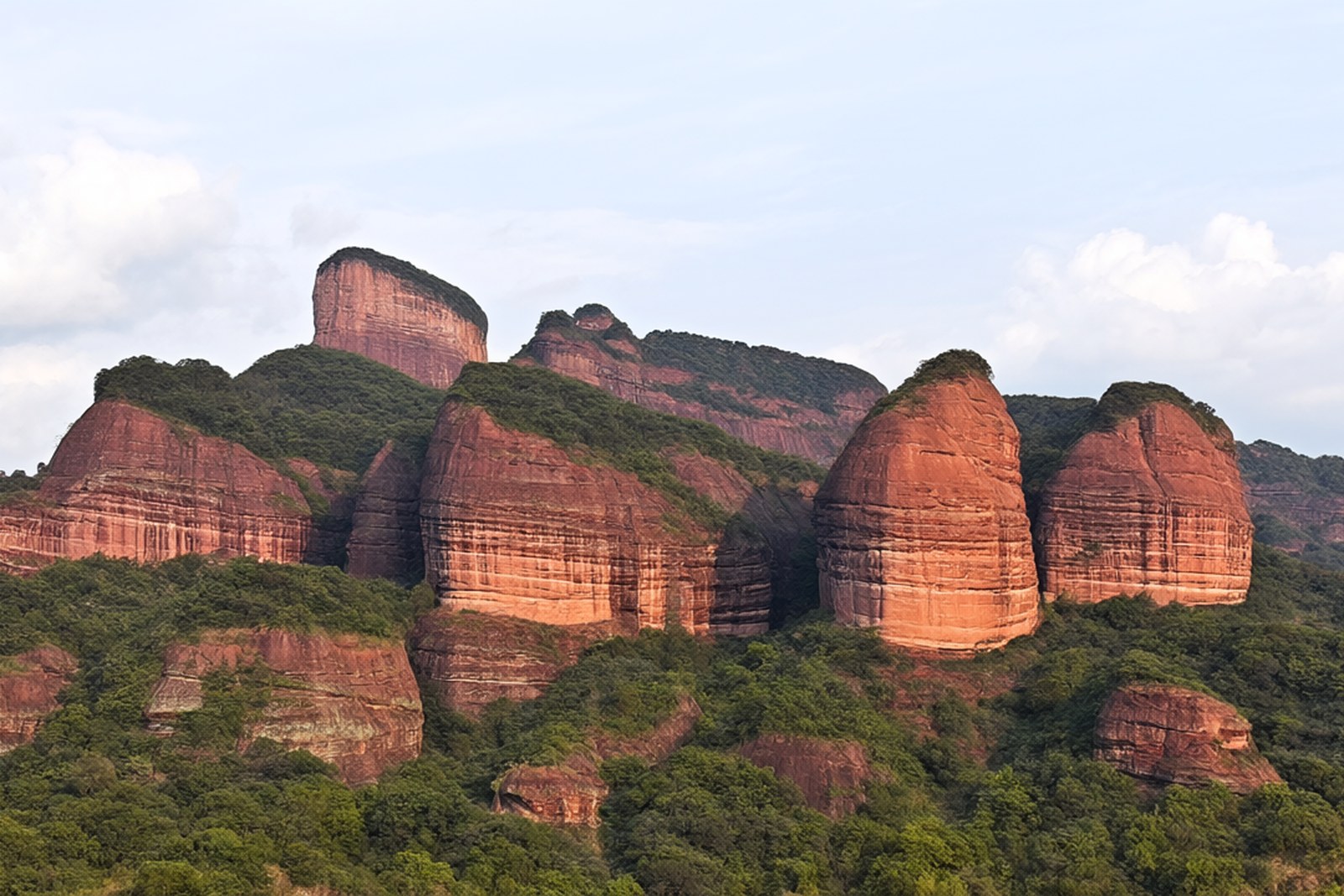
The name is shared with the more famous 霍山 in 安徽, and the local claim is that this one took the name because the shape resembles it; what matters for a visitor is the rock itself. 丹霞地貌 takes its name from the 丹霞山 in 韶关, which is the same formation system and a different mountain, and the two are worth distinguishing because the material behaves in a particular way: a coarse red conglomerate erodes into sheer walls with rounded or squared tops rather than the spires of limestone, which is why a mountain like this looks like a set of blocks pushed up out of the valley. The main summit is 船头石 Chuán tóu shí, the Boat’s Prow Rock, at about five hundred and fifty metres, a great rounded bow of stone with a platform above the drop, and it is the summit that everyone climbs to.
The mountain has been a religious and scenic site for a long time, which is why the walk passes more than rock. 灵山寺 Líng shān sì is set into a natural alcove in the cliff and shaded by old banyans, and it is a working temple rather than an exhibit; 太乙岩 and 玉麟洞 are the caves and rock shelters along the lower path; 酒瓮石 is a boulder shaped like a wine jar with a spring said to run beneath it; and 一线天 yī xiàn tiān is the slot where the two walls come close enough that a walker has to turn sideways and the sky is a single line overhead. There is a ridge path with stone stairs and iron rails, a glass walkway cantilevered off the cliff on the flank of the mountain, and a conveyor lift installed to carry visitors up the first and steepest part of the climb.
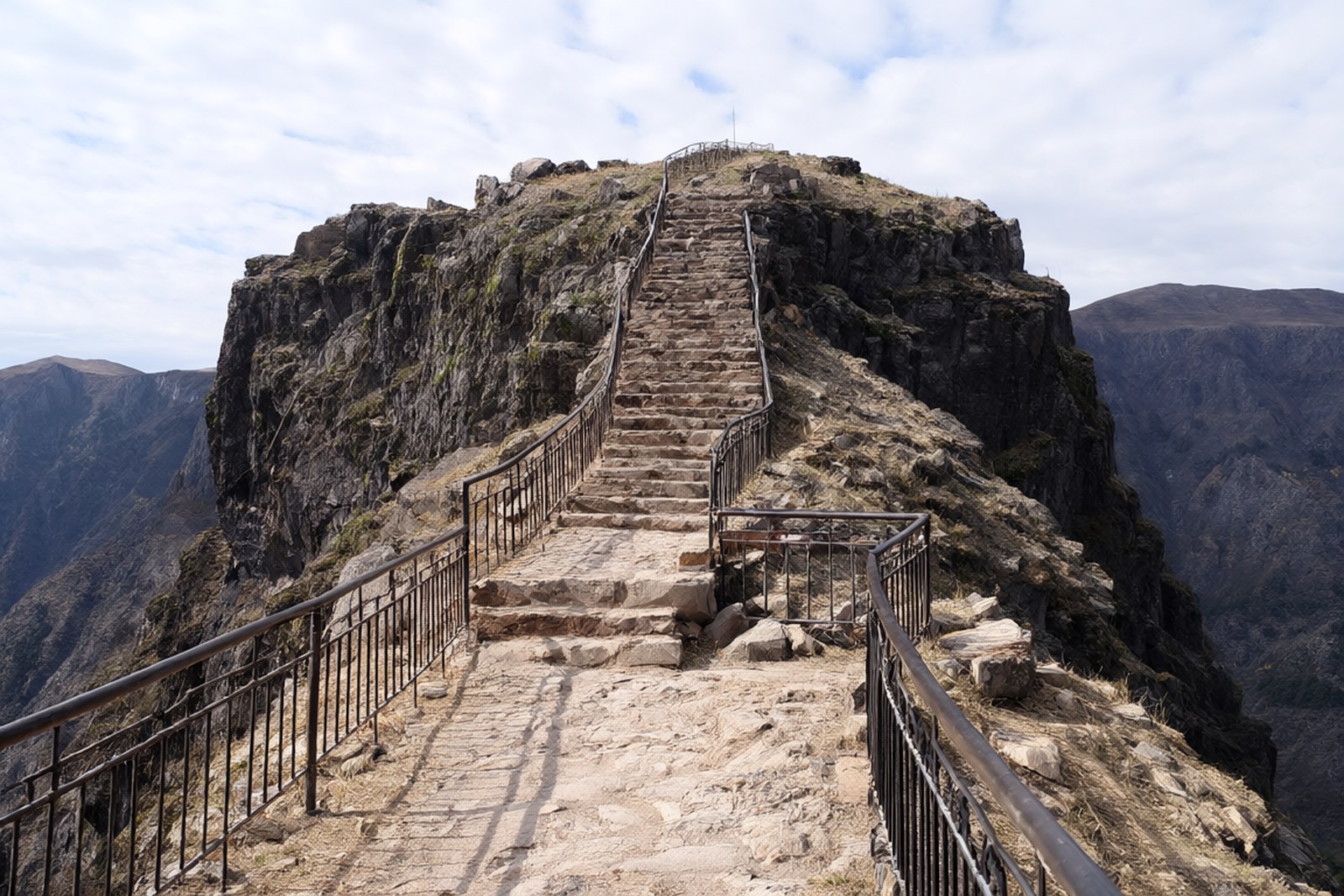
There are two sensible ways to do it and they suit different people. The short way is to ride the conveyor up, walk the glass walkway, take the stairs to the summit platform for the three-hundred-and-sixty-degree view, drop through the slot canyon and come down past the temple on the gentler path, which fills three to four hours and is comfortable for anyone; the long way is to walk up from the gate past 将军石 and the lower caves, take in the ridge and the summit, and come down the other side, which is four to five hours of real stairs. Either way, wear shoes with grip, because the rock and the cut steps are polished and wet after rain; carry water, because the stalls are few above the gate; and start in the morning, since the last entry is at half past four and the light on the red rock is best before noon. Afterwards the county has two other things worth the same day: 佗城, the Qin-founded old town, and 车田镇, the village whose pressed bean curd is the county’s best-known food.
Practicalities
Tickets. An adult gate ticket is around ¥40 and a concession about ¥20; a combined ticket including the glass walkway and the conveyor lift runs about ¥105, and the walkway on its own is roughly ¥35 with the lift at about ¥40 each way. The car park costs about ¥10 for the day.
Opening hours. The area runs 08:00 to 17:30 every day, with the last entry at 16:30 in the afternoon. The climb is best started before ten, both for the light and because the summit platform gets crowded in the middle of the day.
Getting there. 霍山 is at 田心镇 Tiánxīn zhèn, 龙川县, 河源市, about an hour by road from the centre of 河源 and roughly two and a half hours from 广州. The nearest high-speed rail stop is 龙川西站 Lóngchuān xī zhàn on the 赣深 line, from which the drive is about forty minutes; from 河源东站 it is about an hour on the line and a car from there.
Closing day. There is no weekly closing day. The mountain closes to visitors in high wind and in thunderstorms, which matter on an exposed summit and on a cantilevered glass walkway, and the rock is slippery for a day or two after heavy rain.
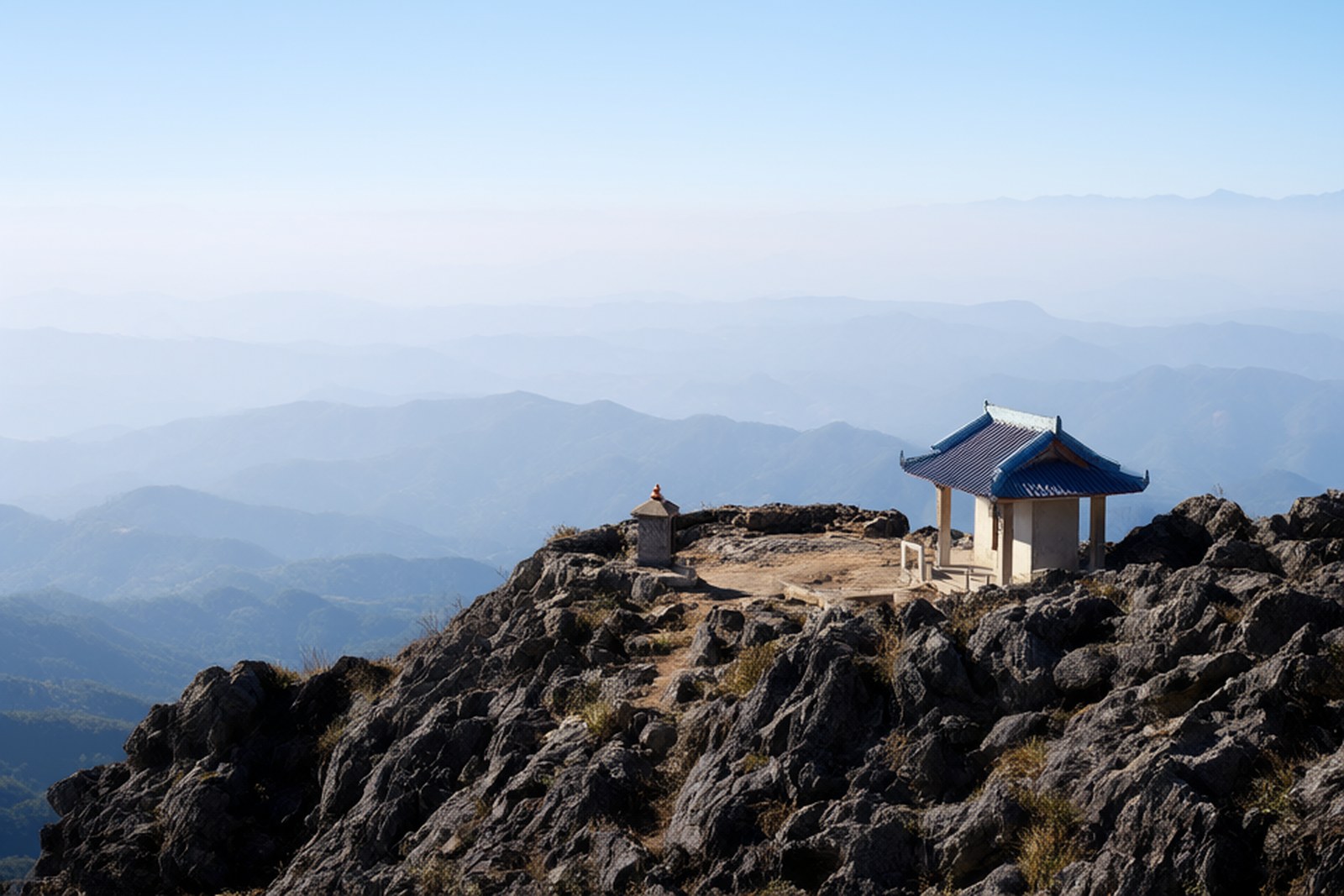
flowcloud would say that a mountain whose summit is a rounded prow of red stone, whose temple is tucked into a natural alcove in the cliff and whose worst feature is a slot you must turn sideways to pass, has been generous with its geology and asked almost nothing of the people who built on it.
Getting there: 霍山风景区 is at 田心镇, 龙川县, 河源市, about an hour by road from 河源 and two and a half from 广州; from 龙川西站 on the 赣深 high-speed line the drive is about forty minutes, and the last stretch is signposted from the main road.