
A Thousand Years Standing: The Old Poplars of Tumushuke’s Huyang Park
生而千年不死,死而千年不倒 Shēng ér qiānnián bù sǐ, sǐ ér qiānnián bù dǎo – A thousand years alive without dying; a thousand years fallen without rotting
正文:胡杨林公园 Húyáng Lín Gōngyuán the Huyang Forest Park sits on the southern fringe of 图木舒克市 Túmùshūkè Shì Tumushuke City – a reserve of old desert poplars, Populus euphratica, close enough to downtown that the boardwalk loops begin minutes from the urban grid. The species is the desert’s flagship: silver-barked, salt-tolerant, rooted into the old floodplains of the Yarkand system, and famously durable in all three of its states – living gold, standing gray death, and fallen logs that outlast the dynasties. Tumushuke’s grove is a working remnant of the belt that once lined the whole river: a forest with a job description, flood-buffer and windbreak, kept as a park because it is also the region’s autumn cathedral.
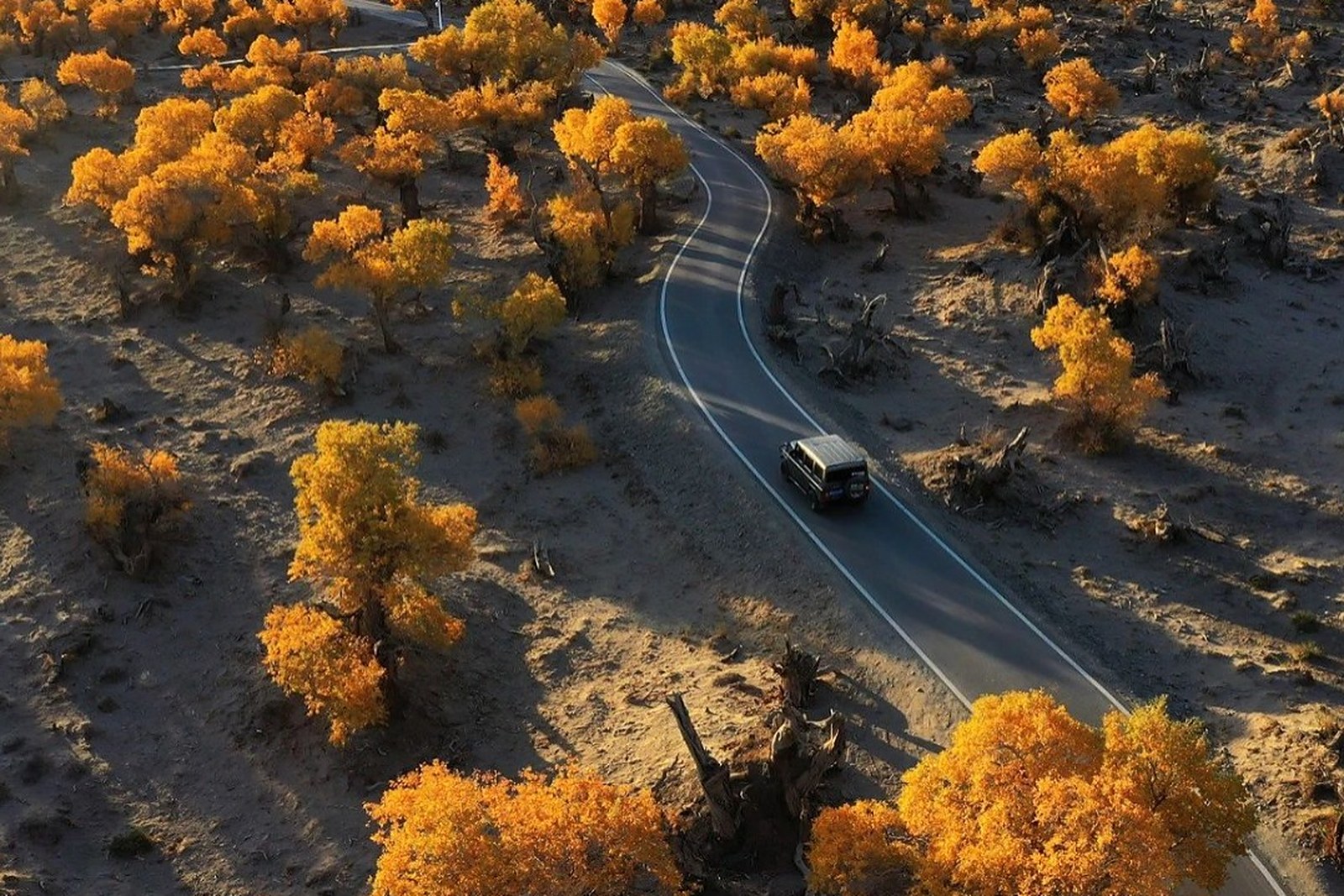
October is the reason everyone comes. In the gold weeks the crowns turn together – sulphur, saffron, amber, all lit by the clean desert sun – and the boardwalks fill with photographers working the reflections in the park’s shallow lagoons. The rest of the year has its own case: winter strips the grove to ivory trunks and blue shadow; spring runs a soft green haze with the cotton poplar seeding; summer is for shade, the canopy running ten degrees under the sand outside. There is no dead season here, only a different palette.
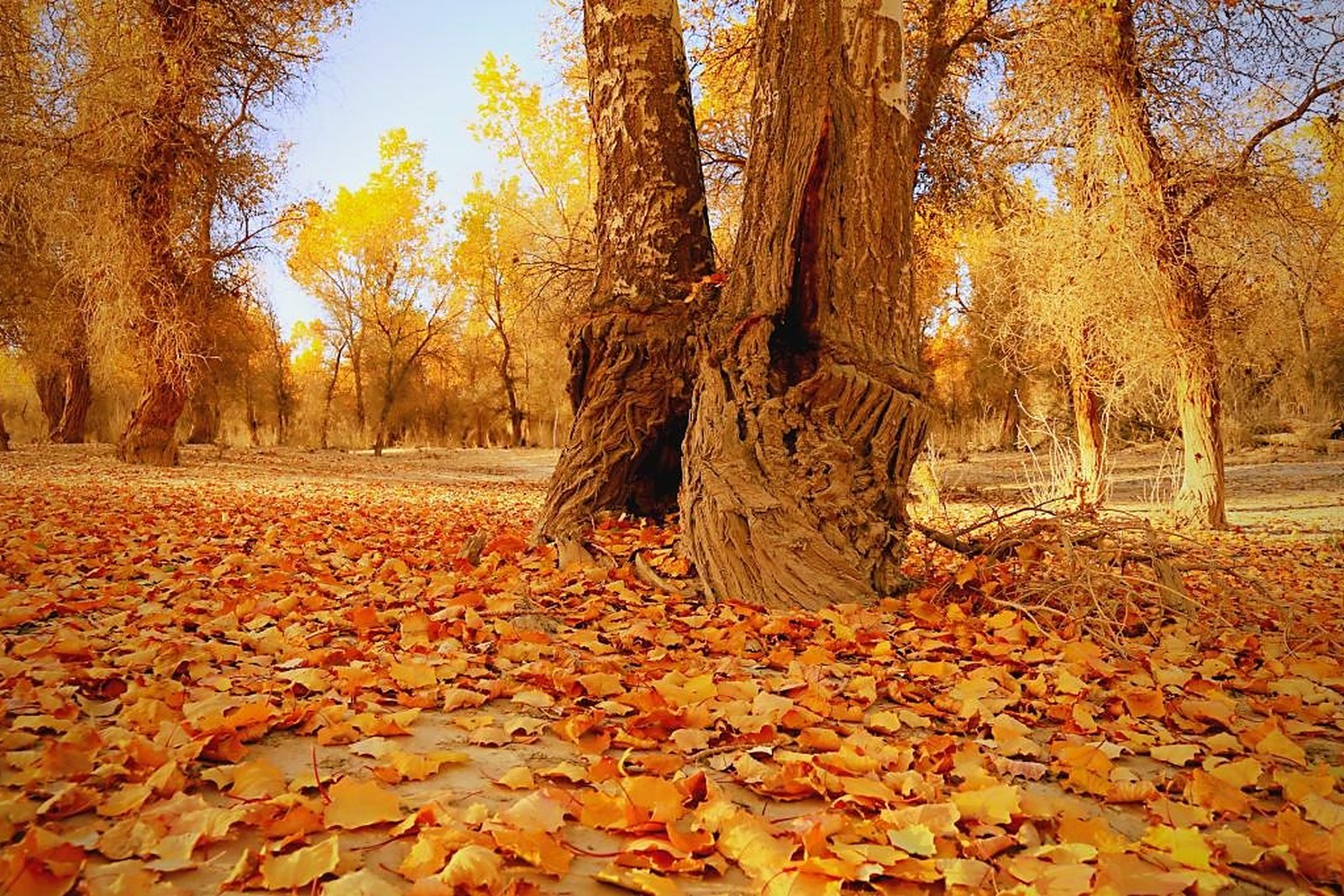
The park’s structure helps the slow visitor. Loops are flat and stroller-friendly; interpretive boards mark the veteran trees – the “pagoda poplar”, the triple-trunk “camp council”; and side paths drop to the lagoon shores where the old flood line shows as a dark band on every trunk. Birdlife rides the grove too: golden orioles in the canopy, owls in the dead snags, and the reed fringes keeping their warblers. It is a park that rewards a second lap at a different hour.
Practicalities first. The park sits minutes from the central avenues by taxi; tickets are modest, the loops flat, and late October is the headline window – book the surrounding rooms a fortnight out in the gold weeks. Mornings give calm water for reflections and the light coming through the canopy from behind; evenings warm the trunks to honey. Carry water in the warm months; the park’s kiosks keep seasonal hours, and the desert sits close enough to remind you.
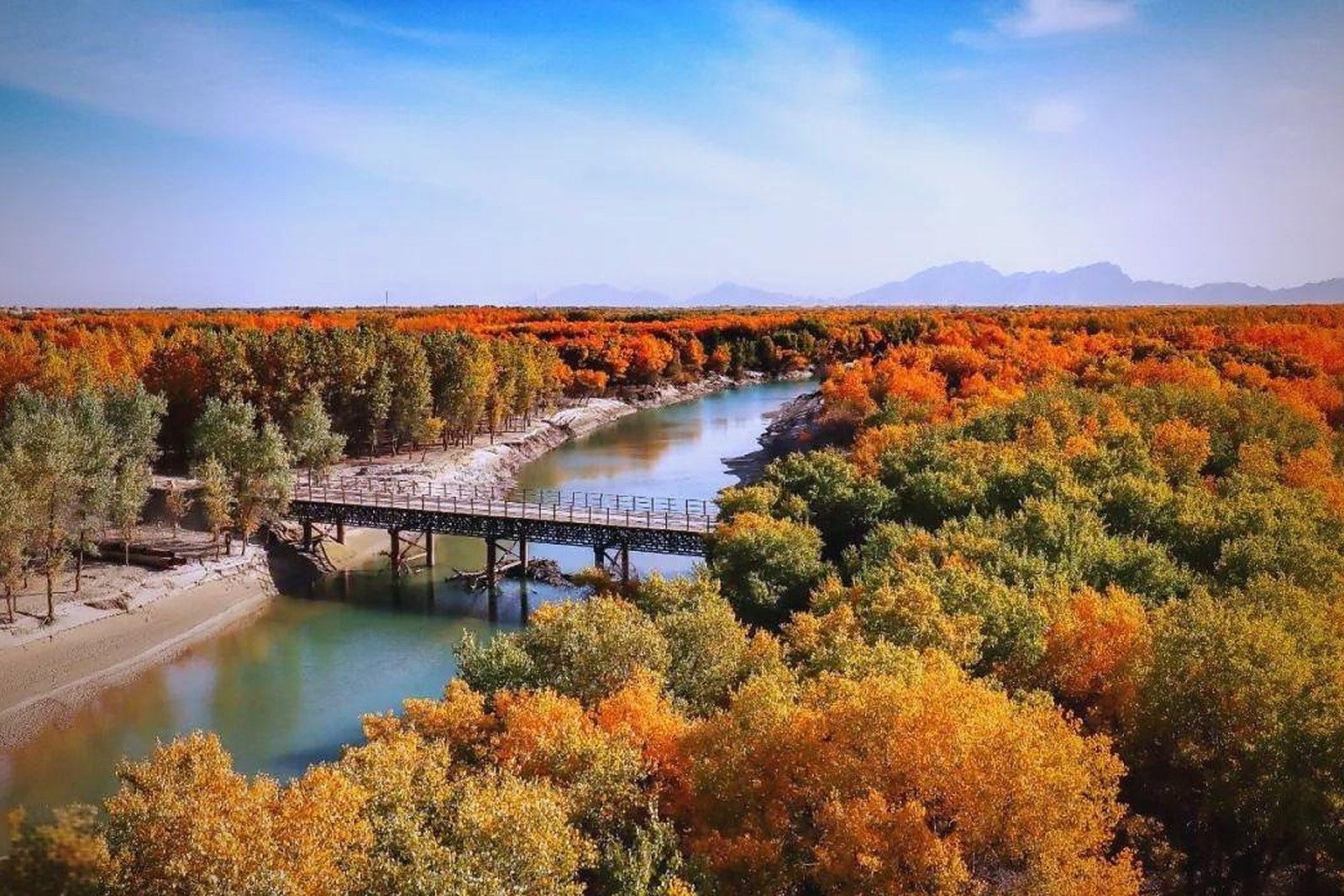
The grove earns its park status by biography as much as beauty. Each veteran carries its flood years as rings and its fire years as scars; the standing dead keep their branches for decades, housing the woodpeckers and owls of a dozen calendars; and the seedlings crowding the lagoon margins show the regeneration that a stable water table allows. What the Tangwang ruins record in earthwork, this grove records in timber – the same long negotiation between river, sand and patience, still standing.
Practicalities
Beyond the grove, the same 图木舒克市 Túmùshūkè Shì Tumushuke City keeps more places worth the detour: 唐王城遗址 Tángwáng Chéng Yízhǐ the Tangwang City ruins for the Tang frontier walls, 小海子水库 Xiǎohǎizi Shuǐkù the Xiao Haizi reservoir for the desert’s great sheet of water, 永安湖 Yǒng’ān Hú Yong’an Lake for the egret bays, or 图木舒克博物馆 Túmùshūkè Bówùguǎn the Tumushuke Museum for the excavated garrison – four more doors into the same 图木舒克市 Túmùshūkè Shì Tumushuke City. Once the grove is walked, our Tumushuke food map fills the day.
Practicalities
Words and Names
flowcloud would say the Huyang park is the desert’s longevity made visible: gold crowns in one month, ivory bones the next, and trees that treat a millennium as a working career – a forest that outlasts the walls, the canals and everyone’s itinerary. All checked November 2026.
Getting there: The park sits on the city’s southern fringe, minutes from the central avenues by taxi; the boardwalk loops are flat and stroller-friendly. Late October turns the crowns gold – go early before the tour buses. All checked November 2026.