
October Gold: The Desert Poplar Stands That Named a City
生千年不死,死千年不倒 Shēng qiānnián bù sǐ, sǐ qiānnián bù dǎo – A thousand years alive it does not die; a thousand years fallen it does not lie down
正文:胡杨林景区 Húyáng Lín Jǐngqū the Huyang Forest scenic stands lie on the river terraces at the edge of 胡杨河市 Húyáng hé Shì Huyanghe City – the old desert poplar stands that gave the young city its name. These are working trees before they are scenery: a windbreak forest planted and tended by the regiments to hold the river terraces against the Gobi’s wind, silver-trunked and salt-hardened, doing their acreage in silence until October arrives and the whole stand ignites into the purest gold the north has to offer. The city took its emblem from them, and every autumn the forest returns the compliment.
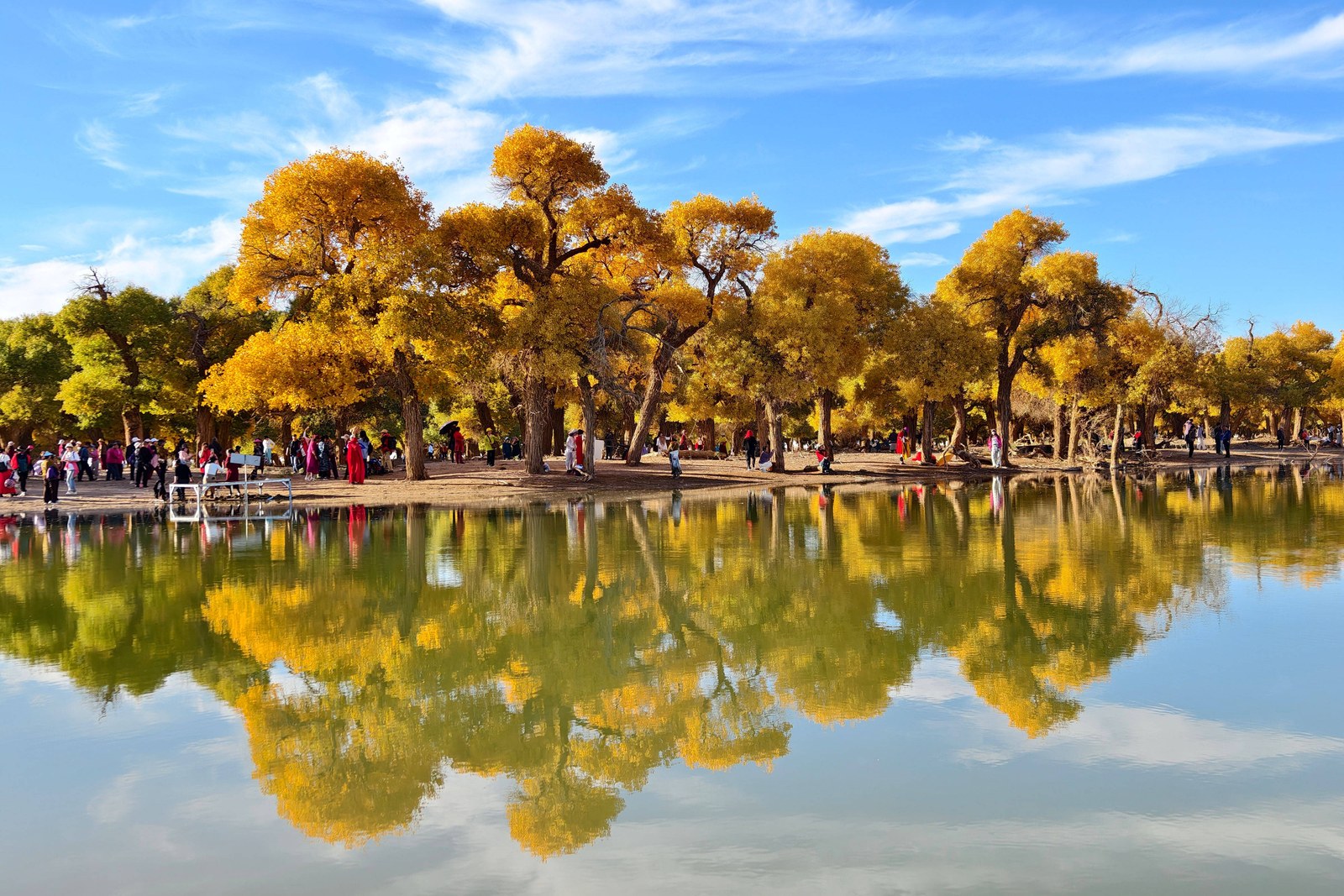
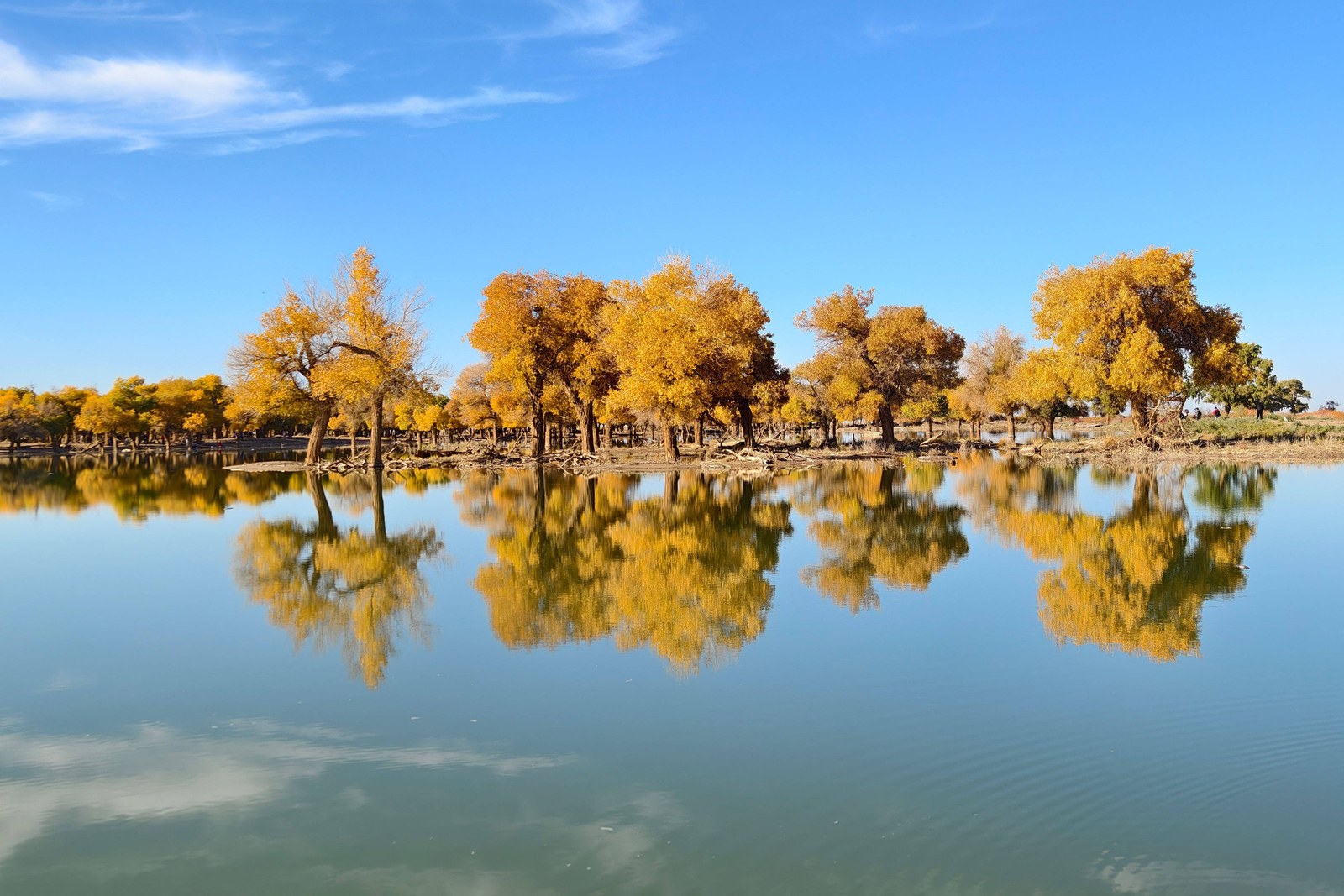
Walk the terrace tracks and the forest shows its range. The young groves near the entrance stand in disciplined ranks – an orchard of light when the low sun gets behind them – while the older stands deeper in gnarl and twist into the shapes that made the species famous: trunks furrowed like bark-armor, crowns holding gold over silver, roots gripping the terrace edge where the watering ditches end. Side clearings open onto the river oxbows, and the water doubles every tree, so the best photographs are taken downward into gold reflection rather than upward into gold canopy.
The season is short and exact. Gold usually climbs from mid-October through the first week of November, running later on the watered margins and earlier on the dry ridge tops; a cold snap finishes it inside days. Locals track it the way coast towns track a run of fish – by word of mouth from the terrace farms – and the weekend crowds arrive the moment the word goes round. Come on a weekday if the calendar allows, early when frost still silvers the leaf litter, and you may hold the whole stand to yourself.
Practicalities first. The stands sit minutes by taxi from the central avenues and the terrace tracks are flat, boot-friendly walking; there is no shade except the forest itself and no water on the trails, so carry what you need. The windbreak is working farmland at its margins – respect the fenced plots and the irrigation heads – and the fallen wood stays where it lies; the forest renews itself on its own dead. October weekends crowd the entrance groves, but a twenty-minute walk thins the people to nothing.
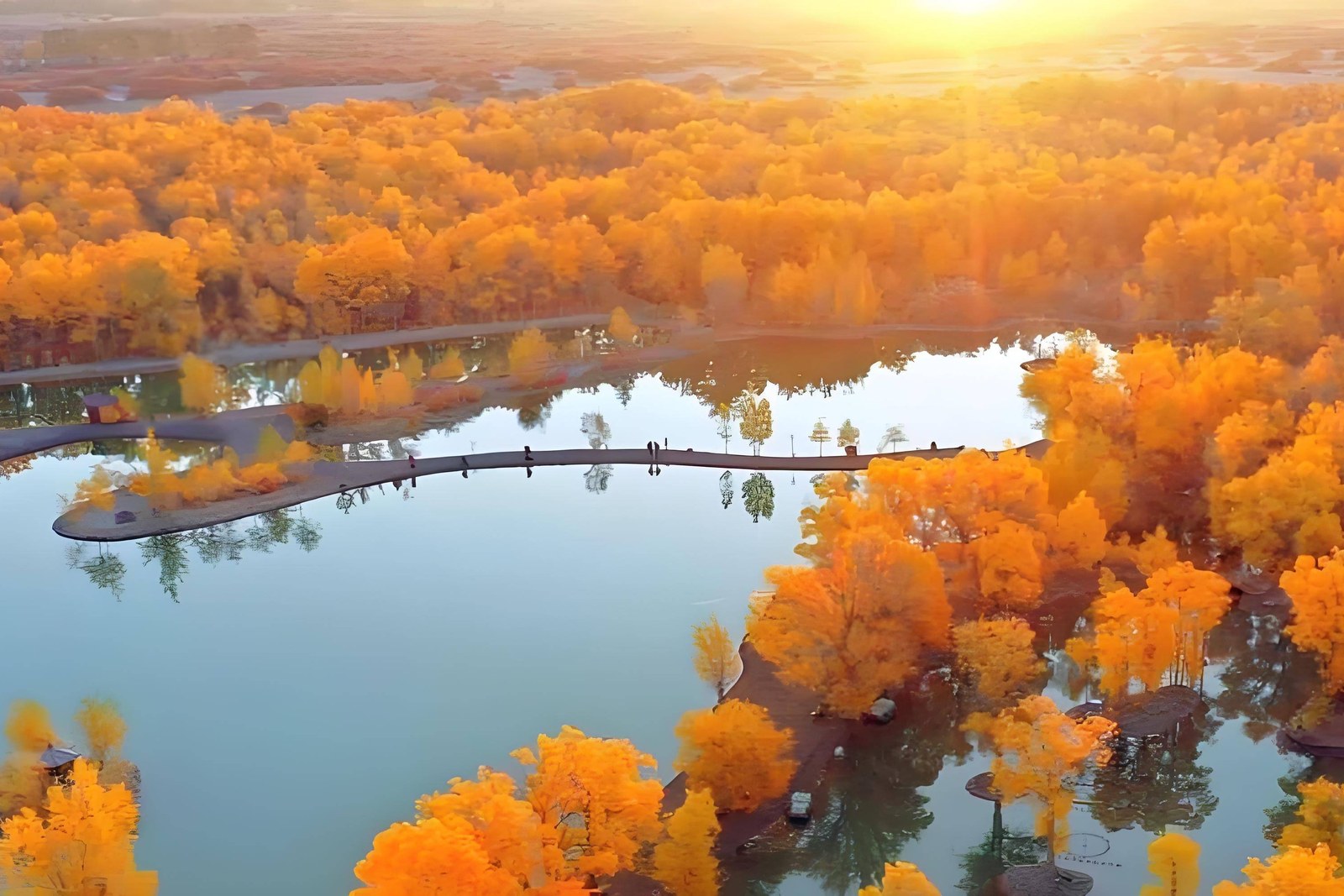
The poplars reward a second visit at a different hour. Morning gives frost and side-light; noon gives blue-sky contrast for the wide shots; and the hour before sunset turns the terraces amber and the trunks to charcoal outlines. What stays with you is the sound – dry leaves clicking like coins in the wind, a noise the forest makes at exactly the volume of the city’s youth.
Practicalities
Beyond the groves, the same 胡杨河市 Húyáng hé Shì Huyanghe City keeps more places worth the detour: 胡杨河湿地公园 Húyáng hé Shīdì Gōngyuán the wetland park for the reed bays, 戈壁母亲旧居 Gēbì Mǔqīn Jiùjū the Gobi Mother residence, 军垦历史陈列馆 Jūnkěn Lìshǐ Chénlièguǎn the history hall, or 城市公园 Chéngshì Gōngyuán the central park – four more doors into the same 胡杨河市 Húyáng hé Shì Huyanghe City. Once the stands are walked, our Huyanghe food map fills the day.
Practicalities
Words and Names
flowcloud would say the Huyang stands are the city’s signature written in gold ink: a windbreak that became an icon, ten days of October glory earned by fifty years of quiet root-work – go on a weekday morning and have the applause of the leaves all to yourself. All checked November 2026.
Getting there: The poplar stands lie on the river terraces at the city’s edge; taxis make the run in minutes and the terrace tracks are walkable in dry weather. Late October turns the crowns gold – go early for the light. All checked November 2026.