
The Evening Square: Water, Poplars and the Planned Grid at Huyanghe’s Central Park
新城灯初上,一湖收晚霞 Xīnchéng dēng chū shàng, yī hú shōu wǎnxiá – The new city’s lamps come on; one lake gathers in the sunset
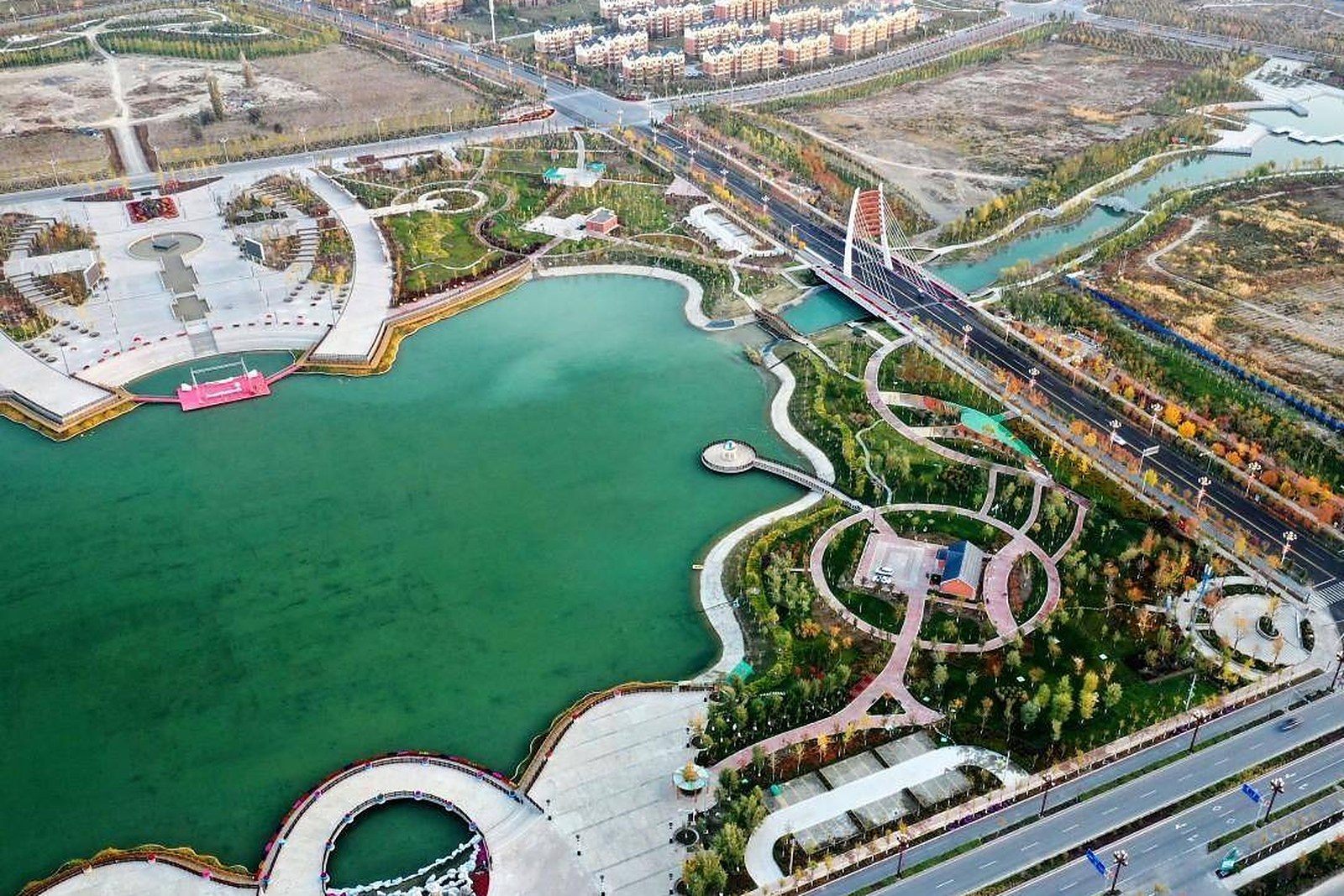
正文:城市公园 Chéngshì Gōngyuán the central city park fronts the civic square in the heart of 胡杨河市 Húyáng hé Shì Huyanghe City, the green lung of one of China’s newest planned cities. Everything here is legible as intention: poplar avenues marching to the compass, a lake and water-feature belt threaded through the residential grid, fountains timed to the evening promenade, and flower belts that rebloom on schedule from spring to frost. Planned cities elsewhere can feel like drawings; Huyanghe’s park is the rare plan that has already softened into a place – the trees have caught up with the blueprint.
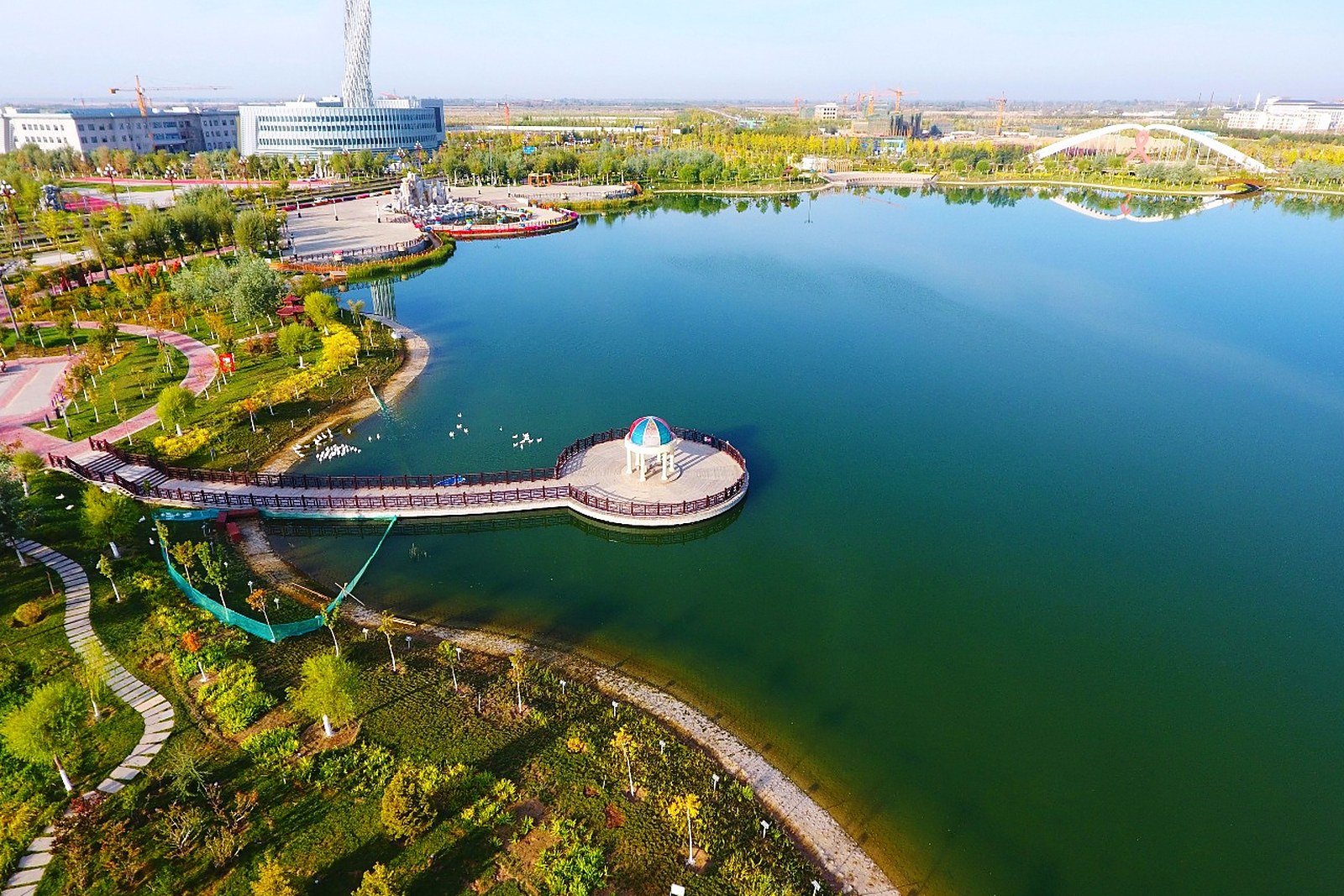
The lake is the park’s slow heart. Boardwalks and footbridges loop the water through beds of iris and reed, pavilions sit at the photogenic angles, and the evening light show draws the whole neighborhood: grandparents with fans, couples with phones on sticks, children racing the fountain clocks. Aerial visitors get the park’s best argument at once – the green grid of water and avenues sitting square in the middle of a young city, the wetland belt beyond it, and the desert light making the whole plan glow like a drawing that came true.
Morning is the park’s working hour: taiji groups on the squares, the lakeside walkers logging their laps, vendors setting up tea and corn at the gates. Midday belongs to the shade – the poplar alleys run cool even in summer, and the benches under them are the city’s best reading room. But the hour the park was designed for is dusk, when the lamps rise along the waterline, the fountains run their program, and the planned grid demonstrates why the planners put a lake in the middle of everything.
Practicalities first. The park fronts the civic quarter and is walkable from any downtown hotel; entry is free, the loops are flat, and the facilities – toilets, kiosks, evening lighting – run at full-city standard. Come at dusk for the fountain-and-lamp show, morning for the taiji and market stalls, and October for the combination that no brochure can resist: golden poplars on the avenues reflected in the park lake. Food streets adjoin the square, so an evening stroll ends a dinner as well as it begins one.
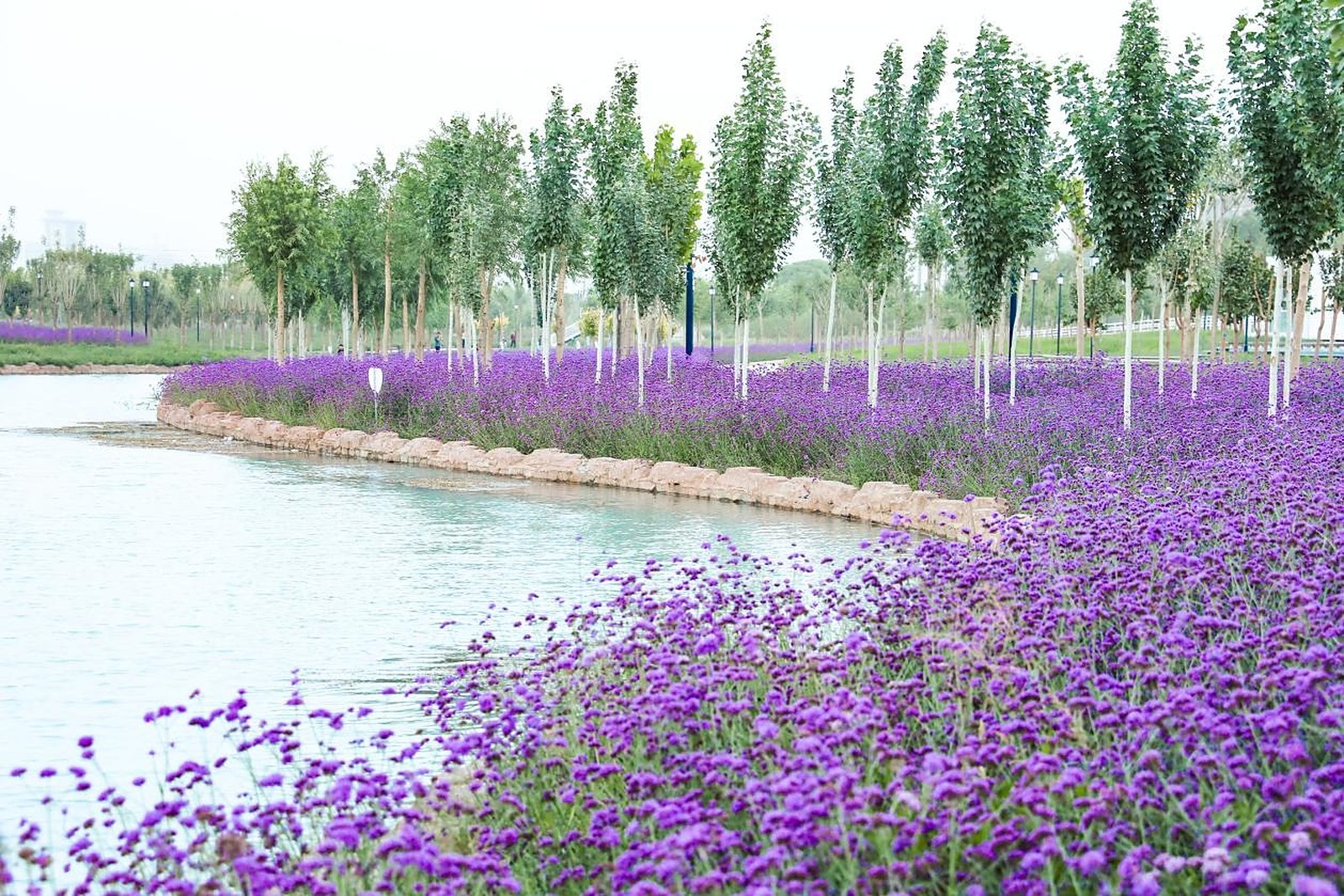
For all its newness the park already carries local history in small print: commemorative stones for the regiment farms that pooled the money, saplings grown from the shelter-belt seed orchards, and the lake itself fed by the same canal system the founders cut. The city is young, but the water is old – and the park is where the two generations meet every evening at the fountain edge.
Practicalities
Beyond the park, the same 胡杨河市 Húyáng hé Shì Huyanghe City keeps more places worth the detour: 胡杨河湿地公园 Húyáng hé Shīdì Gōngyuán the wetland park, 戈壁母亲旧居 Gēbì Mǔqīn Jiùjū the Gobi Mother residence, 军垦历史陈列馆 Jūnkěn Lìshǐ Chénlièguǎn the history hall, or 胡杨林景区 Húyáng Lín Jǐngqū the poplar stands – four more doors into the same 胡杨河市 Húyáng hé Shì Huyanghe City. Once the park is strolled, our Huyanghe food map fills the day.
Practicalities
Words and Names
flowcloud would say the central park is the planned grid exhaling: fountains on schedule, poplars off-script in gold every October, and a lake that turns the city’s straight lines into reflections – proof that a young city can grow an old soul in a single decade. All checked November 2026.
Getting there: The central park fronts the civic square in the heart of the planned grid; walk from any downtown hotel, and come evening when the fountains and the promenade crowd arrive. All checked November 2026.