
The Heart of Kashgar: Praying, Tea and Yellow Tiles at the Id Kah Mosque
金顶映晨光,万人礼拜声 Jīndǐng yìng chénguāng, wànrén lǐbài shēng – Gilded roofs catch the dawn light; ten thousand voices rise in prayer
正文:艾提尕尔清真寺 Ātígǎ’ěr Qīngzhēnsì the Id Kah Mosque anchors the very centre of 喀什地区 Kāshí Dìqū Kashgar Prefecture, facing the square that has been the city’s clock, marketplace and meeting point for five centuries. First built in 1442 and rebuilt into its present yellow-tiled form in the nineteenth century, it remains the largest mosque in China – a rectangle of courtyard gardens, painted colonnades and prayer halls that holds up to twenty thousand worshippers on the great festivals. For visitors the surprise is the mood: this is not a monument sealed behind glass but a working mosque, and the streets around it hum with the same commerce that has always paid for its upkeep.
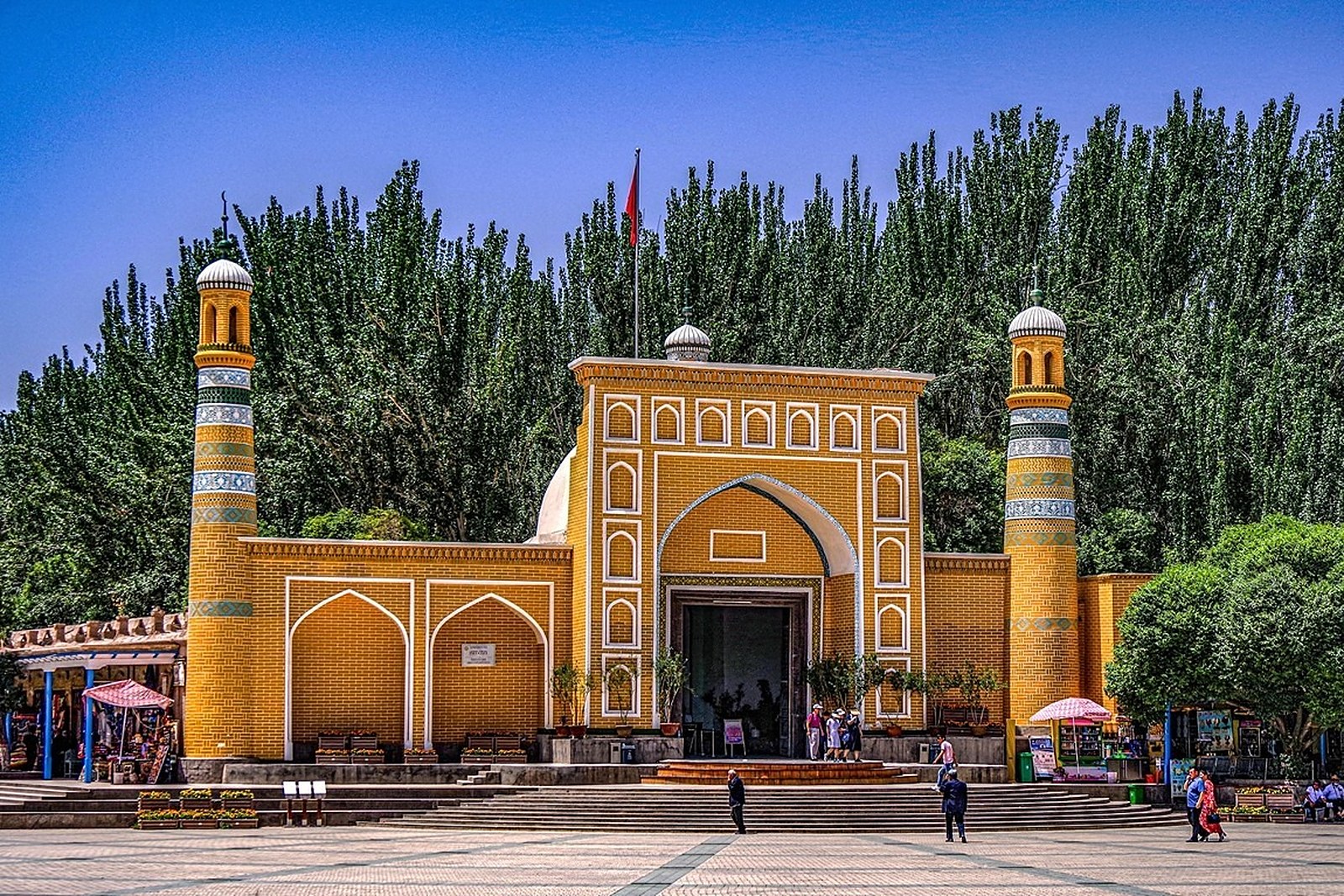
The square in front deserves its own hour. Plane trees shade the benches; the famous century-old teahouse overlooks it from across the street; and on Friday noon the plaza fills so completely that the prayer lines spill onto the pavements – a spectacle of order and scale unlike anything else in the city. Come on an ordinary morning instead and you get the gentler version: pigeons, tea urns, elders greeting each other, and the mosque’s facade catching the light in that deep sand-yellow that photographers chase from opening time.
Inside, the mosque is a set of surprises. The entrance portal – cypress-figured doors, glazed brick, a drum tower for the call to prayer – gives onto cool courtyards where the city’s noise drops away. Side halls hold centuries of timber columns painted in greens and ochres; the main prayer hall stretches nearly the length of a football pitch under a coffered ceiling rebuilt with traditional methods. The mosque’s museum rooms explain the building’s history in three languages, and the guides are frank about the cycles of fire, earthquake and repair that shaped what stands today.
Timing shapes everything here. Outside prayer hours the mosque admits ticketed visitors, modest dress required, shoes off at the hall doors. During prayers the halls close to tourists and the polite move is to stroll the square or slip into the bazaar lanes nearby. The two great Eid festivals invert the pattern entirely: the mosque itself becomes closed to visitors while the square becomes the event, tens of thousands kneeling in rows that run past the old city gate, followed by street dancing in front of the mosque steps – the Sama whirl that Kashgar shows off every festival morning.
The mosque’s setting is its greatest asset. Every lane of the old town radiates from this point: goldsmiths and coppersmiths to the east, the food streets to the south, the handicraft rows and the Apak Hoja road heading out of town. Guides who grew up here still navigate by the mosque – “the lane behind Id Kah” is a complete address in Kashgar. That centrality is why the building survived so many rebuilds: the city simply kept choosing to rebuild its own heart.
Practicalities first. Tickets are modest and include the museum rooms; visit outside the five daily prayer times, cover shoulders and knees, and keep voices low inside the courtyards. Photography is welcome in the courtyard and on the facade, restricted inside the prayer halls. Late afternoon gives the best facade light; Friday noon belongs to worshippers, not cameras. Water and shade sit close by in the square, where the teahouse balcony makes the most civilised rest stop in the city.
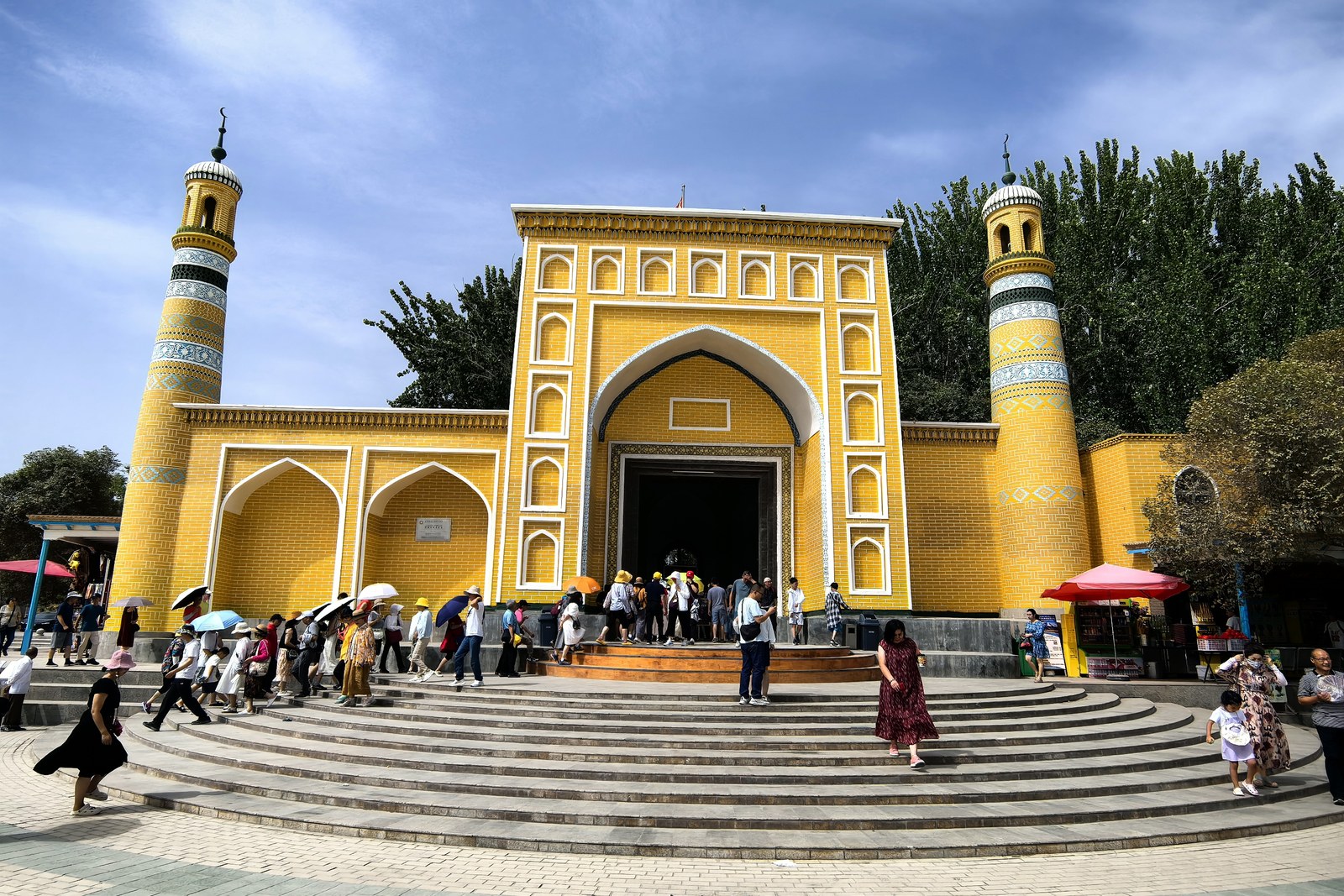
Widen the frame and the mosque is the gateway marker of the whole prefecture’s circuit – the old town lanes behind it, the tomb gardens to the northeast, the highway south to the great lake. Whatever else a Kashgar itinerary holds, this square is where the city explains itself.
And that is the lasting impression: a building that is simultaneously monument, compass and living room. The minarets call, the pigeons circle, the tea pours – and five hundred years feel less like history than like this morning, continued.
Practicalities
Beyond the mosque, the same 喀什地区 Kāshí Dìqū Kashgar Prefecture keeps more places worth the detour: 喀什古城 Kāshí Gǔchéng Kashgar Old Town for the earthen lanes, 香妃园 Xiāngfēi Yuán the Fragrant Concubine Garden for the green dome, 喀拉库勒湖 Kālākùlè Hú Karakul Lake for the mountain mirror, or 牛羊大巴扎 Niúyáng Dàbāzhā the Livestock Bazaar for Sunday’s great trade – four more doors into the same 喀什地区 Kāshí Dìqū Kashgar Prefecture. Once the mosque is seen, our Kashgar food map fills the day.
Practicalities
Words and Names
flowcloud would say the Id Kah Mosque is Kashgar’s town hall, clock and living room at once: a yellow-walled anchor where every lane begins, best understood with tea on the square as the light goes amber. All checked November 2026.
Getting there: The mosque fronts the Id Kah square at the very centre of the old town; most visitors arrive on foot from anywhere inside the walls, and city buses along Jiefang North Road stop within a five-minute walk. Come outside prayer hours if you only want to look, dress modestly, and buy tickets at the south gate. All checked November 2026.