
Beijing International Flowers Port: The Spring Tulip Shows, the Autumn Chrysanthemums and the Working Flower-Industry Park in Shunyi District, Beijing
郁金香涌千重浪,金菊又燃十月天。Yùjīnxiāng yǒng qiān chóng làng, jīn jú yòu rán shíyuè tiān – Tulips surge in a thousand layered waves; golden chrysanthemums set the tenth-month sky alight all over again.
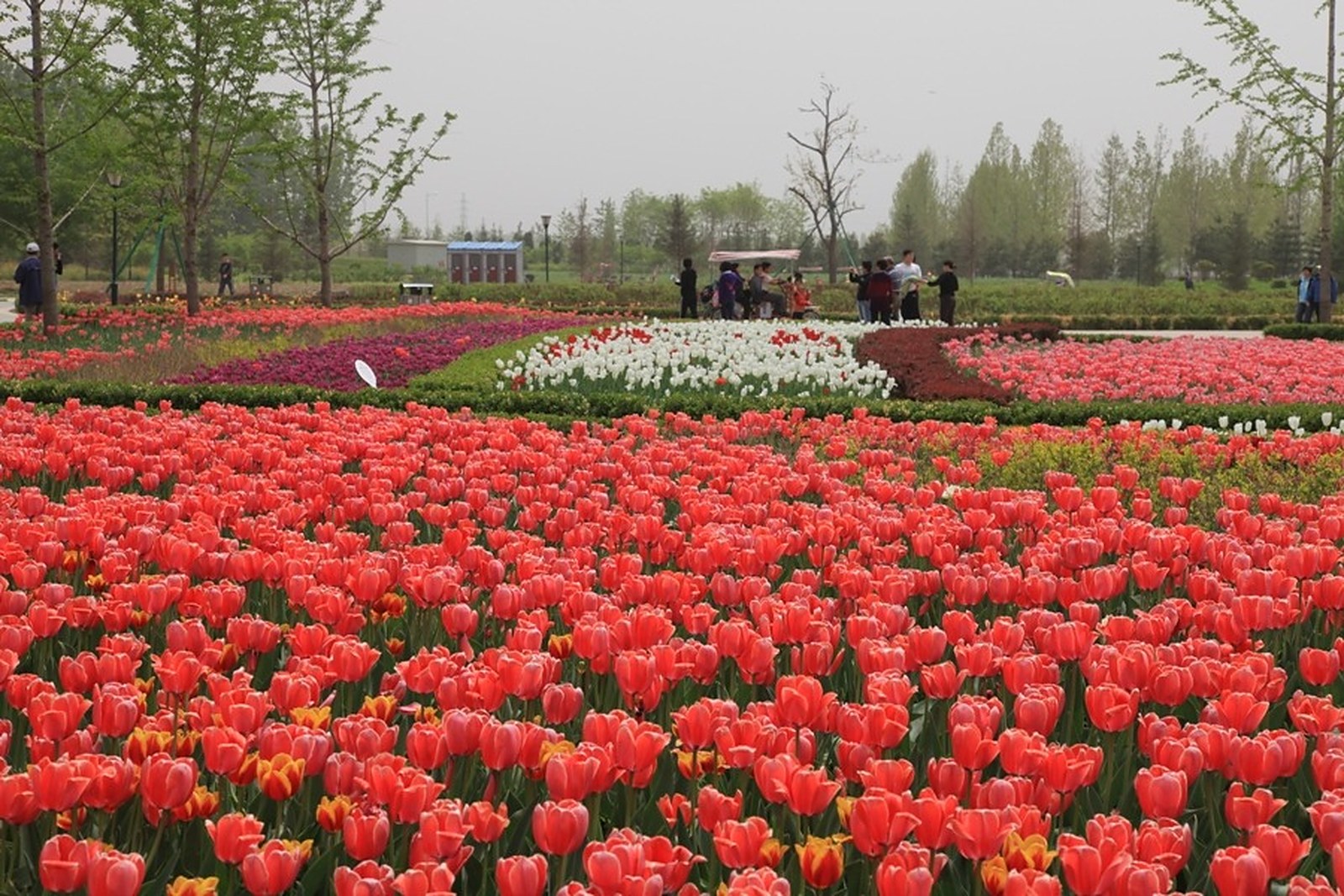
北京国际鲜花港 Běijīng Guójì Xiānhuāgǎng Beijing International Flowers Port is not a botanic garden of rare specimens — it is, plainly put, a working flower port that dresses up twice a year: a production, research and show ground at 杨镇 Yáng Zhèn Yangzhen in eastern 顺义区 Shùnyì Qū, opened in 2009 as a flagship ground of the 第七届中国花卉博览会 dì-qī jiè Zhōngguó Huāhuì Bólǎnhuì seventh China Flower Expo, planned at several square kilometres with the built first phase reported at well over a thousand mu of glasshouses, trial fields and show gardens. The calendar is the show: a spring 郁金香 yùjīnxiāng tulip festival plants the lanes with hundreds of thousands of bulbs — reported figures have run into the millions in peak years — from late April into May, and an autumn 菊花 júhuā chrysanthemum festival repays September and October with ranked beds of blooms in every Chinese style, from pompons to cascades. Between the festivals the port keeps its trade face — grading halls, cold stores, breeding 温室 wēnshì greenhouses and demonstration beds that supply the city’s flower trade, plus lawns and windbreak woods for ordinary weekend picnics. What you actually visit is a big engineered flower farm wearing its best clothes twice a year, in which timing matters more than the ticket.
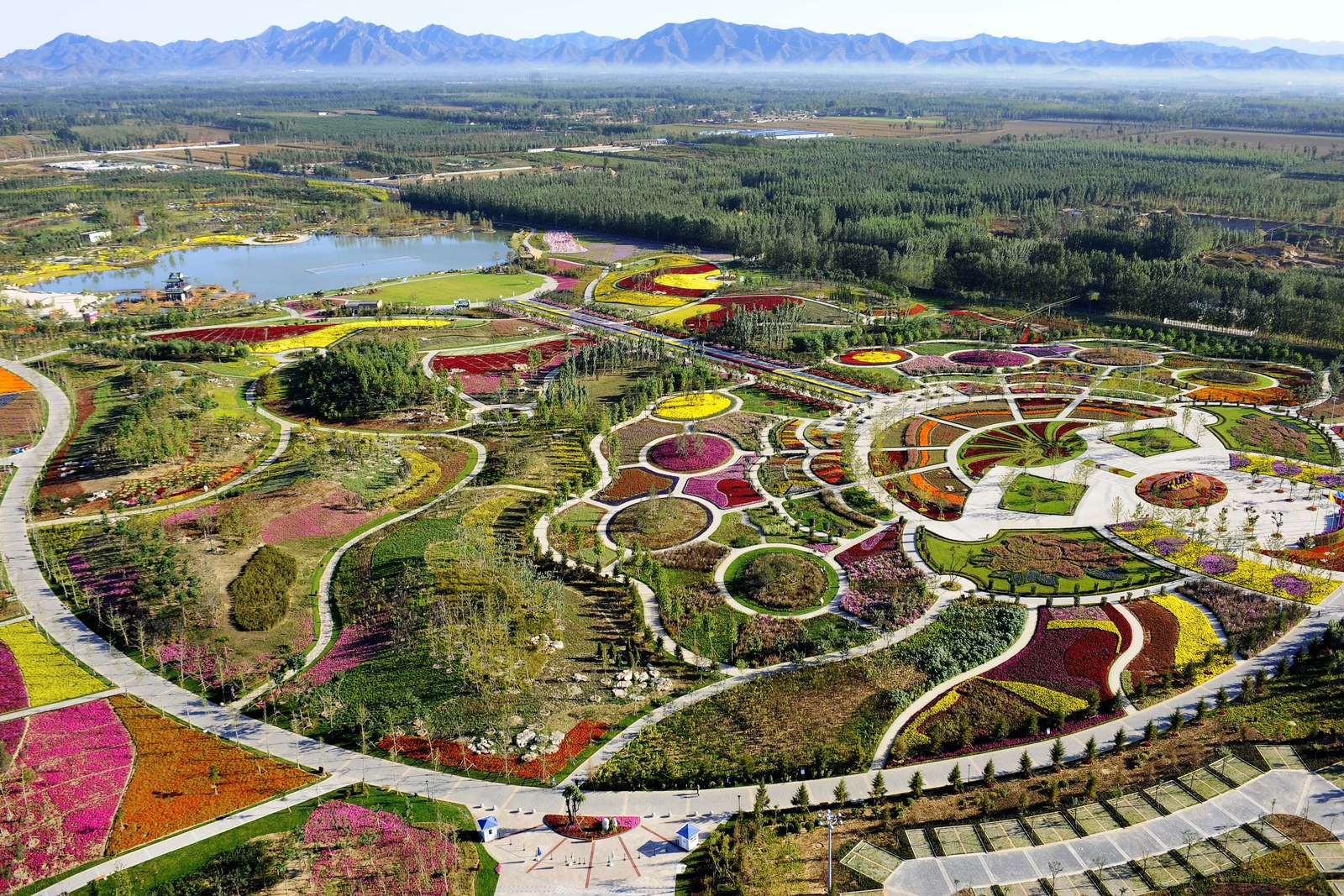
Call it honestly: the difference between a great visit and a mediocre one is the calendar, not the price. Entry sits at a modest ticket in the quiet stretches and rises during the two festivals, with parking, shuttles and greenhouse exhibits priced or booked separately (worth confirming the details for current festival dates, tickets and reservation rules). Come in the last week of April for the tulip lanes at their densest, or early October for the chrysanthemums; outside those windows the outdoor beds are honest farmland between acts, and the glasshouses carry the visit alone. The site is flat, big and windswept, so bring sun protection in spring and a wind layer in autumn, and expect festival weekends to be stroller-to-stroller busy — a weekday morning inside either show fortnight is the golden ticket. Two to three hours cover an ordinary visit; a festival day with the greenhouses added can fill half a day.
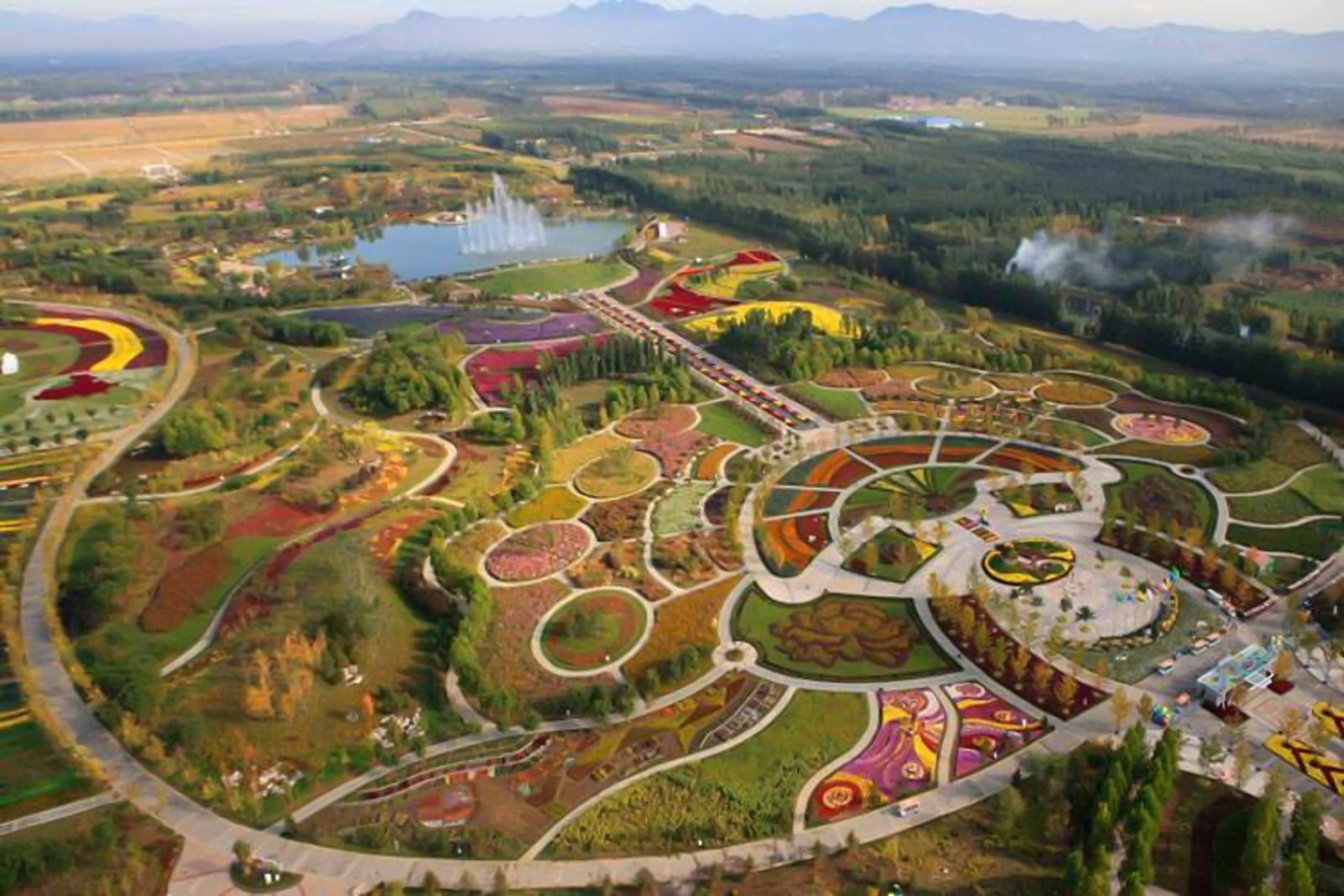
The honest star is the tulip lane at peak — colour planted in ribbons that march a kilometre at a time, with windmills, photo frames and all the cheerful festival stagecraft — not the “international” in the name, which points to trade and breeding programmes rather than a world’s fair. What gets oversold is the off-season promise: between shows the port is a place of work, and visitors arriving in June or January find polytunnels, grading belts and planning boards rather than bloom (worth confirming the details for whatever interim displays and greenhouse exhibits are open in your month). What repays the effort is precisely that honesty — crates of bulbs on forklifts, the smell of a real nursery, the sight of next season’s stock being planned — plus the neat geography that puts the reed marsh of 汉石桥湿地 Hànshíqiáo Shīdì a few minutes away for a two-stop day. Come for the layering of the place: field, then glasshouse, then the show lane at peak.
The self-aware postscript: I walked the tulip lane the morning after a festival closed and found a crew lifting spent bulbs by the crate, and one of them straightened up and said, “yesterday this was a painting — today it is inventory; a flower port has to be both to afford being either”. That is the visit in miniature. 北京国际鲜花港 Běijīng Guójì Xiānhuāgǎng suits whoever treats it as a flower-calendar outing first and a country drive second — tulips, glasshouses, marsh, home — and exhausts anyone expecting a labelled botanic collection in any season. Everything else on this Shunyi list lies within an easy drive: the Olympic straight of 奥林匹克水上公园 Àolínpǐkè Shuǐshàng Gōngyuán to the north-west, the butterflies of 七彩蝶园 Qīcǎi Diéyuán to the west, the underground village of 焦庄户地道战遗址 Jiāozhuānghù Dìdàozhàn Yízhǐ to the north-east, and the reed plumes of 汉石桥湿地 Hànshíqiáo Shīdì next door — all in the same 顺义区 Shùnyì Qū that farms, ships and exhibits its own springtime.
Practicalities
- Rating: ★★★★☆ — Beijing’s biggest flower-themed showground with a genuinely professional nursery underneath; the late-April tulip lanes and the October chrysanthemums outrank the off-season grounds; plan the calendar first and buy the ticket second.
- Tickets: Modest admission in ordinary stretches with higher festival-season tickets; greenhouses, shuttles and parking priced or booked separately (worth confirming the details for current festival dates and ticketing).
- Address: 北京国际鲜花港 Běijīng Guójì Xiānhuāgǎng, at 杨镇 Yáng Zhèn, eastern 顺义区 Shùnyì Qū, Beijing — a few minutes from 汉石桥湿地 Hànshíqiáo Shīdì.
- Time needed: Two to three hours in ordinary times; half a day inside either festival with the glasshouses added, best in late April-May or September-October.
Words and Names
北京国际鲜花港 Běijīng Guójì Xiānhuāgǎng Beijing International Flowers Port · the flower-industry park and showground of eastern Shunyi 郁金香 yùjīnxiāng tulip · the spring festival bulb, planted by the hundreds of thousands 菊花 júhuā chrysanthemum · the autumn festival bloom of ranked and cascading beds 花卉博览会 huāhuì bólǎnhuì flower expo · the seventh China Flower Expo of 2009 that opened the port 温室 wēnshì glasshouse · the working greenhouses that carry the between-seasons visit 杨镇 Yáng Zhèn Yangzhen · the eastern-Shunyi town that hosts both the port and the marsh 花海 huāhǎi flower sea · the planted spectacle fields of festival season 花展 huāzhǎn flower show · the port’s trade face of trials, grading and displays
flowcloud would say that 北京国际鲜花港 Běijīng Guójì Xiānhuāgǎng is a flower port that wears its uniform twice a year — opened at 杨镇 Yáng Zhèn in 2009 as a flagship ground of the seventh China Flower Expo, spring 郁金香 yùjīnxiāng festivals of hundreds of thousands of bulbs, autumn 菊花 júhuā festivals of ranked blooms, and working glasshouses in between — and that the honest move is a weekday morning inside either festival fortnight, because festival dates, ticketing and interim displays all shift year by year (worth confirming the details), the international in the name is the poster half and the forklift of spent bulbs the morning after closing is the real half, and the port repays whoever follows its calendar while losing anyone arriving between acts expecting bloom on demand. All checked October 2026.
Getting there: Metro Line 15 to the 俸伯 Fèngbó terminus shares the eastern corridor with the Hanshiqiao wetlands, with taxis and local buses covering the last stretch into 杨镇 Yángzhèn Yang town to the flower-port gates; self-drive repeats the 顺平路 Shùnpíng Lù run out of the district or leaves the 京平高速 Jīngpíng gāosù expressway toward 杨镇 Yángzhèn and parks in the gate car parks, busiest in festival weeks (worth confirming the details for current bus numbers, festival shuttles and gate parking). All checked October 2026.