
The Monastery Above Two Rivers: Jampa Ling
两水交汇金顶寺,康区格鲁第一扉 Liǎng shuǐ jiāohuì jīndǐng sì, kāng qū Gélǔ dì-yī fēi – Where two rivers meet, a gold-roofed monastery; the first gate of the Gelug school in Kham
强巴林寺 Qiángbālín Sì Jampa Ling Monastery crowns the terrace between the Ngom Qu and Dza Chu rivers just above the center of 西藏自治区昌都市 Xīzàng Zìzhìqū Chāngdū Shì Chamdo, its gilded roofs and whitewashed prayer halls visible from most of the city. Begun in 1437 and completed in 1444 by a direct disciple of Tsongkhapa, it grew into the largest Gelug monastery of the Kham region and the seat of the Phagpa lama lineage, and its name comes from Jampa – the Maitreya Buddha whose statue gives the main chapel its focus. For centuries it anchored the eastern end of the tea-horse trade, and the city below grew up in its shadow.
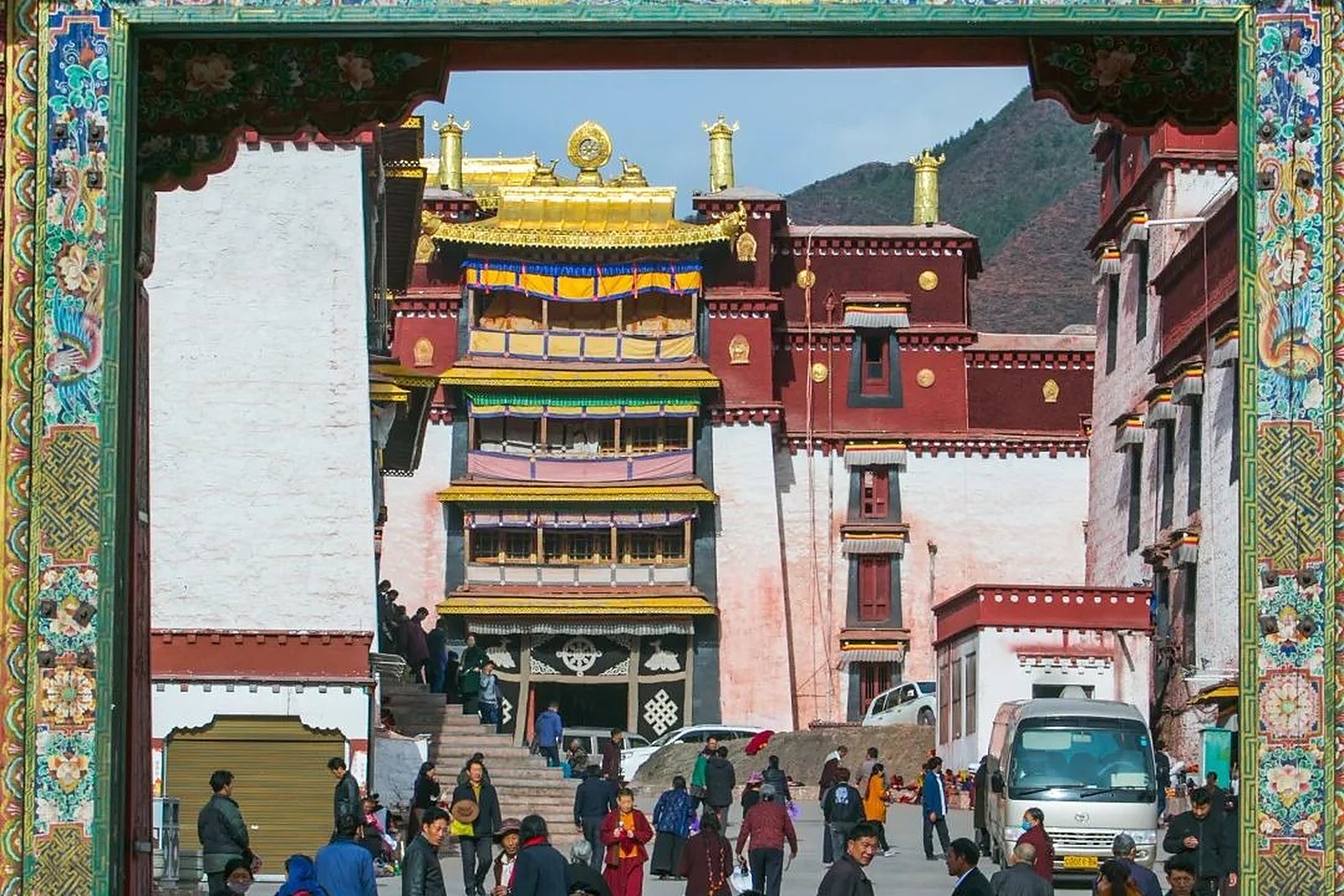
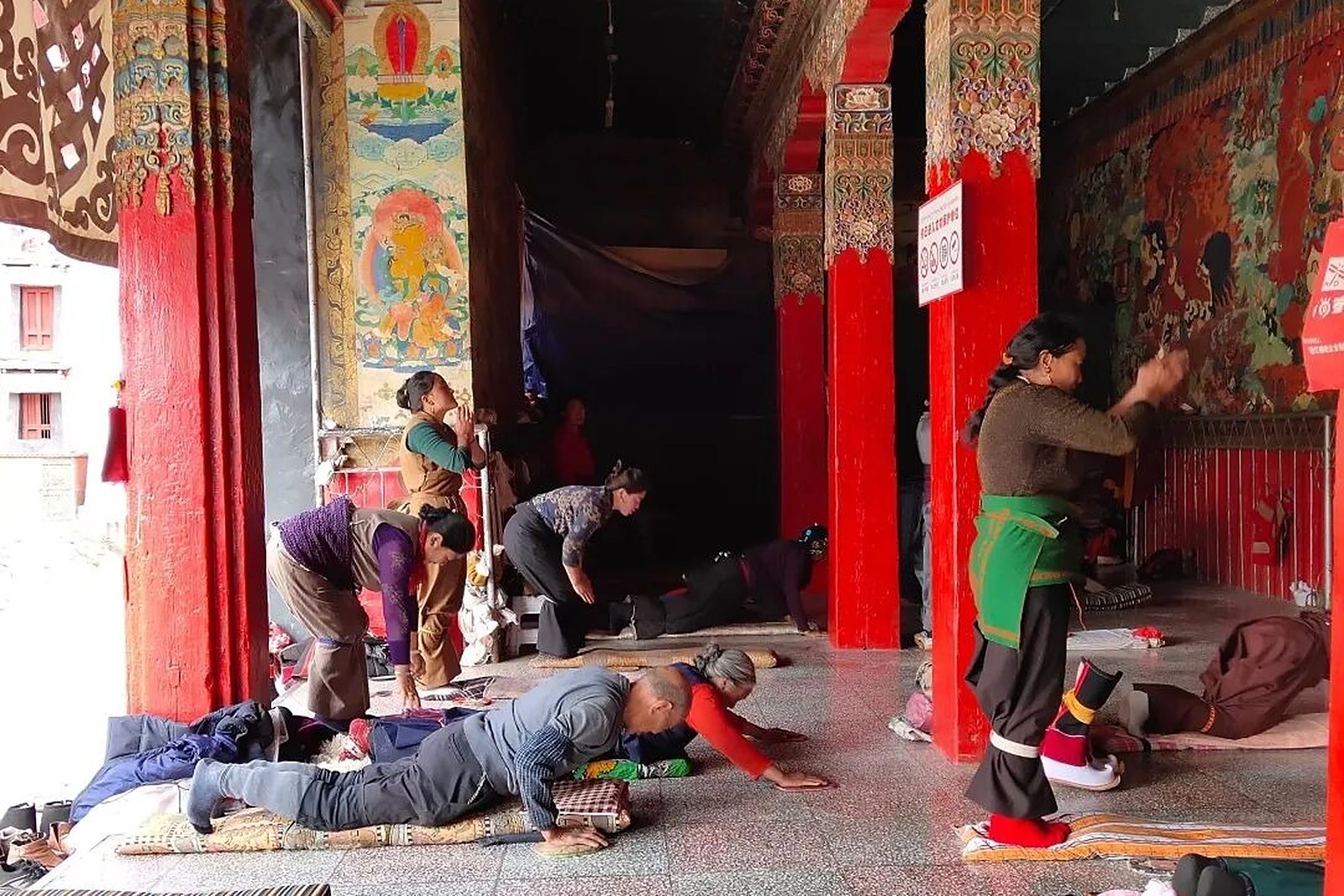
The visit runs through the monastery’s own geography. The great 措钦大殿 cuòqīn dàdiàn assembly hall holds rows of tall pillars wrapped in thick carpets, butter lamps glow along the chapels of the Maitreya, the protectors and the taras, and nine monastic colleges spread around the upper court alongside eight great stupas. On regular afternoons the young monks debate in the courtyard, copper kettles pass between the kitchens and the colleges, and the flagstones of the inner lanes stay polished by centuries of prostrations.
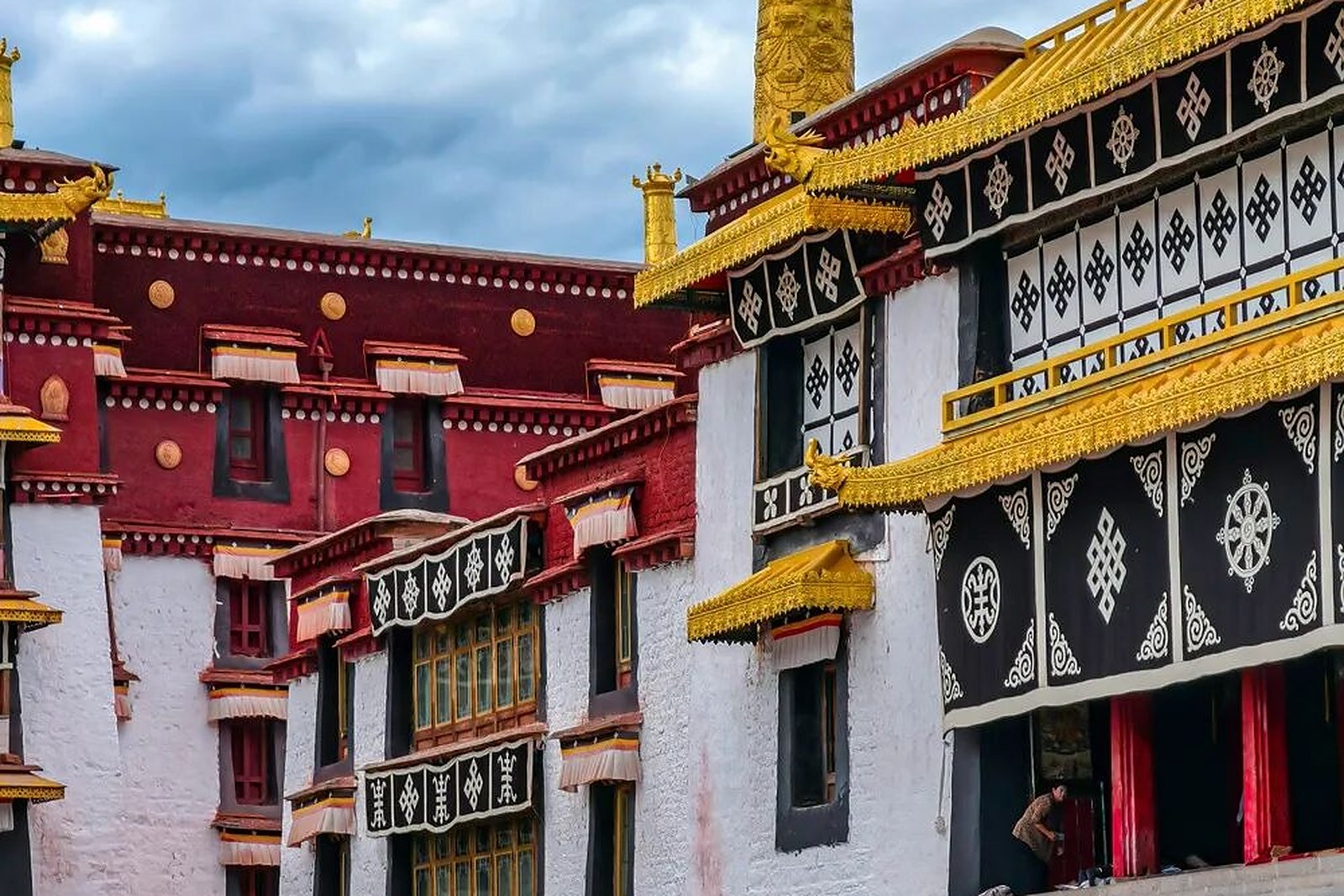
It is a working monastery, not a museum. Red-robed monks cross between halls with texts under their arms, herder families from the grasslands of Kham arrive with prayer beads and butter for the lamps, and pilgrims circle the upper ridge among prayer flags with the two river valleys spread out below. Mid-morning lights the gold roofs; late afternoon sends long shadows across the courtyard, and the low sun on the gilt is the image the city keeps of itself.
What the monastery means is written on the city around it. Chamdo grew as the service town of Jampa Ling – the market streets, the old caravanserai quarter and the pilgrim lanes all face the hill – and the monastery still sets the rhythm of the city’s festival calendar, from the great prayer gatherings of winter to the courtyard dances of the New Year. Whatever else the journey includes, this is the building Chamdo points at, and the first light on its gold roofs explains the town better than any plaque.
Practicalities
- The monastery sits within walking distance of the town center – twenty minutes uphill from 茶马广场 Chámǎ Guǎngchǎng Chama Square, or a short taxi ride to the upper gate.
- The town stands at about 3,200 meters – take the climb slowly on the first day and keep water handy.
- Photography inside the chapels is restricted; ask before raising the camera and keep flash away from the butter lamps.
- Allow half a day with the kora; the best light on the golden roofs comes before noon.
Words and Names
强巴林寺 Qiángbālín Sì Jampa Ling, “the Maitreya Island” monastery above two rivers; 强巴佛 Qiángbā Fó Jampa, the Maitreya or future Buddha; 措钦大殿 cuòqīn dàdiàn the Great Assembly Hall; 扎仓 zhācāng a monastic college of the Gelug system; 转经道 zhuǎnjīng dào the kora, the pilgrim circuit; 帕巴拉 Pàbālā the Phagpa lama lineage that has headed the monastery for centuries. Beyond the monastery, the same 西藏自治区昌都市 Xīzàng Zìzhìqū Chāngdū Shì Chamdo keeps more places worth the detour: 卡若遗址 Kǎruò Yízhǐ the Neolithic village site south of town, 孜珠寺 Zīzhū Sì the Bon monastery on its six peaks, 然乌湖 Ránwū Hú the glacier lake on the G318, or 盐井古盐田 Yánjǐng Gǔ Yántián the ancient salt terraces of the Lancang – four more doors into the same Chamdo. Once the monastery is behind you, our Chamdo food map fills the table.
flowcloud would say Jampa Ling is Chamdo’s north star: every lane in the town bends toward its hill, and an hour on the kora explains the two-river city better than any guidebook. All checked November 2026.
Getting there: The monastery sits within walking distance of central Chamdo – twenty minutes uphill from Chama Square, or a short taxi ride to the gate. From Bamda Airport the transfer takes about 1.5 hours by the G214. Mornings bring the best light on the golden roofs; allow half a day with the kora. All checked November 2026.